Visiting Spain & Portugal
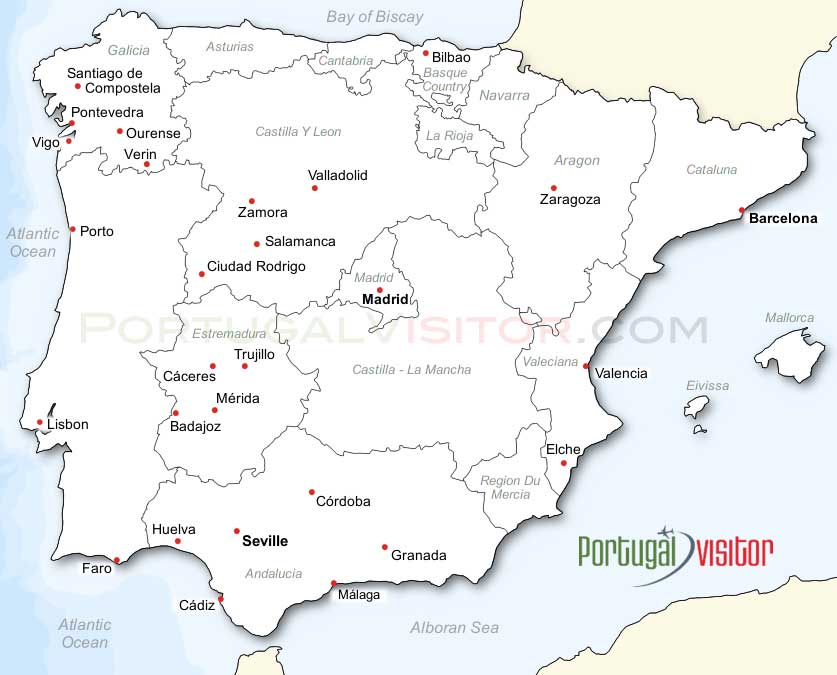
A quick look at a map of Portugal and its geography shows that the country occupies around a sixth of the Iberian Peninsula and is surrounded by Spain on its northern and eastern borders.
A holiday to Portugal can thus easily include a side trip into Spain and vice versa. A flight from Madrid to Lisbon Airport is less than an hour and the two countries are also connected by road, bus, rail and even ferry.
Algarve-Andulasia Bus Connections
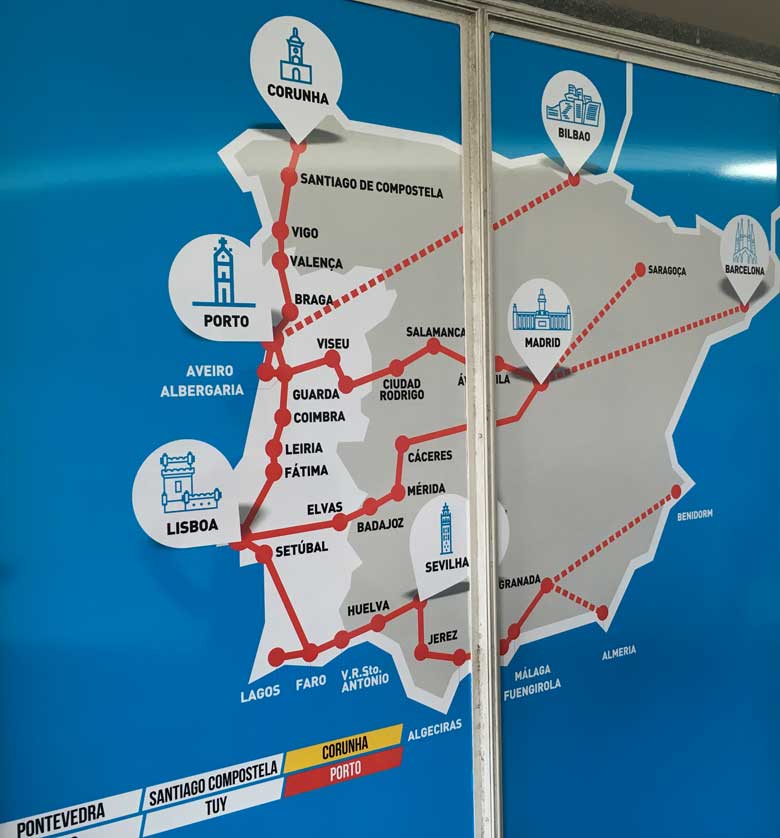
A bus links the resorts of the Algarve with Seville in Spain. The buses, jointly operated by Eva and Damas leave Lagos early in the morning, calling in Portimao 30 minutes later, Lagoa, Albufeira (after about one hour) and then Faro then taking about 3 hours and 20 minutes to reach Seville via Olhão, Tavira, Vila Real Santo Antonio on the Spanish border, then to Ayamonte, Huelva and then Sevilla Bus Station in Plaza de Armas.
Madrid-Porto Bus Connections
Another bus links Madrid and Porto. Buses are operated by ALSA/Internorte and take 6 hours and 15 minutes from Salamanca to Porto and 9 hours, 15 minutes from Madrid to Porto. The bus station in Porto where these international buses depart is at Casa da Musica on the Porto metro. On the Portuguese side of the border the bus stops in Guarda, Viseu, Aveiro and Porto.
Coruña-Porto Connections
From Porto a bus runs north via Braga and Valença across the border to Tui, Vigo, Santiago de Compostela, and La Coruña. It is also possible to take a train from Campanhã Station in Porto to Vigo. There are stops at Nine, Viana do Castelo and Valença.
Madrid-Lisbon Connections
Buses from Sete Rios and Gare do Oriente in Lisbon leave for Estación Sur bus station and Madrid Barajas International Airport in the Spanish capital via Evora, Badajoz, Mérida and Caceres. Four buses daily make the 8 and a half hour journey between the two capitals from 6.30 am until 9.15 pm.
The Lusitânia Comboio Hotel train departs from Santa Apolónia Station every evening for Madrid. Travelers can choose from 1st or 2nd class seats or beds. (cp.pt)
Zamora-Porto Connections
Bragança's sister city of Zamora in Spain is 100 km southeast and can be reached by bus 3 times a week on Tuesday, Friday and Sunday. Buses leave Zamora for Bragança Bus Station at 5 am (Spanish time) arriving in Bragança in the Trás-os-Montes region at 6 am (Portuguese time).
The journey time is 2 hours. The bus continues on from Bragança to Macedo de Cavaleiros, Mirandela, Murça, Vila Real, Amarante, Porto, Guimaraes, Braga, Ponte de Lima, Viana do Castelo and Vila Praia de Ancora. Going the opposite way, the bus departs Bragança at 3.45 pm arriving in Zamora at 6 pm. (See www.interurbana.ad for further details).
The two countries share many similarities. In an often violent history, Portugal was once ruled by Spain and the two monarchies once frequently inter-married. Both were occupied by the Romans and later by the Visigoths and Moors. The climate, language, cuisine and wine of the two countries also have numerous interconnections.
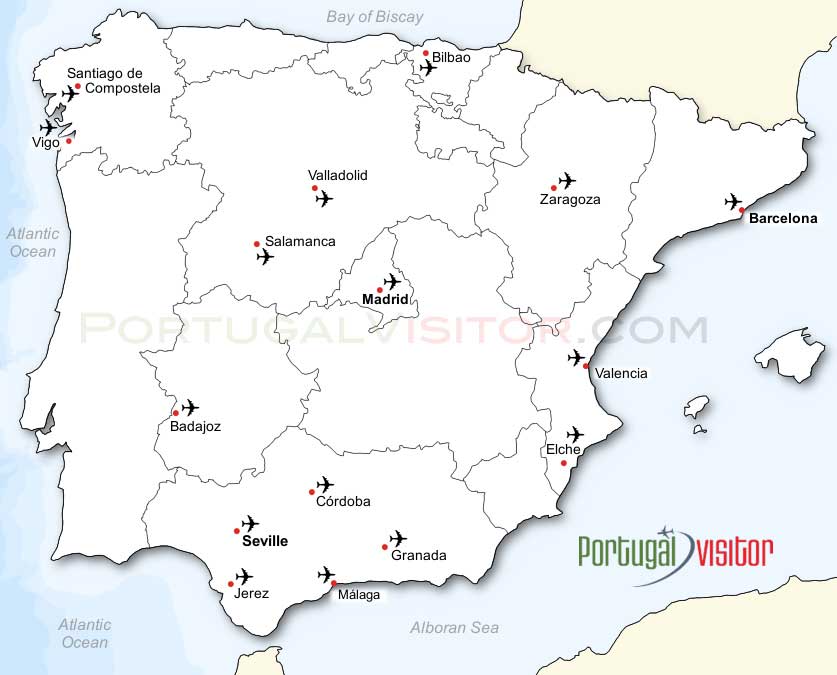
We look at some of the towns and cities in Spain (in alphabetical order) that can be visited on a holiday to Portugal.
A Coruña
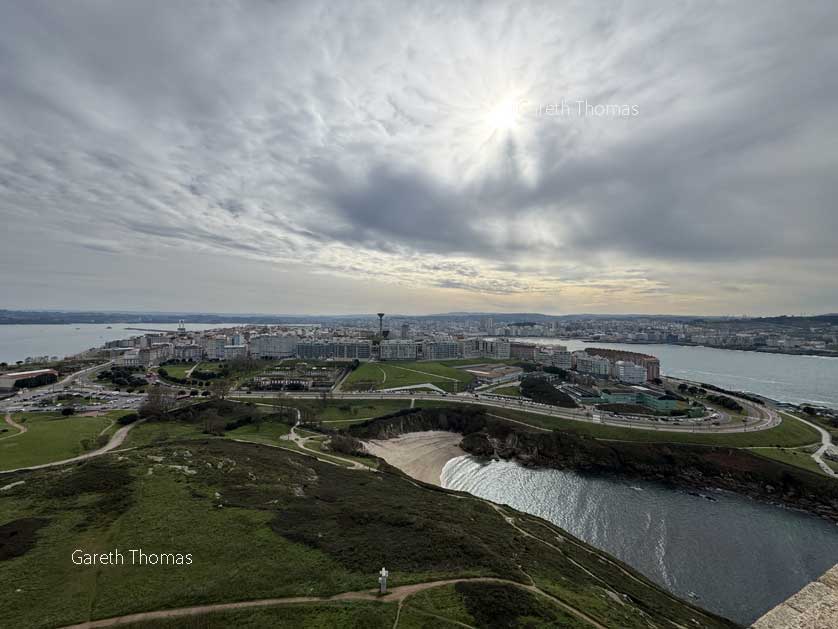
The coastal city of A Coruña (La Coruña) in Galicia, northwest Spain is a major port and gateway to the region. Located on a peninsula jutting out into the Atlantic Ocean, A Coruña has a population of around 250,000 (making it the second largest city in Galicia after Vigo to the south), is home to the world's oldest functioning lighthouse (the Torre de Hércules) and also the birthplace of the fashion giant Zara.

Ayamonte
The pretty Spanish town of Ayamonte is just a short ferry journey or drive across the Guadiana River to Vila Real de Santo António on the Algarve in Portugal.
The Guadiana International Bridge carries the A22/A49 highway linking Spain and Portugal across the river on a modern suspension bridge, just to the north of the town.
Paseo de la Ribera is the main square in Ayamonte which has a couple of lovely churches, Iglesia de San Francisco and the 15th century Iglesia de San Salvador. The main attraction, though, is the beach, Playa Isla Canela, which draws thousands of mainly Spanish holidaymakers in summer.

Badajoz
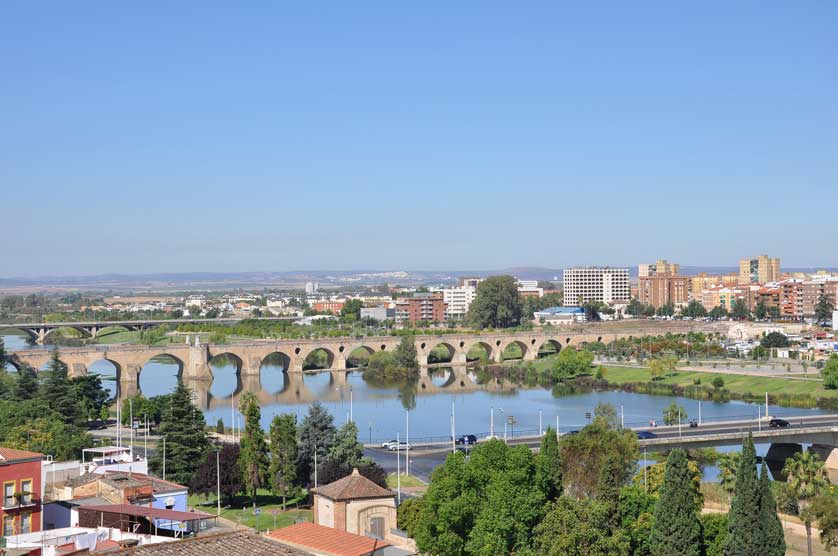
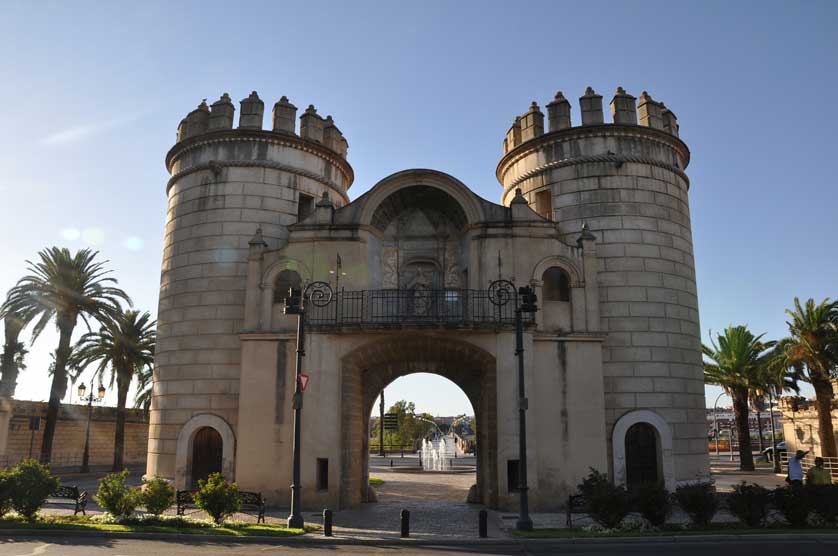
Badajoz is closer to Lisbon than it is to Madrid. Plaza Alta is the town's main square and other must-sees are the 12th century Espantaperros Tower, the Alcazaba and the Museo Extremeño e Iberoamericano de Arte Contemporáneo (MEIAC) with art by Spanish, Portuguese and Latin American artists. From the town it is easy to drive over the border to nearby Elvas, then on to Estremoz and the UNESCO World Heritage city of Evora in the Alentejo region of Portugal.
Cáceres
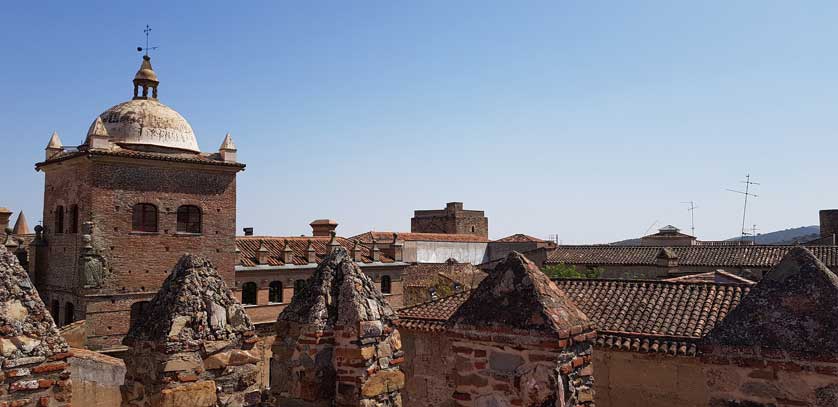
Cáceres in Extremadura is 120 km east of the Portuguese hilltop town of Marvão in the Alto Alentejo region. The historic core of Cáceres (Ciudad Monumental) is designated as a UNESCO World Heritage Site with numerous churches, mansions, museums, plazas and towers among its twisting, narrow, cobbled streets. In May a 3-day edition of the world music festival WOMAD takes place here.
Cádiz
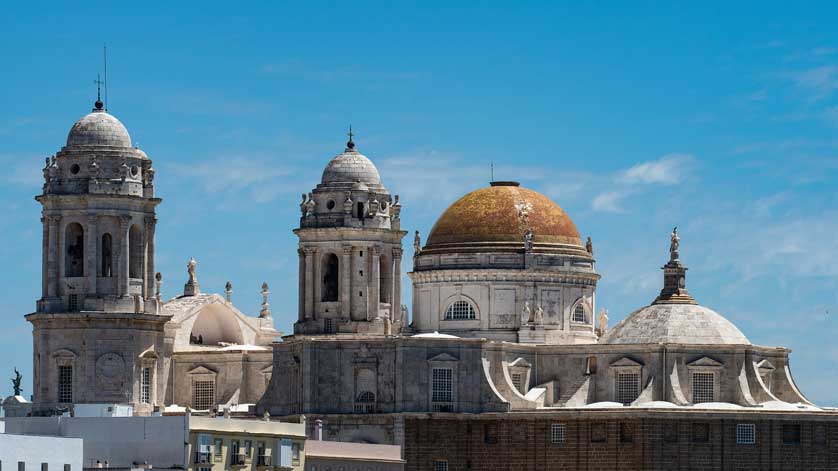
Cádiz is an historic port town and believed to be the oldest continuously-inhabited city in Europe. Playa de la Caleta is the town's main beach and a glorious stretch of sand. The narrow streets of the old town are full of atmospheric tapas bars and tiny churches. Things to see include the Catedral de Cádiz and the Museo de Cádiz full of reminders of the city's long history going back to Phoenician and Roman times.
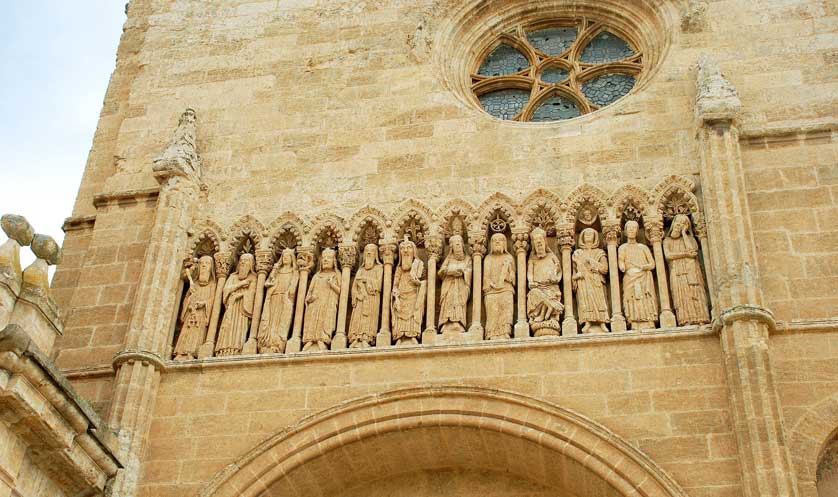
Ciudad Rodrigo
Ciudad Rodrigo in the Province of Salamanca is a small city of less than 15,000 people known for its preserved Medieval core of historic buildings. The city, on a rise above the River Águeda, boasts a cathedral, a castle (now partly occupied by a parador), several mansions and a few museums of interest. Ciudad Rodrigo is nearer to Guarda in Portugal than Salamanca in Spain and can be visited as a day trip from either, though a longer stay is recommended.
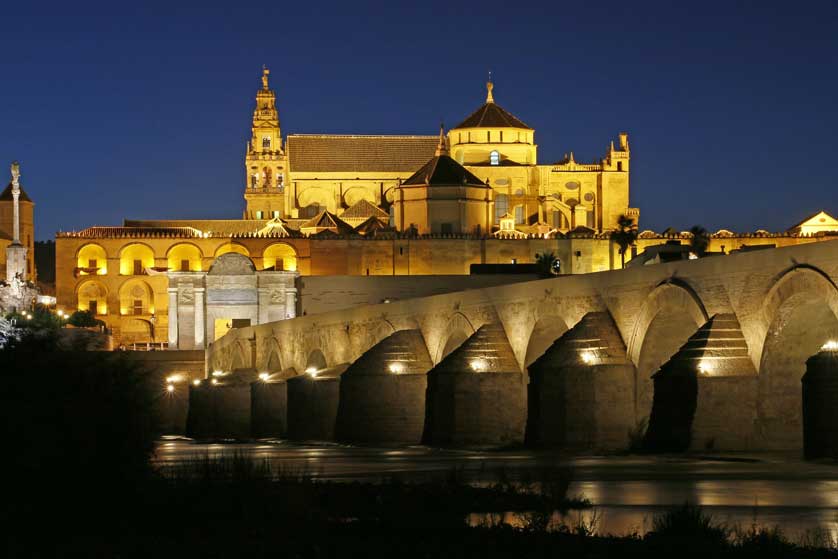
Córdoba (Cordova)
Córdoba (Cordova) was once the capital of the Umayyad Caliphate of Córdoba during the Moorish period of Iberia's history. Much of that heritage can be seen and enjoyed today. The Mezquita-Catedral is a UNESCO World Heritage Site and other attractions include the Medina Azahara, Alcázar de los Reyes Cristianos and the Puente Romano (Roman Bridge). There are also many museums, churches and parks to enjoy in one of Spain's most beautiful cities.
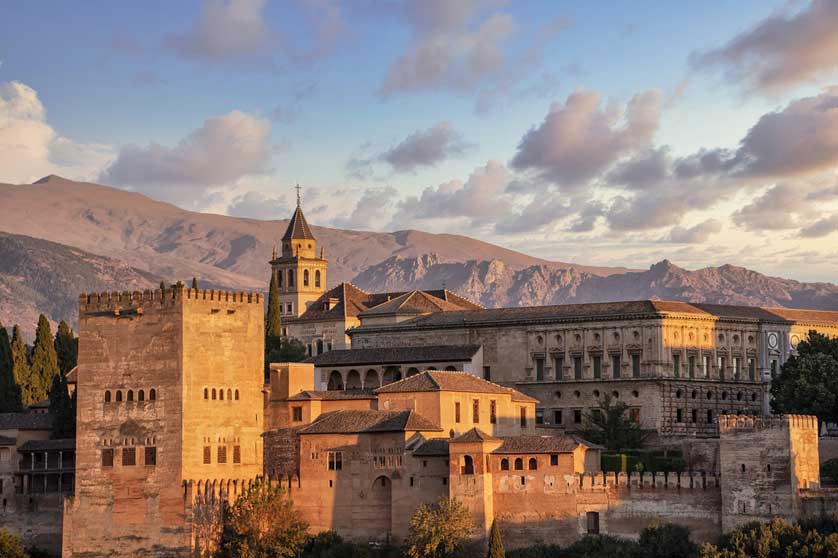
Granada
Granada in Andalusia, southern Spain is one of Iberia's most beautiful places. The historic city is now the capital of the province of Granada with a population of over 227,000 inhabitants. It sits at the foot of the Sierra Nevada mountains at the confluence of four rivers. Highlights include the Alhambra - a UNESCO World Heritage Site and one of the most famous monuments in Spain and Granada Cathedral (Catedral de Granada) - a grand Renaissance-style cathedral built over the former main mosque. Granada is only slightly further from Faro in Portugal than it is from Madrid in Spain.
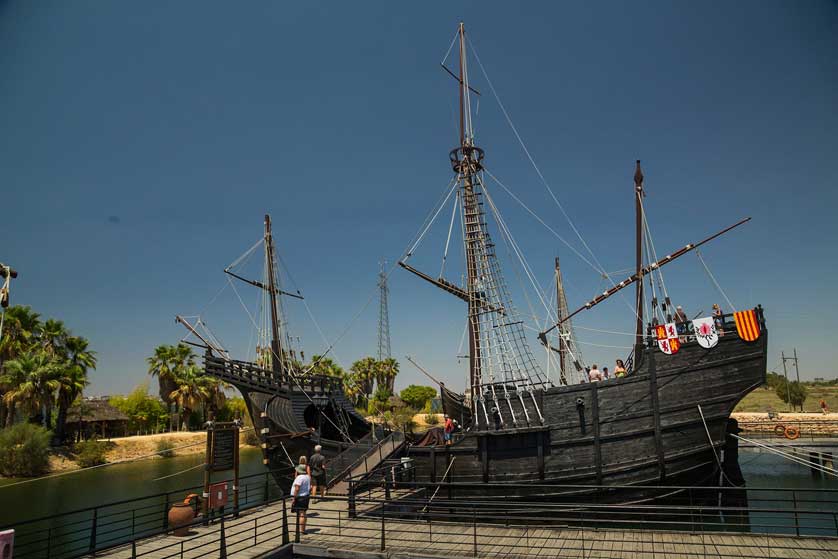
Huelva
Huelva on the coast of southwestern Spain is midway between Sevilla and Faro across the border in Portugal. The historic town is the capital of the province of Huelva in the region of Andalusia. Christopher Columbus set sail on his first voyage for the Americas from nearby Palos de la Frontera. The area has a very long history going back as far as the Phoenicians - a thousand years before Christ. During the Roman period it was known as Onoba Aestuaria and was part of the province of Hispania Baetica. The city is also the main gateway to the Doñana National Park.
Madrid
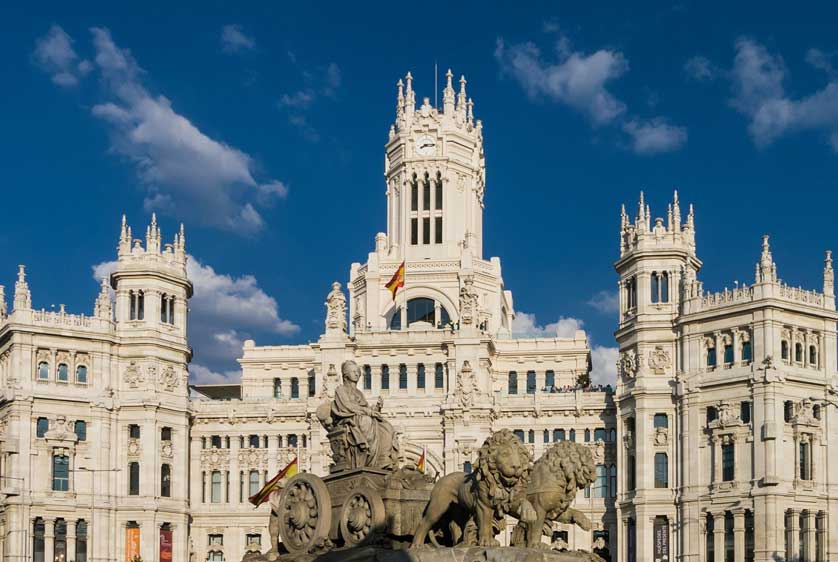
Spain's capital of Madrid has much to see and do. The Prado Museum is top of most people's to do list followed by seeing Picasso's Guernica in the Museo Reina Sofía. Football fans also flock for the tour of Real Madrid's amazing stadium - the Santiago Bernabéu. The major public space in the heart of Madrid is Plaza Mayor - another area very popular with foreign tourists. The historic city of Toledo is a short train journey away.
Malaga
Birthplace of Picasso, Malaga combines a long history, some fabulous beaches and an easy-going feel. The Alcazaba de Málaga was once the seat of power of the area's Moorish rulers. The Baroque Catedral Nuestra Señora de la Encarnación dates from the 16th and 17th centuries and it was here Picasso was baptized. La Malagueta is the nearest beach to the town or it is a short journey to the resorts of Marbella and Fuengirola.

Mérida
Mérida is a jewel. 60 km east of Badajoz on the A-5 the town is full of Roman remains. These include a Roman theatre (a UNESCO World Heritage Site), the San Lázaro Aqueduct (Acueducto de San Lázaro), Roman amphitheatre, bridge (the Puente Romana), circus (Circo Romano) and temple (Temple of Diana). The town's various museums, especially the outstanding Museo Nacional de Arte Romano (MNAR) have extensive exhibits of its rich Roman past. The Basilica Santa Eulalia is an historic church, thought to be the first Christian place of worship erected in Hispania after the Peace of the Emperor Constantine in 313CE. The Alcazaba of Mérida is a 9th century Islamic fortification on the banks of the river.

Nerja
Nerja (pronounced 'nerxa') is a resort on the southern Costa del Sol coast of Spain in the province of Malaga in Andalusia. The town has a population of just over 21,000 people which increases during the summer season.
The picturesque town is known for its beaches, dramatic cliffs, and crystal-clear waters. Its whitewashed houses, narrow streets, and lively plazas reflect its Moorish heritage when the town was called Narixa. The surrounding mountains offer both scenic views and outdoor adventures.
Ourense
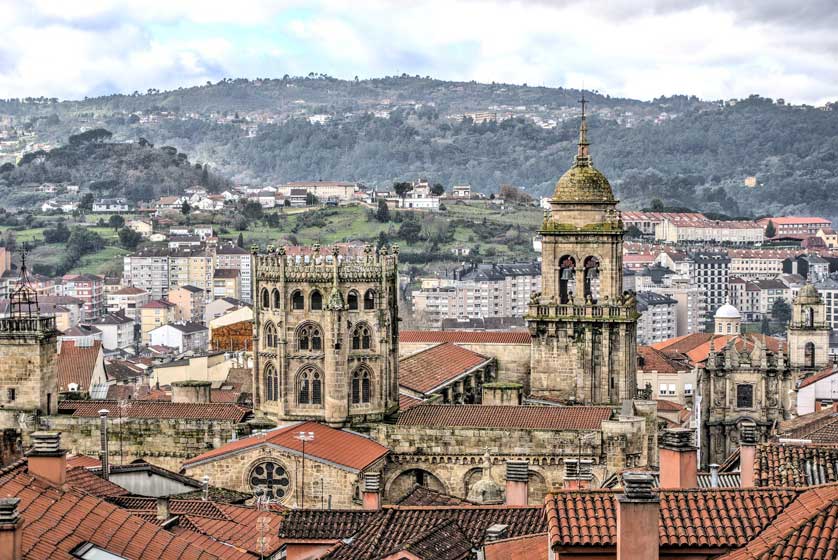
Ourense (Orense) is the provincial capital of the province of Ourense and lies on the River Minho which divides the city in two. North of the river are the city's bus and train stations while the main attractions of this city of over 100,000 people are on the south side. A spa town, Ourense draws visitors to its healing waters and merits a stay of a day or two to dine in its fine tapas bars and restaurants as well as wander the pleasant streets around the cathedral. The city is on the Camino Portugués (Portuguese Way) path of the Camino de Santiago and the La Ruta de la Plata (Silver Route) from Sevilla.
Pontevedra
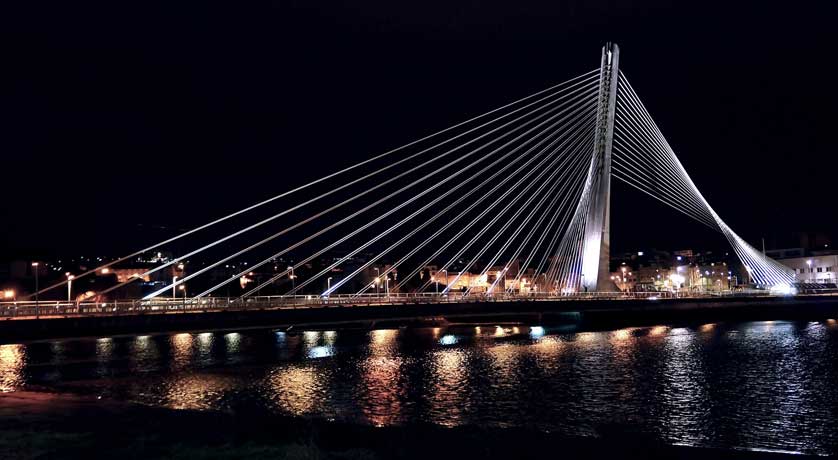
Pontevedra is the capital of the province of Pontevedra in Galicia, northwestern Spain. 30 km north of Vigo this charming, relaxed city has a population of over 80,000 people.
The city is situated on the Ria de Pontevedra, the northernmost of the Rías Baixas, deep-water, sunken estuaries that mark this part of the Atlantic coast. The River Lérez enters the sea here.
Pontevedra has over the years become one of the best places to live in Spain. The city center is now largely pedestrianized and has won several awards for its urban planning as well as international attention for its low carbon emissions and quality of family-friendly life.
As in Vigo, two languages are generally spoken by the city's inhabitants, Galician (Galego) which is close to Portuguese and Spanish.
Salamanca
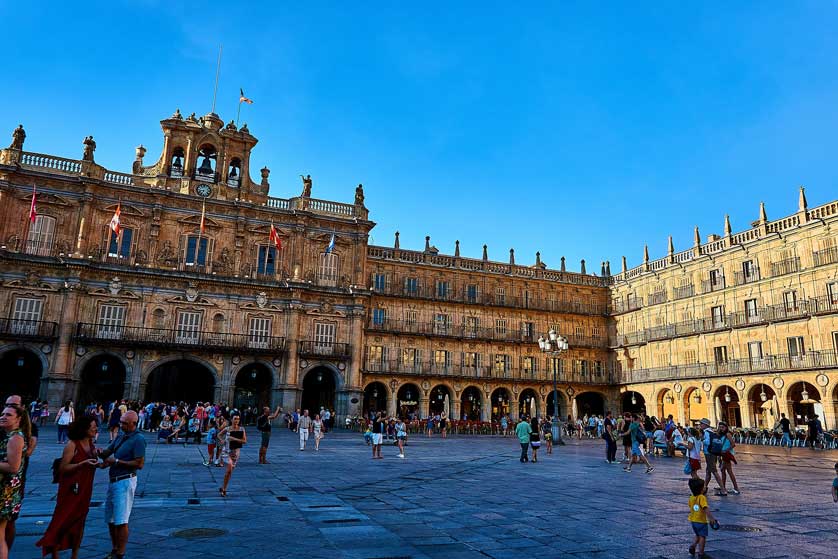
Salamanca has one of the oldest universities in Europe (Universidad de Salamanca) and the largely car-free streets are a delight to wander. Besides a tour of the university, the highlight is the amazing Plaza Mayor, one of the most beautiful public squares in Spain or indeed Europe. Other places of interest include the cathedral, La Clerecía and the unusual Casa de las Conchas (House of the Shells). River cruises up the River Douro from Portugal often include side trips by bus to Salamanca.
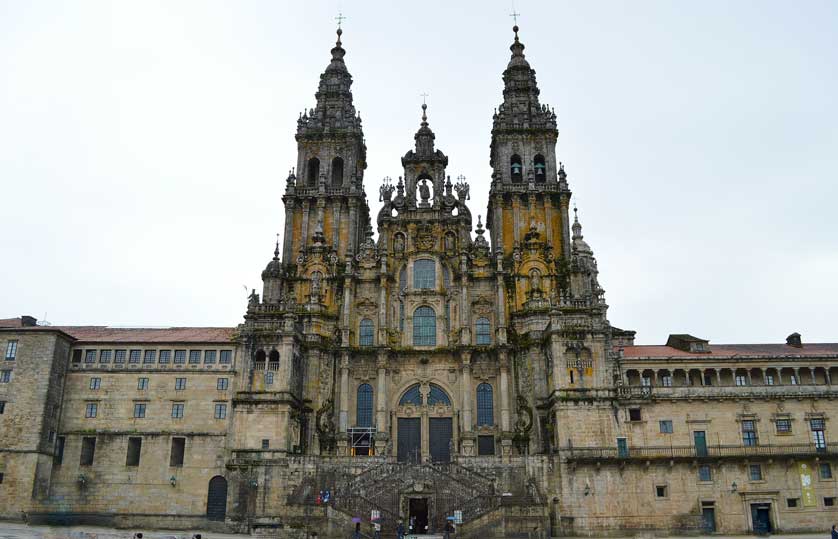
Santiago de Compostela
Thousands of people from all over the world now participate in the Camino de Santiago pilgrimage to Santiago de Compostela. Many then head south and cross over into Portugal especially in the Porto area. Santiago de Compostela itself has plenty to offer the weary pilgrim. Wander the historic streets to admire the Catedral de Santiago, its majestic towers soaring over the town, the grand Plaza del Obradoiro and the Casco Antiguo (Old Town) full of enticing bars, cafes and eateries.
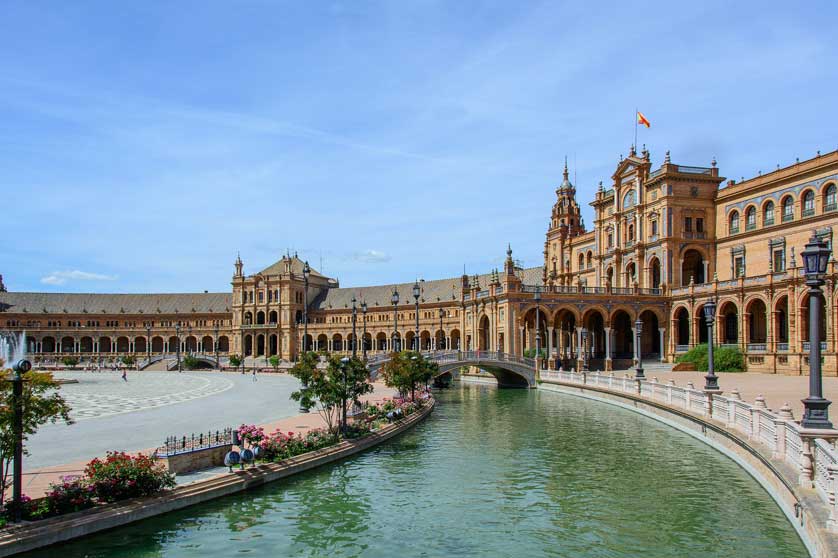
Sevilla (Seville)
Sevilla is one of Spain's most attractive cities with grand monuments, plazas and churches financed by the gold and silver brought back from Spain's former colonies in Central and South America. Seville's attractions include its huge cathedral built over a former mosque, the beautiful Real Alcázar, the main palace of the city's once Moorish rulers and the Plaza de España inside the Parque de María Luisa. Next to the cathedral is La Giralda, the minaret for the Great Mosque of Seville. The trendy Alameda de Hércules is a small, tree-lined boulevard and urban square containing two original Roman columns with statues.
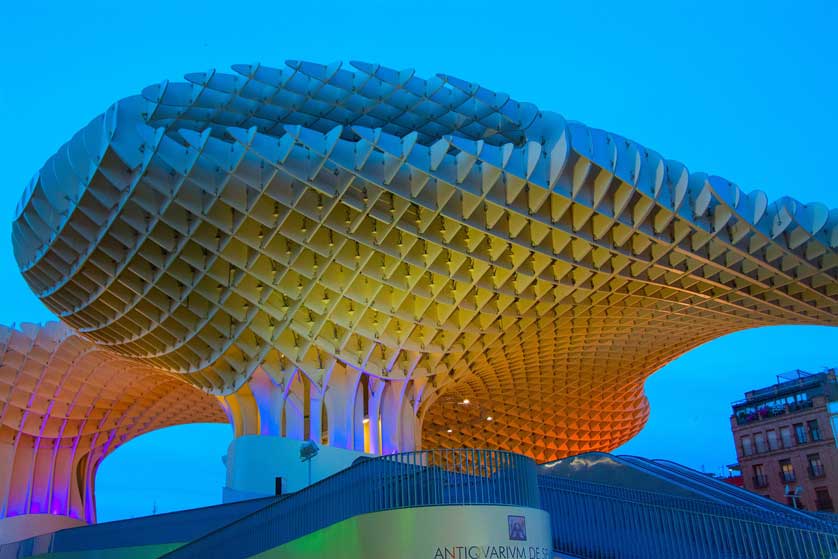
More recent buildings are the Metropol Parasol (aka Las Setas de la Encarnación), which claims to be the largest wooden structure in the world. The Plaza de Toros de la Maestranza is the city's bullring and even if you have little interest in the "sport," the tour of the arena is fascinating. It explores the very heart of Spanish culture. Tapas is believed to have originated in Sevilla and there is no better place to start than El Rinconcillo. Located in the La Macarena district of the historic city, El Rinconcillo dates back to the 1670s and the atmospheric, woody interior is the setting for some great food and drink. Specialties include Huelva hams, vegetarian chickpeas and spinach, and the catch of the day from Cadiz. Wash down your tapas with some fine wines, while your bill is totted up on the wooden counter of the large barrels that serve as tables. It's easy to get around this beautiful city too on Sevilla's metro.
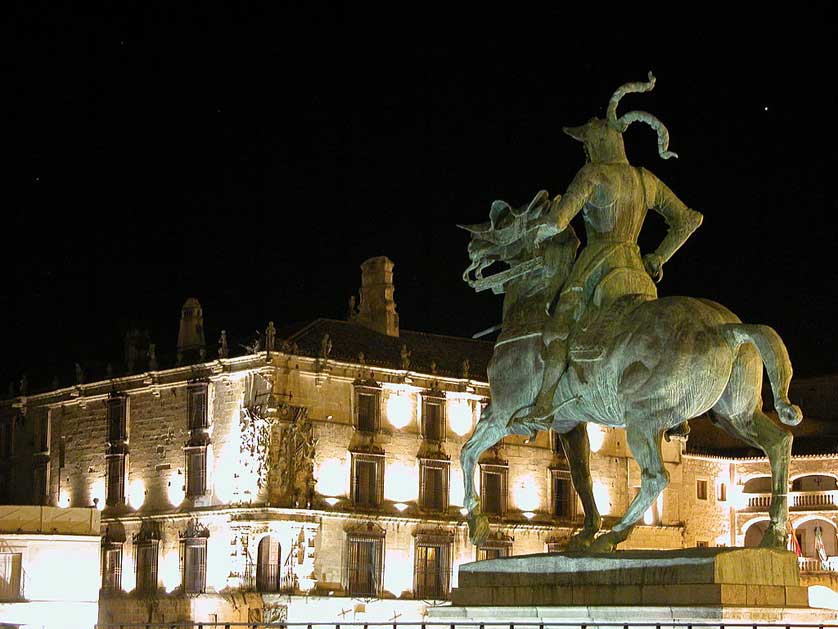
Trujillo
Trujillo in many respects is a smaller version of Cáceres, just 45 km to the west. A UNESCO World Heritage site, the historic old city is home to the towers and mansions of many conquistadors who made their fortune in the South America and brought this plundered wealth back to their hometown. Chief among them are Francisco Pizarro, the conqueror of Peru and his brothers as well as Francisco de Orellana, the first European to explore the Amazon River. Natives of the city also exported the very name "Trujillo" to the Americas. For example, Diego García de Paredes founded Trujillo in Venezuela in 1557, while Francisco de las Casas began the city of Trujillo in Honduras, which once served as the Spanish capital. There is also a Trujillo in Peru named in honor of Pizarro by one of his accomplices, later turned enemy, Diego de Almagro.
Tui
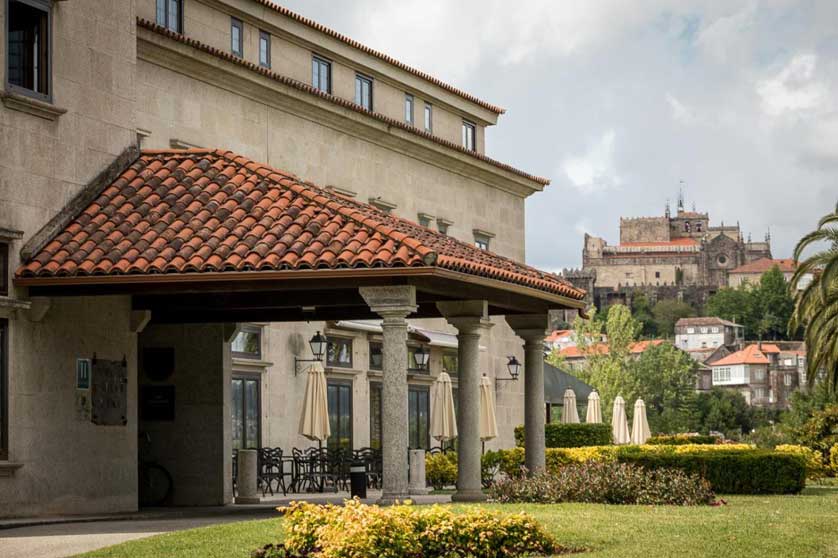
The small town of Tui is just across the River Minho from Valença in the Minho region of Portugal. Things to see include Tui's cathedral which was fortified to protect it from attacks by the Portuguese.
Verín
Verín is a short 34 km drive north of the Portuguese spa town of Chaves. The Castillo de Monterrei is the main attraction along with the area's fine wines and the recent Banksy Trail of street art (Verín territorio Banksy). The castle is now a four-star parador, Parador Castillo de Monterrei, and is a wonderful place to stay.
Vigo
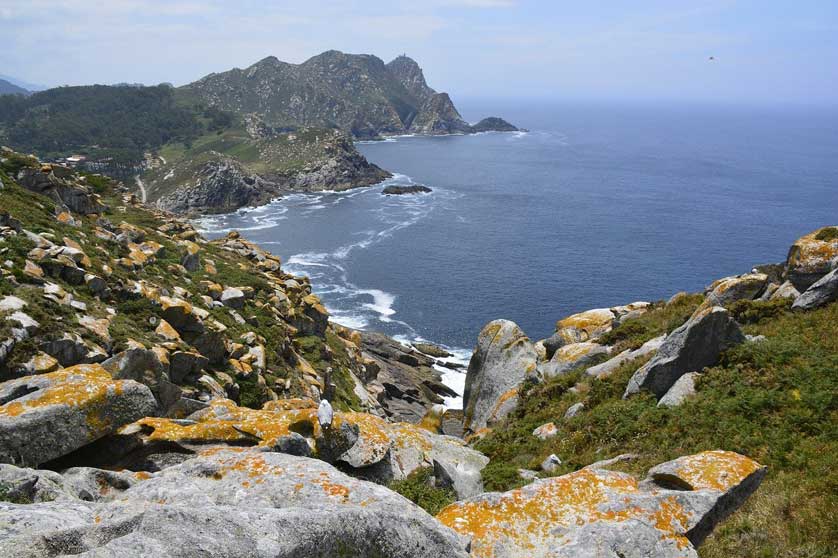
Vigo is a pleasant-enough place to spend time and is the gateway to the remarkable Cíes Islands. There are no cars or hotels on the islands to preserve the pristine natural environment. Back in Vigo the main sights are its 17th-century fortress and the historic fisherman's houses in the Casco Vello.
Zamora
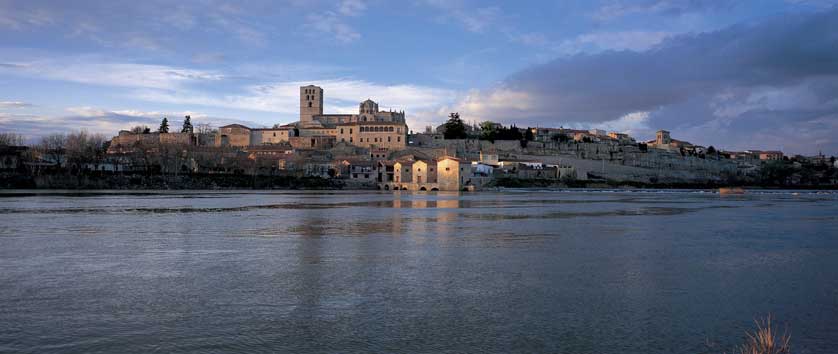
Zamora is important in the history of both Portugal and Spain as it was here that the Treaty of Zamora was signed in 1143. The treaty recognized Portuguese independence from the Kingdom of León and created Portugal as a nation. Things to see include the Catedral de Zamora and the fascinating Museo Etnográfico de Castilla y León.
Maps

Sources
A History of Portugal and the Portuguese Empire by A. R. Disney
Rough Guide to Spain by Rough Guides
Lonely Planet Spain by Gregor Clark et al