Portugal City Travel Guide: Bragança
Bragança, the capital of the Trás-os-Montes region of north east Portugal, is close to the Spanish border and the gateway to the Park Natural de Montesinho.
Bragança has a long history and was known as Brangantia under the Franks and Juliobriga to the Romans. The city's strategic location near Spain meant it was long contested between the two nations.
Portugal's first king Afonso Henriques began the walled citadel (Cidadela) in 1130 and his son, Sancho I, greatly expanded and strengthened his father's efforts on the 680-metre-high hill.
The Duchy of Bragança was created in 1442 by Afonso V for his uncle, an illegitimate son of King João I, and it was this house of the Portuguese nobility, the House of Bragança, that assumed the Portuguese throne in 1640 and would rule until the monarchy was overthrown in 1910.
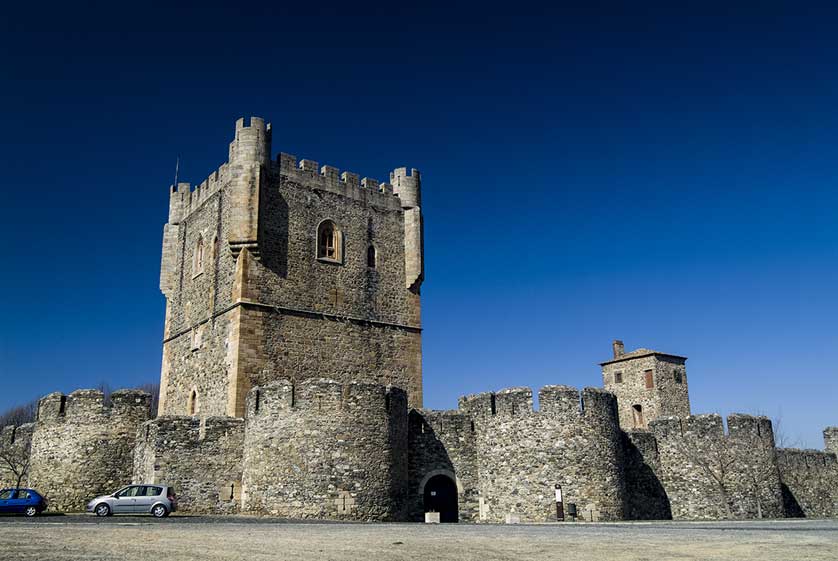
The medieval Cidadela on the hill above the city centre is one of Bragança's most impressive attractions and its ramparts have wonderful views out over the surrounding countryside.
Here is the original 12th century fortress with 15th century additions by João I, all patched up by restorations in the 1930's. The Torre de Menagem (keep) was occupied by the Portuguese military in to the 20th century and now houses a ubiquitous, though excellent, Museu Militar, with an impressive and varied assortment of swords, armour, cannons and focus on Portugal's colonial wars and bloody participation in World War I on four floors of the tower.
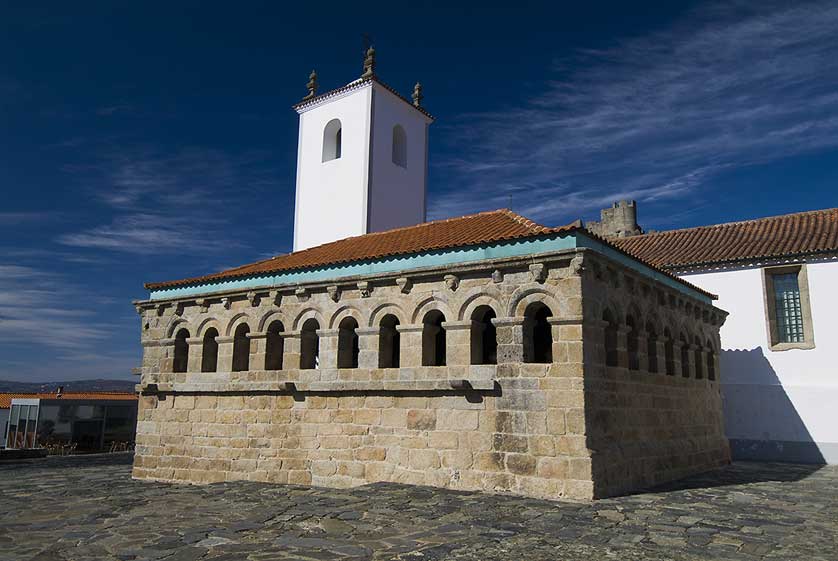
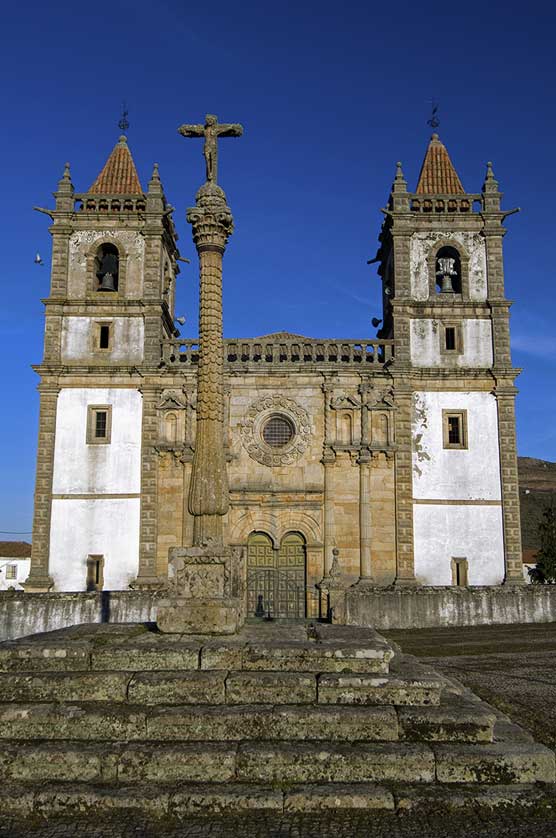
The Domus Municipalis is the oldest town hall building in Portugal and is thought to date from the 15th century. The city council met in the impressive arcaded upper room. The Igreja de Santa Maria built and added to between the 16th-18 centuries stands nearby and is noted for its fine ceiling paintings.
A unique Pelourinho or pillory mounted on a granite wild boar (known as porcas or berrões and found throughout this area in both Portugal and Spain) can be seen outside the Torre de Menagem.
The Museu do Abade de Baçal, (named after a locally-born scholar priest) is set in the 18th century, former Bishop's palace, and has an eclectic collection of Celtic and Roman archaeological remains along with religious art and historical photography of life in the Trás-os-Montes region. 1930's watercolours by Alberto de Sousa focus on the area's stone pillories.
The Praça de Sé around Bragança's old cathedral has been renovated and now includes modern sculpture - look out too for the bronze postal worker outside the main post office (correio) in Largo dos Correios and the huge fighting bulls and their minders in the Rotunda do Lavrador Transmontano roundabout.
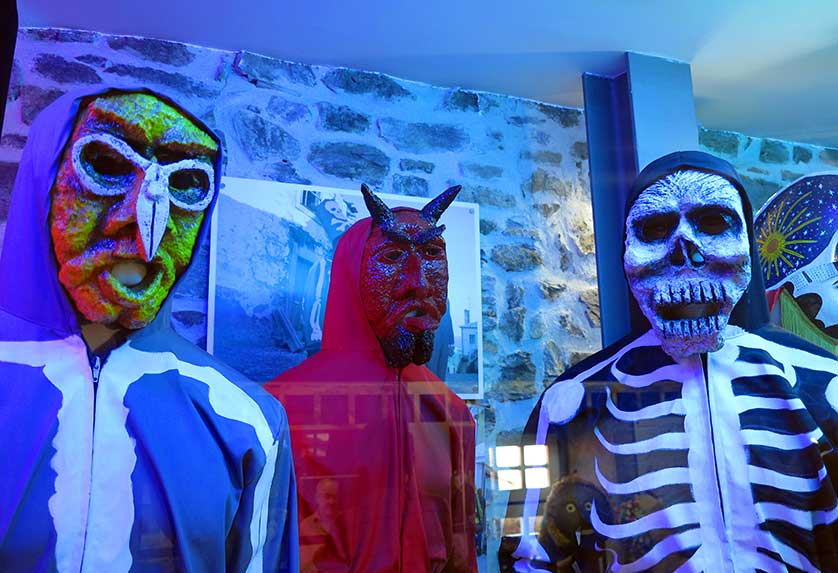
Two recommended museums in Bragança are the Museu Ibérico da Máscara e do Traje (Iberian Museum of the Mask and the Costume), dedicated to masks and costumes worn in pagan-based carnival and solstice festivals in this area of northern Portugal and Spain and the Centro de Arte Contemporânea Graça Morais showcasing the art of Portuguese painter Graça Morais as well as other Portuguese and international artists in temporary exhibitions.
For a town its size, Bragança has several interesting museums and cultural centres and they co-operate in hosting a number of thematic events relating to the region's culture and history especially in the summer season. The Paulo Quintela Auditorium Georges Dussaud Photography Centre exhibits the black and white photographs of French photographer Georges Dussaud, who has been active in the Trás-os-Montes area for four decades. his work captures local people at work in the fields, their rituals and life cycles.

In the main Praça Camões near the cathedral is the modern building of the Adriano Moreira Municipal Cultural Centre which holds the Municipal Library, the Adriano Moreira Library (17,000 volumes donated by Prof. Adriano Moreira of the Technical University of Lisbon, the long-serving Christian Democratic politician), the Music Conservatory, the Letters Academy of Trás-os-Montes and several galleries which host temporary exhibitions.
Bragança has two museums dedicated to the history of the Sephardic Jewish presence in city; many of them refugees from persecution in Spain. Both are located on the "museum street" of Rua Abílio Beça. The Centro de Interpretação da Cultura Sefardita do Nordeste Transmontano, next door to the Centro de Arte Contemporânea Graça Morais, presents a variety of photographs and audio visual exhibits explaining the history and cultural and economic influence of the Sephardic Jewish population of the area. The space is also designed by Portuguese architect Eduardo Souto Moura.
The Memorial e Centro de Documentação Bragança Sefardita at Rua Abílio Beça, 26, includes a synagogue and has exhibits on Sephardic Jewish rites, the roles of women, as well as Sephardic Jewish (Jews of the Iberian Peninsula) celebrations.
The small Dr. Belarmino Afonso Ethnographic Museum (Museu Etnográfico Dr. Belarmino Afonso) on Rua Dr. Herculano da Conceição is the personal collection of Dr. Belarmino Afonso of artifacts relating to the culture and history of Trás-os-Montes.
The Ciência Viva Centre in Bragança is one of a network of 19 Ciência Viva Centres throughout Portugal which seek to educate and inform young people on energy use, the environment and how humans should interact with the planet
Churches in Bragança include the Igreja de São Bento on Rua São Francisco, the Igreja de São Vicente, connected with the grisly 14th century Dom Pedro - Inês de Castro tale and the old Sé (Cathedral), which dates from the 16th century. Bragança's contemporary cathedral is the Igreja de Nostra Senhora Rainha.
The Feira das Cantarinhas is a three-day market and fair promoting the area's local handicrafts and agricultural produce in early May.
Bragança Tourist Office
Bragança Tourist Office.
Av. Cidade de Zamora.
Tel. 276 348 180
Hours: 9 am-12.30 pm; 2 pm-5 pm, Monday-Friday; 10 am-12.30 pm on Saturday.
Getting to Bragança
Train Travel in Portugal
Bragança is no longer connected by railway but the area of the old train station now serves as a bus station (Estação Rodoviária de Bragança).
Car Travel in Portugal
Bragança is 120 km northeast of Vila Real on the IP4/A4 motorway and 100 km east of Chaves on the slow, winding N103 road. Bragança's sister city of Zamora in Spain is 100 km southeast and can be reached by bus 3 times a week on Tuesday, Friday and Sunday. Buses leave Zamora for Bragança at 5 am (Spanish time) arriving in Bragança at 6 am (Portuguese time). The journey time is 2 hours. The bus continues on from Bragança to Macedo de Cavaleiros, Mirandela, Murça, Vila Real, Amarante, Porto, Guimaraes, Braga, Ponte de Lima, Viana do Castelo and Vila Praia de Ancora. Going the opposite way, the bus departs Bragança at 3.45 pm arriving in Zamora at 6 pm. (See www.interurbana.ad for further details).
Bus Travel in Portugal
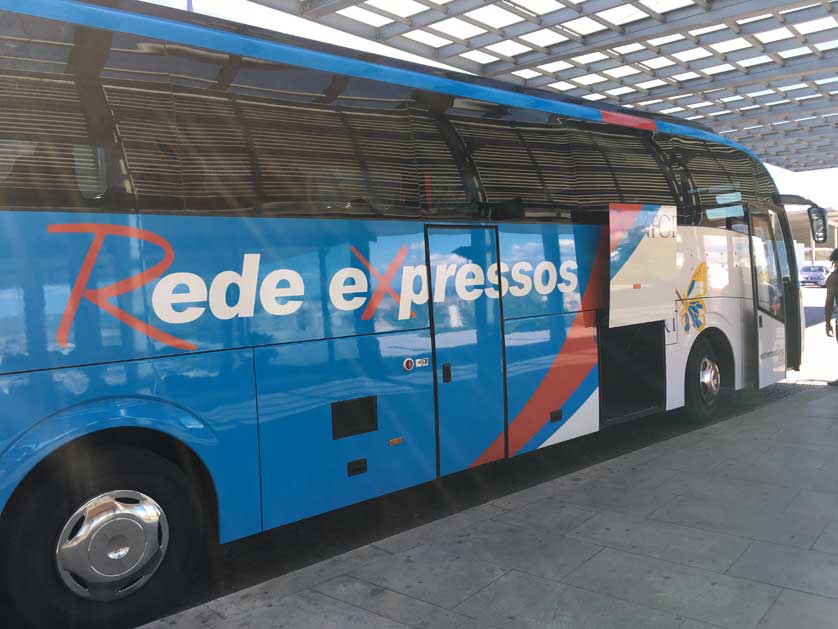
Bragança is served by various bus companies.
Bragança has bus connections to Porto (3 hours), Lisbon (7 hours, 30 minutes), Braga (4-5 hours), Chaves (2-3 hours), Guimaraes (3 hours, 30 minutes), Mirandela (1 hour), Miranda do Douro (1 hour, 30 minutes - 2 hours, 15 minutes), Mogadouro (1 hour, 30 minutes), Vila Nova de Foz Côa (1 hour, 45 minutes), Vila Real (1 hour, 30 minutes), Vinhais (35 minutes) and Viseu (3 hours, 15 minutes).
Portugal Hotel & Hostel Accommodation
Bragança has a variety of places to stay including the recommended Hotel Tulipa, the 2-star Hotel Tictac, the 2-star Hotel Classis, the historic, 17th century Solar Santa Maria and the Casa de Chica on Rua D. Fernão O Bravo.
See here for a full listing of hotel accommodation in Bragança.
Featured Hotel
The Pousada de Bragança - Sao Bartolomeu
Bragança, 5300-271 Bragança, Portugal.
Book Hotel Accommodation in Bragança
Hotels in Portugal - Booking.com
Albufeira Hotels - Booking.com
Book Hotels in Algarve - Booking.com
Find Hotels in Lisbon - Booking.com
Search Hotels in Porto - Booking.com
Apartments & Hotels in Madeira - Booking.com
Hostels in Portugal - Booking.com
Lisbon Hop-On Hop-Off Bus, Tramcars, and Yellow Boat River Tour
Eating
Bragança has a good number of recommended restaurants serving the local cuisine which is known for its smoked ham (presunto) and alheira sausage. Try Solar Bragançano in Praça de Sé with its oak panelled dining rooms and al fresco garden seating in summer. O Geadas on Rua do Loreto also serves local favourites such as kid (cabrito) and river trout.
Drinking
There are a number of bars in the Citadela.
List your restaurant/bar/hotel contact Advertising

Internet
WiFi is available in nearly all hotels in the area.
The average high June temperatures for Portugal is between 22 degrees Centigrade and 26 degrees Centigrade.
Get more weather information for Portugal
Map
