Vila Real
Vila Real: Trás-os-Montes

Vila Real, in the Trás-os-Montes region of north east Portugal, is located on the River Corgo and close to the Park Natural do Alvão.
There is evidence of settlement in the area dating back in history to the Stone Age. The Romans had a the settlement at nearby Panóias, though Vila Real ("Royal Town") itself was founded in 1289 by Dom Dinis.
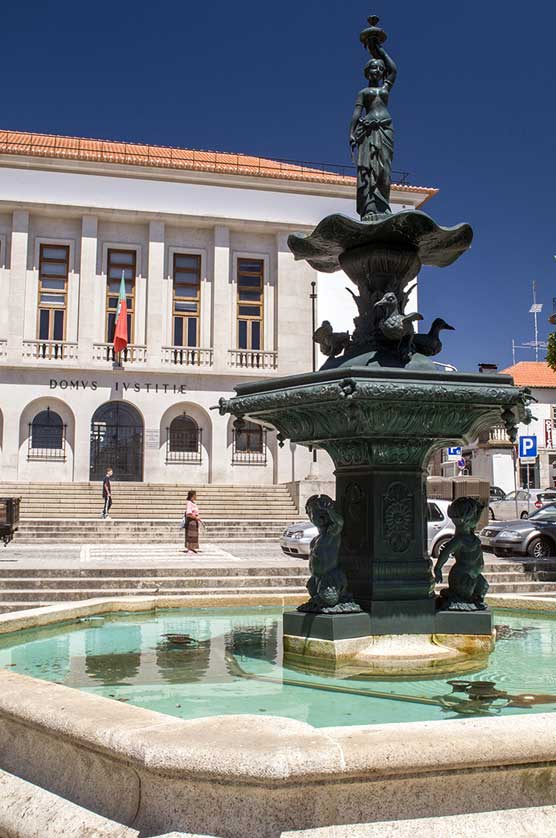
The University of Trás-os-Montes and Alto Douro is located in this pleasant town of about 20,000 people, which is best known for the Palácio de Mateus (Casa de Mateus) - the Portuguese manor house seen on the labels of bottles of Mateus Rosé.

The Palácio de Mateus, 3.5 km outside of Vila Real, is believed to be the work of the Italian architect Nicolau Nasoni (1691-1773), who was so active in northern Portugal designing such iconic buildings as the Torre dos Clérigos and Igreja da Misericórdia in Porto.
The palace was constructed in the Italian Baroque style for a local aristocrat and is set in wonderful formal gardens. The palace's interior is noted for its carved wooden ceilings, ornate staircases with balustrades and period furniture. Visitors taken on guided tours can admire the 17th and 18th century paintings on the walls and the library, which contains an early edition of Os Lusíadas by Luís de Camões (1524-1580).
The gardens are a delight with avenues of cypress trees, trimmed boxwood hedges, ponds and statues. The tour includes a wine tasting including the fine Alvarelhão rosé. The Palácio de Mateus now hosts art exhibitions and classical music concerts.
The Santuário de Panóias, also a few kilometres out of Vila Real, was the site of a 2nd/3rd century temple dedicated to sacrificial rituals involving the slaughter of animals. Greek and Roman inscriptions can still be seen on the strange stone remains.
Back in Vila Real the town's main attractions include the Museu da Vila Velha, containing a variety of archaeological finds including items from Panóias, pottery made from the black clay of Bisalhães, metalwork, farm implements and old black and white photographs showing traditional lifestyles and culture in the remote Trás-os-Montes region.
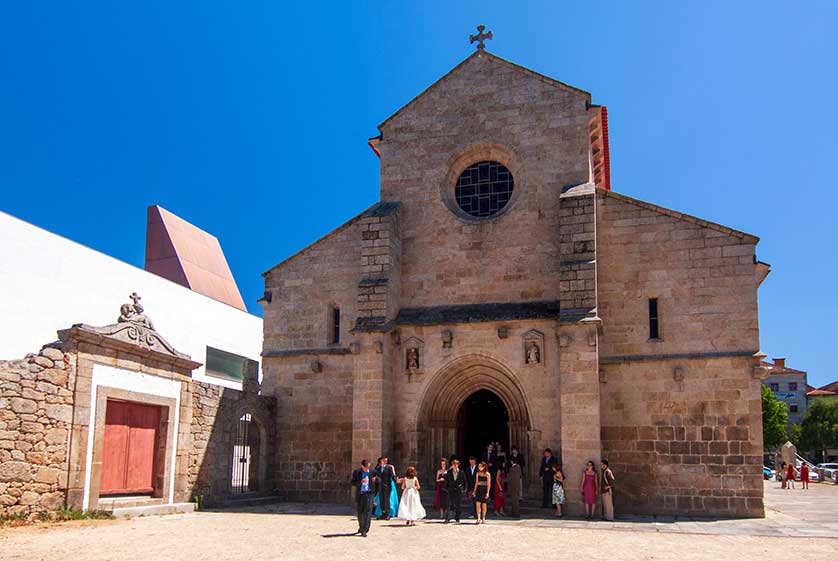
The Gothic Sé (cathedral) dates from the 15th century and was once part of a Dominican monastery. The facade has images of Saint Dominic and Saint Francis of Assisi. It is considered the best example of Gothic architecture in the Trás-os-Montes region. It was founded by monks from Guimarães with work beginning on the church in 1424. The church became a cathedral in 1924. In 2003, modern stained glass windows by the artist João Rodrigues Vieira (1934-2009) were installed.
The house of the explorer Diogo Cão still stands in Vila Real. He was sent to explore the coast of Africa in the 1480's by King João II during the Age of Discovery and is accredited with being the first European to locate and explore the River Congo.
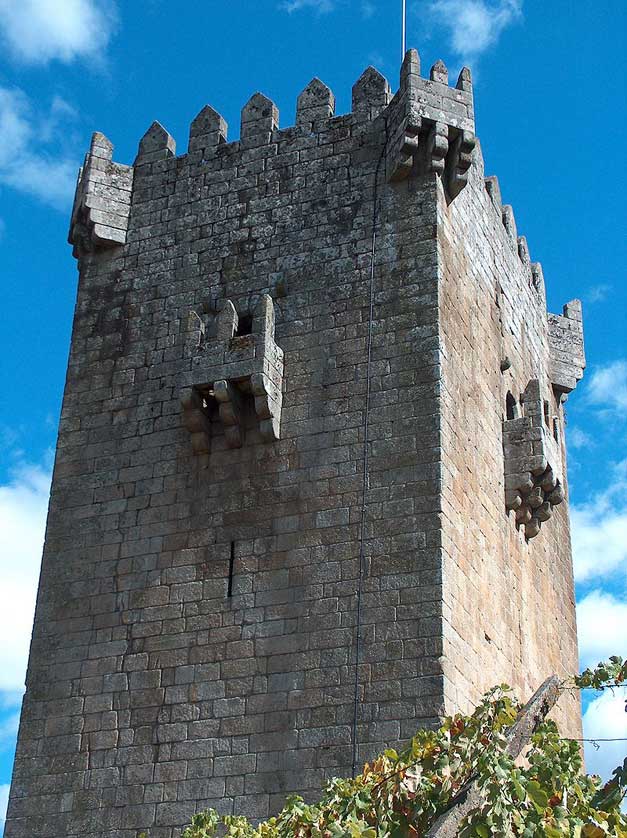
The medieval Torre de Quintela was saved from demolition in the early 20th century and is now classified as a National Monument.

Churches
The Capela Nova (Igreja de São Paulo) has a 17th century baroque facade with wonderful azulejos in the interior of the church. The church may be the work of Nicolau Nasoni. The grandiose exterior has a statue of St. Peter holding the papal cross, flanked by two angels.
The Igreja de São Pedro also has an impressive facade and more beautiful tile work inside. The church dates originally from 1528, though various changes were made over time, particularly in the 18th century, when the facade and tiles were added. The church boasts two impressive bell towers.
Other churches in Vila Real include the Capela da Misericórdia, which dates from 1532, with improvements carried out in the 17th century including an image of the Virgin Mary, added in a niche between the portico and the bell tower and the Franciscan Igreja do Senhor do Calvário, which dates from 1680 with the sacristy and the bell tower added in the 19th century.
The Capela de São Brás was built in the 18th century and houses the graves of nobles from Vila Real. It was classified as a National Monument in 1910.

Vila Real Tourist Office
Vila Real Tourist Office.
Av. Carvalho Araujo 944.
Tel. 259 322 819
Hours: 9.30 am-12.30 pm; 2 pm-6 pm.
Getting to Vila Real
Train Travel in Portugal
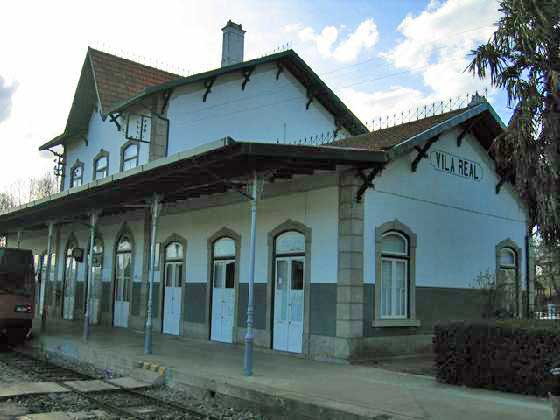
Vila Real is no longer connected by railway.
Car Travel in Portugal
Vila Real is 120 km southwest of Bragança on the IP4/A4 motorway. Take the N332 in the direction of Sabrosa for Casa de Mateus and Panóias. Vila Real is 30 km north of Régua on the A24.
Bus Travel in Portugal
Vila Real is served by various bus companies. The bus station is close to the Mercado Municipal for long distance buses and local Corgobus buses to the Palácio de Mateus.
Vila Real has bus connections to Porto (1 hour, 30 minutes), Lisbon (5 hours), Braga (2 hours, 40 minutes), Bragança (2 hours), Chaves (1 hour, 10 minutes), Guimaraes (1 hour, 30 minutes), Lamego (45 minutes), Miranda do Douro (3 hours) and Mirandela (1 hour).

Portugal Hotel & Hostel Accommodation
Vila Real has a variety of places to stay including the recommended Hotel Miracorgo, the Residencial Encontro, the 2-star Hotel Miranave, and the 4-star Quinta do Paço Hotel near Casa de Mateus.
See here for a full listing of hotel accommodation in Vila Real.
Featured Hotel
The Quinta de Santo António
Rua das Quintas, s/n, Raia-Mateus, 5000-284 Vila Real, Portugal.
Book Hotel Accommodation in Vila Real
Hotels in Portugal - Booking.com
Hostels in Portugal - Booking.com
Eating
Vila Real has several recommended restaurants offering local cuisine in the old town. Try Terra de Montanha or Transmontano.
Drinking
List your restaurant/bar/hotel contact Advertising
Internet
WiFi is available in nearly all hotels in the area.
The average high June temperatures for Portugal is between 22 degrees Centigrade and 26 degrees Centigrade.
Get more weather information for Portugal

Map
