Cathedrals, Churches & Chapels in The Algarve
Portugal is a land full of churches. Even the smallest village in the most remote area of the country will have a church. Churches are often still a focus of community life in Portugal as well as repositories of local and national history, fine architecture and the well-spring of many local festivals.
See a listing of churches in the Algarve region of southern Portugal.
Albufeira
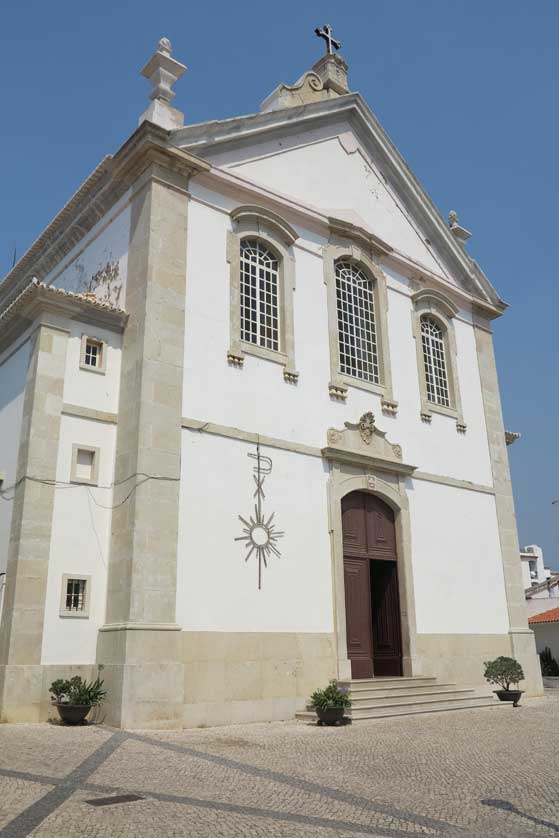
Igreja Matriz (Parish Church) Nossa Senhora da Conceição is an 18th century, single nave church at the heart of the annual Festa Nossa Senhora da Orada procession celebrated in August.
Igreja Santa Ana is dedicated to St. Anne, Jesus' maternal grandmother, with a fine, gilded, wooden altar painted in blue, possibly the work of master sculptors Francisco Xavier Guedelha and João Baptista.
The beautiful Ermida de São Sebastião better known as the Museum of Sacred Art (Museu de Arte Sacra) exhibits religious art collected from surrounding churches that survived the 1755 earthquake and subsequent tsunami that hit the region.
Read a guide to Albufeira and more about churches in Albufeira.
Aljezur
The Museu de Arte Sacra, attached to the Igreja da Misericórdia, originally dates from the 16th century though it was damaged in the 1755 earthquake. The small, intimate museum contains religious art donated by the locally-born Monsignor Manuel Francisco Paral.
The Igreja Nova (Church of Our Lady of the Dawn; Igreja Nossa Senhora d' Alva) is in the newer part of Aljezur and was built in the late 18th century. The interior has three naves and a neoclassical gilded, wooden altar.
Read a guide to Aljezur
Faro
Faro Cathedral (Sé) was built over remnants of a Roman temple, Visigoth church and then a Moorish mosque and was completed in 1251. Except for the tower gate and two chapels, the original cathedral was damaged in the English raid of 1596, destroyed in the earthquake of 1755 and subsequently rebuilt in a hotchpotch of styles, which include Baroque, Gothic and Renaissance.
Igreja da Misericórdia dates from 1581 and is designed in the shape of a Greek Cross. The facade and attached hospital were rebuilt by the noted Italian architect Francesco Xavier Fabri (1761-1817), who was responsible for the design of a number of buildings in Faro including the Arco da Vila, the Seminário Episcopal and the Ermida de São Luís.
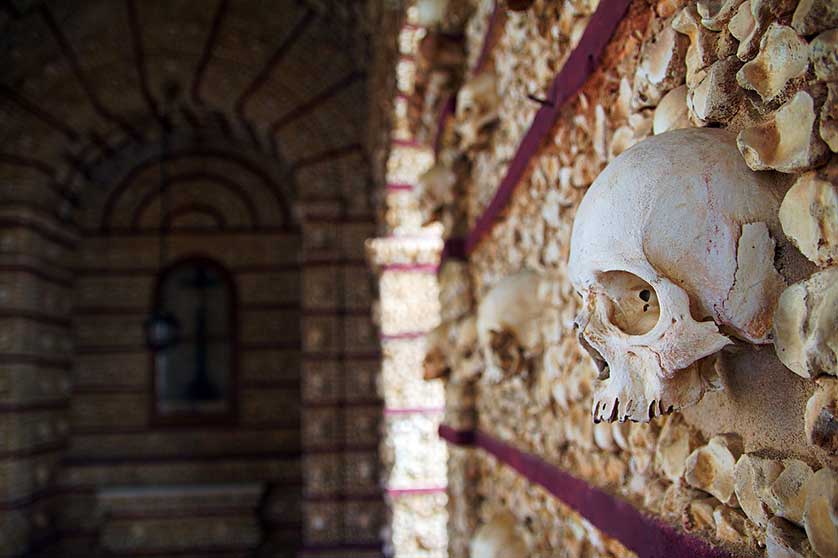
Igreja do Carmo & Capela dos Ossos originally dates from 1719 with the money for its construction financed with Brazilian gold from Portugal's colony in South America. However, the main attraction of the church for many visitors is its macabre Capela dos Ossos, situated in a sacristy and a walled small garden, just behind the main church building.

Lagos
Igreja de Santo António is entered through the Museu Municipal and is a Baroque masterpiece of 18th and 19th century intricate gilded wood carving. The church, a National Monument and one of the finest baroque churches in Portugal, is now very much a museum piece rather than a very active place of worship.
Igreja de Santa Maria was built in the 15th and 16th centuries but the majority of the church is a much later restoration after a fire in the 19th century. This is the most active church in Lagos.
The Igreja de São Sebastião (Church of St. Sebastian) has three naves separated by arches with Doric columns and several gilded side chapels. Attached to the church is a small Chapel of Bones (Capela dos Ossos). St. Sebastian is the patron saint against plagues.
Olhão
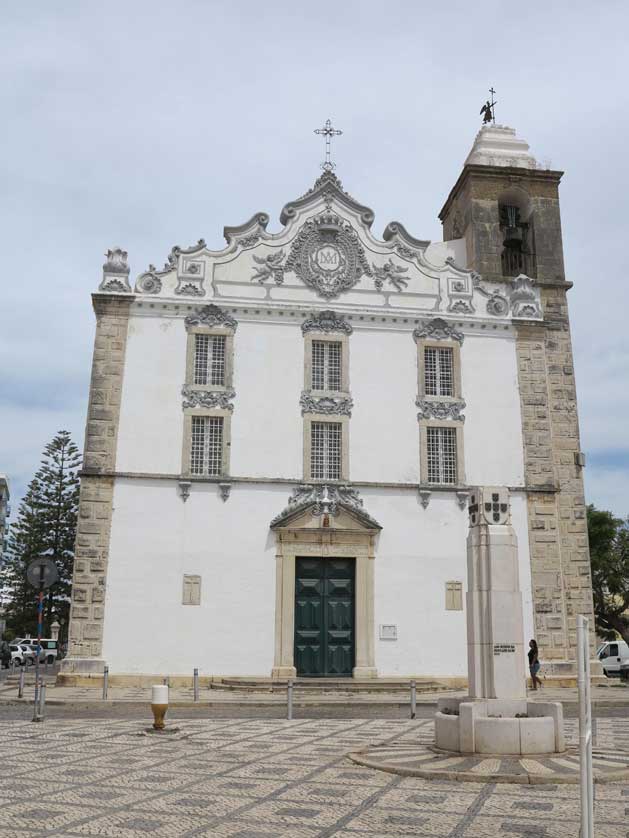
Churches in Olhão include the 17th century Igreja de Nossa Senhora do Rosário (Church of Our Lady of the Rosary) and the adjacent chapel of Nossa Senhora dos Aflitos where the wives and families of sailors would gather to pray for their safety. Look out for the votive offerings of baby dolls and plastic arms and legs within the iron grille.
Portimão
The Igreja Matriz (Igreja da Nossa Senhora da Conceição) was founded in 1476 and mostly rebuilt after the 1755 earthquake. The impressive Gothic portico and Manueline door still survive.
The Jesuit College (Igreja do Colégio) in Praça da República dates from the mid-17th century and is an imposing baroque building.
The Igreja da Nossa Senhora da Conceição in Ferragudo is the main church in the village. The church is situated at the top of a hill, at the top of the village, overlooking the river and is visible from Portimão and the Fort. The church is noted for its collection of ex-voto offerings from fishermen to the Virgin Mary.
Silves
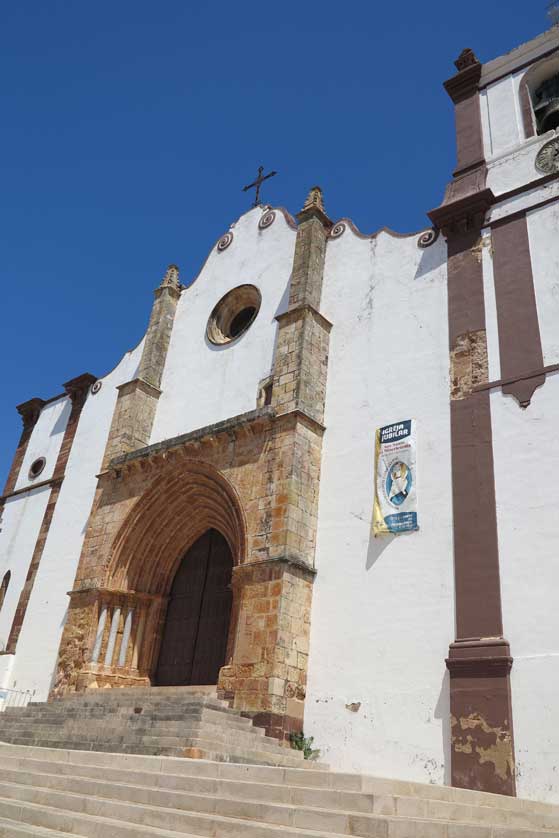
Silves Cathedral (Sé) dates from 1189 and was built over an existing Muslim mosque. Silves Cathedral was subsequently rebuilt after the final Reconquista (Reconquest) of Silves in 1249. After damage in the 1755 earthquake, the church underwent further renovations. The red sandstone (grés de Silves), fortress-like Gothic structure has a decorative interior and is regarded as the Algarve's most dramatic church.
Igreja da Misericórdia, across the street from the Sé, retains an intact highly-decorative Manueline doorway and dates from the second half of the 16th century. The altarpiece has seven panels depicting the Seven Works of Mercy below a painting entitled "The Crucifixion."
Ermida Nossa Senhora dos Mártires (Church of Our Lady of the Martyrs) which dates from the 16th century in the Gothic style with Manueline decorations. Inside is a Baroque altar and ancient tombstones from the 14th century.
Tavira
Igreja da Misericórdia (Church of Mercy) retains a faded, carved doorway from 1541 with statues of Nossa Senhora da Misericordia, São Paulo (St. Paul) and São Pedro (St. Peter) and azulejos and gilded woodwork in the church's interior. The church is Tavira's most impressive Rennaissance building and the stone mason, Andre Pilarte, also worked on the Mosteiro dos Jerónimos in Belém, Lisbon.
Igreja de Santa Maria do Castelo (Church of Saint Maria of the Castle) standing on the ruins of a former mosque. The chapel contains the tombs of seven Christian knights killed by the Moors in the 13th century, an act which prompted the reconquest of Tavira from the Moslems by Dom Paio Peres Correia, whose tomb is also in the church.
The whitewashed Igreja de Santiago dates from the 17th century and was probably constructed on the site of a former mosque.

Castro Verde
The Royal Basilica of Castro Verde (Nossa Senhora da Conceição / Igreja Matriz de Castro Verde) is an historic church in this peaceful market town in the Algarve. Its construction was in honour of the Battle of Ourique in 1139 a pivotal event in Portuguese history where the first King of Portugal, Afonso I, secured a decisive victory against Moorish forces. Its interior walls are adorned with around 60,000 azulejos tiles depicting various scenes from the Battle of Ourique and other events.
Loulé
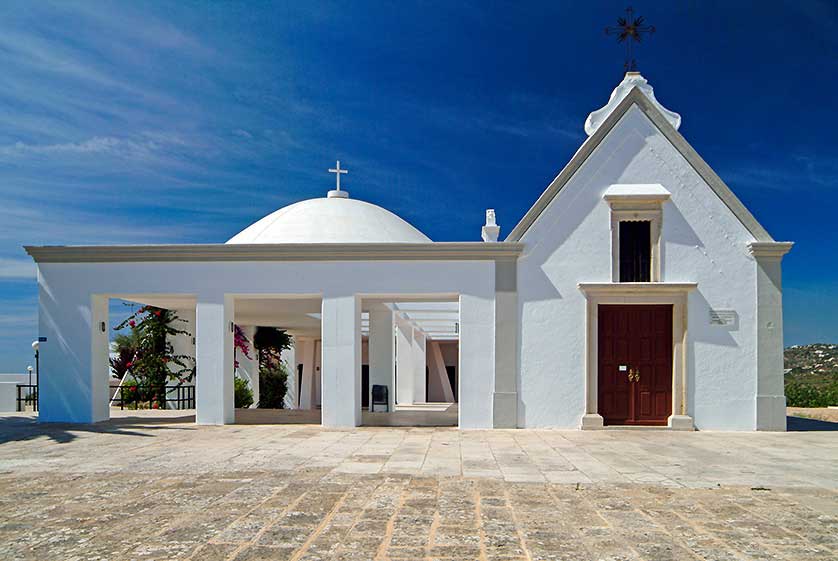
The Igreja Matriz de São Clemente near the Jardim dos Amuados (Sulky People's Garden) is the standout church in Loulé with Manueline carvings and tile work. It was originally a mosque and the bell tower was converted from a minaret. It is now one of only a handful of remaining Moorish minarets in Portugal. The Jardim dos Amuados was once the church graveyard.
The Igreja de Nossa Senhora da Piedade - Mãe Soberana, west of the center atop a small hill, is one of the most important Marian shrines in Portugal and its annual celebration is recognized as one of the largest religious festivals south of Fátima. The original hermitage dates from the 16th century with modern structures added in the 20th century. A wooden image of Nossa Senhora da Piedade is carried though the streets during the celebration.
The Igreja Matriz de Alte is in the picturesque village of Alte to the east, about 30 minutes by car. The Manueline style church dates from the 16th century. Inside are fine azulejos tiles from the 18th century, a Baroque altar and several statues done in ivory.
Related Articles
Hotels in the Algarve
Stay at the Hotel Hostellicious
Hotels in Albufeira - Agoda.com
Book Hotels in Algarve - Agoda.com
Find Hotels in Lagos - Agoda.com
Hotels in Portugal - Booking.com