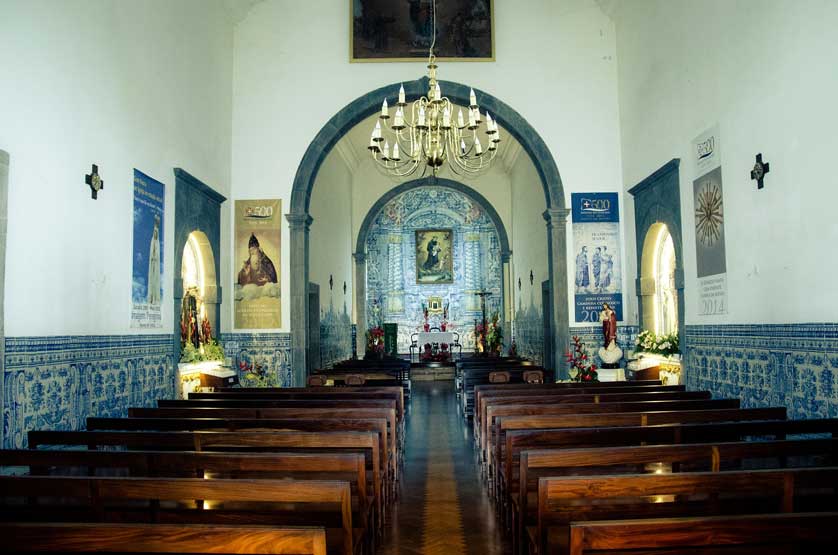
Churches in Funchal & Madeira
Funchal and the island of Madeira as a whole has a number of beautiful churches. Several have been constructed in a local style using black basalt.
Churches are a focus of community life in Portugal as well as repositories of local and national history, fine architecture and the well-spring of many local festivals.
See a listing of churches in the city of Funchal and the island of Madeira.
Capela do Corpo Santo
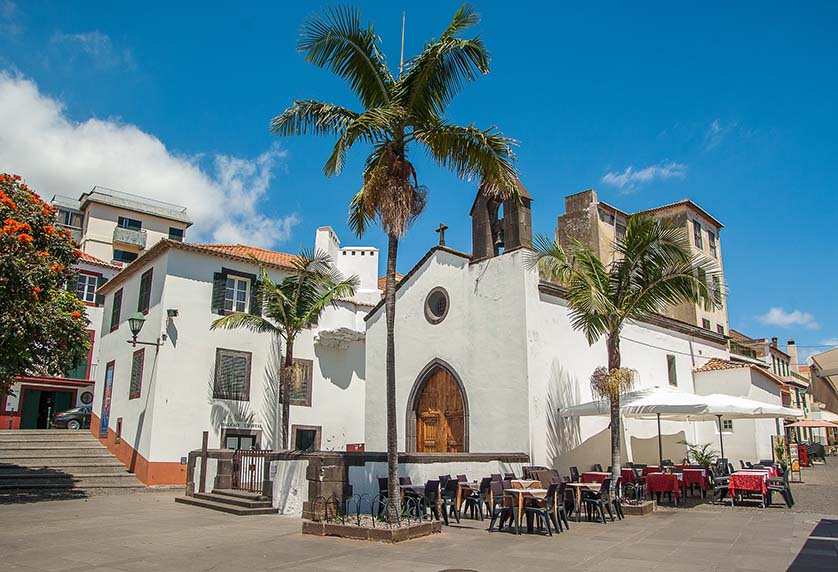
The Capela do Corpo Santo (Chapel of Corpo Santo) is located in the Zona Velha (Old Town) of Funchal.
The church is dedicated to São Pedro Gonçalves Telmo (1190-1246), the patron saint of seafarers and fisher-folk. The building originally dates from the 15th century but most of the church's interior is from the following 16th century.
The church was run by the Guild of São Pedro Gonçalves and provided alms, health care and provisions for the seafearing and fishing community. So the church acted as a kind of infirmary for sick sailors and also provided provisions both of food and money for their widows and orphans.
Capela de Santa Catarina
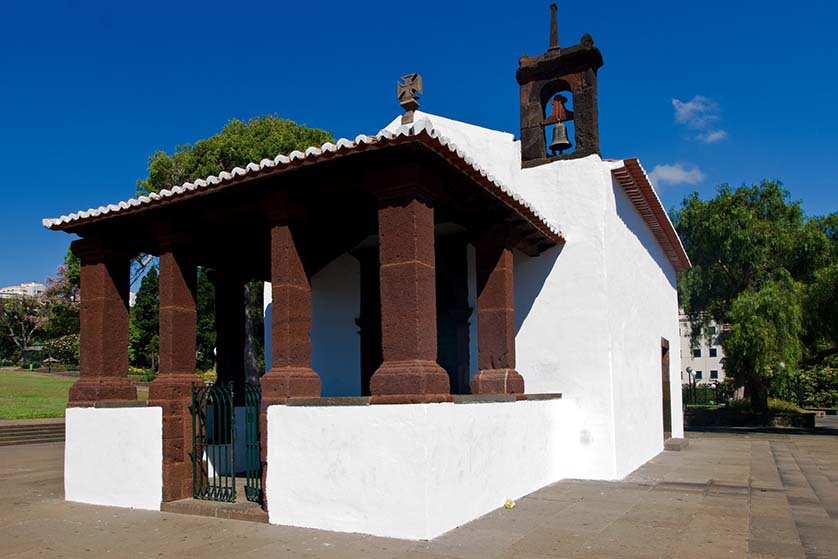
The Capela de Santa Catarina is a small but beautiful church. It is located within the pleasant Santa Catarina Park (Parque de Santa Catarina), a large green space in the city.
The church dates from the 15th century and was originally constructed in wood. In the 16th century, the present stone church was built.
The stone font and bell both display elements of distinctive Manueline design.

Igreja de Nossa Senhora do Monte
The Igreja de Nossa Senhora do Monte (Church of Our Lady of Monte) is located north of the Zona Velha (Old Town) in the Monte district.
There are great views over Funchal from the top of the stairs or even better from the towers of the church.
Legend has it that a chapel was built on the site in 1470 by a certain Adão Gonçalves Ferreira, supposedly the first person born in Madeira, along with his twin sister Eve.
The present church, however, dates from the 18th century, the 1740's to be precise. It was damaged in an earthquake in 1748 and was subsequently rebuilt and consecrated in 1818.
The last Emperor of Austria Charles I (1887-1922) died in exile on Madeira in the 1920's. His tomb, minus his heart, which is in Switzerland, can be seen within the church. A statue of the man, who was later beatified by the Catholic church, is also in the atrium of the church.
The main festival of the church, the Assunção de Maria, is held on August 15 annually. It celebrates the Lady of Monte, the patron saint of Funchal. Supplicants may often climb the steps to the church on their knees.
The church is thus the most important pilgrimage site on Madeira.
Igreja do Socorro
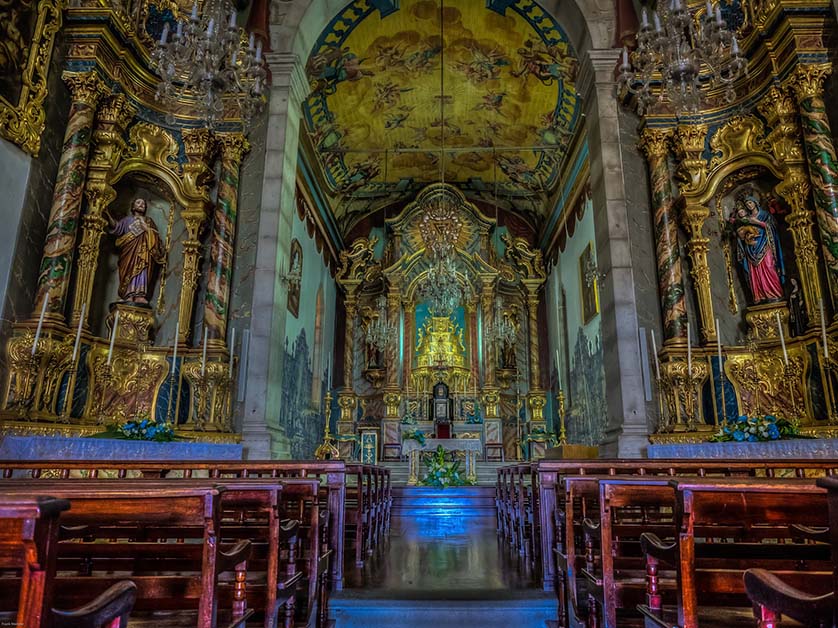
The somewhat plain style of the Baroque exterior of the Igreja do Socorro belies a lavishly ornate interior.
The church was completed in 1768 and houses a statue of St. James from the previous church of Our Lady of Calhau destroyed in the floods of 1803.
Step inside to admire the gilded altar, and dazzling ceiling and wall paintings. There are also rich panels of azulejos tiles to see in the chancel.
The exterior of the church has a marble statue of the Virgin Mary set in a niche above the main door. There are great views of the sea from the entrance to the church.
The church is the starting point of a religious procession honoring Saint James on May 1.
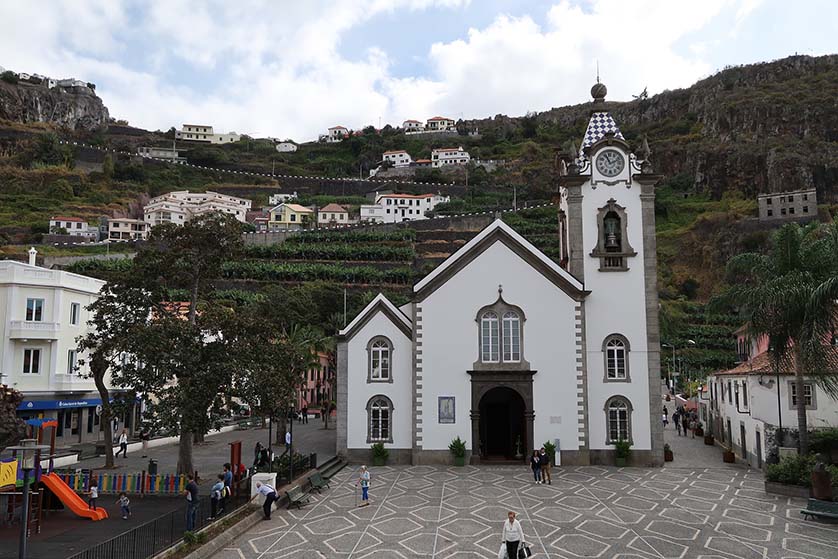
Igreja de São Bento
The Igreja de São Bento (Igreja Matriz da Ribeira Brava) is in Ribeira Brava to the west of Funchal.
The origins of the church go back to a small 15th-century chapel on the site, though the present church dates from the 16th century.
The interior has a strong Flemish influence, namely in the panels that represent the Virgin with the Child, flanked by São Bento and São Bernardo, as well as in the image of Nossa Senhora do Rosário from the 16th century.
This church has Manueline, Mannerist and Baroque characteristics and is home to a rich collection of painting, sculpture, jewelery and gilded woodwork from the 16th and 17th centuries.
A carving of a basilisk (mythical reptile) was said to have the power to turn humans into stone.

Funchal Cathedral
Funchal Cathedral (Sé Catedral de Nossa Senhora da Assunção) dates from the late 15th century and is one of the oldest buildings on the island.
Inside, it has three naves, a transept and baptistry. The whole church was built using local volcanic stone brought from Cabo Girão.
The church was designed by Pêro Anes with the possible assistance of master mason Gil Enes. They were sent from Lisbon by King Manuel I (1469-1521) and it is the king's coat of arms visitors can see over the Gothic doorway.
Of particular beauty is the knot-work, cedarwood ceiling based on Moorish geometric designs. The main nave and south aisle are paved with the tombs of bishops and local merchants.
The wooden choir stalls are in wood and the work of Flemish sculptor Olivier de Gand. The blue and gold seats depict saints and other religious figures dressed as local 16th-century merchants.
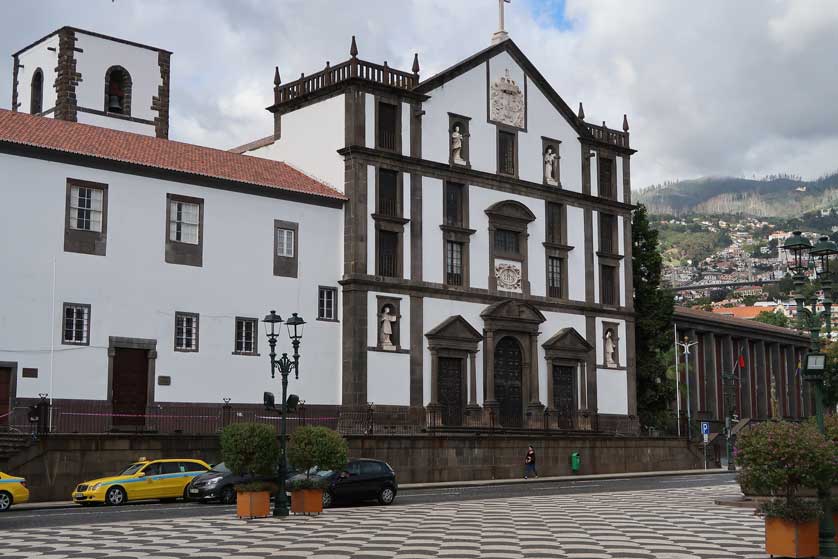
Igreja do Colégio
The Igreja do Colégio (Igreja de São João Evangelista) owes it opulent Baroque interior to the wealth of the Jesuits from their wine estates on the island.
The 17th-century church is noted for its extravagant, gilded woodwork, fine blue and white azulejos tiles and altarpieces.
The University of Madeira now occupies the school by the Jesuits next to the church.

Igreja de São Pedro
The Igreja de São Pedro on Rua Nova São Pedro is another Manueline and Baroque gem known chiefly for its superb azulejos tiles, painted ceilings and gilded carvings. Inside, it has a single nave with three lateral chapels and two altars. The church was begun in the 16th century in 1590 to be precise, during the early years of Portuguese colonization of Madeira.

Igreja de São Salvador
The large Igreja de São Salvador in Santa Cruz, east of Funchal, dates from 1512. Constructed in the Manueline Gothic style, it contains the tomb of the Italian merchant Micer João. The 16th-century altar paintings are the work of Gregório Lopes (1490-1550), one of the most important painters in Portugal of his time. The church is similar in style to Funchal Cathedral and its construction was commissioned by King Manuel I.

Holy Trinity Church
The Holy Trinity Church aka Igreja Inglesa dates from 1822 and is the Anglican church on the island. It was built using funds from donations including from the Duke of Wellington, the family of Lord Nelson and George III. The British consul of the time, Henry Veitch, arranged its construction. Legend has it that Veitch presented Napoleon (on his way to exile and death on St. Helena) with a pipe of wine and received some gold coin in return. This gift was laid under the foundation stone of the building.
Neoclassical in style the elegant church stands within pleasant grounds. The nearby cemetery holds the graves of many former British residents of Madeira including William Reid, who established the five-star Reid's Palace Hotel.
Church & Convent of Santa Clara
The church and adjacent Convento de Santo Clara were founded by João Gonçalves de Câmara, the son of João Gonçalves Zarco in 1476. The church is known for its silver tabernacle dating from 1671 and wooden altar painted in a way to resemble marble and gold. The elder Zarco is buried within the church as are the first Abbess, Isabel de Noronha and her sister, Constança. The convent itself is surrounded by high walls and a metal grille separated the nuns from the church so they could hear mass but remain unseen. The church and convent both underwent restoration from 2020-2023.

Igreja de Nossa Senhora do Livramento
The Igreja de Nossa Senhora do Livramento is a Catholic church located in the highland village of Curral das Freiras on Madeira. The church was built in the late 18th century and is dedicated to Our Lady of Livramento. The church is open to visitors and offers a peaceful and serene atmosphere for prayer and contemplation. It is also a popular destination for pilgrims, who come to offer prayers and seek blessings. The history of the church dates back to the nuns of the convent of Santa Clara in Funchal. They erected the Chapel of Santo António in the 17th century after fleeing pirate attacks on Funchal in 1566. The land here had previously belonged to João Gonçalves Zarco, the founder of the first Portuguese colony on the island.

Igreja Matriz do Porto Moniz
The Igreja Matriz do Porto Moniz lies in the town of Porto Moniz, on the northern coast of Madeira. It is also known as the Church of Nossa Senhora da Conceição. The church has a simple style, with an elegant façade. It is constructed of stone and has a single bell tower. The interior of the church has a single nave and several altarpieces dedicated to different saints.
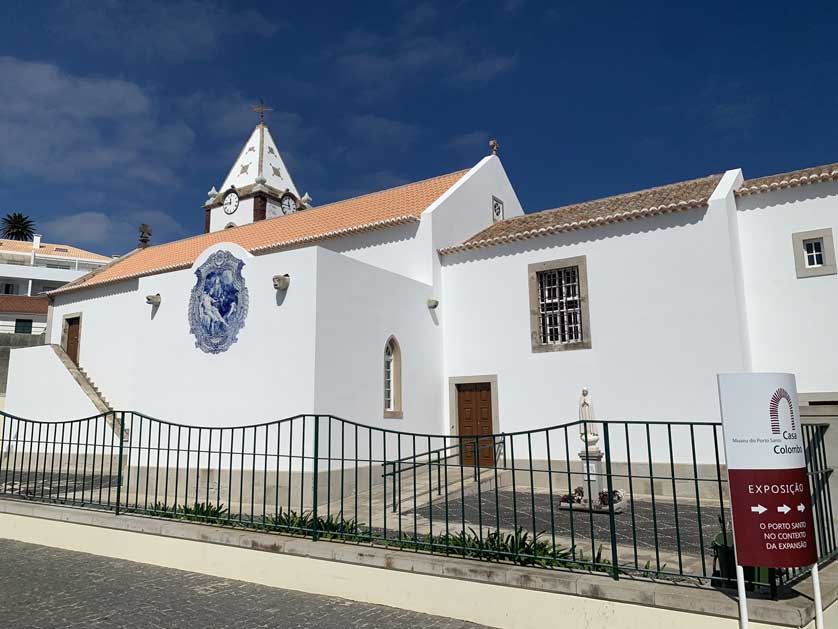
Nossa Senhora da Piedade
The Igreja de Nossa Senhora da Piedade in Vila Baleira on Porto Santo is a lovely, historic church packed with artistic riches. There are paintings by Martim Conrado and the German artist Max Wilhelm Römer, who lived the latter part of his life on Madeira. The church dates originally from the late 15th century. However, it was badly damaged by French pirates in 1566. It was completely rebuilt from 1667 onwards. The white-washed church is close to the Casa Museu de Cristóvão Colombo.

Capela do Espirito Santo
Also on Porto Santo further along the coast to the south in Campo de Baixo is the small Capela do Espirito Santo. It dates from the 17th century but was largely modified in the 19th century. The chapel comprises a single nave and a chancel.

Igreja de Santo António
The Igreja de Santo António in the parish of Santo António in Funchal dates from 1789. Constructed in the Rococo style the two tall bell towers were added later in 1883. Cristiano Ronaldo grew up in the area.