Portuguese Culture: Manueline Architecture (Manuelino)

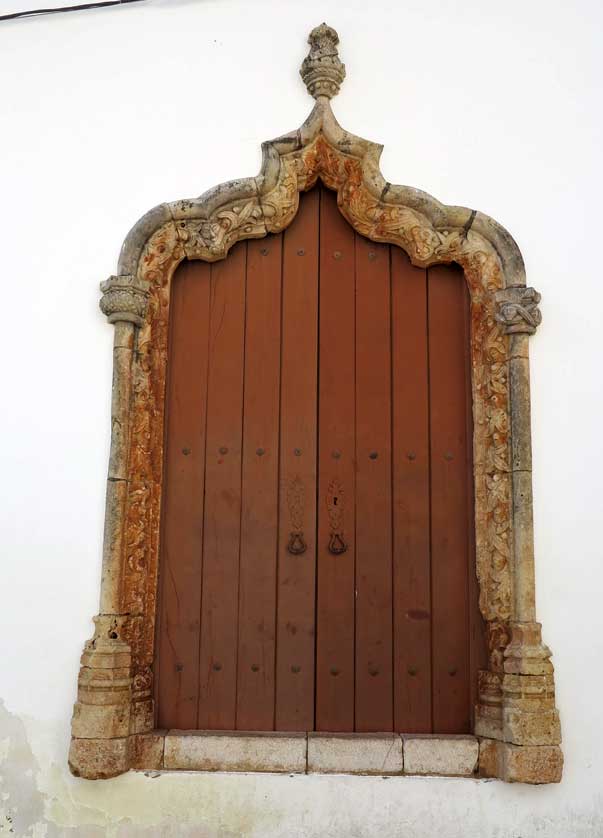
Manueline (Portuguese late Gothic) is a unique style of Portuguese architecture. It takes its name from the reign of King Manuel I who ruled the country between 1495 and 1521.
This was the time of the Age of Discoveries and a new-found confidence and wealth in Portugal. Money flowed in to the country from its growing empire overseas staked out by the voyages of such men as Vasco da Gama, Pedro Álvares Cabral and Afonso Alberquerque.
These voyages and the riches they brought were to fuel a construction boom back home in Portugal.
The name itself actually dates from the 19th century and the writings of Francisco Adolfo de Varnhagen, a Brazilian diplomat in Lisbon.
History
Maritime exploration and the conquest of far-flung lands is represented in the many flamboyant, nautical motifs carved into the stone of buildings constructed during this vibrant period of Portuguese history.
Anchors, armillary spheres, coral, crosses, seashells and ropes are recurring themes, reflecting the spirit of the age.
Several Manueline structures were unfortunately destroyed in the 1755 Earthquake but many still survive as a testament to this remarkable time of creation in stone.
The style was also to spread from Portugal to its overseas possessions and examples can be found in Brazil, Goa and parts of North Africa.

Manueline Buildings in Portugal
Igreja de Jesus
The first truly Manueline structure in Portugal is generally acknowledged to be the Igreja de Jesus in Setúbal, south of Lisbon.
The church was designed by French immigrant Diogo de Boitaca in the 1490's. His use of ribbed vaulting resembling ropes and columns rising like trees soon became popular and was copied elsewhere.
Mosteiro dos Jerónimos
In the capital Diogo de Boitaca was also partially responsible for the huge Mosteiro dos Jerónimos in Belém, a UNESCO World Heritage Site.
A supreme example of Manueline architecture, Mosterio dos Jerónimos is built on a vast scale and is also finely embellished.
Typical Manueline nautical motifs of the sea, ropes, armillary spheres and anchors combine with trappings from the history of Portuguese expansion, such as exotic elephants and spreading palm trees.
Belém Tower
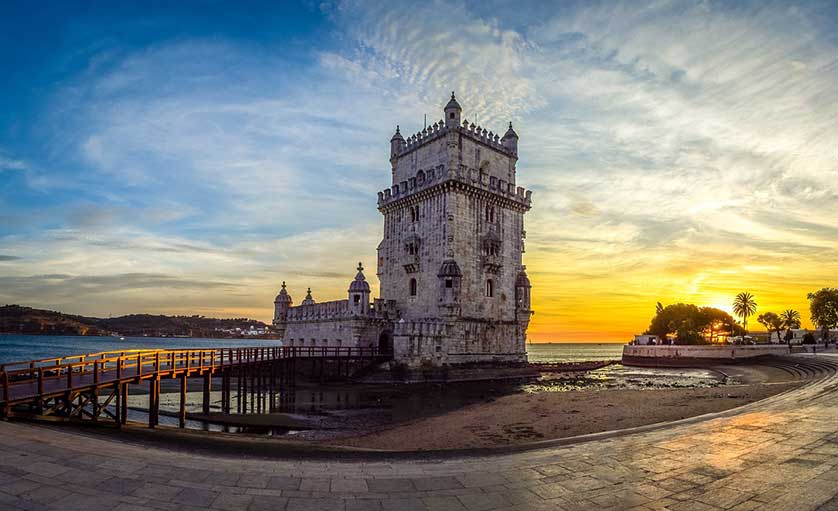
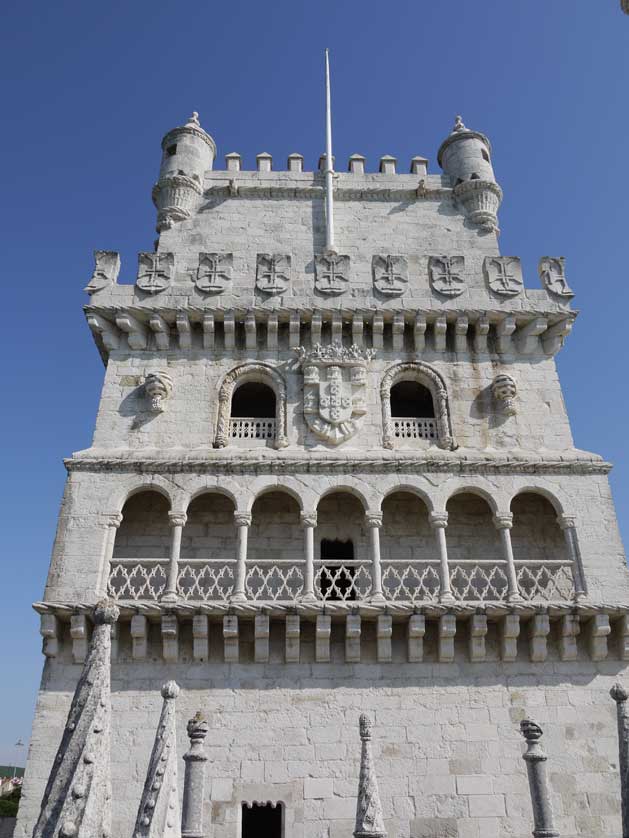
Belém Tower is also a UNESCO World Heritage Site. The 35 metre-high fortress was designed by the military architect Francisco de Arruda between 1514 and 1520 as part of a defensive system at the mouth of the River Tagus. The fortress was named the Torre de Sao Vincente de Belém after the patron saint of Lisbon.
The tower is Manueline in style with the customary and lavish motifs of armillary spheres, Templar crosses and thick ropes.
The building also shows the Moorish influences on Arruda's design - he had built a number of forts in North Africa previously. Diogo de Boitaca, the initial chief architect of the Mosteiro dos Jerónimos, is also thought to have participated in constructing the building.

Church of Nossa Senhora da Conceição Velha
The Church of Nossa Senhora da Conceição Velha was badly damaged in the earthquake of 1755. Thankfully, its Manueline portal miraculously survived.
A classic piece of Manueline architecture, the portal, below a triangular pediment, is richly carved with motifs of angels, armillary spheres, flowers, and the cross of the Order of Christ (formerly the Templars).
The facade includes an image of the Virgin of the Misericórdia and figures of nobles and monarchs including D. Manuel I and his sister D. Leonor as well as religious clerics.
Convent of Christ Tomar
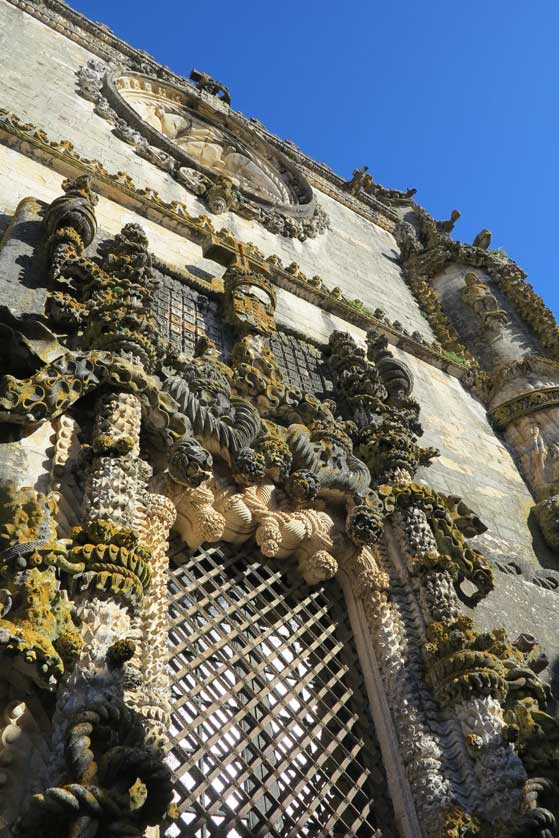
As time progressed Manueline became even more decorative reaching its apogee probably in the incredible Convent of Christ in Tomar. The Janela do Capítulo (see above) is a masterpiece of late-Gothic Manueline architecture.
It displays various motifs from scripture including the Tree of Life as well as various nautical references relating to Portugal's overseas expansion at the time: twisting ropes, knots, globes and crosses.
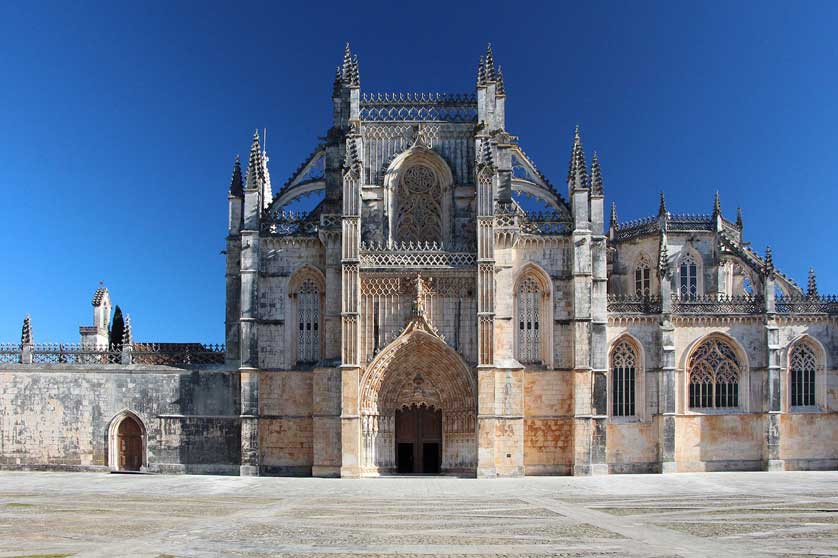
Batalha Monastery
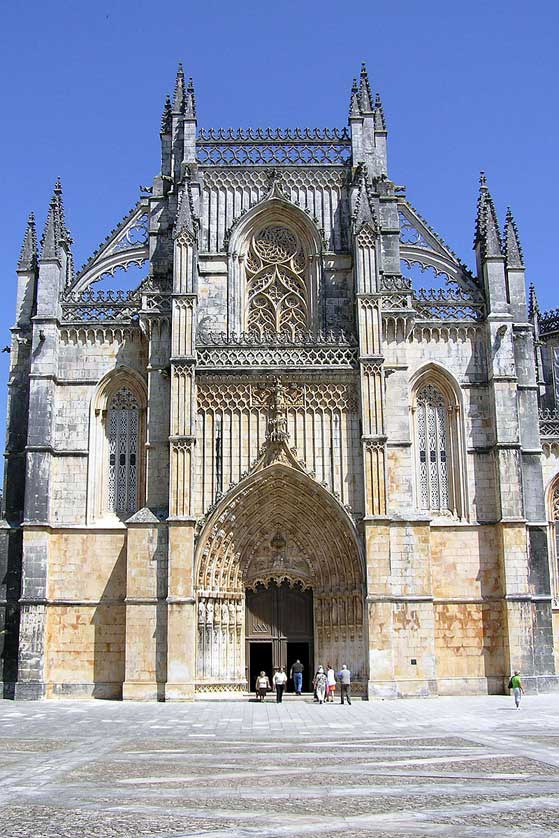
The vast Batalha Monastery is a masterpiece of Gothic-Manueline art. Its delicately carved limestone towers over the small town of Batalha.
The later Manueline additions to the original Gothic Royal Cloisters are a particular highlight as is Sala do Capitulo, a 15th century chapterhouse with exquisite stained-glass windows.
Further Examples
Other examples of Manueline architecture can be found in parts of Braga Cathedral in Braga, Guarda Cathedral in Guarda and Viseu Cathedral in Viseu, all in more northern Portugal.
Other parts of the country also have remaining traces of the style including churches in Silves, Vila do Conde, Guimarães, Viana do Castelo and the Santa Cruz Monastery (Mosteiro de Santa Cruz) in Coimbra.
Articles on Portuguese Culture
Pastel de Nata Workshop in Lisbon