Cathedrals, Churches & Chapels in Porto
Portugal is a land full of churches. Even the smallest village in the most remote area of the country will have a church. Churches are often still a focus of community life in Portugal as well as repositories of local and national history, fine architecture and the well-spring of many local festivals.
Porto, Portugal's second city, has a number of outstanding churches beginning with its fortress-like cathedral and the iconic tower of Clérigos Church.
See a listing of churches in Porto, Portugal.
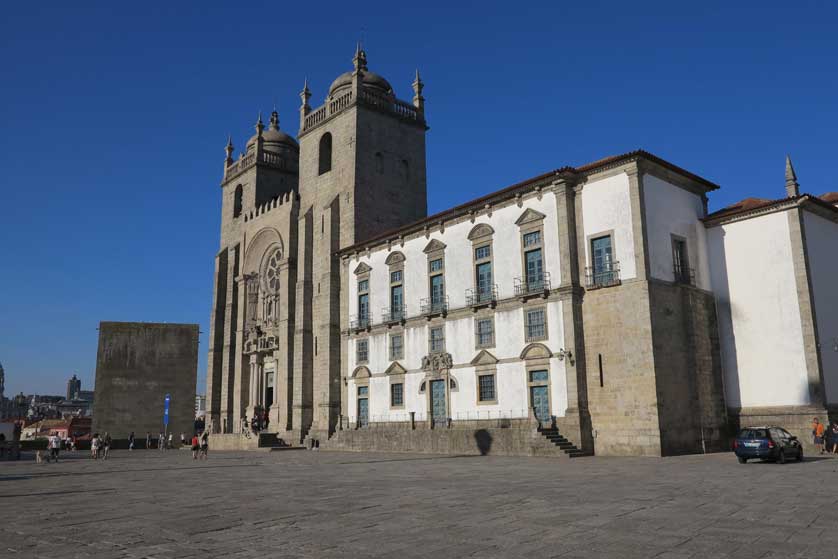
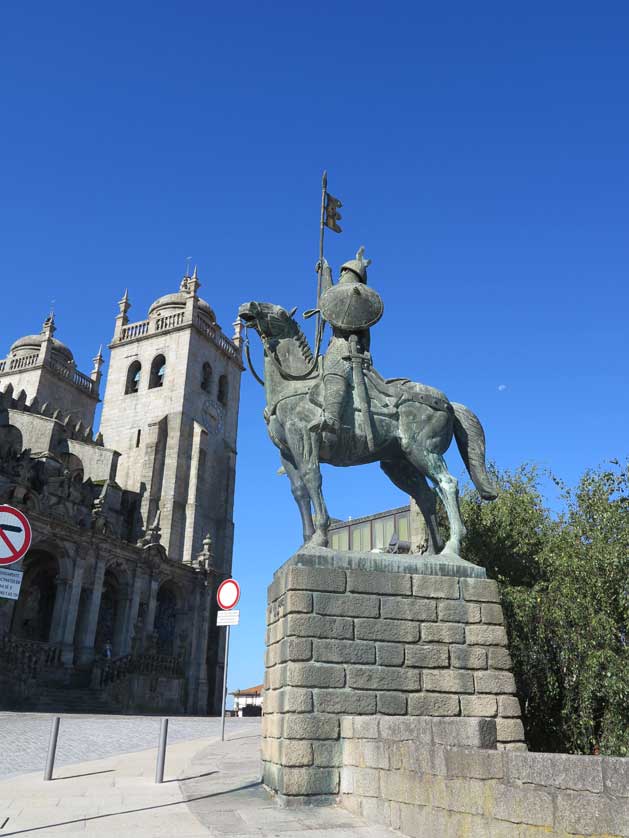
Porto Cathedral
Porto Cathedral (Sé) is located in the center of Porto's old town very close to Sao Bento Station. The historic, fortress-like Romanesque church dates from 1110, though construction was completed in the 13th century, making the cathedral one of the oldest buildings in Porto. Porto's cathedral holds an important place in Portuguese history as it was here that Prince Henry the Navigator was baptized and King John I married the Princess Philippa of Lancaster in the 14th century, leading to the long-standing Anglo-Portuguese alliance.
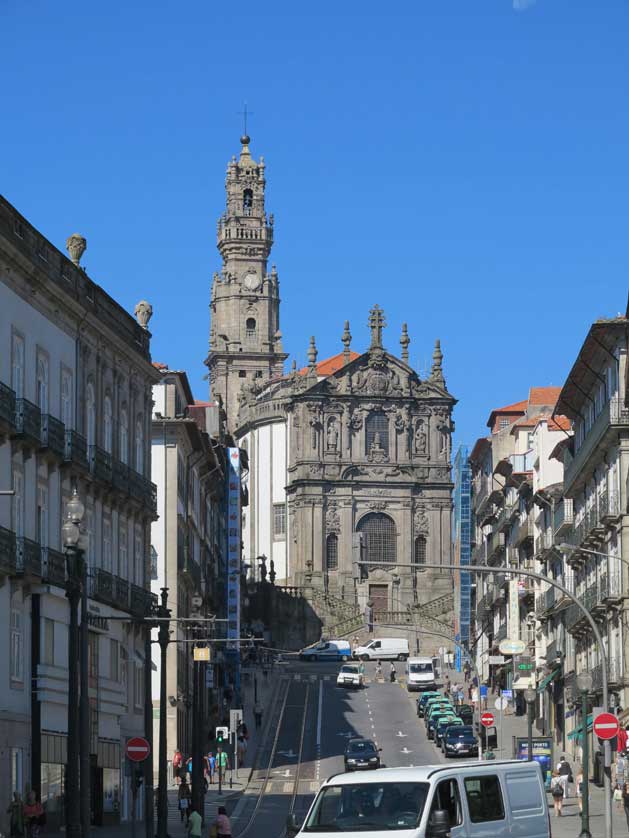
Torre dos Clérigos
The Torre dos Clérigos is a very popular attraction in Porto with a line of foreign tourists waiting to ascend the 75 meter tower each day in the summer vacation season for spectacular views over the city. Designed by Italian architect, Nicolau Nasoni, the Torre dos Clérigos is an icon of the city and was the tallest building in Portugal when it was completed in 1763.
Igreja dos Clérigos
The Igreja dos Clérigos (Clérigos Church) is the church in front of its more famous bell tower, the 75m-high Torre dos Clérigos, in central Porto. Both tower and church were designed by the prolific Italian architect, Nicolau Nasoni (1691-1773), who was so active in the city and other parts of northern Portugal during the 18th century.
Igreja de Santo Ildefonso
The Igreja de Santo Ildefonso situated close to Batalha Square, dates back to the 18th century. The church was completed in 1739 and includes a framed altarpiece by the prolific Italian architect, Nicolau Nasoni. The granite church, in Baroque style, was 30 years in construction and is named after an early, 7th century Bishop of Toledo, Ildephonsus.
Igreja da Misericórdia
The Museu da Misericórdia do Porto is located on the historic Rua das Flores in downtown Porto. This beautiful modern museum is connected to the historic 16th century church of Igreja da Misericórdia re-designed in the 18th century by the Italian architect Nicolau Nasoni, whose work can be seen in many outstanding buildings of historical interest around the city.
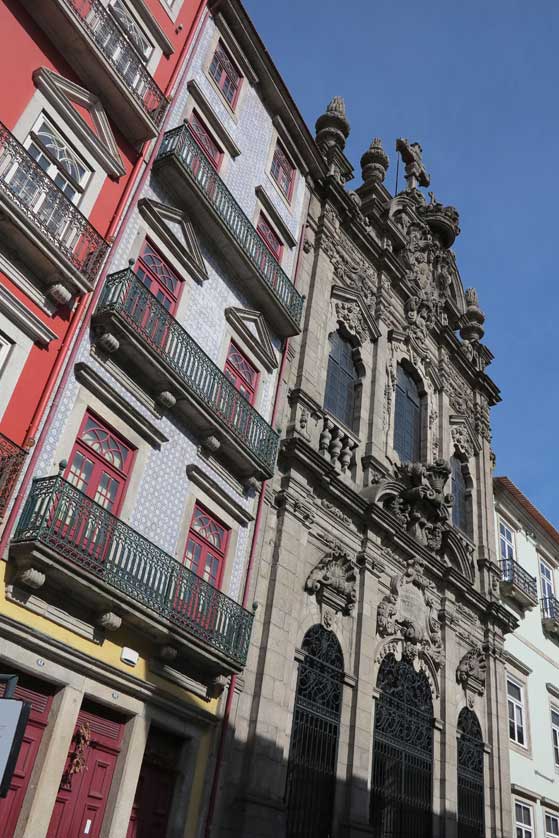
Igreja dos Congregados
The Igreja dos Congregados (Igreja de Santo Antonio dos Congregados) stands just to the north of Sao Bento Station in Praça de Almeida Garrett in the old city area of Porto. Igreja dos Congregados was built in 1703 on the site of a previous chapel. Restoration work on the church was done in the 19th century and the classic blue and white azulejos tiles by Jorge Colaço were added in the 20th century and depict scenes from the life of Saint Anthony.
Igreja de São Francisco
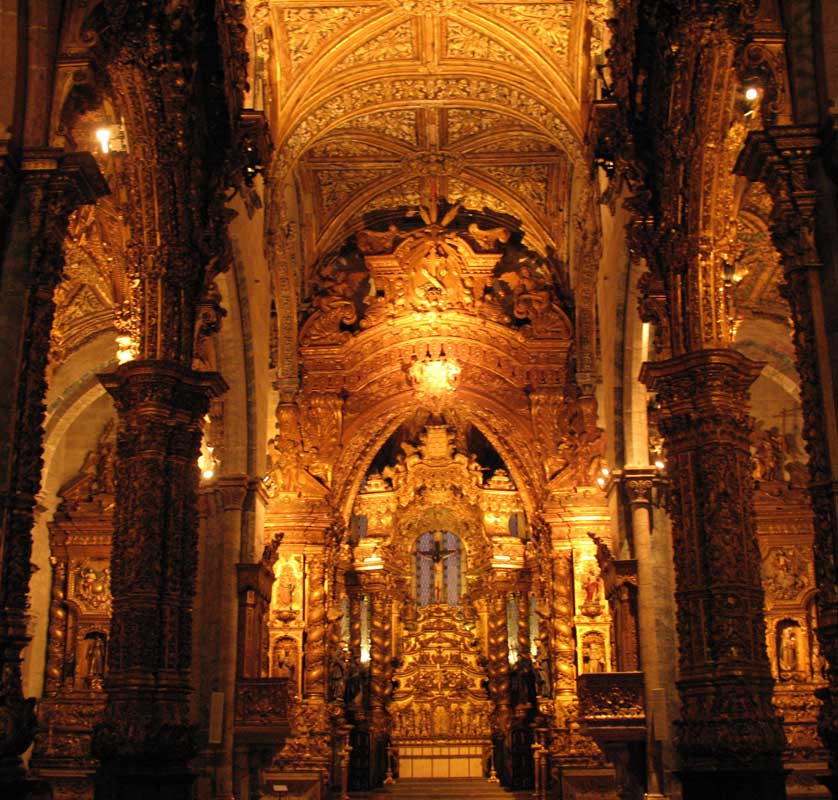
The Igreja de São Francisco in Praça Infante Dom Henrique has an austere Gothic front but within is a wealth of Baroque features. The main façade has a large rose window done in the Gothic style. But it is the interior of the church which has the most breath-taking features with several ornate chapels done in elaborate gilded woodwork and an altarpiece by Filipe da Silva and António Gomes. It represents a family tree of Jesus with twelve kings of Judah connected by branches of a tree to the recumbent body of Jesse.
Igreja de Santo Clara
The Igreja de Santo Clara just to the east of Porto's cathedral, was part of a Franciscan convent. Boasting a fine Renaissance portal, the church's interior has fine gilded woodwork.
Igreja do São João Novo
The Igreja do São João Novo dates from 1539 and was built on land in the city's Jewish quarter. The church has been rebuilt and restored on numerous occasions in its history. The church was the monastery church of the now defunct Convento dos Frades Eremitas Calçados de Santo Agostinho (Gracianos) of São João Novo do Porto.
Igreja do Carmo & Igreja dos Carmelitas
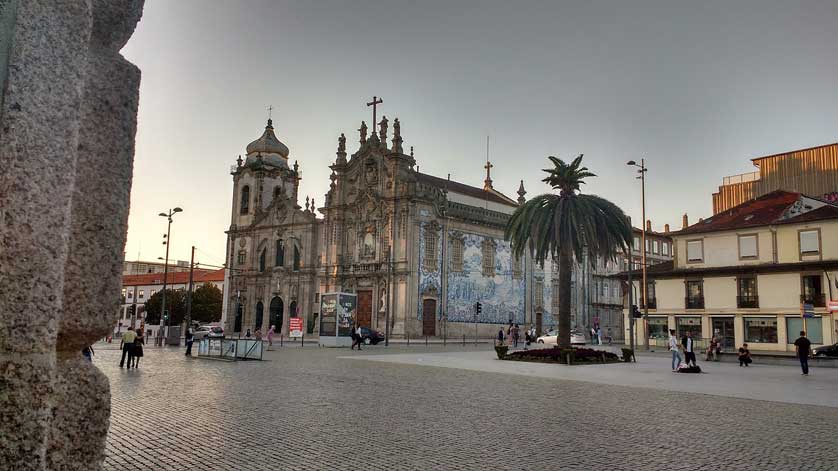
The Igreja do Carmo and Igreja dos Carmelitas are twin churches at the corner of Praça de Carlos Alberto and Rua do Carmo. Igreja do Carmo has an azulejo-covered exterior with the church done in the rococo style. The church was built between 1756 and 1768. The azulejos were added in 1912 and were made locally in Vila Nova de Gaia. The Igreja do Carmo stands next door to the Igreja dos Carmelitas, part of a 17th century convent. The two churches are separated by a very narrow (1m wide) house that was inhabited until the 1980's. The house was built so that the two churches would not share a common wall and to prevent any relations between the nuns of Igreja dos Carmelitas and the monks of Igreja do Carmo.

Igreja de Santa Marinha
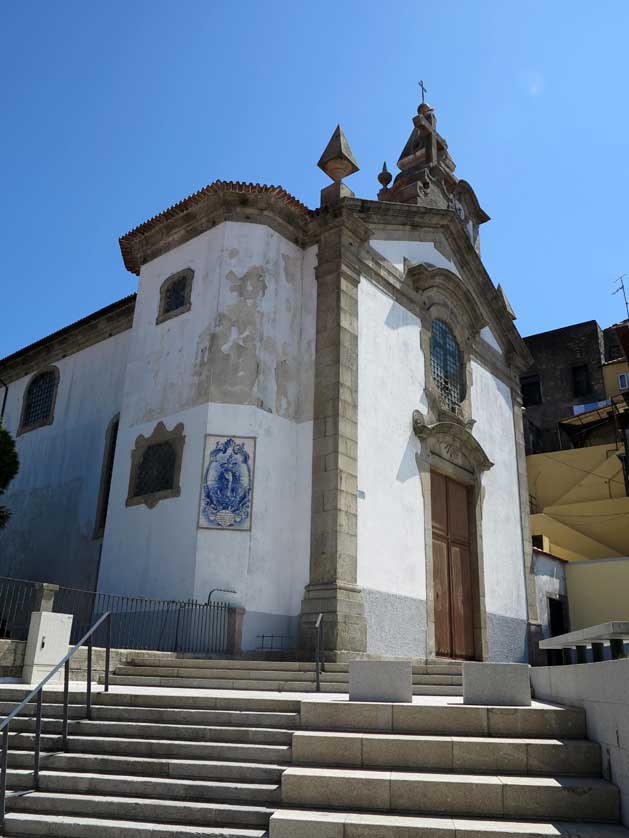
The Igreja de Santa Marinha is a church in Vila Nova de Gaia, across the Douro River in Gaia. The original 16th century church has later work by Nicolau Nasoni with the nave covered by a barrel vaulted ceiling.
Capela das Almas
The Capela das Almas de Santa Catarina on the fashionable, pedestrianized shopping street of Rua de Santa Catarina, next to Bolhão metro station, is one of the most attractive churches in Porto from the outside. The church dates from the 18th century. However, it is the early 20th century makeover by Eduardo Leite, that distinguishes the church as one of the most interesting in Porto. The classic 18th century-style, blue and white tile panels on the side of the church depict The Death of St. Francis of Assisi, The Saint in the Presence of Pope Honorious III, and The Martyrdom of St. Catherine.
Igreja de São Nicolau
The Igreja de São Nicolau is another of the many beautiful churches in Porto. Located south of the Igreja de São Francisco and the Palácio da Bolsa, the Igreja de São Nicolau is close to the banks of the River Douro. The Igreja de São Nicolau dates from 1671 when it replaced a small medieval chapel. It suffered a fire in 1768 and was repaired in a mix of neo-classical and baroque styles by 1762. The facade is lined with blue and white azulejos tiles added in the 1860's. In the pediment above is a niche with the image of St. Nicholas done in limestone. The interior of the church has a single nave with vaulting in brick. The altarpiece is gilded wood in the rococo style by Manuel de Jesus Monteiro. The fine panels are by the painter João Glama.
Igreja da Santíssima Trindade
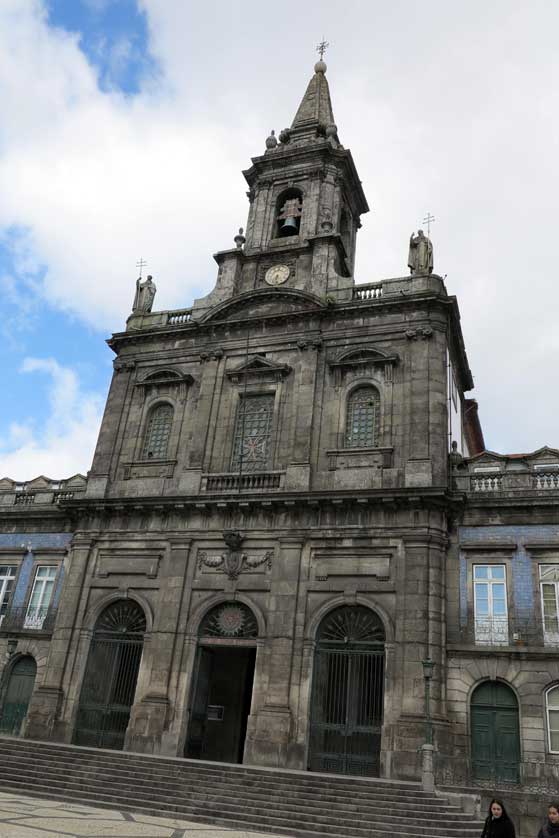
The Igreja da Santíssima Trindade is a Neoclassical church built in the 19th century. The church's initial architect was Carlos Amarante (1748-1815), who was also responsible for the main church of Bom Jesus in Braga. The architect is himself buried within the church, which was finally completed in 1841. The interior of the church is noted for a painting by the artist José de Brito (1855-1946), who studied at the University of Porto and came from nearby Viana do Castelo. The large panel by the artist in the chancel features the Baptism of Christ. It is close to Trindade metro station, the Hospital da Ordem da Trindade and close to Porto's Town Hall.
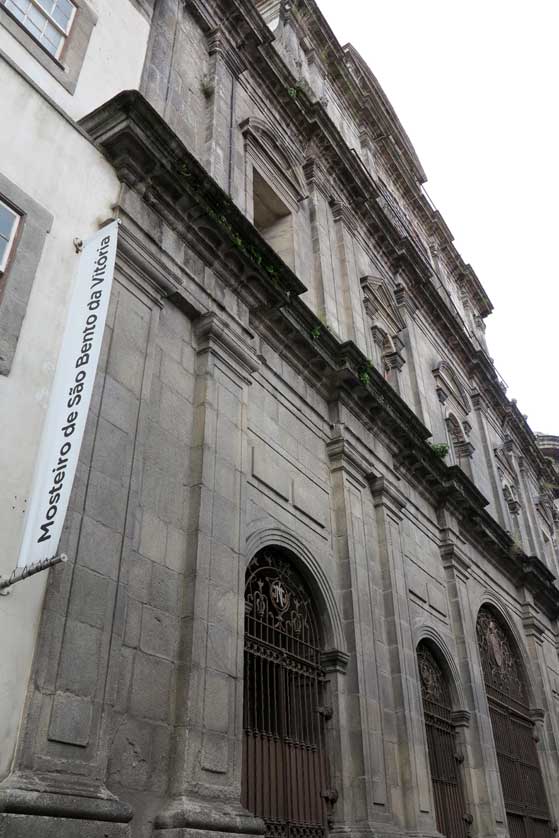
Igreja de São Bento da Vitória and the Convento de São Bento da Vitória
The Igreja de São Bento da Vitória and Convento de São Bento da Vitória stand next to each other, close to São Bento Station. The monastery was Benedictine with monks coming from the large headquarters of the Benedictine order in Portugal and Brazil at the Mosteiro de São Martinho de Tibães, a few kilometers west from the center of Braga. As seemed customary in Portugal is took a long time to complete the monastery which was finally finished only in 1707. As a result the styles of architecture are mixed and include both Mannerist and Baroque.

Church of Nossa Senhora da Vitória
The Church of Nossa Senhora da Vitória is an 18th century replacement of a previous 16th century church. It was constructed between 1755 and 1769. It replaced an early church built by Bishop D. Frei Marcos of Lisbon, way back in 1539. The original church was in the old Jewish quarter of Lisbon and was partly financed by money coerced from these so-called "New Christians" - forced converts from Judaism. It is possible the church is located on the site of a former synagogue. Present highlights within include the Rococo-style artwork of such masters as the sculptors Francisco Pereira Campanhã and José Teixeira Guimarães. The sculpture in the main altar is by António Manuel Soares dos Reis (1847-1889), now considered a leading realist artist of his time, who tragically took his own life, aged just 41. His work can be seen in Porto at the Museu Nacional de Soares dos Reis.
Igreja de São Pedro de Miragaia
The Igreja de São Pedro de Miragaia is close to the River Douro and is dedicated to São Pedro (Saint Peter), the patron saint of fishermen. The church is just down the hill from the larger Igreja do São João Novo. The church of São Pedro de Miragaia that we can see today is the most recent of several that have existed in the same place since the Middle Ages. The area was once used by local fishermen before becoming a site of ship-building during the Age of Discovery period of Portuguese history.
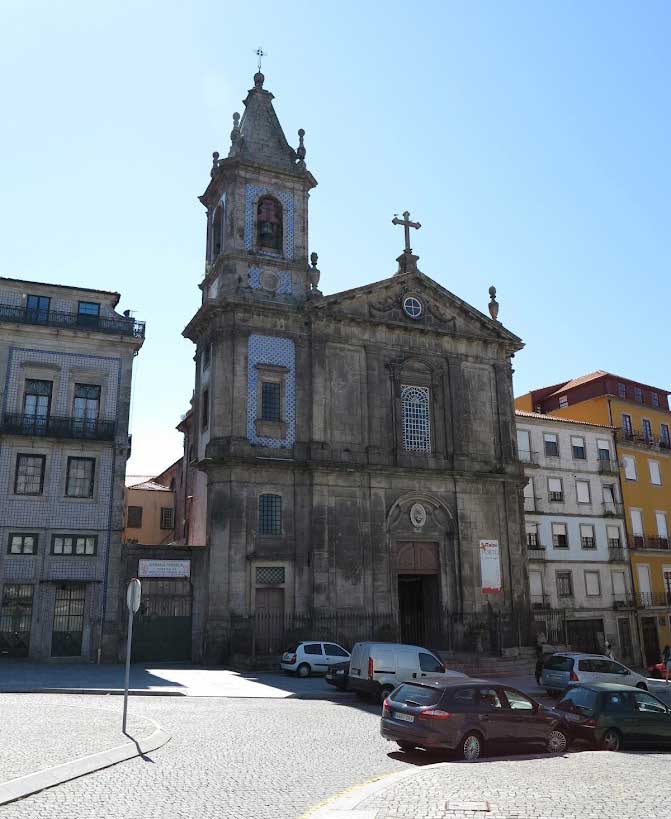
Igreja de São José das Taipas
The neoclassical Igreja de São José das Taipas dates from 1878. It has a single barrel-vaulted nave, supported by ten arches. The church is by Carlos Amarante, architect and military engineer of neoclassicism, and a prolificarchitect of the time in the north of Portugal. His work includes the well-known monuments of Bom Jesus, Igreja do Pópulo and Igreja do Hospital de S. Marcos, all in Braga; the São Gonçalo Bridge over the Tâmega River in Amarante; the Rectory of the University of Porto; Igreja da Trindade in Porto and Brejoeira Palace, in Monção.
The church of S. José das Taipas is linked to one of the most important events in the history of Porto, the Ponte das Barcas disaster in 1809 during the Napoleonic invasion. A painting alluding to the catastrophe can be seen on the altar of Souls. The bridge, which connected Porto and Gaia, was built on boats (hence the name Ponte das Barcas) collapsed during fighting in the city leading to the deaths of at least 4,000 people.
Related Articles - Churches in Portugal
Hotel Accommodation in Porto
Hotels in Porto - Booking.com
Mercure Porto Centro Santa Catarina
Book the Grande Hotel do Porto
Hotels in Portugal - Booking.com
Order your Porto Card online with Get Your Guide