Cathedrals in Portugal

Portugal has several fine cathedrals both in peninsular Portugal and also one cathedral in each of the islands of Madeira and The Azores.
Most of the cathedrals are from earlier periods in Portuguese history.
See a listing of cathedrals in Portugal.
Lisbon Cathedral

Lisbon Cathedral (Sé) is located in the Alfama district of Lisbon. The fortress-like Romanesque church was built in 1150, possibly (though not definitively) on the remains of a Moorish mosque, on the orders of King Dom Alfonso Henriques. The first bishop was the English crusading knight Gilbert of Hastings. The imposing, defensive design of the church is typical of the history of this period. The most striking features of Lisbon's Sé are the rose window and twin crenellated towers.

Sé Catedral Angra do Heroísmo, Azores
The Sé Catedral, in the city of Angra do Heroísmo on Terceira in the Azores archipelago has its roots in a mid-15th century chapel founded by the explorer Álvaro Martins.
This earlier building was expanded in the late 16th century after the founding of the bishopric. It is now the largest church in the archipelago, with three naves, two bell towers and several chapels.
The building was damaged by both an earthquake and a major fire in the 1980s.
The Museu de Arte Sacra in an annex of the church displays azulejo tiles, furniture, lamps, panels and several religious sculptures.
Of particular beauty is the silver-plated altar within the cathedral itself.
Aveiro Cathedral
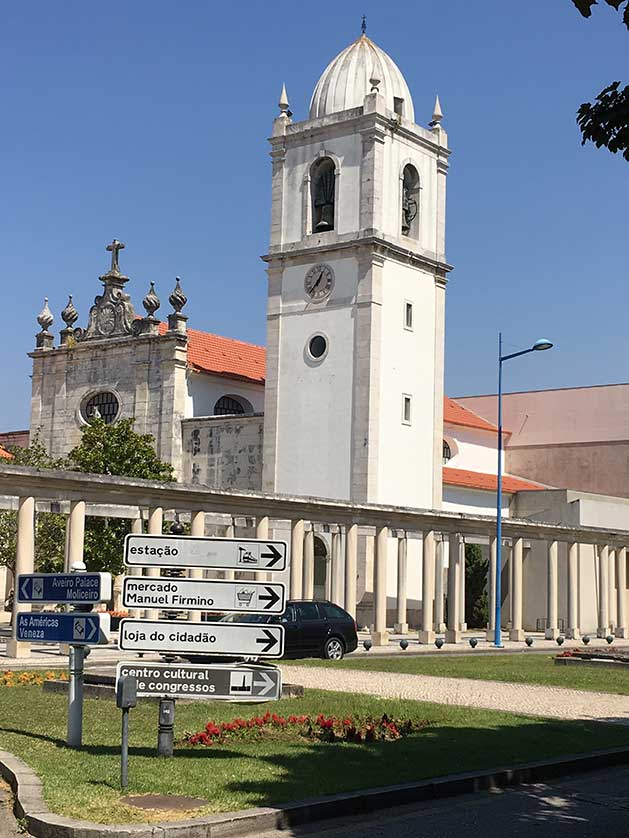
Aveiro Cathedral (Sé de Aveiro) is a former Dominican monastery. It contains an original Gothic, Manueline stone cross preserved as a national monument. It was founded in 1423 making it the oldest religious institution in the city, though little remains from this time. The church we see today was constructed in the 18th century.
Beja Cathedral
Beja Cathedral in Beja is known also as the Cathedral of St. James the Great (Sé Catedral de São Tiago Maior). The church is a mix of architectural styles and dates from the 16th century. The altars are of gilded wood and particularly fine pieces.
Braga Cathedral
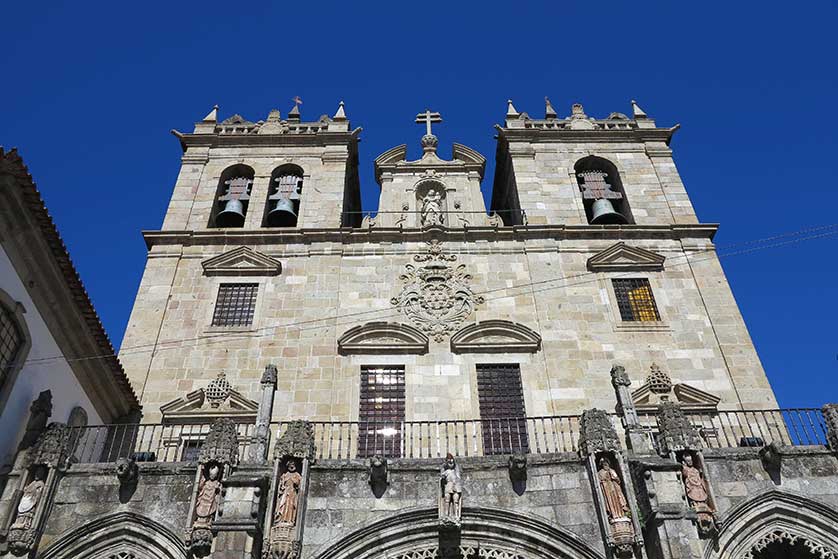
Braga Cathedral (Sé de Braga), in the historic center of Braga is the seat of the Archdiocese of Braga. The archbishop of Braga is the primate of all Portugal, somewhat equivalent to the archbishop of Canterbury in England.
Braga Cathedral is the oldest cathedral in Portugal and one of the oldest cathedrals on the Iberian Peninsula.
The twin-towered building originally dates from the 11th century and is a mix of different architectural styles as renovation and rebuilding took place over the succeeding centuries.
.jpg)
Bragança Cathedral
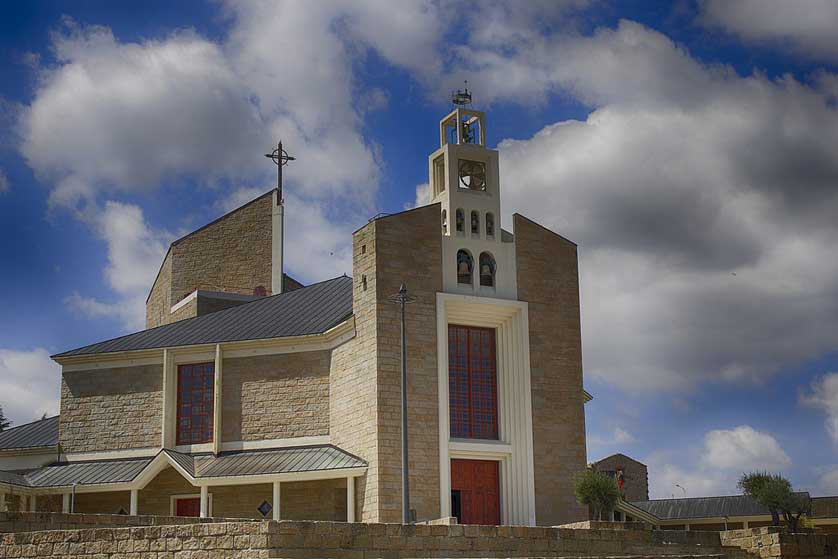
The Catedral de Nossa Senhora Rainha or Our Lady Queen Cathedral serves as the cathedral in Bragança in the north east of the country. It was the first cathedral to be built in Portugal in the 21st century.

New Cathedral of Coimbra
The Sé Nova (New Cathedral) in Coimbra was originally a Jesuit church built slowly over a hundred years between 1598 and 1698.
The church's first architect was Baltazar Alvares and the design of the building was based on the Mosteiro de São Vicente de Fora in Lisbon.
When the Jesuits were expelled from Portugal by the Marquis de Pombal in 1759, Sé Nova became vacant. Thus in 1772 cathedral status was transferred from the smaller Sé Velha to the larger Sé Nova, which is located at the top of the hill in the historic higher part of the city (Alta de Coimbra) close to Coimbra University.
Évora Cathedral
The ornate, fortress-like Evora Cathedral on Largo do Marques de Marialva in the center of Evora is one of the most impressive churches in Portugal. Begun at the end of the 12th century, Evora Cathedral has some splendid Gothic additions such as the chancel and the cloister. Evora Cathedral is beautifully lit with the light from two rose windows.
The granite cathedral stands on the highest point in Evora and the exterior of the building is reminiscent of Lisbon's Cathedral. The church has an interesting sacred art museum full of jeweled, religious artifacts in the south tower, including a gorgeous, gem-encrusted reliquary purportedly containing slivers of Christ's Cross.
The Museu de Evora is next to the cathedral and was once the palace of the archbishop. The museum exhibits Roman and medieval remains as well as religious art by Flemish painters from the Renaissance.
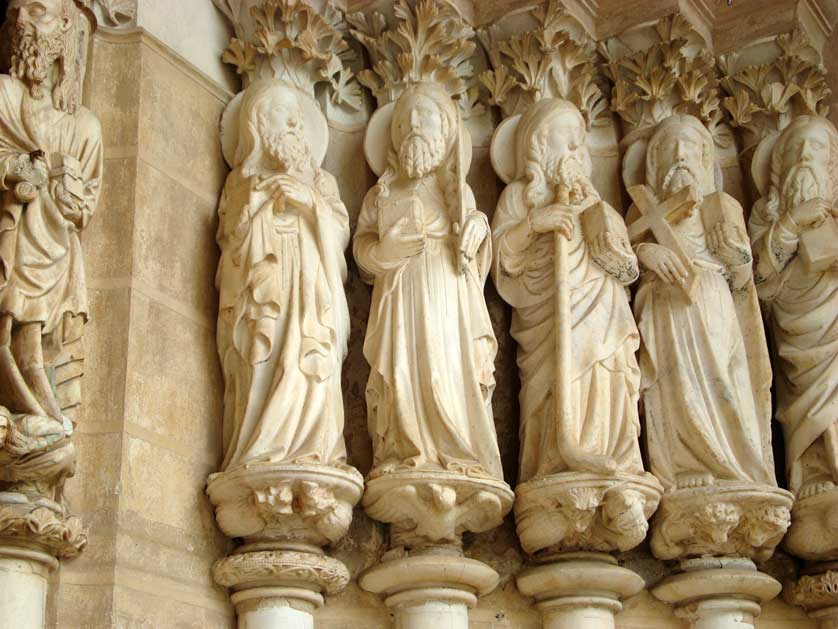
The impressive entrance portal to the church is covered with statues of the apostles. Inside the architecture is heavily Gothic. Downstairs from the cloister are the tombs of previous archbishops of Evora.

Faro Cathedral
Faro Cathedral (Sé) in Faro is located in the heart of the city's small Old Town (Cidade Velha) in Largo de Sé.
The Sé was built over remnants of a Roman temple, Visigoth church and then a Moorish mosque and was completed in 1251. Except for the tower gate and two chapels, the original cathedral was damaged in the English raid of 1596, destroyed in the earthquake of 1755 and subsequently rebuilt in a hotchpotch of styles, which include Baroque, Gothic and Renaissance.
The interior of Faro's cathedral contains some beautiful azulejos tilework, marble inlay and gilded wood carvings. Visitors climb up the narrow, winding staircase to the roof for wonderful views over Faro, the Paço Episcopal (Bishop's Palace) and out to the mud flats and sea from the miradouro.
The small cathedral museum upstairs from the floor of the church contains an eclectic assortment of exhibits: statues, religious paintings, vestments and a small ossuary. Close to the Sé are the statue of Afonso III and the worthwhile Museu Municipal de Faro.
The Largo de Sé has a pleasant cafe with outdoor seating in the square to sit back and enjoy the tranquility amidst the orange trees.
which contains the most valuable of the church's treasures including 16th century Portuguese paintings, religious artifacts, a collection of works done in silver and ecclesiastical vestments.
Funchal Cathedral
Funchal Cathedral (Sé Catedral de Nossa Senhora da Assunção) in Funchal on Madeira dates from the late 15th century and is one of the oldest buildings on the island.
Inside, it has three naves, a transept and baptistry. The whole church was built using local volcanic stone brought from Cabo Girão.
The church was designed by Pêro Anes with the possible assistance of master mason Gil Enes. They were sent from Lisbon by King Manuel I (1469-1521) and it is the king's coat of arms visitors can see over the Gothic doorway.
Of particular beauty is the knot-work, cedarwood ceiling based on Moorish geometric designs. The main nave and south aisle are paved with the tombs of bishops and local merchants.
The wooden choir stalls are in wood and the work of Flemish sculptor Olivier de Gand. The blue and gold seats depicts saints and other religious figures dressed as local 16th-century merchants.

Guarda Cathedral
The fortress-like Guarda Cathedral (Sé) in Guarda is a massive, medieval church built in granite between 1390-1540. The Sé in Guarda is remarkable for the number of different architectural styles in its construction, its Gothic exterior combined with intricate Manueline flourishes.
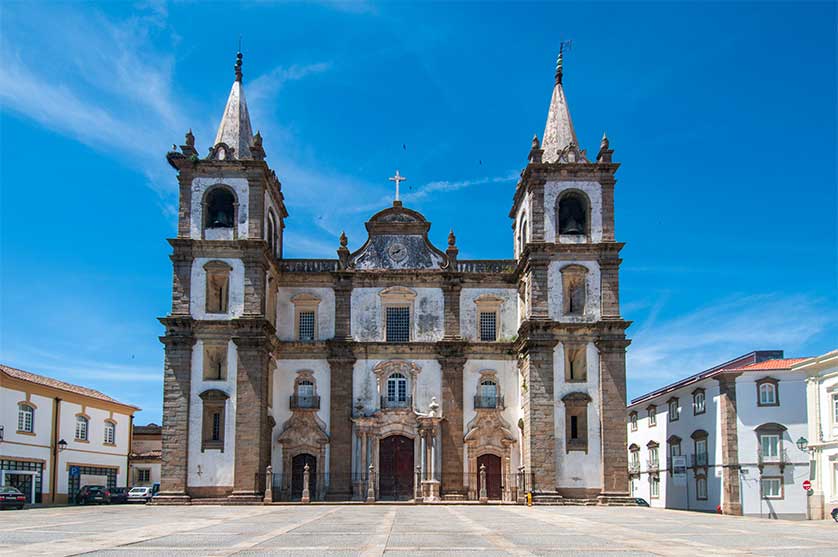
Portalegre Cathedral
The 16th century Sé de Portalegre on Praça do Municipio is the most important religious building in Portalegre in the Alentejo region of southern Portugal. With the creation of a new diocese for Portalegre, the cathedral was built over the former Igreja de Santa Maria do Castelo starting in 1556.
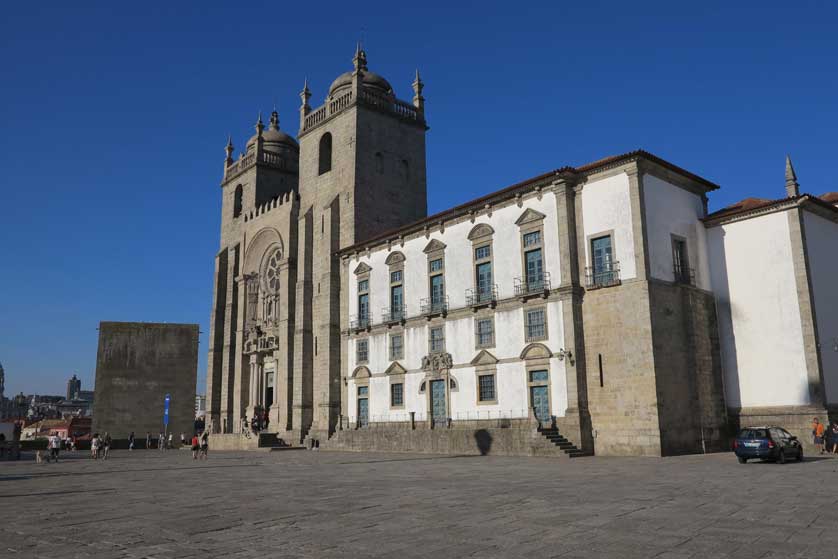
Porto Cathedral
Porto Cathedral (Sé) is located in the center of Porto's old town very close to São Bento Station. The historic, fortress-like Romanesque church dates from 1110, though construction was completed in the 13th century, making the cathedral one of the oldest buildings in Porto.
Porto's cathedral holds an important place in Portuguese history as it was here that Prince Henry the Navigator was baptized and King John I married the Princess Philippa of Lancaster in the 14th century, leading to the long-standing Anglo-Portuguese alliance.
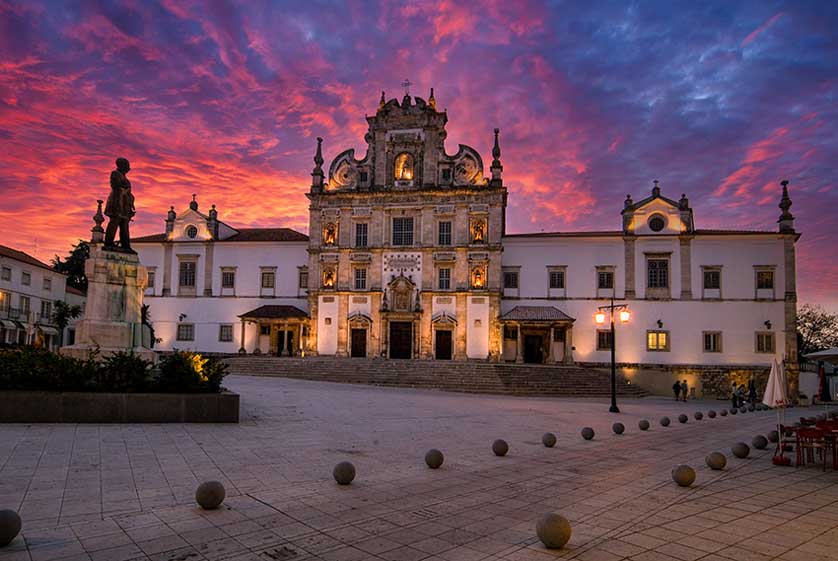
Santarém Cathedral
Santarém Cathedral in Santarém is the most recent of Portugal's cathedrals when its status was elevated in 1975 with the creation of the diocese of Santarém. The building is a former Jesuit church built in the late 17th and early 18th centuries and completed in 1711. Baroque in style, the church is marked by its relatively austere facade and wonderfully ornate interior.
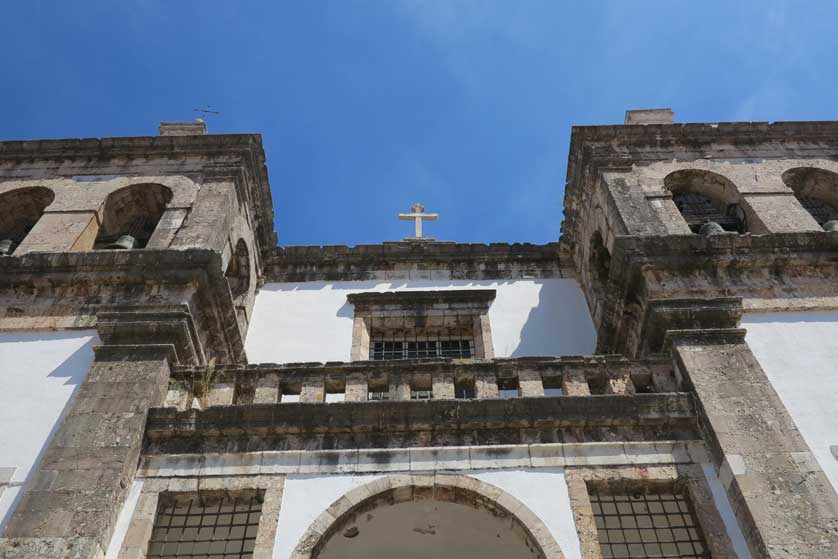
Setúbal Cathedral
Our Lady of Grace Cathedral (Sé Catedral de Santa Maria da Graça) is close to the Casa do Corpo in the historic center of Setúbal. Built in the Roman-Gothic style it dates originally from the 13th century. It was rebuilt in the second half of the 16th century. The interior has Tuscan columns with beautiful frescoes.
Viana do Castelo Cathedral
The Romanesque Cathedral (Sé) in Viana do Castelo, in the Minho region of Portugal, dates from the early 15th century. The entrance arch is decorated with sculptures of the Apostles Peter, Paul, John, Bartholomew, Andrew and James. The façade is flanked by two large towers topped by battlements. The interior is in the shape of a Latin cross with several side chapels.
Vila Real Cathedral
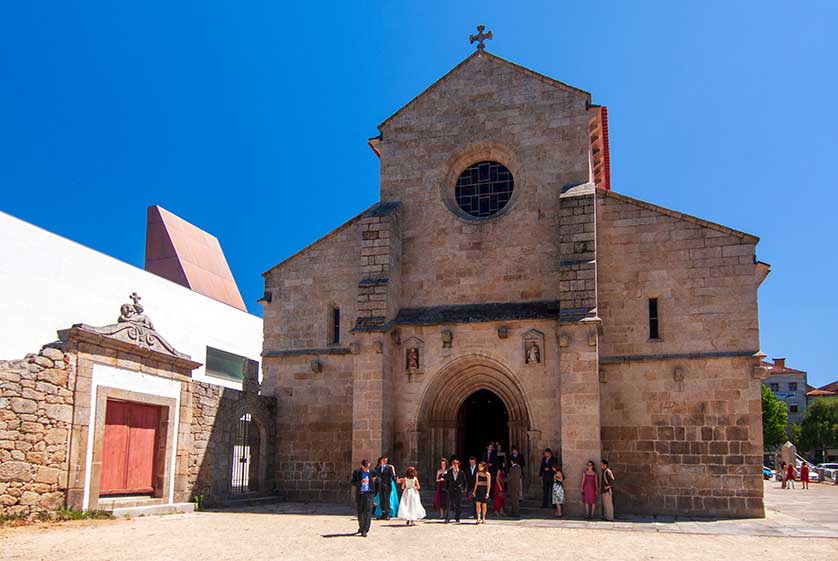
The Gothic Sé (aka Igreja de São Domingos) in Vila Real in northern Portugal dates from the 15th century and was once part of a Dominican monastery.
It is considered the best example of Gothic architecture in the Trás-os-Montes region. It was founded by monks from Guimarães on land donated by D. João I, with work beginning on the building in 1424. The bell tower, in Baroque style, dates from the 18th century. The church became a cathedral in 1924 and has been classified as a National Monument since 1926.
The facade has a rose window and images of Saint Dominic and Saint Francis of Assisi in two niches above the portal. In 2003, modern stained glass windows by the artist João Rodrigues Vieira (1934-2009) were installed.
Viseu Cathedral
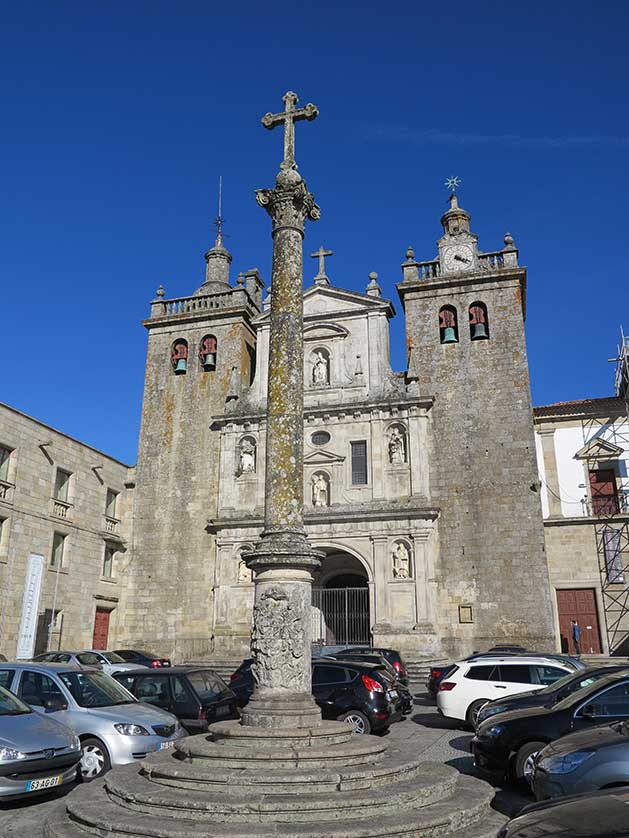
Viseu Cathedral in Viseu, in the Beira Alta region of Portugal is the historic heart of the town. It is located in a square, Praça de Sé, facing the Igreja da Misericórdia, and flanked by the Museu de Grão Vasco, the former Bishop's Palace.
The twin-domed, mainly granite, Romanesque-Gothic church dates from the 12th and 13th centuries with many later additions over the following years. As a result the cathedral displays a mix of various architectural styles including Gothic, Manueline and Baroque.
The building was greatly enlarged in the 16th century by João de Castilho. Castilho was the great architect with a hand in many of Portugal's finest, historic buildings: the Convent of Christ in Tomar, Jerónimos Monastery in the Belém district of Lisbon, and the monasteries of Batalha and Alcobaça.
Castilho added a new façade and the stone roof. The church's rib vaulting and Manueline touches of intricate nautical ropes and knots date from this period.
Former Cathedrals in Portugal
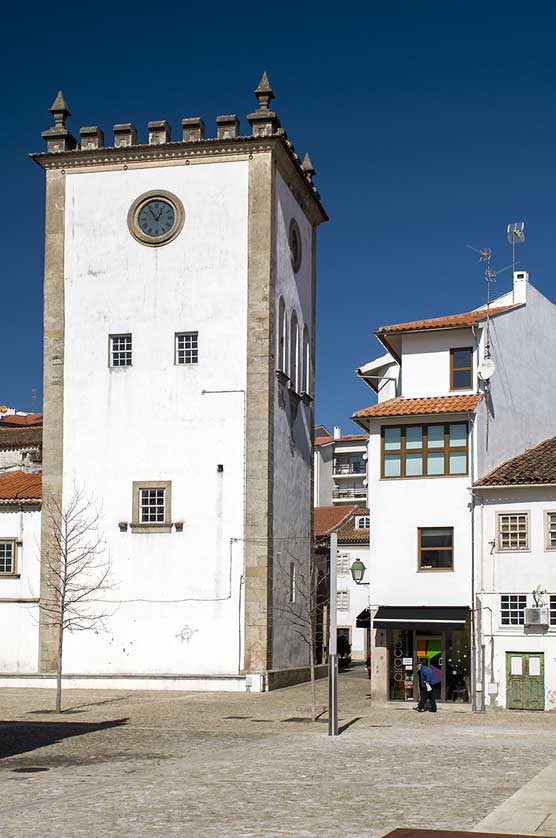
Portugal has four former cathedrals. They are the Sé Cathedral of Bragança (Antiga Sé de Bragança, Church of Saint John the Baptist) in Bragança (pictured above), the Igreja da Sé Velha in Coimbra, Silves Cathedral in Silves on the Algarve and the Cathedral of Idanha-a-Velha in Idanha-a-Velha.
Related Articles - Churches in Portugal

Map