Beja: Alentejo
Beautiful Beja
Beja, 30 km west of Serpa and about the same distance north west of Moura, is the major town in this remote area of the Lower Alentejo (Baixa Alentejo) in south east Portugal with rail links to the capital, Lisbon.
The town of Beja is believed to have been founded by Julius Caesar in 48 BCE. It was named Pax Julia in honour of a peace accord between the Romans and the Lusitanians becoming over time Pax Augusta, Pax, Paca, Baca, Baju and eventually Beja.
Whatever the name changes, you will still find modern-day Beja a very peaceful and tranquil place.
The Roman influence is still evident to the north of the town at the Ruinas Romanas de São Cucufate, where three Roman villas have been excavated and partially reconstructed.
Beja, with a population of around 36,000 inhabitants, is strategically situated in the middle of the plain, though this means it becomes one of the hottest places in Portugal in high summer.
Beja, like nearby Serpa, is now an agricultural hub for the surrounding expanses of mostly cultivated wheat and olive trees.
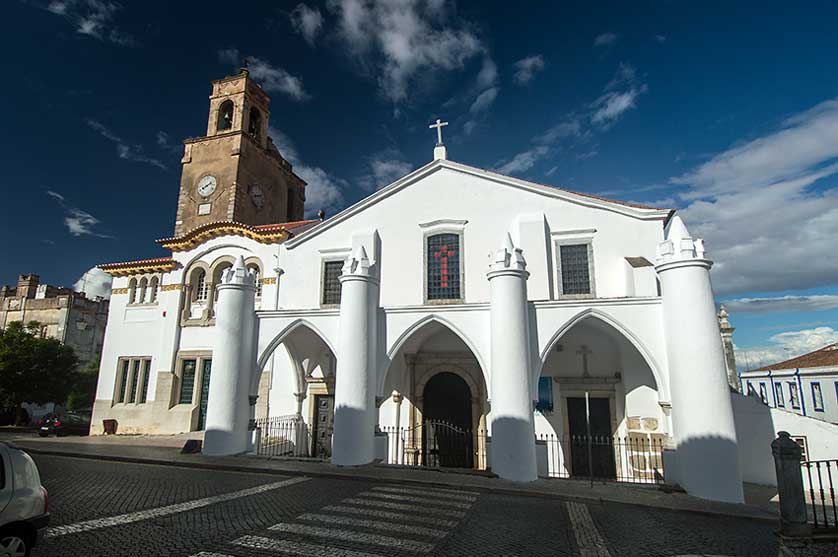
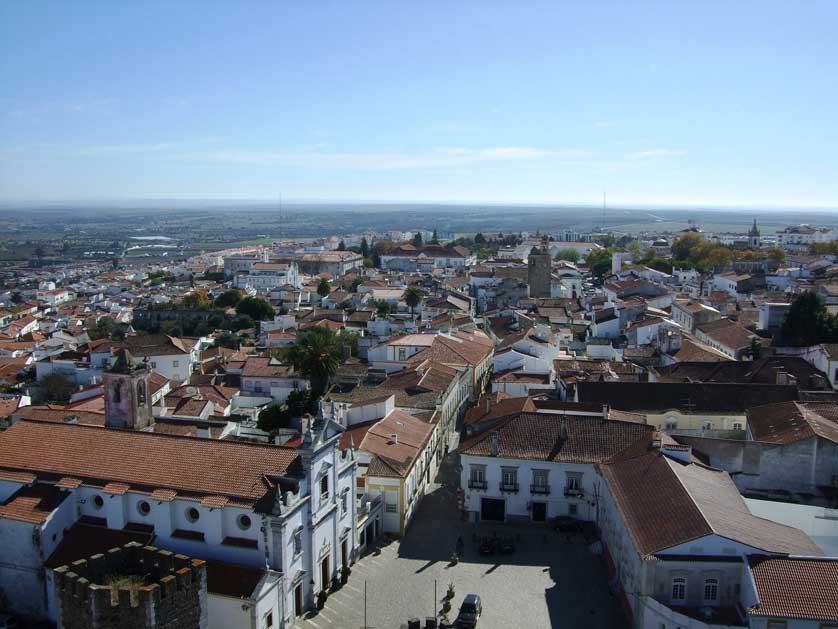
The historic centre of Beja is surrounded by modern suburbs and the town makes for a good base for exploring the surrounding area.
Praça da República is the main square and heart of Beja. You can't miss the pelourinho or stone pillory close to the 16th century Igreja de Misericórdia, where the arched portico was once the site of the city's meat market.
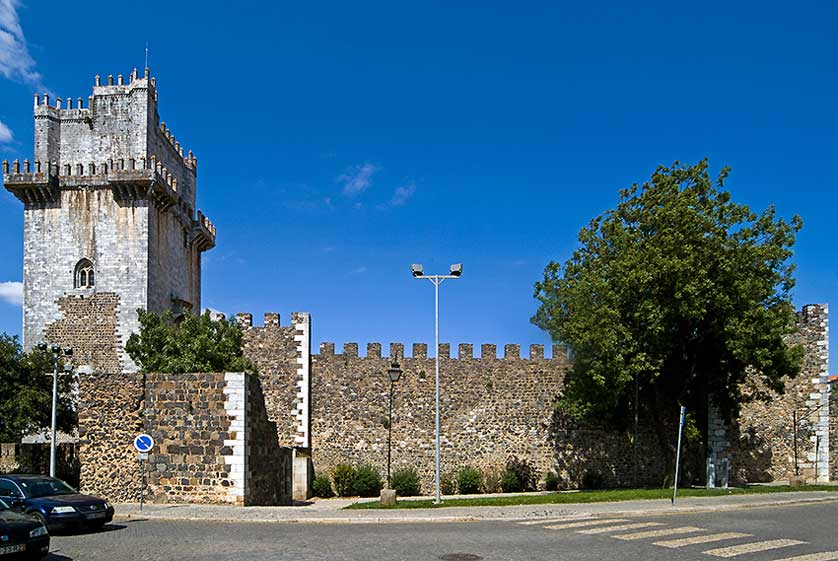
The 14th century Castelo de Beja was constructed by Dom Dinis and the 42 metre-tall Torre de Menagem has great views over the surrounding countryside.
The castle is basically an irregular pentagon in layout and lies within what is now a spacious park. The castle tower is 40 metres (130 feet) in height, with three floors. The first two are rectangular while the top floor is octagonal. The second and third floors have vaulted ceilings.
Since 1910 the fortress has been classified as a National Monument. In 1938 the Roman arch (Évora Gate) was rebuilt along with parts of the old walls.
The Convento de Nossa Senhora de Conceicão dates from the 15th century and includes impressive Manueline features. The convent was dissolved in 1834 and is now home to the excellent Museu Regional which has exhibits of religious art and Flemish paintings. The star of the show, however, is the superb 16th and 17th century tile work (azulejos) on the walls of the cloisters and chapter house. Other highlights are the marble Rococo chapel dripping with gold leaf on its woodwork and the 15th century Mudéjar terracotta grille that connected the convent to the adjacent palace.
The Museu Regional also has exhibits of Roman period stonework, glass and stelae found at the Pisões archaeological site 7 km south west of Beja.
It was at the Convento de Nossa Senhora de Conceicão that an unlikely 17th century love affair took place between a nun, Mariana Alcoforado and a French cavalry officer, Count Chamilly, who was in the town during a war with the Spanish.
The then scandalous Letters of a Portuguese Nun were published in French in 1669, the Fifty Shades of Grey of their era, though the originals were never located.
A later feminist work The Three Marias: New Portuguese Letters published in 1972 earned the Portuguese writers a court appearance under the post-Salazar authoritarian regime.
The Museu Jorge Vieira previously on Rua do Touro and now housed in the Casa do Governador (Governor's Residence) within the grounds of the castle showcases the surrealist sculptures and terracotta works of the Cubist-influenced artist Jorge Vieira (1922-1998).
The former Igreja de Santo Amaro dates back to pre-Moorish times and houses the small though interesting Museu Visigótico with exhibits of swords and other historic artefacts. This is one of Portugal's oldest buildings post-Roman times and well worth a visit for the sense of history the building exudes.
Beja is also the birthplace of the poet Al-Mutamid ibn Abbad, the last Muslim ruler of Seville in Spain.
Beja's main festivals or feiras are the Ovibeja Agricultural Fair held in March which includes an agricultural show, music, handicrafts and food and the Beja Alternative featuring bands, street performances and sports.
Beja Tourist Office
Beja Tourist Office.
Beja Castelo.
Tel. 284 311 913.
Find information on where to stay and eat in Beja.
Getting to Beja
Train Travel in Portugal
Beja is connected by railway to Lisbon with a change of train in Casa Branca. The journey from Beja to Lisbon takes about 2 hours, 10 minutes.

Car Travel in Portugal
Beja is on the N260 north west of Mértola.
Bus Travel in Portugal
Beja has bus connections with Mertola (1 hour, 15 minutes), Lisbon (3 hours), Evora (1 hour, 15 minutes), Faro (2 hours, 50 minutes), Moura (1 hour, 15 minutes), Santiago do Cacém (2 hours), Portalegre (approximately 3 hours) via Evora and Estremoz, Castro Verde, Aljustrel and Serpa (35 minutes) with Rede Expressos.
Portugal Hotel & Hostel Accommodation
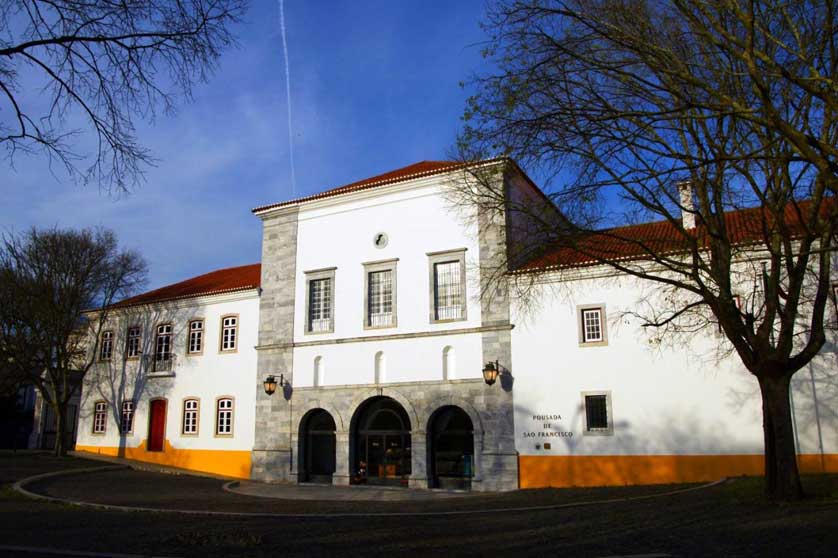
Recommended places to stay in Beja include Pousada Convento de Beja, the Hotel Bejense, the Pax Julia Hostel, the Hotel Francis and the Monte do Gafanhoto a short drive east out of town. See here for a complete listing of hotels in Beja.
Book Hotel Accommodation in Beja
Hotels in Portugal - Booking.com
Albufeira Hotels - Booking.com
Book Hotels in Algarve - Booking.com
Find Hotels in Lisbon - Booking.com
Search Hotels in Porto - Booking.com
Apartments & Hotels in Madeira - Booking.com
Hostels in Portugal - Booking.com
Lisbon Hop-On Hop-Off Bus, Tramcars, and Yellow Boat River Tour
Eating
Try the local cuisine of Beja at A Pipa 76 on Rua da Moeda, O Capitel on Largo Eng Duarte Pacheco and Pena at Praça de Diogo Fernandes.
Drinking
List your restaurant/bar/hotel contact Advertising
Internet
There is a WiFi point at the Parque de Campismo de Beja.
The average high June temperatures for Portugal is between 22 degrees Centigrade and 26 degrees Centigrade.
Get more weather information for Portugal

Map
