Beja Castle (Castelo de Beja)
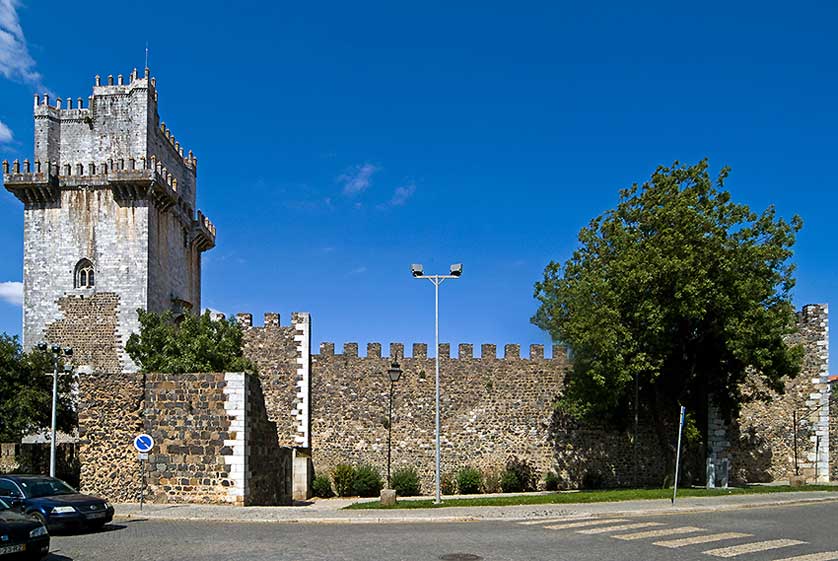
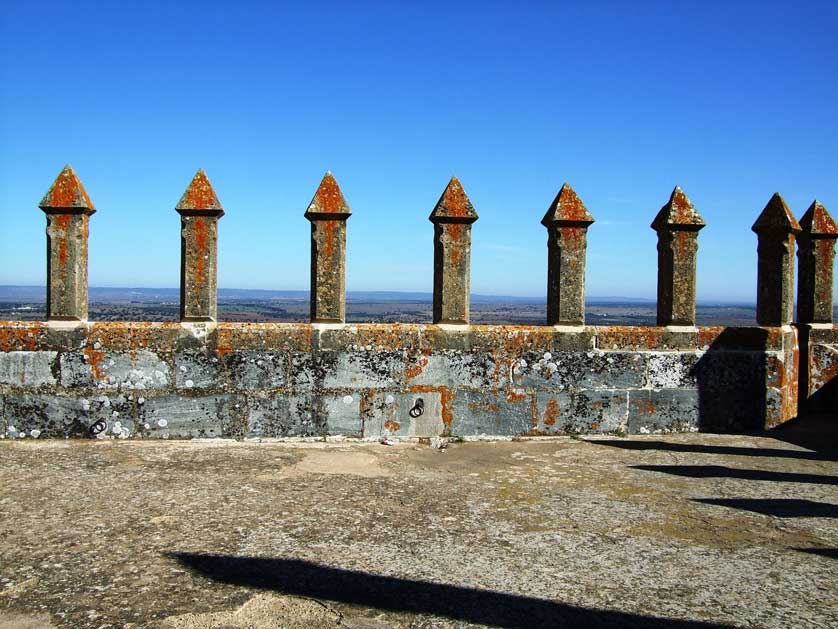
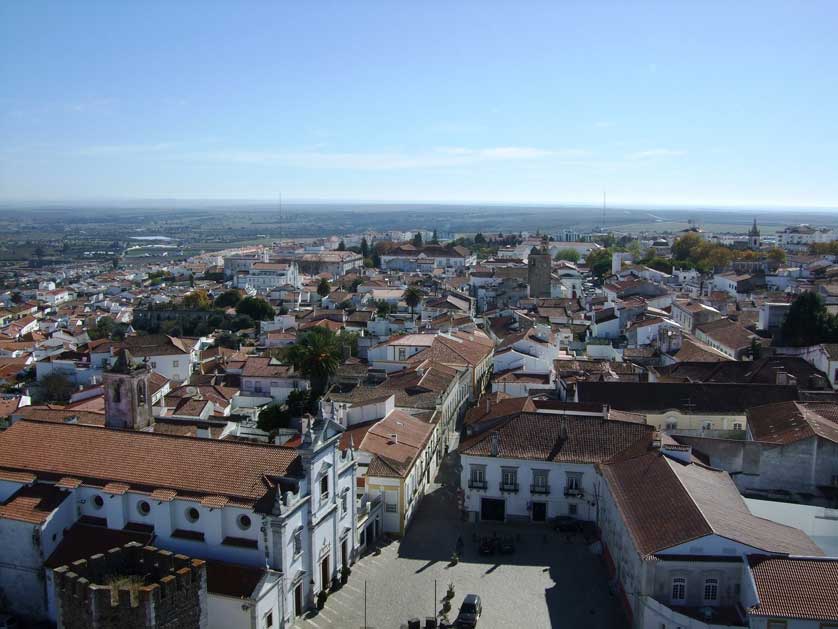
Beja Castle (Castelo de Beja) in Beja in the Alentejo region of Portugal was constructed by Dom Dinis and the 42 metre-tall Torre de Menagem has great views over the surrounding countryside.
Various Portuguese monarchs had a hand in assorted stages of construction of the castle over the centuries.
History
The medieval castle has both Roman and Moorish antecedents. Beja was first retaken from the Moors during the reign of Afonso Henriques (1112-1185), the first king of Portugal, during the Reconquista period of Portuguese history, but was soon abandoned.
It was not until 1253 that Afonso III began work on reconstructing the ruined fortress.
Dom Dinis built the impressive tower in 1310 and the walls were completed in the middle of the century.
Manuel I enhanced the defences of the castle in the 16th century and more improvements took place in the 17th century. Later in the 19th century parts of the castle were demolished.
Architecture
The castle is basically an irregular pentagon in layout and lies within what is now a spacious park. The castle tower is over 40 metres (130 feet) in height, with three floors. The first two are rectangular while the top floor is octagonal. The second and third floors have vaulted ceilings.
Since 1910 the fortress has been classified as a National Monument. In 1938 the Roman arch (Évora Gate) was rebuilt along with parts of the old walls.
The grounds contain the free Museu Jorge Vieira - Casa das Artes within what was once the Casa do Governador (Governor's Residence). On display are sculptures, models and drawings by the modernist Portuguese artist Jorge Vieira (1992-1998). Once a student of Henry Moore at the Slade School of Fine Arts in London, Vieira was an opponent of the Salazar regime and several of his works post-1974 are political in nature. His Monument to the Unknown Political Prisoner (Monumento ao Prisioneiro Político Desconhecido) stands on a roundabout in Beja.
A bust of the poet Mário Beirão (1890-1965) is also in the pleasant park. Unlike Jorge Vieira he was a supporter of the Novo Estado.

Getting to Beja
Train Travel in Portugal
Beja is connected by railway to Lisbon with a change of train in Casa Branca. The journey from Beja to Lisbon takes about 2 hours, 10 minutes.
Car Travel in Portugal
Beja is on the N260 north west of Mértola.
Bus Travel in Portugal
Beja has bus connections with Mertola (1 hour, 15 minutes), Lisbon (3 hours), Evora (1 hour, 15 minutes), Faro (2 hours, 50 minutes), Moura (1 hour, 15 minutes), Santiago do Cacém (2 hours), Portalegre (approximately 3 hours) via Evora and Estremoz and Serpa (35 minutes) with Rede Expressos.
Portugal Hotel & Hostel Accommodation
Recommended places to stay in Beja include Pousada Convento de Beja, the Hotel Bejense, the Pax Julia Hostel, the Hotel Francis and the Monte do Gafanhoto a short drive east out of town. See here for a complete listing of hotels in Beja.
Book Hotel Accommodation in Beja
Hotels in Portugal - Booking.com
Albufeira Hotels - Booking.com
Book Hotels in Algarve - Booking.com
Find Hotels in Lisbon - Booking.com
Search Hotels in Porto - Booking.com
Apartments & Hotels in Madeira - Booking.com
Hostels in Portugal - Booking.com
Lisbon Hop-On Hop-Off Bus, Tramcars, and Yellow Boat River Tour
Map
