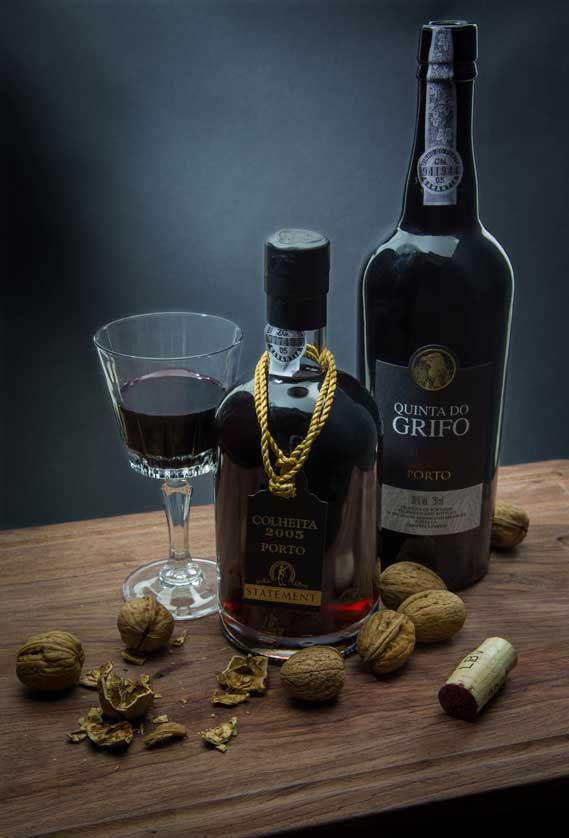
Port Wine & Madeira
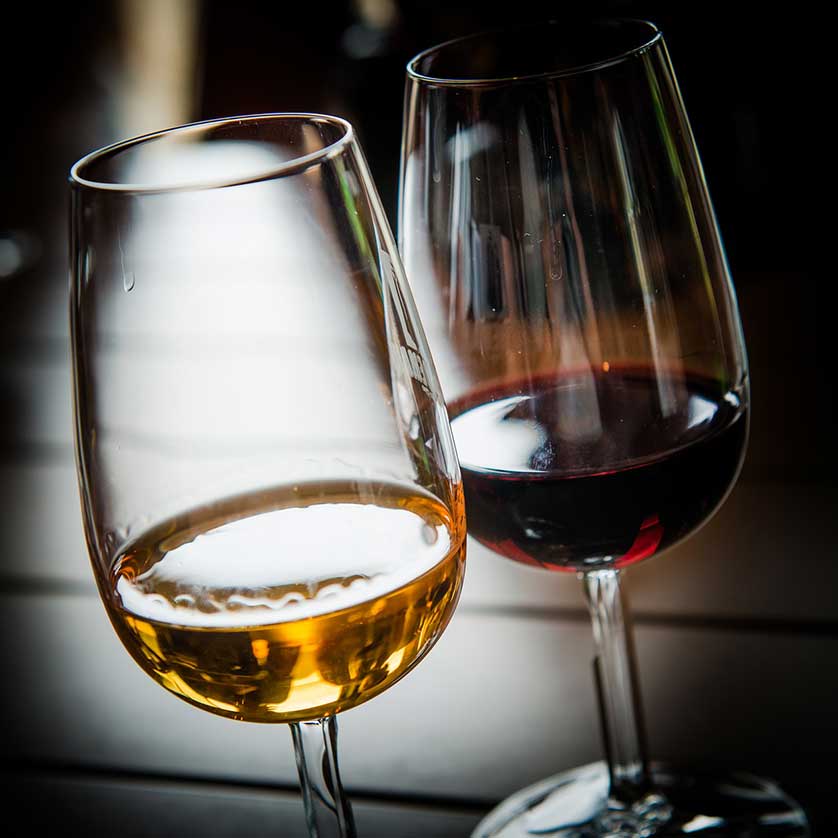
In Portuguese: Vinho do Porto
Apart from the beaches and golf, a good reason for visiting Portugal is the alcoholic beverage called 'port', named after the city of Porto, which is located near to the wine's demarcated area of production.
Port is a fortified wine; the wine has had grape brandy added to it after a couple of days' fermentation. 80% wine 20% brandy. Visit Vila Nova de Gaia, across the River Douro from Porto, to visit one of the dozens of port wine lodges and enjoy a tour and tasting.
- Tinto (red)
- Tinto Aloirado (ruby red)
- Aloirado (tawny)
- Branco (white)
- Seco (dry)
- Doce (sweet)
- Vintage Character Port (a cheaper version of Vintage Port)
- Quinta (wine estate)
- Colheita (tawny port, cask-aged for 7 years or more)
There are several types of port:
Tinto and Tinto Aloirado are dark, sweet and the cheapest. They are made from a blend of wines of lesser quality.
Tawnies can also be blended. These get their name from the colour the wine takes on after maturing, often for many years, in mahogany casks. The longer the maturation, the lighter the colour of the port.
Branco, white port, is not so well-known outside Portugal. The dry version, "seco" makes a good aperitif.
Higher quality port includes tawny aged in casks for more than 7 years: 'colheita'; through LBV (Late Bottled Vintage) which is casked for 4-6 years; to, finally, the top quality Vintage Port, bottled within 2 years and left to mature in the bottle - rather than in the cask - for 10 years or more from a single harvest before it's ready to drink - this is made from wines of exceptionally high standard and only in certain years is it produced.
Vintage Port
Vintage port refers to port wine made from the grapes of a single, exceptional year. It then spends no more than two years in a barrel or stainless steel cask before being bottled. Wines age much more slowly in a bottle than a barrel. Vintage ports require between 10 to 40 years of aging in the bottle.
Late Bottled Vintage Ports (LBVs) are produced from grapes from a single year. However, they spend more than 2 years in the barrel or cask, typically 4-6 years and are ready to drink once bottled, though continue to age in the bottle for a few more years.



Madeira
In Portuguese: Vinho da Madeira
Another fortified wine comes from the Portuguese island of Madeira.
The sweet version the English used to call "malmsey". There are two other versions: the semi-sweet "verdelho" and the dry "sercial".
Madeira was a port of call during the Portuguese Age of Discovery. Wine, as well as water and other supplies, were taken on board here prior to the long voyages to Brazil or the Far East.
To preserve the wine from spoiling during a long time at sea, neutral grape spirits were added. The heat and movement of these arduous sea journeys to Portugal's overseas territories changed the flavor of the wine.
This was recognized when a shipment of wine was returned unopened to Madeira and was found to have improved in taste after its long journey twice over the Tropics. Wine merchants in Funchal began to market vinho da roda, that is wine that had made the retuen journey to the Far East.
Vinho da roda was an expensive way of ageing and improving the wine so thereafter distilled alcohol made from cane sugar grown on the island was routinely added to Madeira's wines before it was exported.
Madeira wine became extremely popular in the USA in the 18th century. It was drunk to toast the Declaration of Independence no less.
Heroes of American independence, John Adams, Benjamin Franklin, Alexander Hamilton, Thomas Jefferson, and George Washington were all huge fans of the drink.
Production Methods
To reproduce the effects of the sea voyage and its attendant movement and heating two modern productions are used. These are the Canteiro and the Estufagem methods.
Canteiro
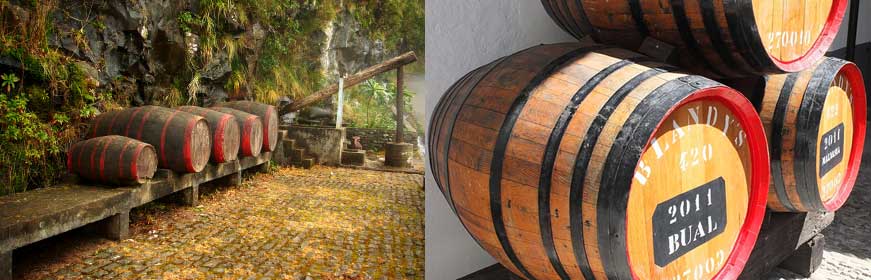
Seasoned American oak casks containing the wine are aged in the warm attics of wine producers on the island such as Blandy's. This ageing process requires a minimum period of four years and produces the highest quality Madeiras.
Estufagem
In the estufagem process, the heating temperature is controlled by the winemaker. The process is shorter at just two years after which the wines are transferred to Brazilian satinwood vats.
High value Madeira wines are often cased in wicker casks.
Dry Red Wines of Portugal
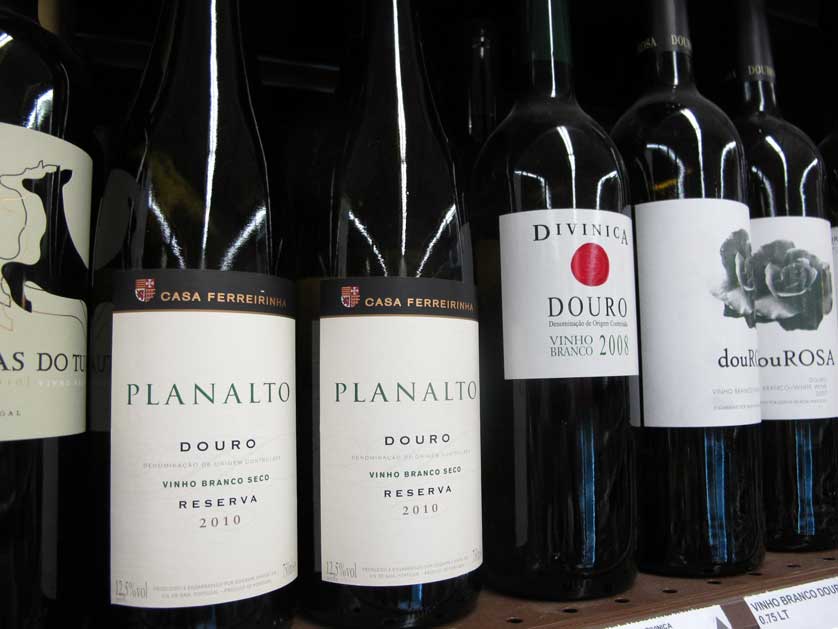
Portugal also produces some excellent dry red wines from such indigenous grape varieties as Touriga Nacional, Tinta Roriz and Touriga Franca. The Alentejo region south of Lisbon is a good source of quaffable red wines.

Other Portuguese Wines
Portuguese wines include reds (tinto), whites (branco) and vinhos verde, young, lightly sparkling, mainly white wines with some reds and the occasional rosé from the Minho region around Braga.
Vinhos verdes, lit. "green wines" refers to the age not the color of these young, light, slightly sparkling wines produced mainly in the Minho region of northeast Portugal.
The wines are drunk early as most do not mature and improve with age. Vinhos verdes combine well with seafood especially shellfish.
There are both red and rosé varieties but white is the most common. Vinhos verdes de quinta are the highest quality, produced from a single winery.
The town of Penafiel is particularly well-known for its vinho verde with production having been begun by the Benedictines who also built some lovely churches in the area. The region of production is marked by an elevated granite plateau cut by several rivers. The weather here is cooler and wetter than much of the rest of Portugal.
Wine production in Portugal goes back to pre-Roman times, with the Phoenicians and Greeks both producing wine in the region. Portuguese wines were exported to England from at least the 12th century.

Cork
As an adjunct to the wine industry, cork production has a long history in Portugal and indeed Portugal is the world's number one producer of cork. Cork oaks can live to a ripe old age and are carefully tended and cut. The trees are not felled, only the bark is taken, so their carbon storage capacity increases as they age.
Wine Links
Read more about Portuguese wine
A Wine Traveler's Guide To Portugal
Hotel Accommodation in Porto
Hotels in Porto - Booking.com
Mercure Porto Centro Santa Catarina
Book the Grande Hotel do Porto
Hotels in Portugal - Booking.com
Order your Porto Card online with Get Your Guide