Portugal Transport: Lisbon Railway Stations
Railway Stations in Lisbon
Lisbon has a number of main railway stations serving different parts of city and the rest of the country. There are coin lockers at the following Lisbon stations: Cais do Sodré, Entrecampos, Lisbon Oriente, Santa Apolónia, Rossio and Sete Rios.
See a listing of the main railway stations in the Portuguese capital.
Oriente Station
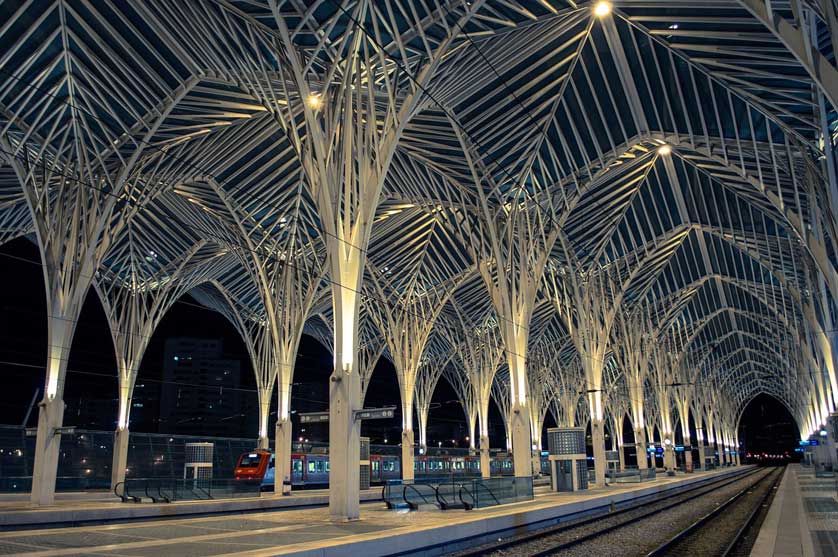
Oriente Station (Gare do Oriente), is part of the Parque das Nações district of eastern Lisbon. The modernist station building was designed by the leading Spanish architect Santiago Calatrava and was completed in time for the 1998 Lisbon Expo. Gare do Oriente includes a Lisbon Metro station on the Linha Vermelha (Red Line) and a suburban train station on the Azambuja Line that has connecting trains to Santa Apolónia, Alverca, Vila Fraca de Xera and Azambuja. The Sintra Line connects Gare do Oriente with Roma Areeiro, Entrecampos, Sete Rios, M. Abraão, Campolide and Sintra. The quickest trains from Gare do Oriente take 2 hours, 35 minutes to reach Campanha Station in Porto. Attractions near the station include the Pavilhão de Portugal, designed by Alvaro Siza Vieira, the Atlantic Pavilion (MEO Arena), the Oceanário Aquarium, the Vasco da Gama Tower, the Pavilhão do Conhecimento Ciência Viva and a cable car - Telecabine Lisboa. The whole area is near to the fantastic sweep of the 17 km long Vasco da Gama Bridge.
Santa Apolónia Station

Santa Apolónia Station is Lisbon's oldest railway station having been built in 1865. Santa Apolónia is situated in the Alfama district of Lisbon near the River Tagus. Caminhos de Ferro Portugueses (CP) trains run from here to both Paris and Madrid, including the high-speed Alfa Pendular service. Express trains to Porto depart from Santa Apolónia Station calling at Gare do Oriente. Santa Apolónia is convenient for a number of Lisbon attractions including the Museu Militar and the Museu Nacional do Azulejo.
Sete Rios

Sete Rios Station in northern Lisbon is the main bus station for long-distance buses to destinations all over Portugal. Many local Lisbon city buses also stop at Sete Rios. Sete Rios is also on the blue line of the Lisbon Metro. The metro station is called Jardim Zoológico. The Sete Rios train station has trains to Faro Station in Faro, Setubal and other destinations. Sete Rios is also a good place to find a taxi. Frequent trains from Sete Rios run to Setubal across the River Tagus operated by Fertagus. There are also several trains a day from Sete Rios to Faro in the Algarve (with connections to Lagos to the west and all stations to Vila Real de Santo Antonio to the east) taking a little over 3 hours to Faro via Tunes. The train to Evora with connections on to Beja departs from Oriente Station and stops on the way at Sete Rios. Also from Sete Rios are trains to Mira Sintra-Meleças, Torres Vedras, Obidos, Caldas da Rainha and Leiria on the Linha do Oeste.
Rossio Station

Rossio Station in central Lisbon is a temple of Neo-Manueline architecture and a major transport hub for the Lisbon city bus, subway, taxi, and tram network. The late 19th century building complete with horseshoe shaped arches and ornamental clock was designed by José Luís Monteiro and is the main rail gateway to Sintra. The station is close to the metro stations of Rossio and Restauradores with the latter station having pedestrian connections to Rossio Station. There are trains to Sintra Station approximately every 15 minutes from Rossio on weekdays and every 30 minutes on weekends, with the journey between Lisbon and Sintra taking 39 minutes. On weekdays after 8.38 pm the service is every 30 minutes.
Rossio is close to the Igreja de São Roque, its adjacent Museu de São Roque, the Igreja de São Domingos and the Teatro Nacional D. Maria II. The Ascensor da Glória, the Monumento aos Restauradores and the Palácio Foz are all just a minute or two from the station. For a shot of traditional Portuguese cherry liqueur try the historic A Ginjinha. For a coffee, do not miss out on the historic and iconic Café Nicola. The elegant interior of Café Nicola is characterized by its classic decor, featuring Art Deco elements and a warm ambiance that harks back to a bygone era.
Restauradores Station
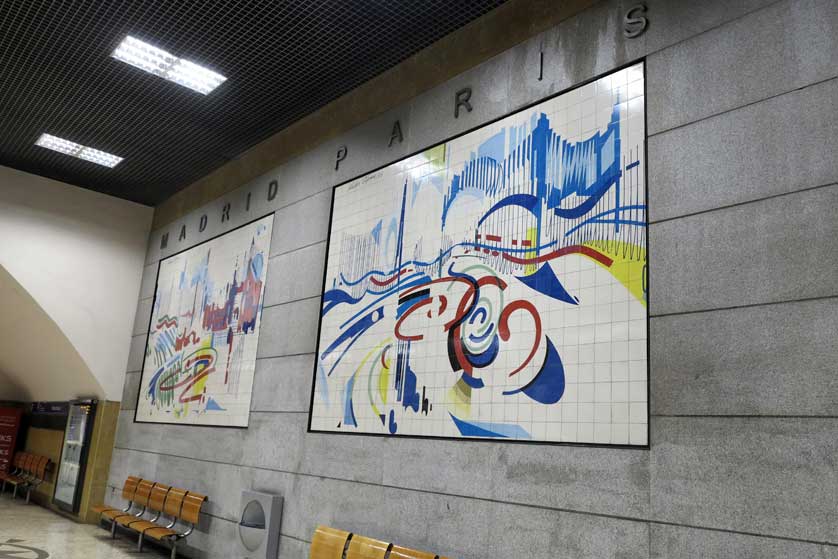
Restauradores Station in central Lisbon is located on Praça dos Restauradores. It is close to Rossio Station and connected to it by a pedestrian pathway. The station opened in 1959 and was one of the original 11 stations of Lisbon's metro. The station has been refurbished several times since it opened. Restauradores is on the Blue Line of the Lisbon metro between Reboleira and Santa Apolónia. Heading south the next station is Cais do Sodré and north is Rato.
Restauradores is within walking distance of the Igreja de São Domingos, the Igreja de São Roque, the Museu de São Roque and the Teatro Nacional D. Maria II.
The Ascensor da Glória, the Monumento aos Restauradores (Monument to the Restorers) and the Palácio Foz are all just a minute or two from the station.
Ride the to Ascensor da Glória to the São Pedro de Alcântara Viewing Point for great views of Lisbon Castle, the River Tagus and Alfama.
Cais do Sodré

Cais do Sodré Station includes a metro station on the Linha da Caravela (Green) Line and a suburban train station on the Cascais Line (Linha de Cascais) that has connecting trains to Santos, Alcantara Mar, Belem, Algés, Cruz Quebrada, Caxias, Paco de Arcos, Santo Amaro, Oeiras, Carcavelos, Parede, S. Joao, S. Pedro, Estoril, Monte Estoril and Cascais. There are also ferries across the River Tagus from Cais do Sodré to Cacilhas, Seixal and Montijo.


Belém Station
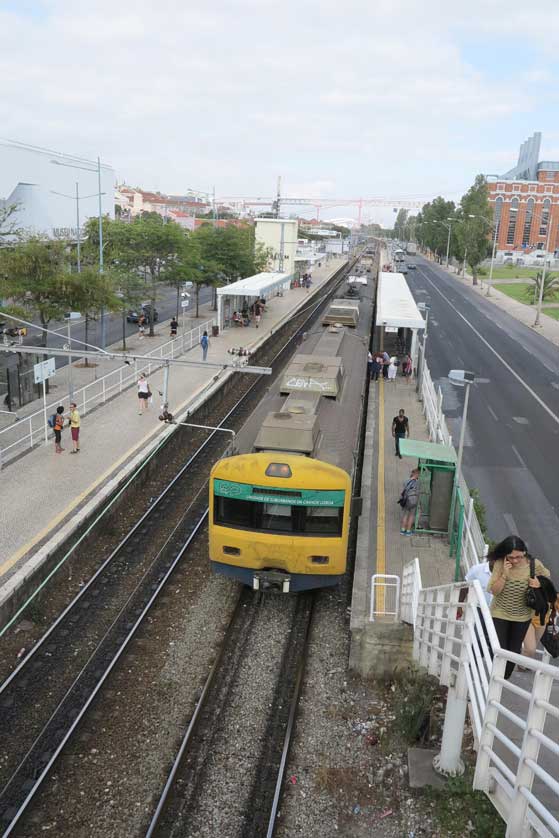
Belém Station is a railway station on the Cascais Line (Linha de Cascais) from Cais do Sodre to Cascais. Belem Station is handy for seeing the sights in Belém and is located close to the Estação Fluvial de Belém, the Museu Nacional dos Coches, MAAT and the Jardim do Ultramar. A short walk from the station is the pleasant Jardim Afonso Albuquerque.
Sintra Station

Sintra Station connects on the Sintra Line to Rossio Station, Oriente, Entrecampos, Sete Rios and Campolide. Sintra Station dates from 1887 and is a lovely station decorated with azulejos tile work on its walls. Located on Avenida Dr. Miguel Bombarda, Sintra Station is a 1.5 km walk to the center of Sintra town or there is a bus or taxi to Sintra's main historic attractions from outside the station.
The many attractions in Sintra include the Palácio Nacional, the hilltop Palácio Nacional de Pena and the Castelo dos Mouros - Castle of the Moors.
Campolide Station

Campolide Station is south of Sete Rios and is a station on the Fertagus Line to Setubal as well as a station for suburban trains on the Sintra and Azambuja lines. The modern station building has a number of art works including sculptures by Francisco Simões, contemporary azulejos tiles by Eduardo Nery and Andreas Stocklein, in addition to sculptures by Charters de Almeida in front of the building. Campolide is close to the historic and impressive Águas Livres Aqueduct.
Cascais Station

Cascais Station is the western terminus of the Linha de Cascais (Cascais Line) from Cais do Sodre Station in Lisbon. Fairly frequent trains ply between Cais do Sodre, Estoril and Cascais. The train journey from Cais do Sodre Station to Cascais takes 30-40 minutes. Tickets are inspected on the train and should be bought before boarding. This is also the train to take to Belem for the Mosterio dos Jerónimos, the Monument to the Discoveries (Padrão dos Descobrimentos) and the Torre de Belem.
Roma-Areeiro Station
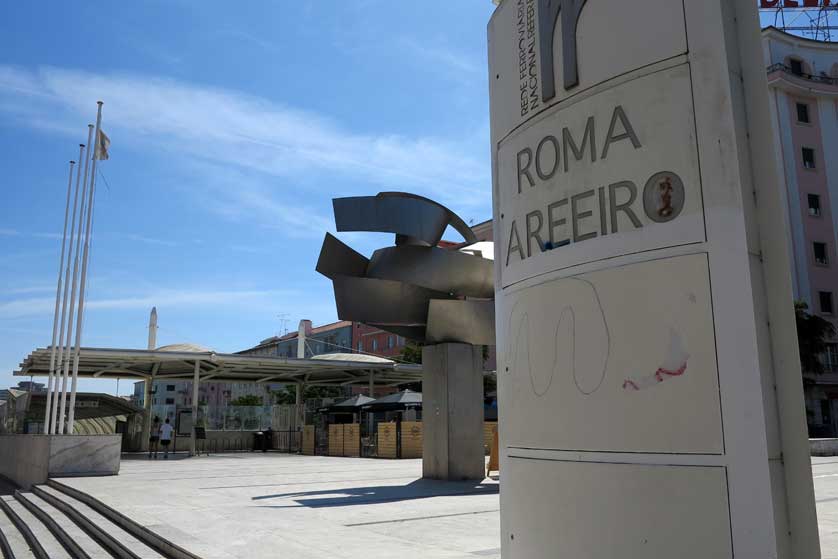
Roma-Areeiro Station is on the Fertagus line over the River Tagus to Setubal and both the Sintra Line (Linha de Sintra) to Sintra and the Azambuja line (Linha Azambuja) north east to Azambuja. Roma-Areeiro Station is also a short distance from both Areeiro Station and Roma Station on the Lisbon metro. Lisbon buses #705, #727 and #793 connect to the station. The Fertagus Station has arts works by sculptor Fernando Conduta and a shopping center.
Entrecampos Station
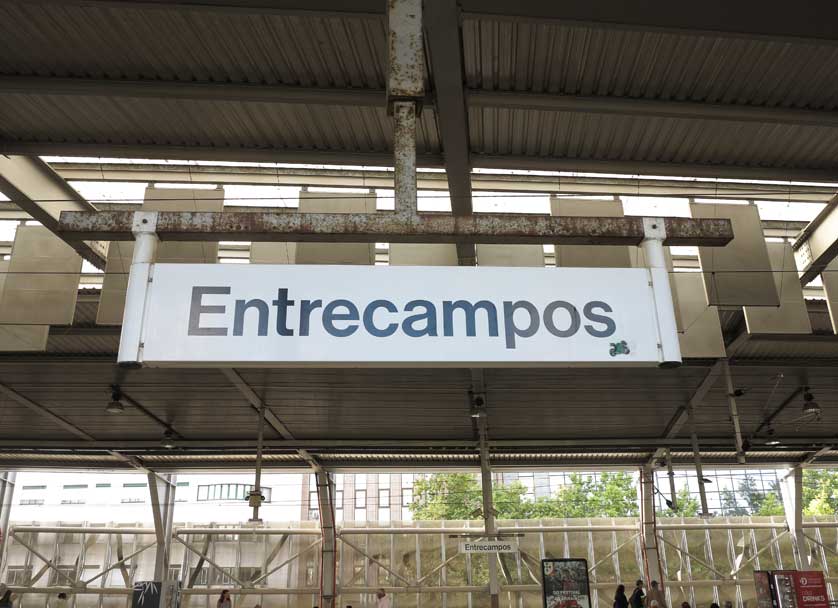
Entrecampos Station is a major station in the capital. It is on both the Fertagus line over the River Tagus to Setubal and the Sintra Line (Linha de Sintra) to Sintra. The station is also on the Lisbon metro. A number of Lisbon buses stop at or close this station including the AeroBus to Lisbon Airport. The station concourse has several shops and cafes. The large station building also includes a supermarket. Several hotels are located nearby including the recommended four star VIP Executive Entrecampos - Hotel & Conference.
Coina Station
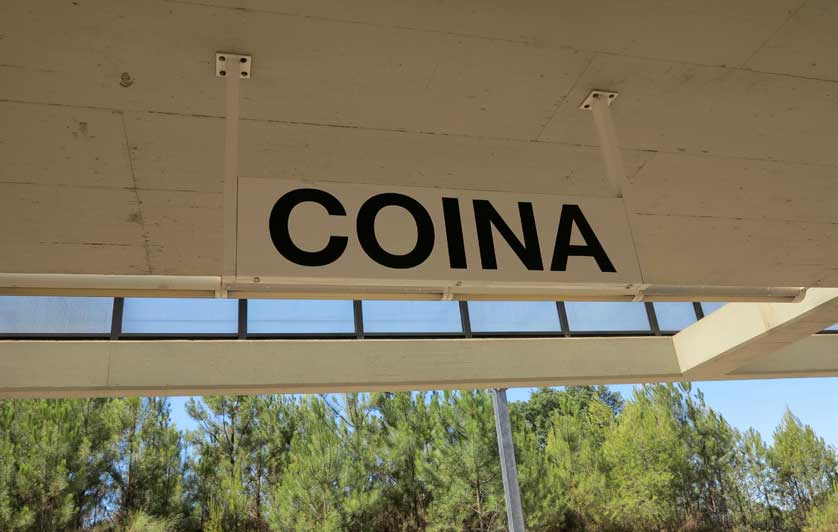
Coina Station is a railway station south of the River Tagus and the city of Lisbon. It is on the Fertagus line to Setúbal from Roma-Areeiro Station. The station is light, clean and spacious. It was designed in concrete and glass by Portuguese architect Motta Guedes. There are also art works by Charteres de Almeida and Nadir Afonso. Coina Station opened in 2004.
Setúbal Station

Setúbal Station is the major point of access for the city of Setúbal. It is on both the Fertagus line over the River Tagus south to Setúbal and the Sado Line (Linha de Sado) to Barreiro. The Sado Line runs between Praias do Sado-A Station and Barreiro. From here there are Soflusa ferries across the Tagus to Terreiro do Paço on the Lisbon metro network. The first station here dates from 1861. Transportes Sul de Tejo (TST) buses run from outside the station.
Monte Abraão Station
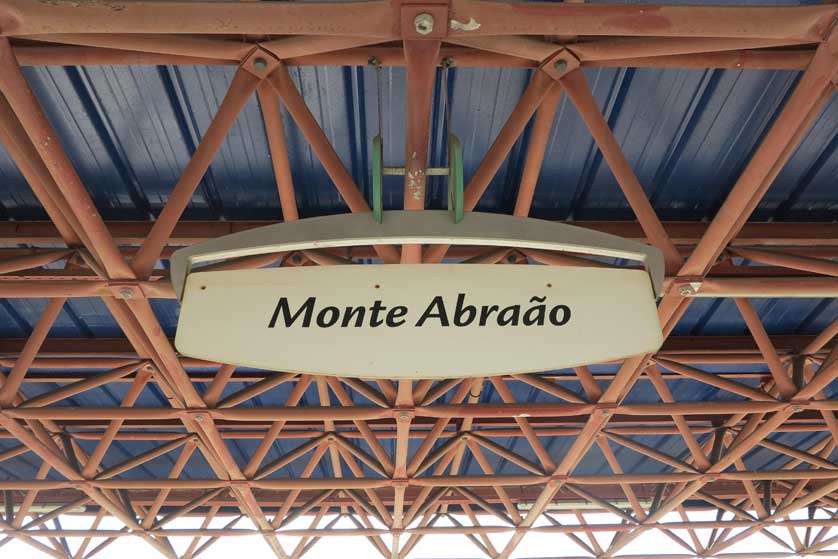
Monte Abraão Station is on the Sintra Line (Linha de Sintra) west to Sintra and the Azambuja Line to the suburb of Azambuja. Along with the previous station of Queluz - Belas, it is convenient for the Queluz National Palace (Palácio Nacional e Jardins de Queluz). From either station is a twenty minute walk to the palace or a short taxi ride.
Queluz-Belas Station
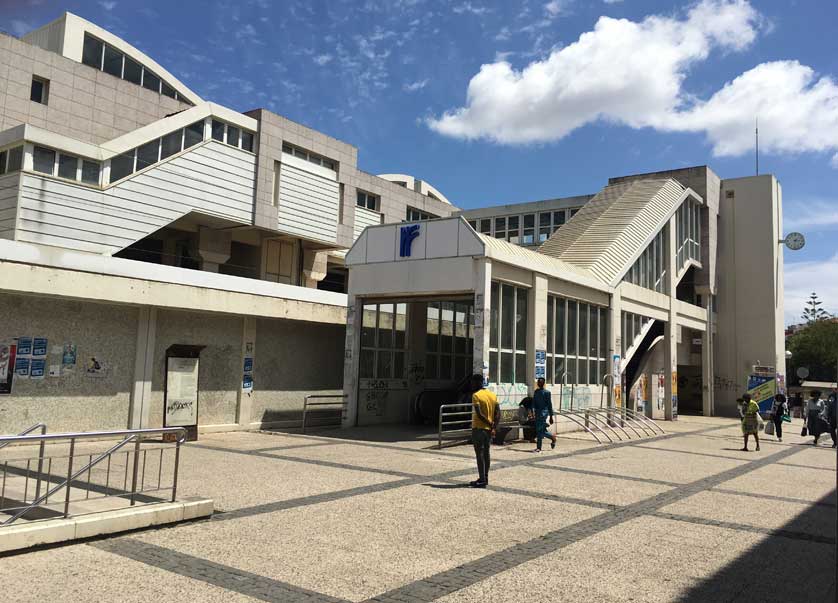
Queluz-Belas Station is the previous station to Monte Abraão Station when traveling west on the Sintra Line (Linha de Sintra). The station is convenient for visiting Queluz National Palace (Palácio Nacional e Jardins de Queluz) and is close to parts of an historic aqueduct that used to carry water to the palace.
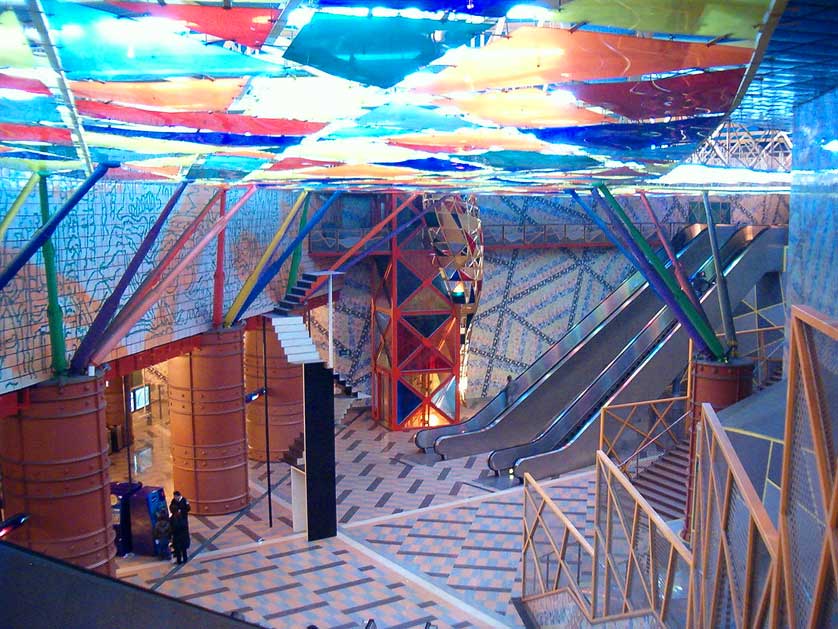
Olaias Station (Estação Olaias)
Olaias Station is a station on the Red Line (Linha Vermelha) of the Lisbon Metro in northeastern Lisbon.
Olaias Station has some of the most spectacular modern art on the Lisbon metro. The station itself was designed on a grand scale by Portuguese architect Tomás Taveira who was also responsible for Aveiro Stadium in Aveiro, Sporting's Estádio José Alvalade in Lisbon and Leiria Stadium in Leiria.
Paço de Arcos Station
Paço de Arcos Station in western Lisbon close to the River Tagus is a station on the Cascais Line (Linha de Cascais) from Cais do Sodré Station to Cascais Station in Cascais. It serves the pretty district of Paço de Arcos in Oeiras and is also a hub for local buses and taxis. Just under a kilometer west of the station is the charming Parque dos Poetas - an urban sculpture park.

Estoril Station
Estoril Station on the Cascais Line is the gateway to the pleasant resort of Estoril on the Lisbon coast. A stone's throw from both Tamariz Beach and Casino Estoril, it is just two stops from the terminus of the Linha de Cascais at Cascais.
Estoril exudes an air of old-world glamour with its casino, upmarket hotels and the pleasant Tamariz Beach, reached by a tunnel from the station. Visitors can explore the town's quiet residential streets lined with upmarket cafes, shops, and restaurants.