Pena Palace, Sintra
Pena Palace (Palácio da Pena) - Europe's most Romantic-style castle

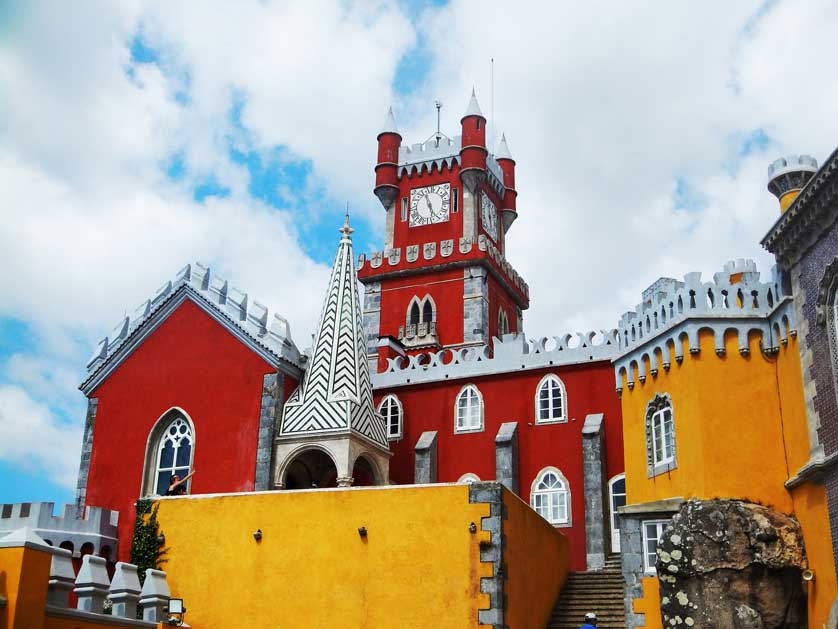
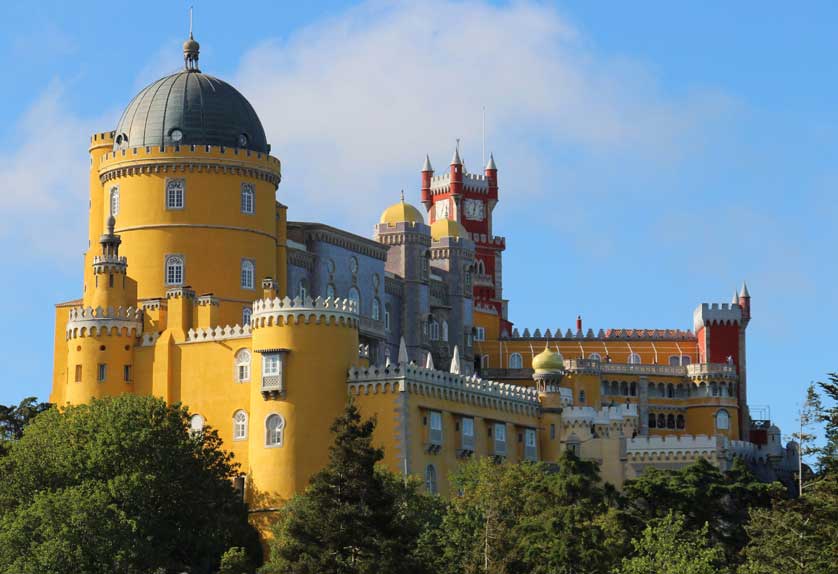
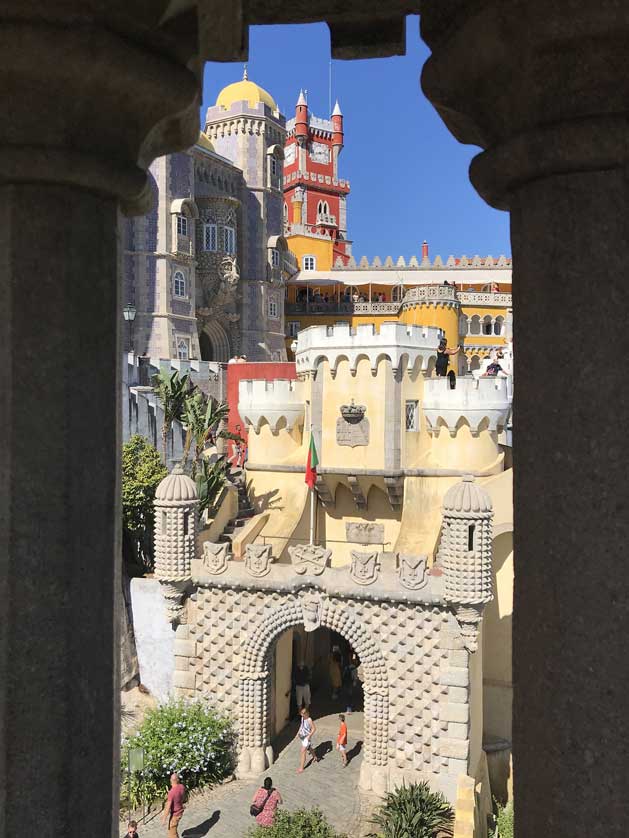
Pena Palace (Palácio da Pena) is part of the UNESCO World Heritage cultural landscape in Sintra and has been described as Europe's most Romantic-style castle.
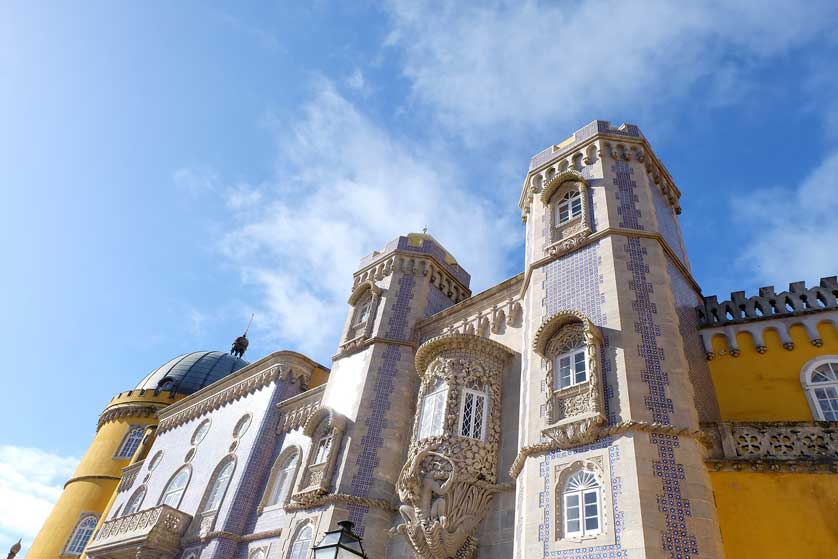
Architecturally it is a potpourri of styles spanning many continents and ages from Gothic, to Renaissance, to Moorish. Highlights include the Manueline cloister, the bedroom of Ferdinand II, the chambers of King Carlos, and the dining room and pantry.
History
Pena Palace began in the 14th century as a small chapel built on a hill, dedicated to Our Lady of Pena. Years later during the reign of King Manuel I, St. Jerome's monastery was added and was acquired by the Hieronymite Order.
In the 18th century, the monastery was first struck by lightning, and then, more seriously, by the 1755 Great Lisbon Earthquake. The chapel, by contrast, survived virtually intact.
The king consort in the mid-19th century, Ferdinand II, was a German by birth. He was charmed and fascinated by this little chapel and the ghostly ruins of the monastery so acquired the site (along with the nearby Castle of the Moors) and set out rebuilding what had been the old monastery as a royal summer residence.
The job of designing the new palace was given to the amateur German architect, Baron Wilhelm Ludwig von Eschwege, and construction took place from 1842 to 1854. King Ferdinand and Queen Maria II also had extensive say in the design. The vault arches and the Islamic and Medieval aspects of the design including the Manueline window, a copy of the famed window in the Convento de Cristo in Tomar are among the features ordered by the royal couple.
After Ferdinand's death the palace became the property of his second wife, the Swiss-American actress and opera singer, Elisa Hensler, Countess of Edla. She subsequently sold the property to King Luís (1838-1889).
King Carlos I (1863-1908), his wife Queen Amelie of Orleans (1865-1951) and their son Manuel II also used the palace as a summer retreat.
Following the Republican Revolution of 1910 the palace became a national monument and museum.

Palace
The Palácio da Pena has many distinct areas reflecting its use as summer residence, a religious space and also an office lay out for the royal family.
The Bedroom of Ferdinand II was where the king broke convention and shared his sleeping space with the Countess of Edla after the death of his first wife. The ornate decoration is in Neo-Mudéjar style with painted plaster.
The Chambers of King Carlos, Ferdinand's grandson, include his unfinished erotic tapestries depicting nymphs and fawns from the gardens. The king was assassinated in Praça do Comércio in Lisbon before they could be finished.
Spectacular in design is the Sitting Room, the work of Paolo Pizzi containing the room's original and opulent furnishings.
The Green Room is an antechamber to the Sitting Room and retains its original chiaroscuro design complete with busts of monarchs and an allegory of winter.
The Dressing Room of Queen Amelia adjoins an exquisite Tea Room where the Queen would enjoy her morning and afternoon tea.
The former refectory of the convent was transformed by King Ferdinand into the royal Dining Room. The room and adjoining pantry are preserved with the original 19th century porcelain tableware enjoyed by the royal family.
The Queen's Office was the working space of both the Countess of Edla and later Queen Amelia. Note the Meissen porcelain, Spanish furniture and superb ceiling.
The Chalet and Garden of the Countess of Edla is done in Alpine style. It was built between 1864 and 1869 and is set in a lush garden.
Gentlemen retired after dinner to the Smoking Room decorated in Islamic style with Portuguese oak furniture.
The Stag Room references a similar space at the Mafra Palace. A dining room the space is aristocratic, displaying the trophies of royal hunts. The deer heads are ceramic but with real antlers.
For superb views, the Queen's Terrace has sight lines out west to the sea and east back to Lisbon.
The Chapel
The chapel is a reworking of the original Monastery Church of Our Lady of Pena.
The stained glass window was installed by Ferdinand II and dates from 1840.


The Garden
The 200-hectare garden is also the work of King Ferdinand II and von Eschwege.
Ferdinand II's vision for the park was a blend of wild tropical forests and the grand woods of Germany.
The garden is noted for its diverse plantings of Chinese ginkgo, Japanese Cryptomeria, North American sequoia, Lawson's cypress, magnolia and Western redcedar, and a variety of ferns from both Australia and New Zealand.
The grounds constitute one of the most important arboretums in Portugal with species from every continent.

Information
Estrada da Pena
2710-609 Sintra
Tel: 21 923 73 00
www: parquesdesintra.pt
The palace opens from 9.30 am to 6.30 pm; the park is open from 9 am to 7 pm.
There are reductions with the Lisboa Card.
From Sintra Station take the 434 (Scotturb) bus.
Book tickets for the palace and gardens with Tiqets
Other palaces in Sintra include the Palácio Nacional de Sintra, the Palácio de Monserrate, the Palácio de Seteais and the Quinta da Regaleira. Further attractions are the Convento dos Capuchos, the Castle of the Moors, the recent NewsMuseum and the Museu Anjos Teixeira. The Camara Municipal de Sintra (Sintra Town Hall) is also a wonderful piece of architecture completed in 1909 in a pleasing fusion of Manueline and Romantic styles.
Getting to Sintra
Buses
There are local buses from Sintra to Cascais (#417), Estoril (#418) and Mafra. From Sintra Station a number of buses run by Scotturb around the sights. Bus #433 (Urbana Sintra) runs into historic Sintra on a circular route. Bus #434 (Pena Tourist) leaves the station 3 (in winter) or 4 times an hour for Sintra Castle, Pena Palace, Vila and Sintra NewsMuseum. Bus #435 also connects to various destinations in the historic center. To get to Cabo da Roca take either bus #403 or the open top tourist bus, Circuito da Roca.

Trains
Sintra Station connects on the Sintra Line to Rossio Station, Oriente, Entrecampos, Sete Rios and Campolide.
There are trains to Sintra approximately every 15 minutes from Rossio on weekdays and every 30 minutes on weekends, with the journey between Lisbon and Sintra taking 39 minutes. On weekdays after 8.38 pm the service is every 30 minutes.
The first train from Rossio is at 6.08 am with the last train at 1.08 am. The last train from Sintra to Rossio leaves Sintra at 12.44 am.


Portugal Hotel & Hostel Accommodation
Recommended accommodation in Sintra must include the Tivoli Palácio de Seteais. It is a luxury 5-star hotel set on a hilltop with superb views of the Moorish Castle and Pena Palace. Facilities include a swimming pool, tennis courts and an equestrian center.
Book Hotel Accommodation in and around Sintra
The four-star Pestana Hotel offers a golf course and outdoor pool.
Tivoli Sintra Hotel, also four-star, has well-appointed guest rooms and superb views complete with a recommended restaurant and bar.
With three stars the VIP Inn Miramonte Hotel has an outdoor pool and games room.
See a complete listing of hotels and guesthouses in Sintra.
Hotels in Portugal - Booking.com
Hotels in Lisbon - Booking.com
Lisbon Hop-On Hop-Off Bus, Tramcars, and Yellow Boat River Tour
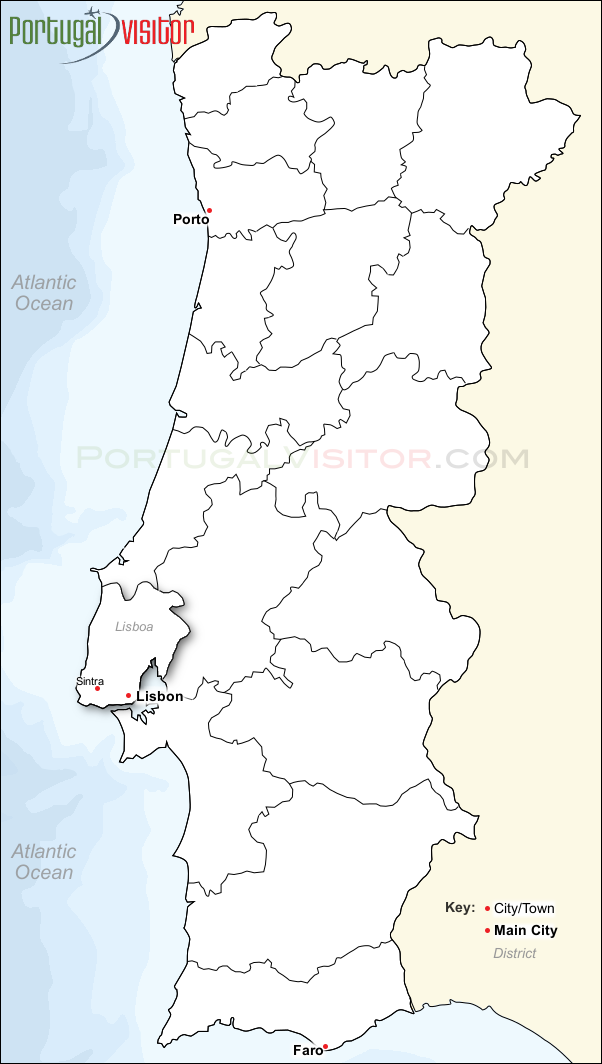
Map