Fátima: City of Pilgrimage
Holy Fátima
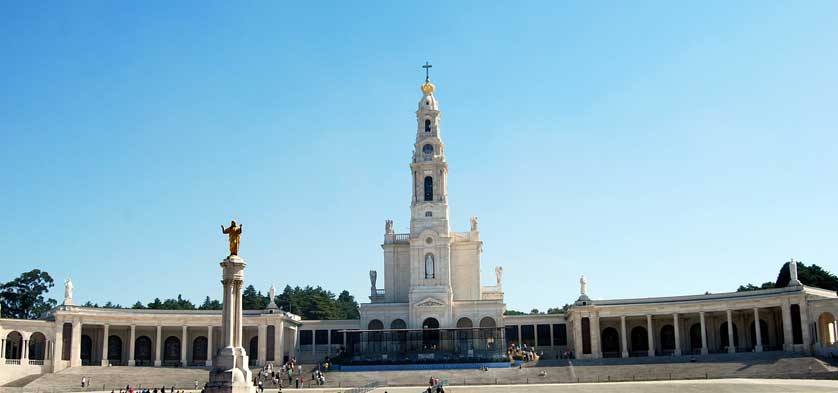
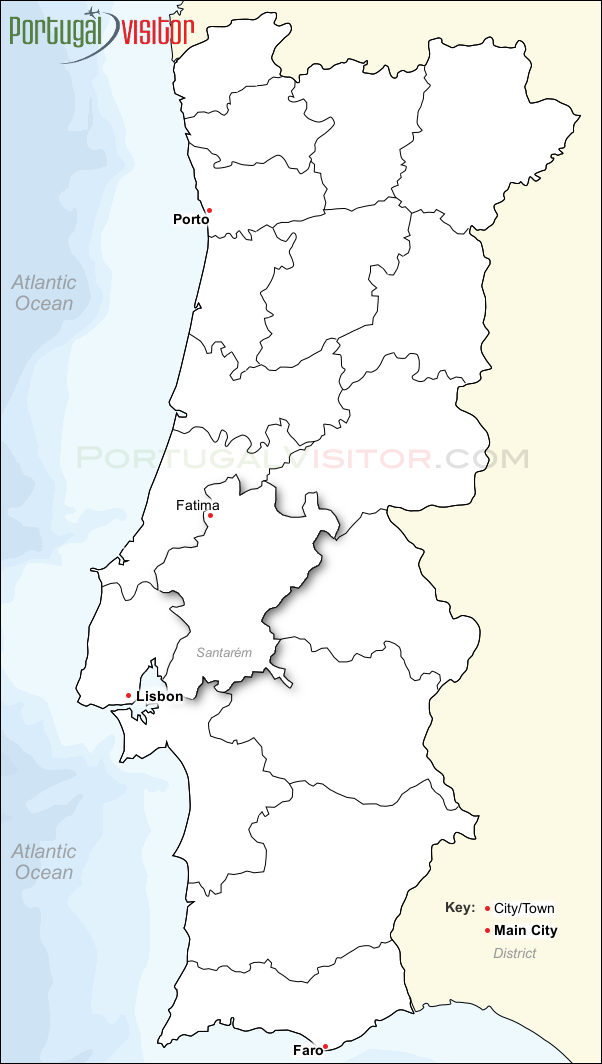
Fátima is a world famous pilgrimage town in the Estremadura region of Portugal, 128 km north of the Portuguese capital Lisbon and close to the historic town of Tomar.
Second only to Lourdes as Europe's major pilgrimage center, the small town of Fátima with around 8,000 inhabitants, welcomes millions of devotees a year who come to pray at the site of a miraculous apparition of the Virgin Mary here in 1917.
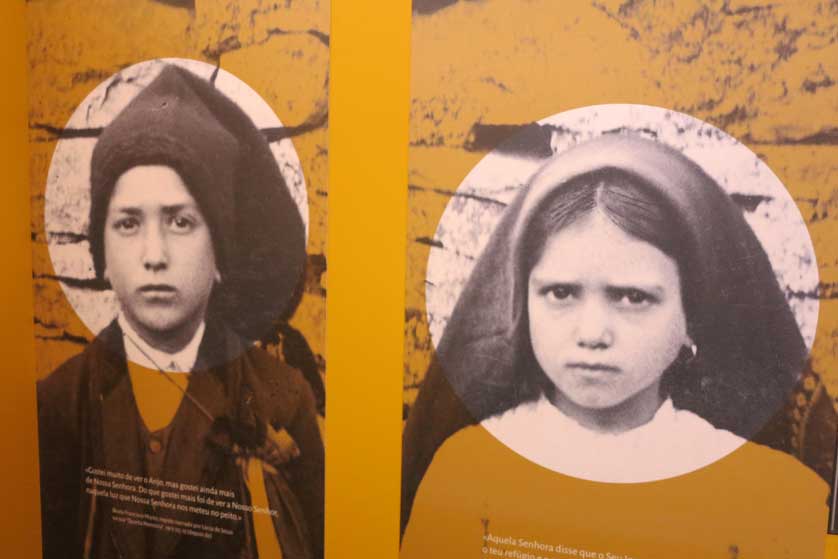
Three shepherd children had a vision of Mary, who supposedly reappeared on the 13th of each of six subsequent months calling for peace in the world.
On the day of the final apparition a crowd of over 70,000 people had gathered and claimed to witness the Miracle of the Sun, when illnesses and disabilities were cured among the onlookers. One of the children Lucia is said to have received "Three Secrets" from the Virgin.

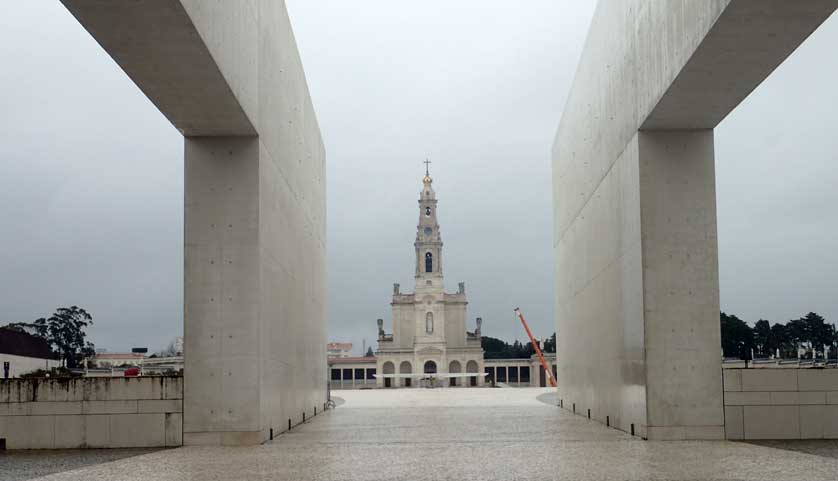
A vast white Basilica and esplanade were completed in 1953 as a shrine for the ever growing numbers of pilgrims flocking to the town. The courtyard outside the basilica is double the size of the square in front of St. Peter's Church in Rome.
The Sanctuary of Our Lady of Fátima (Santuário de Nossa Senhora de Fátima) consists of various Marian religious sites. These are the Basilica of Our Lady of the Rosary (Basílica de Nossa Senhora do Rosário), the Monumento ao Sagrado Coração de Jesus, the Basilica de Santissima Trindade, the Chapel of the Apparitions (Capelinha das Aparições) and the oak tree close to where the apparitions took place.
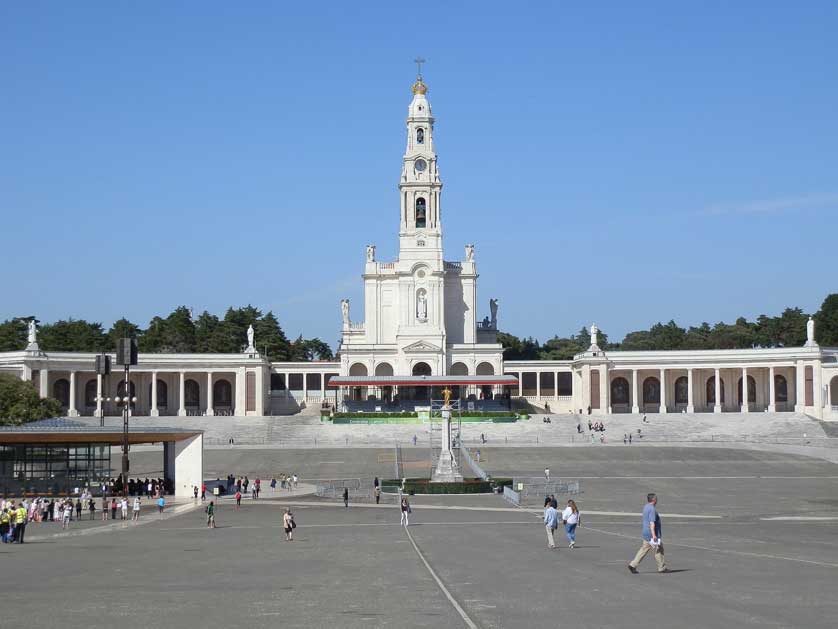
Fátima remains a strange mix of devotion and commercialism with shops selling a mind-boggling array of religious souvenirs to visitors.
Fatima is at its busiest during the major annual pilgrimages of May 12-13 and October 12-13.
Development is ongoing at Fatima and many new museums and places of interest are being built in the town.
Sacred Places in Fatima
The plain and simple, Capelinha das Aparições (Chapel of the Apparitions), now contained within a larger, protective building, is located at the exact point of the apparitions, which occurred over an oak tree.
A marble pillar and case enclosing an image of the Virgin Mary are within the church. The crown of the Virgin contains the bullet that was removed from Pope John Paul II after an attempt on his life in 1981, coincidentally on May 13, the anniversary of the first apparition in Fatima. Pope John Paul II claimed that his survival was due to intervention by the Virgin and he came to Fatima to give his thanks in 1987.
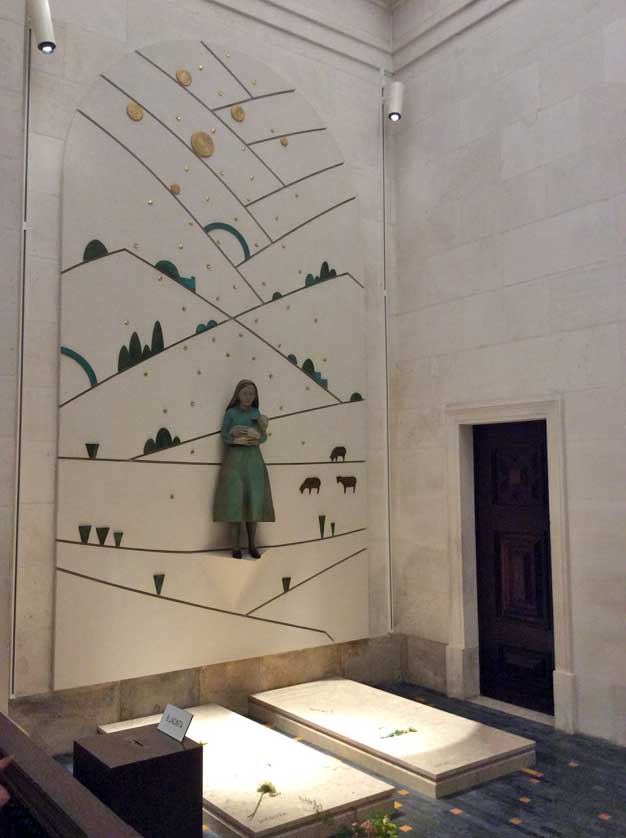
The huge, white Basilica de Nossa Senhora do Rosário de Fátima was completed in 1953 after work started in 1928. Inside the Neoclassical church are the tombs of Lucia, Jacinta and Francisco - the three children who saw the apparition of Mary. Jacinta (1919) and Francisco (1920) perished young in the Spanish flu epidemic but Lucia was to become a Carmelite nun and lived in a convent in Coimbra until her death in February 2005, also on the 13th of the month.
The spire of the church rises to 65 meters and the front of the church is flanked by colonnades facing the huge square. The interior includes stained glass windows depicting the events of the Marian apparitions. There are 15 altars within the church mirrowing the 15 mysteries of the rosary.
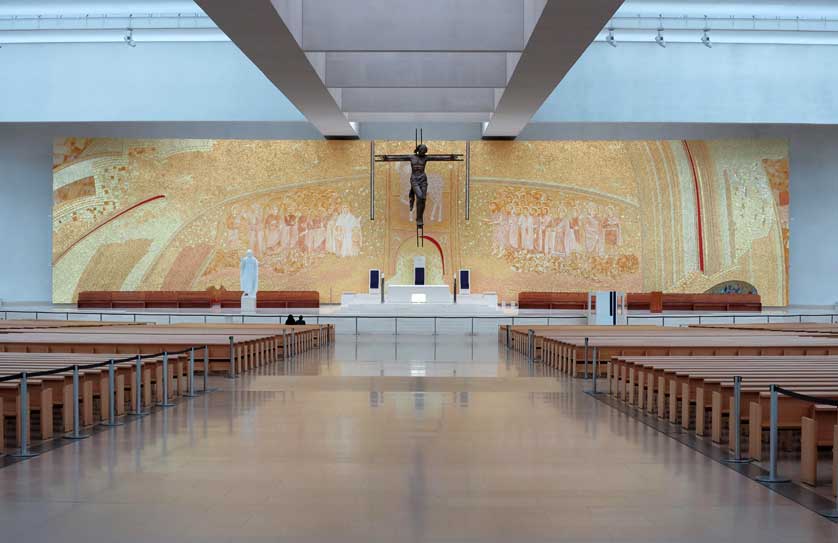
The Basilica de Santissima Trindade (Basilica of the Holy Trinity), at the other end of the massive square, is a contemporary building consecrated in 2007.
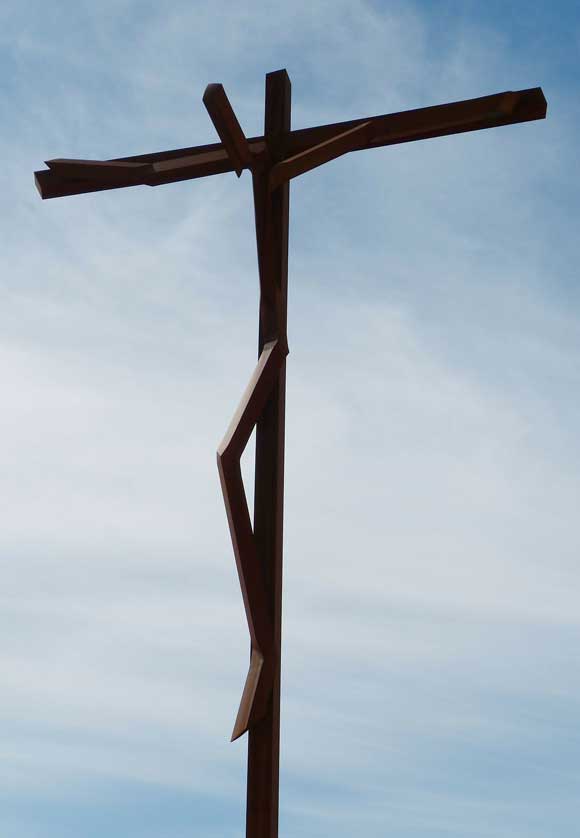
The huge basilica, designed by Greek architect Alexandros Tombazis, is one of the largest Catholic churches and can hold 8,500 worshippers. The sculpture of Christ Crucified outside the church is by German artist Robert Schad.
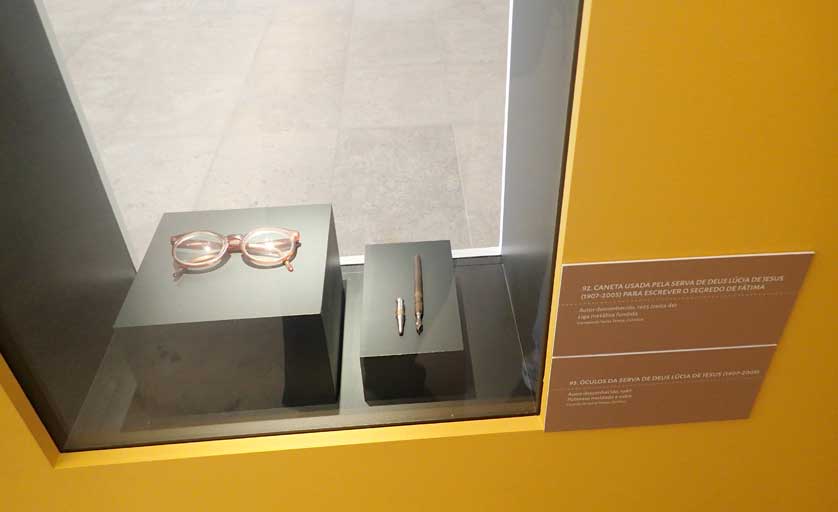
The ground floor of the Basilica of the Holy Trinity holds temporary exhibitions of the permanent collection of objects dedicated to the apparitions at Fátima. Exhibits range from historic religious artifacts to the rosaries, walking sticks and sandals of pilgrims to Fátima, to the pen used to write the Secrets of Fatima and the eyeglasses of Lucia.
Fatima's other attractions include the Wax Museum (Museu de Cera) which recreates the miraculous events at Fátima in wax. There are wax figures of the Virgin meeting the three children, Pope John Paul II and of Lucia in later life as a nun.
The Museu de Arte Sacra e Etnologia de Fátima (Sacred Art and Ethnology Museum of Fátima) exhibits a large collection of religious art as well as folk art of a Christian nature such as dolls of Jesus, Nativity scenes and cribs collected from all over Portugal from the 14th century on. There are also exhibits from Portugal's ex-colonies in Africa, America and the Far East reflecting the missionary work of Portuguese priests overseas.

Turismo
Avenida Dom José Alves Correia da Silva
Tel. 249 531 139
10 am-1 pm; 3 pm-7 pm May-October. Closing at 6 pm at other times.
Arrival
There are trains from from Lisbon's Gare do Oriente to Fatima Station (20 km from town) or Caxarias (22 km away) from where buses or taxis run into Fatima itself. The quickest Intercidades (Inter City) trains take just over one hour from Oriente to Fatima with slower trains requiring a change at Entroncamento making the journey in around 1 hour and 50 minutes.
Much more convenient is to take a frequent and direct bus from Lisbon's Sete Rios bus station. The journey takes 90 minutes to Fatima Bus Station (Terminal Rodoviário de Fátima) and there are departures every hour from 7 am-7.30 pm. Buses from Leiria take just 25 minutes to Fatima. From Tomar Station there are Tejo buses taking about 44-55 minutes to Fatima (Cova da Iria) via Ourém. On weekdays buses leave Tomar at 7.50 am, 9.55 am, 12.50 pm and 5.25 pm.
See www.rede-expressos.pt and www.rodotejo.pt for further details.
From Lisbon Airport drive north on motorway A1. The journey should take around 1 hour and 15 minutes.
Accommodation in Fatima
Fatima has literally hundreds of hotels and guest houses that cater to the estimated 4 million pilgrims who visit Fatima every year.
Places to stay in Fatima include Avenida de Fatima, Hotel Lux, Hotel Lux Mundi, Hotel Anjo de Portugal, Luna Fatima Hotel and Cova da Iria Hotel.
A recommended guest house is Joe's House with family rooms and a picnic area. Also on the same street, Av. João XXIII, are the Hotel Mateus and Casa Talica.
See here for a full list of hotel accommodation in Fatima.
It is also possible to stay in nearby Ourém, 12 km to the east.
Entertainment
There are plenty of good restaurants on Rua Jacinta Marto near the Wax Museum including A Grelha (agrelharestaurante.com) and Restaurante Turpial.
Festivals
Every evening there is a torch lit procession in Fatima but the main gatherings are during the summer months and on May 13 and October 13 each year.
Internet
Your accommodation will most likely have Wifi internet.
Map of Fatima, Leiria & Tomar
Nearby
Other places to visit in the Estremadura region of Portugal include Alcobaça, Batalha, Caldas da Rainha, Ericeira, Foz do Arelho, Golegã, Leiria, Mafra, Nazaré, Óbidos, Ourém, Peniche, Santarém, Tomar, Torres Vedras and Vila Franca de Xira.