Basilica de Nossa Senhora do Rosário de Fátima, Fátima
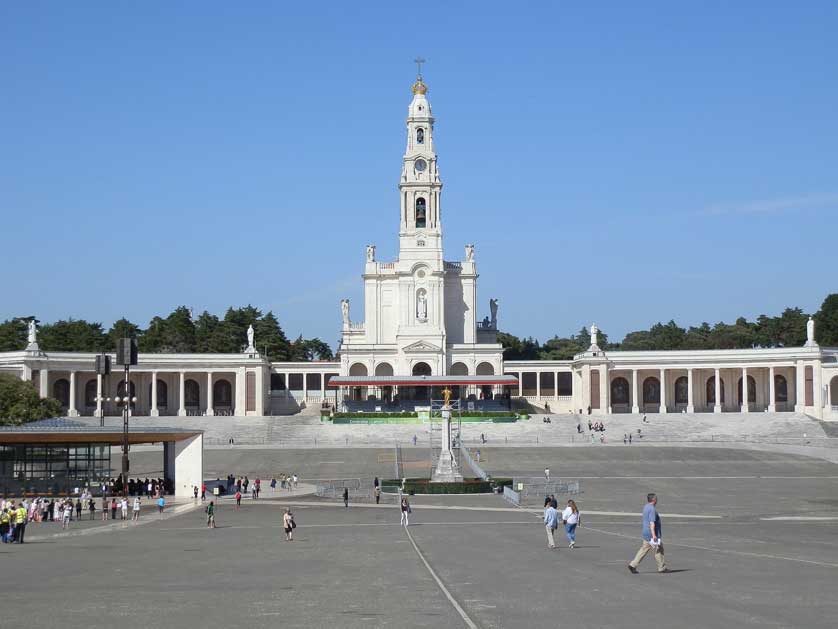
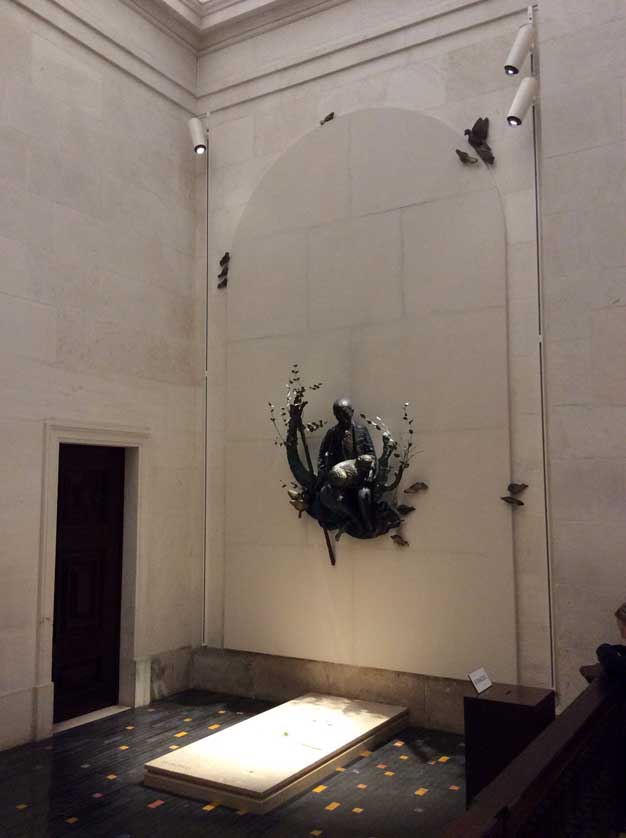
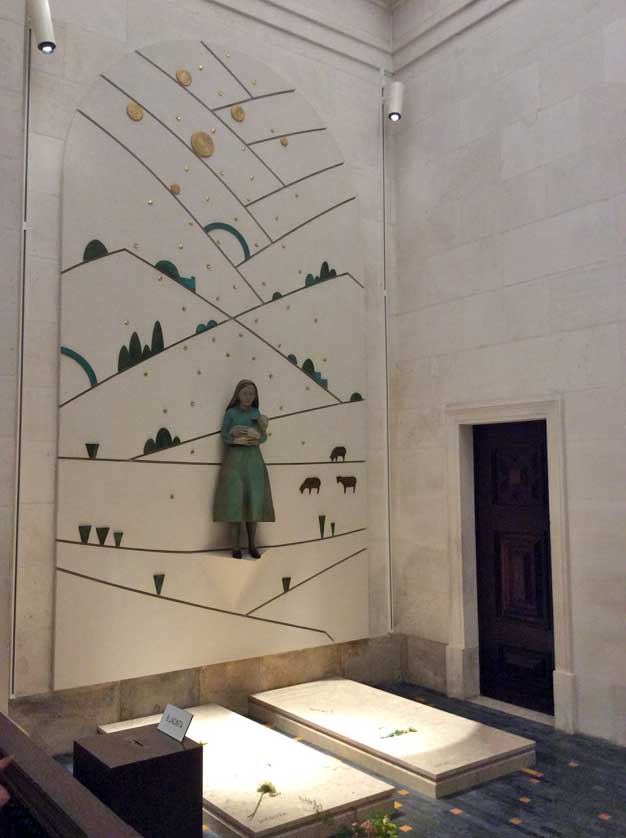
The Basilica de Nossa Senhora do Rosário de Fátima (Basilica of Our Lady of the Rosary) in Fátima holds the tombs of Lucia, Jacinta and Francisco - the three children who saw the apparition of Mary in 1917.
Jacinta (1919) and Francisco (1920) perished young in the Spanish flu pandemic but Lucia was to become a Carmelite nun and lived in a convent in Coimbra until her death in February 2005, also on the 13th of the month.
The church is part of the Sanctuary of Our Lady of Fátima (Santuário de Nossa Senhora de Fátima), which consists of various Marian places of devotion and worship in the town.
History
Work began on the huge white basilica in 1928 and was completed in 1953. The original design was by the Portugal-based Dutch architect, Gerardus Samuel van Krieken (1864-1933). His other works in Portugal include the stained glass at the Livraria Lello in Porto. After his death the building work was continued by João Antunes, a Portuguese architect with a famous 17th-18th century namesake.
The spire of the church rises to 65 meters and the front of the church is flanked by colonnades facing the huge square. This is the work of António Lino (1914-1996) and consists of 200 columns surmounted by 17 statues of saints with the tallest rising to over 3 meters in height. Lino collaborated with the ceramicist Manuel Cargaleiro in creating the ceramics within the colonnade.
The spire is topped with a 7000 kg bronze crown, built at the Bolhão foundry, Porto, surmounted by a cross, which is illuminated at night.
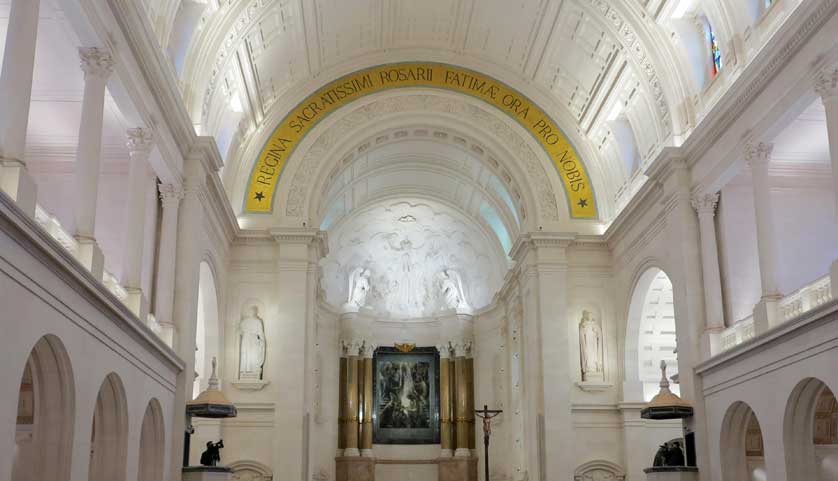
The interior includes stained glass windows depicting the events of the Marian apparitions. There are 15 altars within the church mirrowing the 15 mysteries of the rosary.
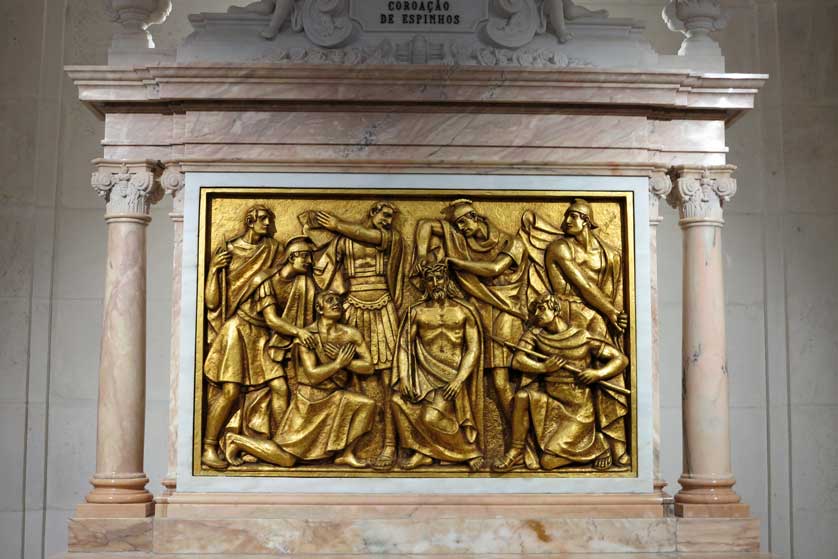
The building is 70.5 meters long and 37 meters wide. It is built in local stone. The altars are made of marble from Estremoz, Pero Pinheiro and Fátima. Each of the 14 side altars represents a mystery of the Rosary, the golden bas-reliefs placed there are by the Portuguese sculptor Martinho de Brito.
The main altar is the work of João de Sousa Araújo and depicts Mary descending to meet the three children.
Also by João de Sousa Araújo are the stained glass windows in the chancel represent the four evangelists (Matthew, Mark, Luke, and John), the apparition of the Angel, a scene from the life of the three, little shepherds, and aspects of Fatima on a typical pilgrimage day.
João de Sousa Araújo's religious art can also be seen at the Santuário Nacional de Cristo Rei and the Igreja da Encarnação in the capital, Lisbon.
Altogether there are over 60 bells in the church with the largest weighing 3,000 kg.
At the entrance of the Basilica, above the main door, there is a mosaic that represents the Holy Trinity to crown Mary. It was made in the Vatican workshops.

Access
Rua de Santa Isabel, 360
2495-424 Fátima
Tel: 249 539 600
www: fatima.pt
The church is a short walk from Fatima Bus Station (Terminal Rodoviário de Fátima) along Av. de Dom José Alves Correia da Silva and Rua João Paulo II.

Nearby
The church is close to a several other sites in the Santuário de Nossa Senhora de Fátima. These include the Capela Nossa Senhora das Dores, The Basilica de Santissima Trindade (Basilica of the Most Holy Trinity) the Capela das Apariçoes and the Statue of Pope John Paul II.
Many hotels and lodgings for the thousands of visiting pilgrims surround the main square.