Mosteiro de Santa Maria da Vitória (Monastery of Batalha)
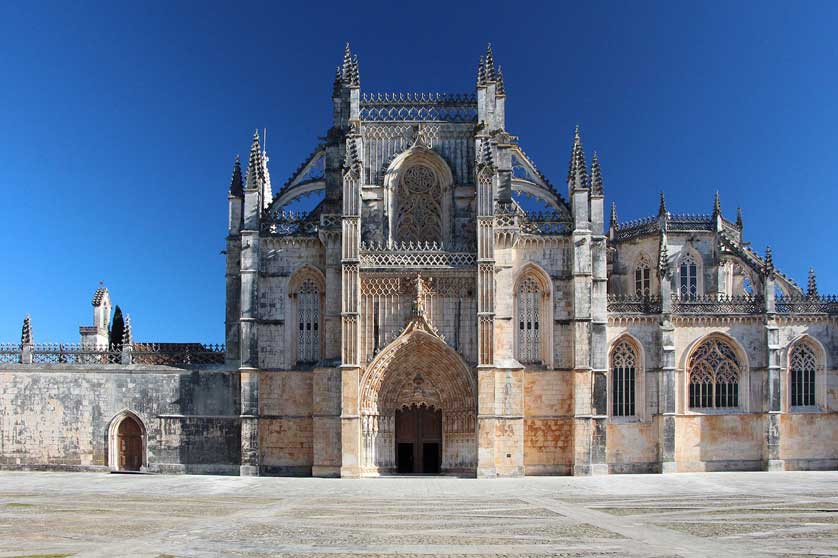
The Mosteiro de Santa Maria da Vitória (Monastery of Saint Mary of the Victory) is a UNESCO World Heritage Site, located close to Leiria in central Portugal.
The monastery was built over two hundred years from the 14th-16th centuries to commemorate the Portuguese defeat of the Castilians at a battle in nearby Aljubarrota in 1385.
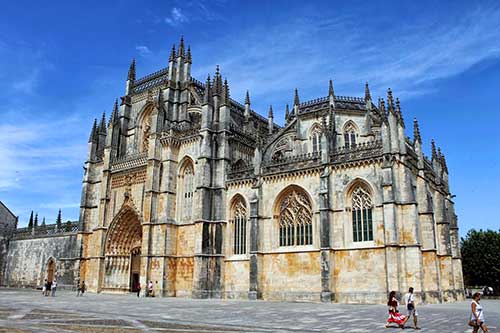
This vast, yet delicately carved limestone masterpiece of Gothic-Manueline art towers over the small town of Batalha.
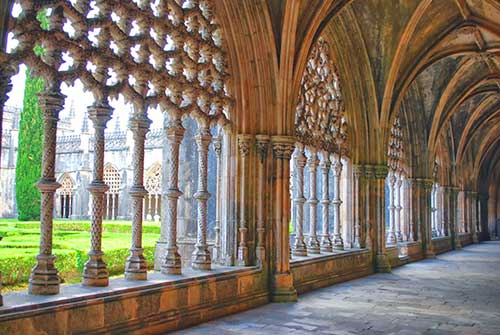
The later Manueline additions to the original Gothic Royal Cloisters are a particular highlight as is Sala do Capitulo, a 15th century chapterhouse with exquisite stained-glass windows.


History
The monastery was built in thanks to the Virgin Mary following the Battle of Aljubarrota in 1385 when a small Portuguese force of just 6,600 men including a few hundred English archers under the command of King John I (João I) of Portugal and his general Nuno Álvares Pereira, defeated a much larger force of maybe 30,000 Castilians.
The battle secured the nation of Portugal and a new dynasty, the House of Aviz, was established under King John. In thanks for this decisive victory in Portuguese history, the king decided to build a monastery near the site of the battle and work began the following year in 1386.
The early Rayonnant Gothic design of the monastery was based on English churches of the time including York Minster, Canterbury Cathedral and Winchester Cathedral.
The first Portuguese architect, Afonso Domingues, was succeeded by the Catalonian Huguet, who was responsible for the main façade, the dome of the chapter house, the Founder's Chapel, and the beginnings of the Imperfect Chapels (Capelas Imperfeitas).
Mateus Fernandes and Diogo de Boitaca, two masters of the Manueline style were the next architects on site. Diogo de Boitaca was also involved with such Manueline masterpieces as the Monastery of Jesus in Setúbal and the early stages of the Mosteiro dos Jerónimos in Belém It is also thought that he had a hand in the Belem Tower as well.
The monastery was damaged in the 1755 Earthquake and then again by invading French forces during the Napoleonic Wars in the early 19th century. After the expulsion of religious orders in 1834, the church was left to fall into ruin until restoration began in the 1840's continuing in to the 20th century.

Architecture
The exterior of the Mosteiro de Santa Maria da Vitória is done in limestone which has slowly turned an ochre colour in parts over the centuries.
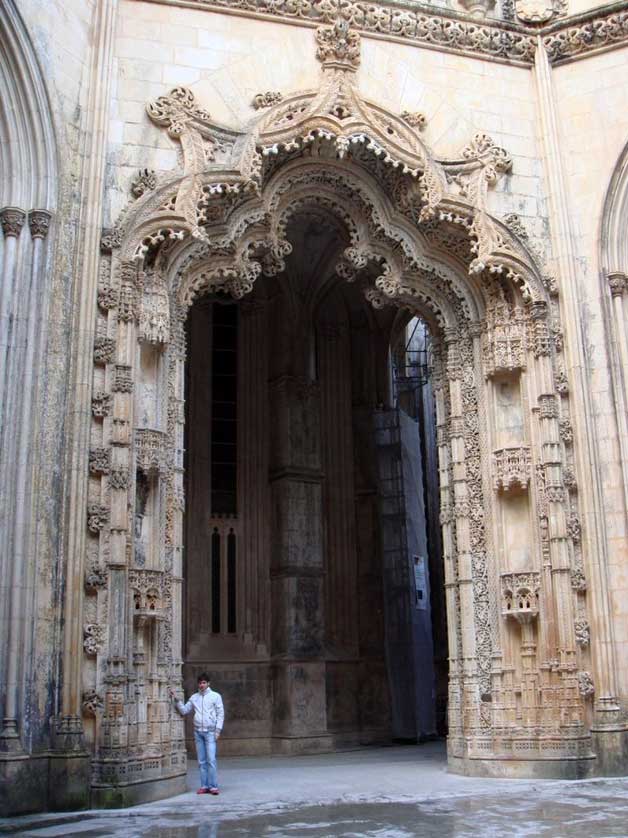
Highlights include the superb Manueline portal of the main church and the equestrian statue of general Nuno Álvares Pereira in the square outside the building.
The Imperfect Chapels (Capelas Imperfeitas) remain unfinished but are made more striking by being out in the open.
Within, the building is long and narrow, it contains the Capela do Fundador (Founder's Chapel) with the tomb of King John I (João I) and his English wife Philippa of Lancaster, hands clasped together as symbol of the Anglo-Portuguese alliance sealed by their marriage in 1387.
The tombs of their four youngest sons including Henry the Navigator, the driving force behind Portugal's Age of Discovery, and the tragic Ferdinand, who died in captivity in Morocco, line the south wall along with the tombs of their spouses except for the bachelor Ferdinand.
The Cloister of King Afonso (Claustro de Dom Afonso V) is a somber space constructed in Gothic with double pointed arches.
Claustro Real
The masterpiece of Afonso Domingues, the Claustro Real (Royal Cloister) were later embroidered in stone by Diogo de Boitac with superb, intricate Manueline motifs of armillary spheres, ropes, shells and other symbols of nautical exploration.
Sala do Capitulo
The Sala do Capitulo or Chapterhouse dates from the 15th century with the addition of 16th century stained glass. The huge vault was constructed by condemned prisoners as it was considered so dangerous; the solemn space now contains the tomb of unknown soldiers.
Capelas Imperfeitas
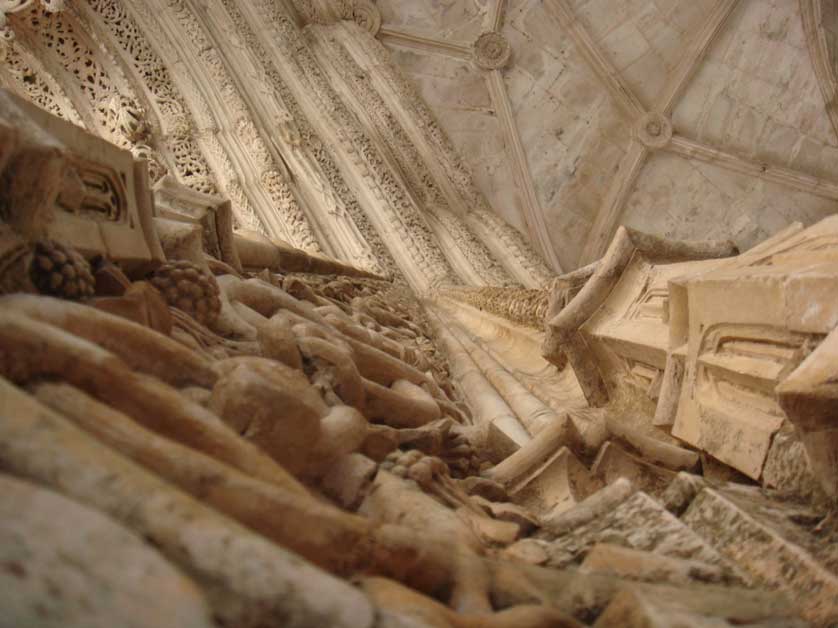
The Capelas Imperfeitas or "Unfinished Chapels" are an octagonal mausoleum begun in the 15th century but were never completed. The Manueline decoration by Mateus Fernandes is outstanding with the 15 metre-tall doorway the most intricate with carvings of angels, plants, ropes and various animals. King Edward of Portugal (Dom Duarte) and his queen, Eleanor of Aragon, are buried here.
Centro de Interpretação da Batalha de Aljubarrota
A couple of kilometres south of the abbey is the impressive Centro de Interpretação da Batalha de Aljubarrota on the actual battlefield that inspired the building.
A video recreates the bloody battle and a display of bones shows the terrible wounds sustained on the day. There's a cafe to relax in after all the excitement and the exhibits are child-friendly.
Access
Monastery of Batalha (www.mosteirobatalha.pt)
Largo Infante Dom Henrique
2440 Batalha
Tel: 24 476 5497
Hours: 16th October - 31st March; 9 am-5.30 pm (last admission at 5.00 pm);
1st April - 15th October; 9am-6.30pm (last admission 6.00pm); Closed: 1 January, Easter Sunday, 1 May, 24 and 25 December.
Admission: Individual ticket: €6
Combined ticket/the Heritage Route (Alcobaça, Batalha, Convent of Christ): €15
Buses leave from Largo 14 de Agosto, next to the Parish Church to Fatima, Leiria and Lisbon. By car exit the IC2 Lisbon-Porto highway at Batalha.
The monastery space is also now utilized for concerts, conferences and exhibitions.
Nearby
Other places to visit in the Estremadura region of Portugal include Alcobaça, Caldas da Rainha, Ericeira, Fátima, Foz do Arelho, Golegã, Leiria, Mafra, Nazaré, Óbidos, Ourém, Peniche, Santarém, Tomar, Torres Vedras and Vila Franca de Xira.