Convent of Christ (Convento de Cristo)
The Convent of Christ (Convento de Cristo) is a UNESCO World Heritage Site, and may well be the best thing you see on a visit to Portugal.
Located on a hill above the town of Tomar, the historical site covers around 45 hectares and was founded in the 12th century by Gualdim Pais and the Knights Templars.
After the Templars were suppressed in the 14th century, they were simply re-established as the Order of Christ in Portugal. Henry the Navigator, who led the order for twenty years and did so much to inspire Portugal's "Age of the Discoveries" used the wealth of the Convento de Cristo to finance his voyages of exploration and colonization.

The History of Convento de Cristo
The Convento de Cristo was founded by Gualdim Pais (1118-1195) - a statue of whom stands in the central square of Praça da República in Tomar. Pais was a Portuguese knight who fought the Moors under D. Afonso Henriques, the first king of Portugal, and later took part in the Crusades in Palestine.
Pais was to become the fourth Grand Master in Portugal of the Order of Knights Templar in 1157 and began building the new HQ of his order in Tomar from 1160, when the town was close to the front line of the war against the Moors.
When Portugal's monasteries were dissolved by the state in the early 19th century the Convent of Christ was protected from looting and damage by Costa Cabral, a Portuguese politician, who secured the site with guards and paid for essential repairs from his own pocket.
Charola
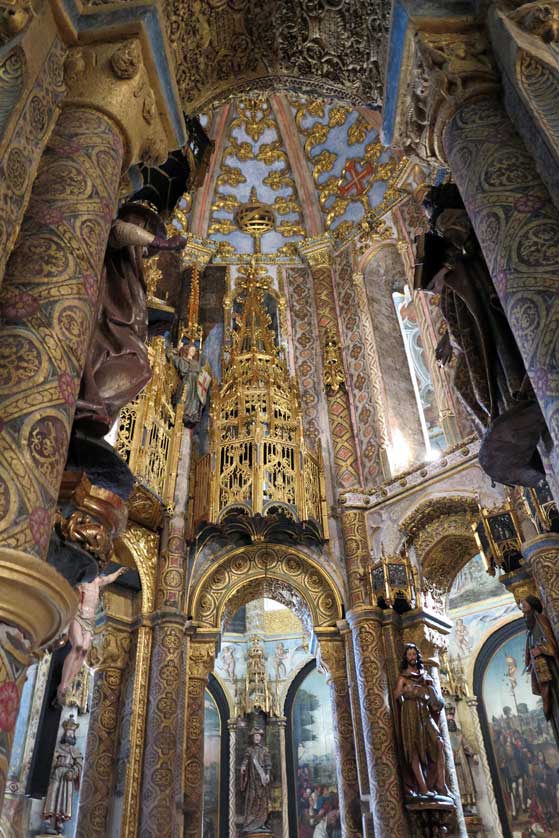
The charola was the original Romanesque Templar church and dates to the foundation of the Convento de Cristo in the late 12th century. During the 16th century altarpiece paintings, murals, stucco work and carvings were added during the reign of King Manuel I (himself a Grand Master) to create an amazing space full of historic atmosphere. The round church is supposedly modeled on the Church of the Holy Sepulchre in Jerusalem and is sixteen sided on the outside and octagonal on the inside.

The Cloisters
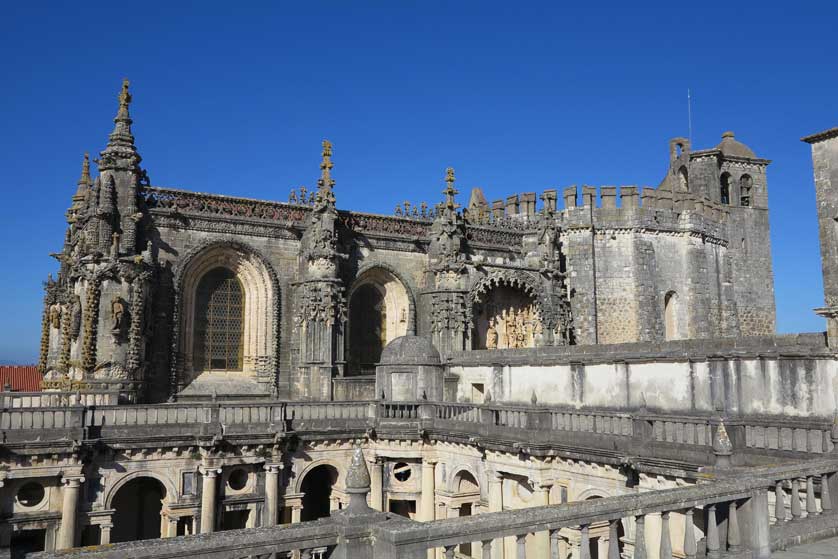
There are seven sets of cloisters scattered throughout the Convento de Cristo. These include the tiled Cemetery Cloister (Claustro de Cemitério) where funeral processions took place and some knights were buried and the Laundry Cloister (Claustro da Lavagem) - a space where lay servants washed the habits of the friars in a stone cistern. A 6 km aqueduct, the Aqueduto de Pegões, supplied much of the water used at the Convent of Christ and was built during the reign of Philip I of Portugal (Philip II of Spain).
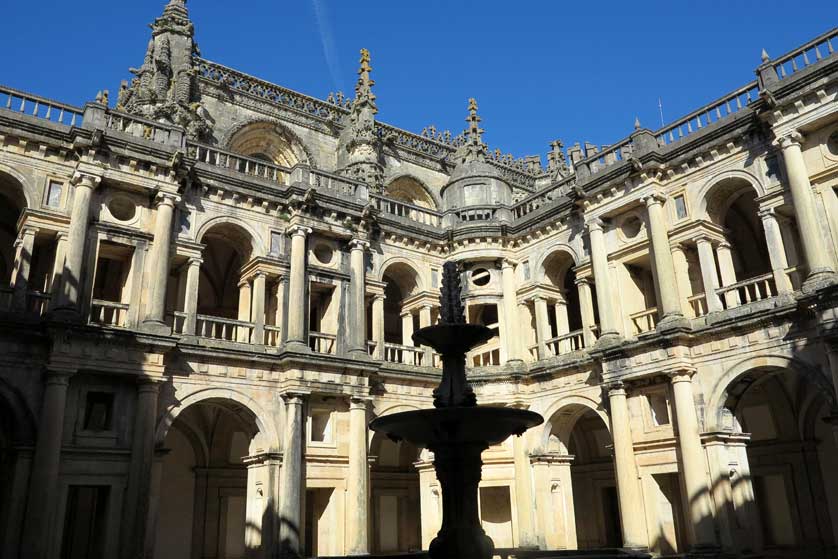
The Micha Cloister was finished between 1543 and 1550 and its name originates from the bread leftovers that were distributed to the poor who came here to beg. The Ravens' Cloister dates from the 16th century and was used for prayer and reading. The former library and scriptorium are in the south wing next to the residence of the Prior. The covered Saint Barbara's Cloister was designed by the architect João de Castilho and served as a distribution area. The Hostelry Cloister was built between 1541-1542 to provide lodging for guests with the people of a higher social status on the upper floor and the servants, stables and infirmary on the ground floor. The most impressive cloister is the Main Cloister or King João III Cloister begun in the 1530's with later work added by the Italian architect Filipe Terzi, who was so active in Portugal. The cloister is considered a masterpiece of the European Renaissance.
The Manueline Window
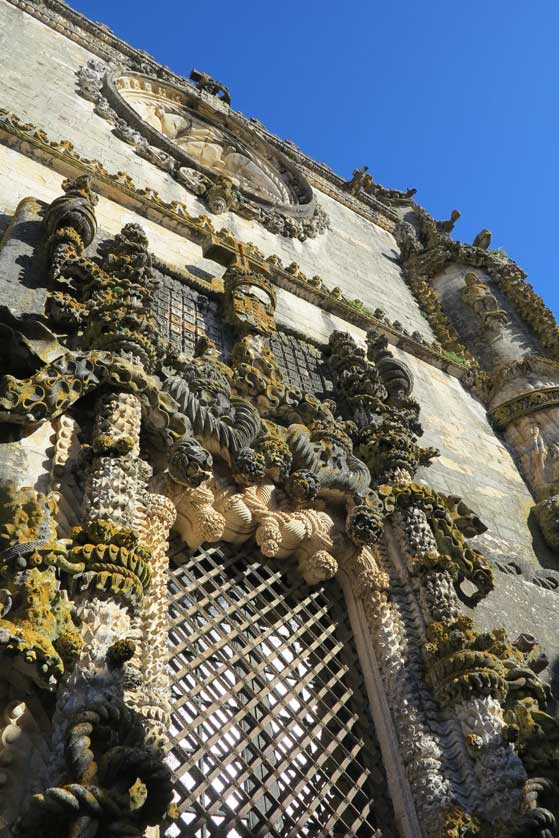
The huge Manueline Window (Janela do Capítulo) created from 1510-1513 by Diogo Arruda, who also worked on Belem Tower in Belem, Lisbon which his brother Francisco, is hailed as masterpiece of late-Gothic Manueline architecture. It displays various motifs from scripture including the Tree of Life as well as various nautical references relating to Portugal's overseas expansion at the time: twisting ropes, knots, globes and crosses. Access to the window is from the Saint Barbara's Cloister (Claustro Barbara).

The Nave & Choir
The main body of the church including the nave and choir was linked to the Charola by a portal added by Price Henry and begun under Diogo da Arruda and finished by João de Castilho.
The Sacristy
The New Sacristy was built in the 16th century by Francisco Lopes with later work by the prolific Felipe Terzi. The arched roof is covered with magnificent paintings.

Other Rooms
Other superb rooms at the Convento de Cristo include the Refectory again by João de Castilho from 1535-1536. Here the friars would have taken their meals in room naturally cooled by the thick stone walls. An ante room connects the Refectory to the kitchen. The grand Dormitory/Transept is another beautiful area with 40 cells lining the transept with a stone wash basin at one end.
Souvenirs of the Convent of Christ including wine, Crusader gowns, swords and books can be purchased from two museum shops.
Access
The Convent of Christ is a short but steep walk up from the center of Tomar. A community bus from the bus station also passes the main car park near the entrance to the convent which has views over Tomar and the surrounding countryside.
Convent of Christ (conventocristo.pt)
Convent of Christ, 2300 Tomar
Tel: 351 249 313 434
Admission: Individual ticket: €6
Combined ticket/the Heritage Route (Alcobaça, Batalha, Convent of Christ): €15
October to May
From 9 am to 5.30 pm (last entry at 5 pm)
June to September
From 9 am to 6.30 pm (last entry at 6 pm)
Closed: January 1st, Easter Sunday, May 1st and December 25th
Map of Tomar