Portugal's Age of Discovery
Portugal's Age of Discoveries (Era dos Descobrimentos) refers to the history of maritime exploration and colonization of parts of Africa, the Americas, the Middle East, Asia and the Far East undertaken by Portugal during the 15th and 16th centuries.
This age of global expansion and "discovery" undertaken by Portugal along with other European nations (namely Spain, England, France and Holland) were the beginnings of globalization and a period of European hegemony in world affairs.
The increased trade (in precious metals, spices, slaves etc) and the establishment of colonial empires were to lead to a flow of wealth back to Europe. Portugal during this period, indeed, was to become one of the richest countries in the world. A rise in power, trade and treasure brought to an end only by the disaster of 1755 Lisbon Earthquake.

Background & Early Exploration
Portugal as Europe's western most nation, blessed with an abundance of natural harbours (Porto, Lisbon, Lagos, Sagres) and navigable rivers, has always looked to the ocean.
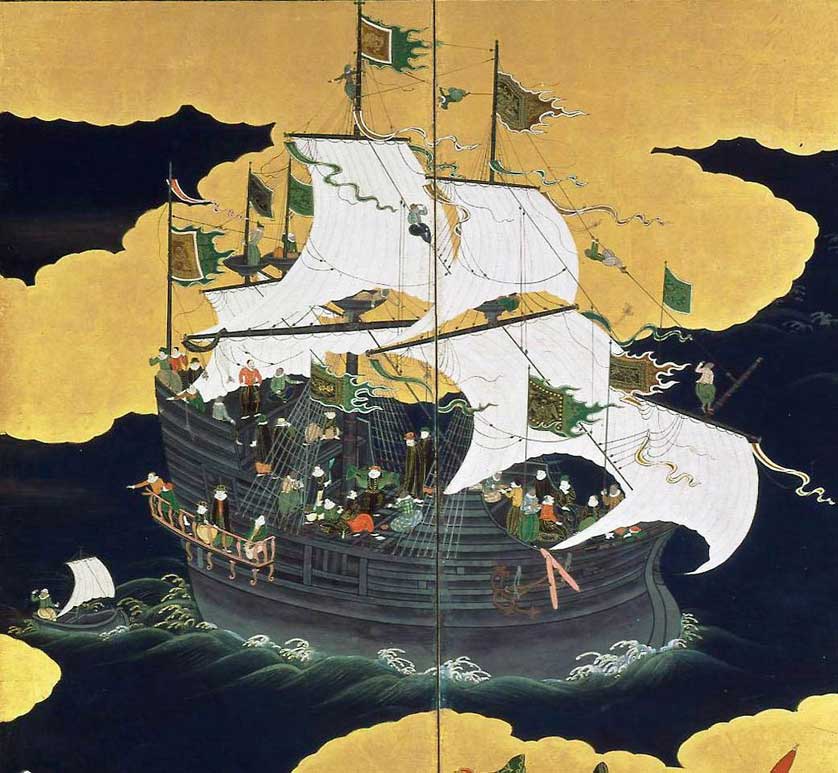
Advances in cartography, shipbuilding and navigation, in particular the use of the astrolabe (developed by the Arabs) for calculating latitude and the caravel - a new type of light, sailing vessel that could navigate into the wind - allowed Portuguese mariners to travel greater distances into unknown waters.

Influence of the Knights Templars
In the 14th century the Knights Templars were persecuted across Europe, beginning in France. Their lands and riches were seized and many Templar knights put to death including the last Grand Master, Jacques de Molay, who was tortured and burned to death in 1314. King Dinis welcomed many Templar refugees to Portugal and along with their wealth they brought a great nautical, cartographic and astronomical knowledge with them. These immigrants were subsumed into Dinis' new Order of Christ. This reconfigured religious order, inspired by the Templars, was to be a key driving force behind the urge to carve out a new empire. Indeed, the Order could be seen represented by the Templar cross on the sails of Portugal's caravels. Both Henry the Navigator and King Manuel I, key figures behind Portugal's overseas expansion, were Grandmasters of the Order of Christ.
The first steps on Portugal's Age of Discoveries was the seizing of Ceuta in North Africa by King João I in 1415.
King João's third son, Henry the Navigator (1394-1460) - the "father of the Age of Discoveries", was the driving force behind subsequent expansion including the colonization of the islands of Madeira and The Azores by 1430.
Gil Eanes (1395-?) was the first Portuguese sea captain to sail past the physical and psychological barrier of Cape Bojador in what is now Western Sahara in 1434.
Black African slaves were first brought to Lagos from the western coast of Africa as early as 1444. The Slave Market Museum in Lagos details the beginnings of the history of this pernicious trade in human beings.
Cape Verde, off the coast of Africa, was reached in 1456 followed by Sierra Leone in 1462.

Rounding the Cape of Good Hope
Bartolomeu Dias (1457-1500) was the first Portuguese explorer to round the treacherous Cape of Good Hope (Cabo da Boa Esperança) and open the sea route to the Middle East and India.
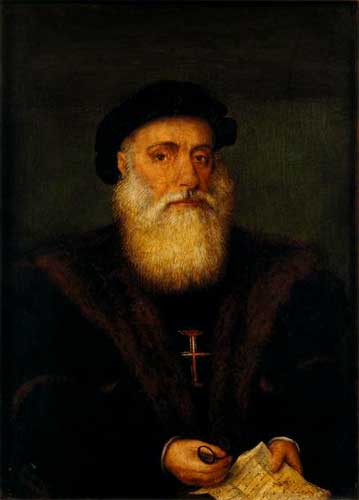
Dias was followed by Vasco da Gama (1460-1524), who was commissioned by King Manuel I to set sail from Lisbon with a tiny flotilla of four ships to explore the route to India. After a series of adventures off the east coast of Africa never previously visited by Europeans, Vasco da Gama employed the services of a local pilot and reached the western coast of southern India in 1498, where he attempted to reach an agreement to trade with the local Indian rulers.
The Monastery of the Hieronymites (Mosterio dos Jerónimos) in Belém, just west of Lisbon was built in honor of da Gama and his men. The voyages of Vasco da Gama lead the way for the Portuguese colonization of eastern Africa and his legacy must be viewed as mixed; a hero in Portugal and a ruthless privateer to the people of southern Africa and Mozambique.
By the early 16th century, annual India Armadas were leaving Lisbon on the long journey to India. On one of these voyages, Pedro Álvares Cabral (1467-1620) was to "discover" what is now Brazil in 1500.

Treaty of Tordesillas 1494
Following Christopher Columbus' first voyage to the Americas in 1492 from Palos de la Frontera near Huelva, the Pope Alexander VI, a member of the infamous Borgia family, hoped to settle any disputes over new territories between Castile and Portugal.
His initial papal bulls on the matter were to lead to the Treaty of Tordesillas, negotiated by King João II of Portugal and King Ferdinand and Queen Isabella of Castile, which divided the newly discovered lands outside Europe between the two Catholic powers.
In this treaty the Portuguese received lands outside Europe east of a line that ran 370 leagues west of Cape Verde, and the islands reached by Columbus on his first voyage, namely Cuba and Hispaniola.
India & The Far East
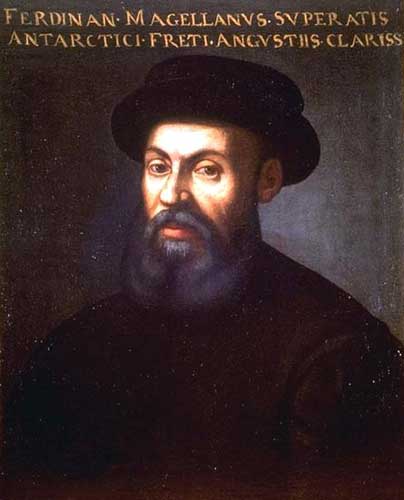
Ferdinand Magellan (1480-1521) is the Portuguese navigator and explorer who, along with his crew, are credited as being the first Europeans to sail across the Pacific Ocean. Sailing under the flag of Spain, Magellan reached The Philippines, were he was killed by the local inhabitants, but his crew were able to return to Spain and complete the first circumnavigation of the globe.
Afonso de Albuquerque (1453-1515) bestrides the Age of Discoveries like a colossus. Albuquerque was the instrument of King Manuel I's grand scheme to secure the spice routes to India, combat and defeat Islam as well as seek out new territories. Nicknamed "The Terrible," Albuquerque, during his colorful career in the East, was to establish an early Portuguese fort on the India coast near Kochi, in Kerala, capture and secure Goa (which was to remain in Portuguese hands until 1961), attack Ormuz in the Persian Gulf, Socotra in the Arabian Sea and also seize Malacca on the south west coast of present-day Malaysia.
Afonso Albuquerque was a brilliant strategist and was prepared to use extreme violence and cruelty to achieve his aims. He succeeded Francisco de Almeida (1450-1510) in 1509 to become the second Portuguese Governor of the State of India.
Albuquerque can be seen as an early empire-builder and his voyages and those of other Portuguese sea captains herald our age of globalization. His actions in Goa and Malacca were to secure the Portuguese presence in Asia.

Later Portuguese explorers were to pass on from India to various spice islands in south east Asia, where Portuguese trading bases and "factories" were established.
Duarte Fernandes became the first European to visit Siam (Thailand) in 1511 and António de Abreu (1480-1514) explored Timor the following year. The coast of China was reached in 1513 by Jorge Álvares, re-establishing trading links between Europe and China, cut since the time of Marco Polo.
By 1542 Fernão Mendes Pinto, Cristovão Borralho and Diogo Zeimoto are among the first Europeans to reach Japan coming ashore on the island of Tanegashima in Kyushu.
In 1557, Macau is given to Portugal by the Chinese Emperor as a reward for fighting pirates in the South China Sea.
By the mid- to late-16th century, Portugal has trading bases in India (Goa), China (Macau), Sri Lanka (Galle), Indonesia, Japan (Nagasaki) and Malaysia (Malacca).
Decline
The beginning of Portugal's decline as a world power was the ill-fated adventure of King Sebastian I, who led the Portuguese army from the port of Lagos to defeat in Morocco at the Battle of Alcazar in 1578. This disaster resulted in the death of Sebastian and the flower of the Portuguese nobility and the conquest of Portugal for a time by Spain.
Competition from other maritime powers, notably England and Holland were to also weaken Portugal's domination of global trade. The Portuguese were expelled from Japan in the early 17th century and their place taken by the Dutch, who also seized previous Portuguese possessions in Sri Lanka and Indonesia in the 1640's.
Impact of the Age of Discovery
One of the major global impacts of the Age of Discovery is the so-called Columbian Exchange - a transfer of culture, flora and fauna (tobacco, potatoes, tomatoes etc), ideas, people (notably black African slaves to the Americas) and technology between the "New World" of the Americas and the "Old World" of Africa, Asia and Europe in the 15th and 16th centuries.
The domination by European powers of this trade and transfer led to an age of imperialism, colonization, globalization and the spread of Christianity.
The influx of new wealth back to Portugal financed a massive building project with much of the money ploughed into the construction of ornate palaces and churches in Lisbon and other cities. The import of large quantities of gold and silver was also to cause widespread inflation in Europe.

Related
Visitors to Porto can experience the Age of Discovery at the excellent World of Discoveries museum.
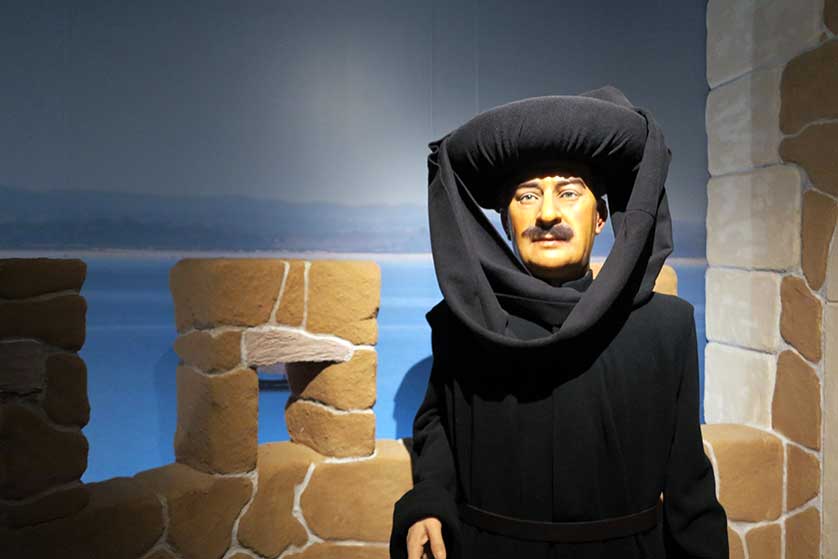
The Portuguese Discoveries Wax Museum (Museu de Cera dos Descobrimentos) which opened in 2014 in Lagos on the Algarve brings the period to life through wax figures.
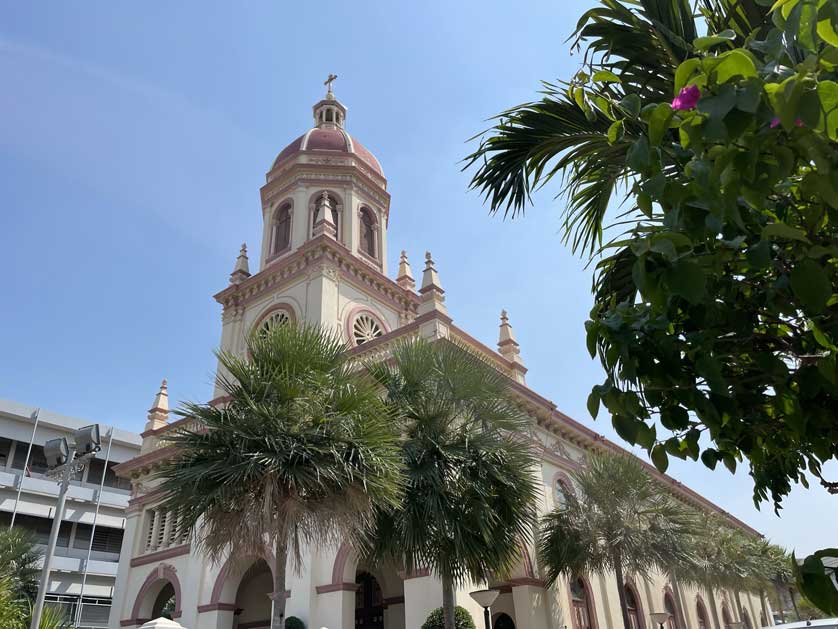
The Kudichin district in Bangkok was once a settlement for Portuguese traders and soldiers dating back to the 18th century.