Pedro Álvares Cabral
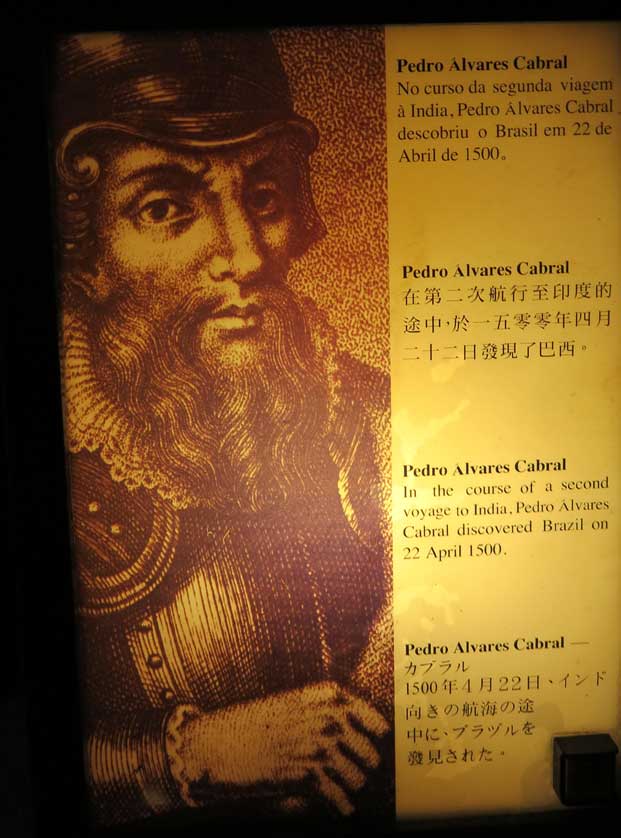
Pedro Álvares Cabral (1467 or 1468-1520) was a Portuguese explorer during the Age of the Discoveries, and is known as the "discoverer" of Brazil.
Cabral was born in the town of Belmonte, close to Covilhã and came from a minor family of the Portuguese nobility, the son of Fernão Álvares Cabral and Isabel Gouveia. He is believed to have received a good education in his youth.
As a young man he served in the courts of the Portuguese monarchs King Dom Afonso V, King Dom João II and King Manuel I, possibly taking part in military campaigns in North Africa.
Cabral was put in charge of a fleet of 13 ships and 1,200 men sailing to Kerala in India in search of spices in 1500. The expedition, which sailed from Lisbon in March, also included the more experienced sea captains Nicolau Coelho, Bartolomeu Dias and his brother Diogo Dias.
The expedition was following in the wake of an early voyage to the east led by Vasco da Gama that had returned to Portugal in 1499 and was to be the second such such enterprise by Europeans to reach India by the sea route after da Gama's own.
Cabral's flotilla navigated via the Canary Islands and Cape Verde and then sailed west, probably getting lost in the Atlantic, before landing in Brazil near what is now Porto Seguro, north of Rio de Janeiro, in April 1500 after a six week voyage.
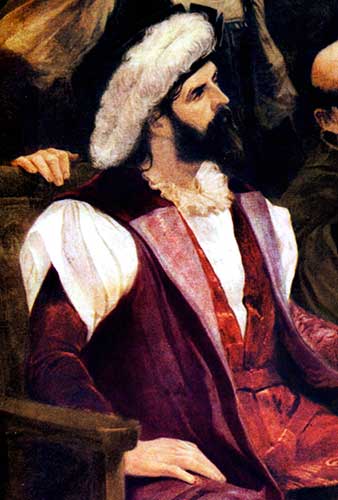
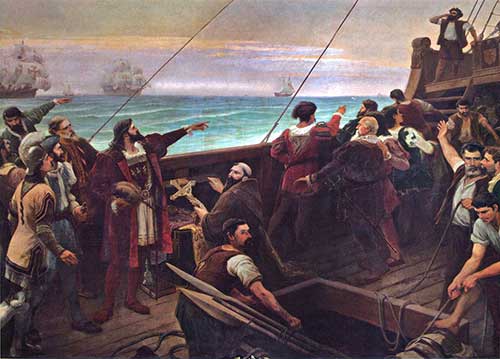
Some of Cabral's men put ashore, meeting with the Stone Age indigenous tribes living on the coast, who are described by Pero Vaz da Caminha, the official scribe of the expedition.
A huge wooden cross was erected and masses held, before the fleet set sail again eastwards. The ships were battered by a violent storm off the coast of Africa near the Cape of Good Hope in which Bartolomeu Dias' ship was sunk and 380 men lost.
After various adventures on the African coast what remained of the expedition reached Calicut in present-day Kerala state in India. Here the Portuguese "factory" was attacked by Arab traders and the Hindu natives upon whom Cabral was to exact revenge in an attack on the town of Calicut.
After his bombardment of the town he sailed south to Kochi where he was able to trade and load his remaining ships with valuable spices such as cinnamon, cloves and pepper. Cabral returned to Portugal via Mozambique and Cape Verde with only two ships.

Despite his losses in men and material, Cabral's voyage was able to turn a profit and inspired further voyages both to the South America and India. Indeed, Cabral was chosen to lead a "voyage of revenge" to Calicut but fell out with King Manuel for some reason and left court in disgrace with the king. The command of the expedition passed to Vasco da Gama. In 1501, a voyage under Gonzalo Coelho, with Amerigo Vespucci also on board, further explored the Brazilian coast.
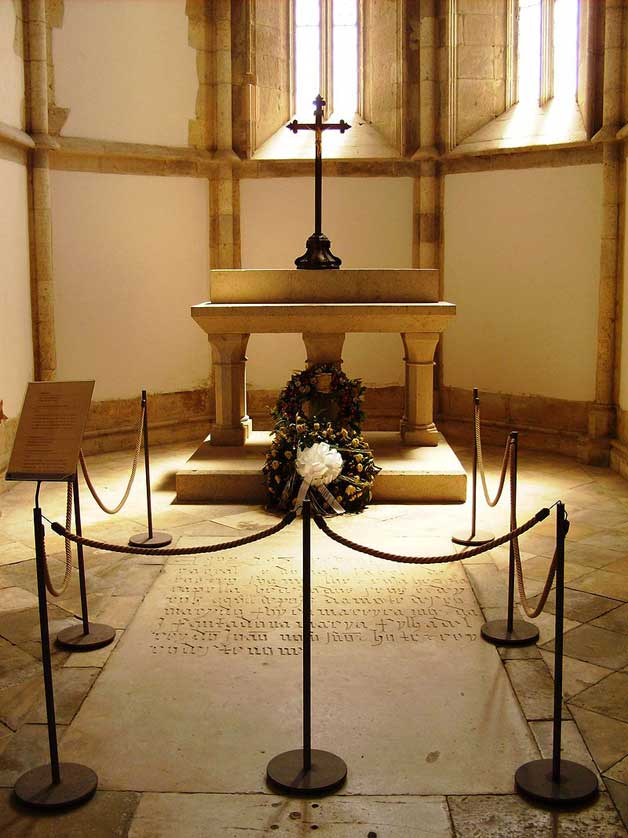
Cabral later married the noblewoman Dona Isabel de Castro and fathered several children. He spent his last years in Santarém where his tomb can be seen in the Igreja de Nossa Senhora da Graça.
Largely neglected in the land of his birth, Cabral was adopted as a hero in 19th century Brazil as the territory sought to establish its identity.
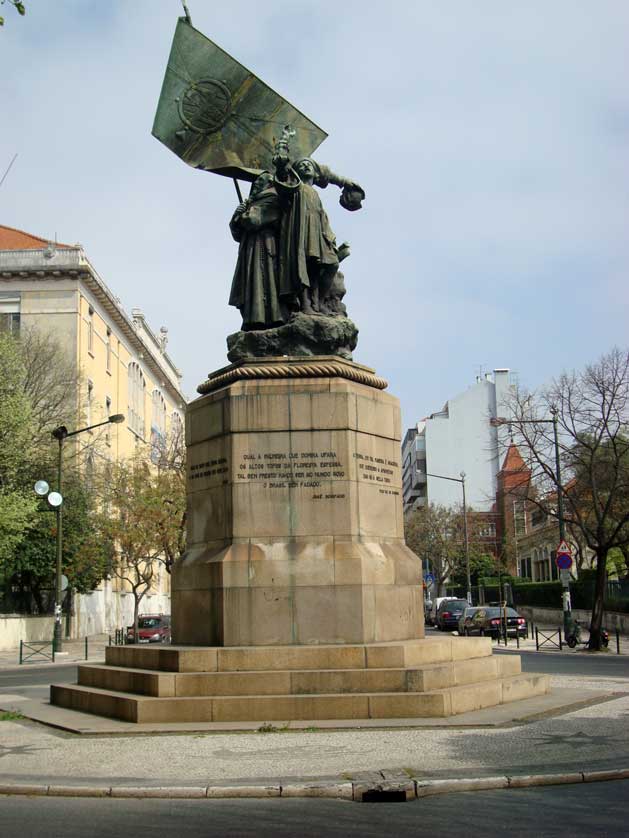
Cabral is featured at the Discoveries Wax Museum (Museu de Cera dos Descobrimentos) in Lagos and is commemorated by several statues in both Portugal and Brazil as well as featuring on the Padrao dos Descobrimentos (Monument to the Discoveries) in Belem.