Museum of São Roque, Lisbon

The Museum of São Roque (Museu de São Roque) stands adjacent to the superb Church of São Roque in the Chiado district of Lisbon.
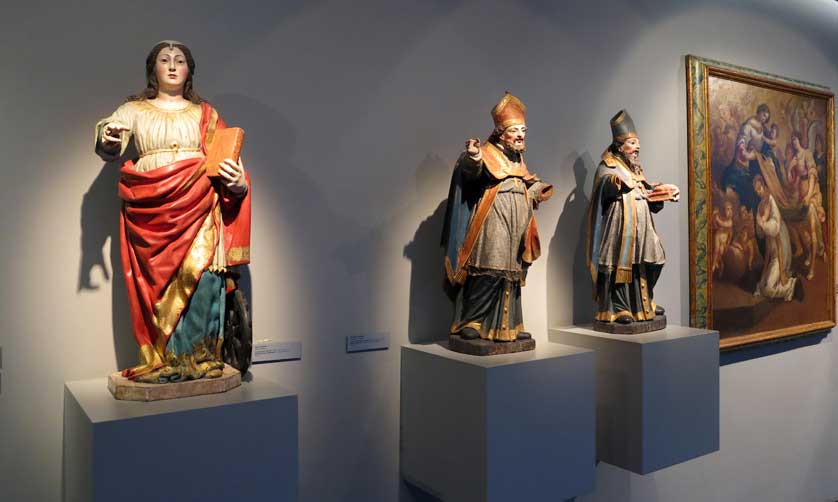
The museum is on two levels and is divided into several sections. It occupies what was once the former Professed House of the Society of Jesus.
History
The history of the Church of São Roque dates back to the early 16th century and an outbreak of plague in the city.
A small chapel or hermitage dedicated to St. Roch and housing a relic of the saint was built to offer prayers for protection from the disease.
This small hermitage was replaced with a grander edifice with the arrival of the Jesuits in 1540.
The church then served as the headquarters of the Jesuit Order in Portugal until they were expelled in 1759.
In 1768 the church was granted to the Santa Casa da Misericórdia de Lisboa.
The museum first opened to the public in 1905 and was known as the Museum of the Treasure of the Chapel of Saint John the Baptist. The core of the collection was the Italian art made in Rome associated with the Chapel of Saint John the Baptist.
Since then the museum has expanded with the addition of Oriental art that was collected and commissioned by the Jesuits in Asia as well as items associated with the Santa Casa da Misericórdia de Lisboa.
Layout of the Museum
The museum is on two floors: 0 and 1.
On the 0 floor are exhibits relating to the early history of the Shrine of São Roque - the first church before the arrival of the Jesuits. The shrine was administered by a Brotherhood who also kept the graveyard where victims of the plague were buried.
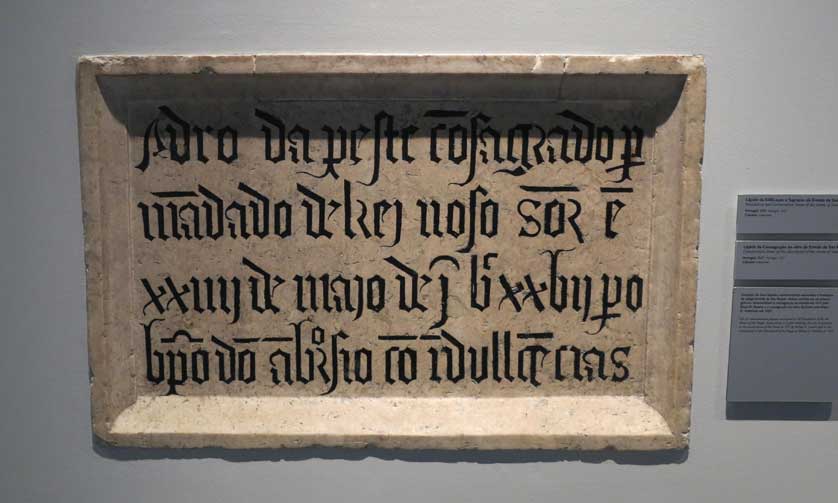
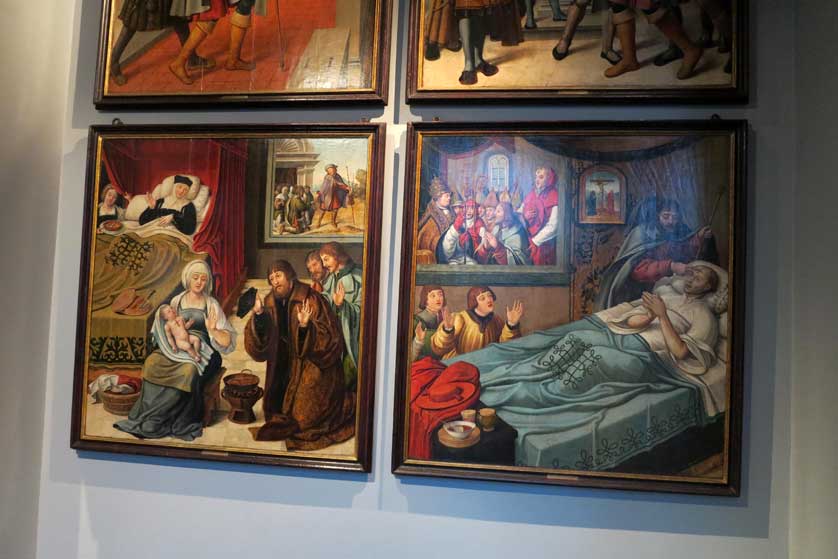
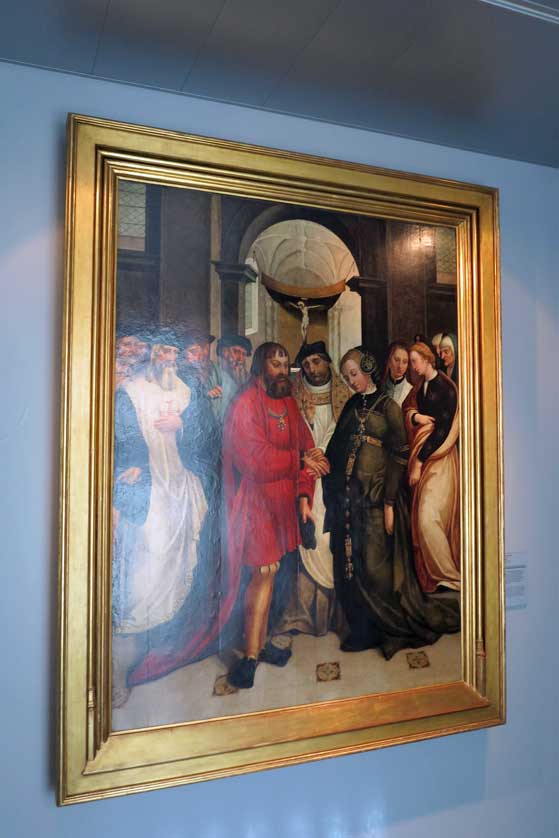
On display is a set of four panels from the altar, depicting the life of Saint Roch, some stone inscriptions, other paintings and the original relic of the saint requested from Venice.
On level 1 are exhibits relating to the Society of Jesus (Jesuits), Oriental art, the Chapel of St John the Baptist as well as items associated with the Santa Casa da Misericórdia de Lisboa.
Jesuits
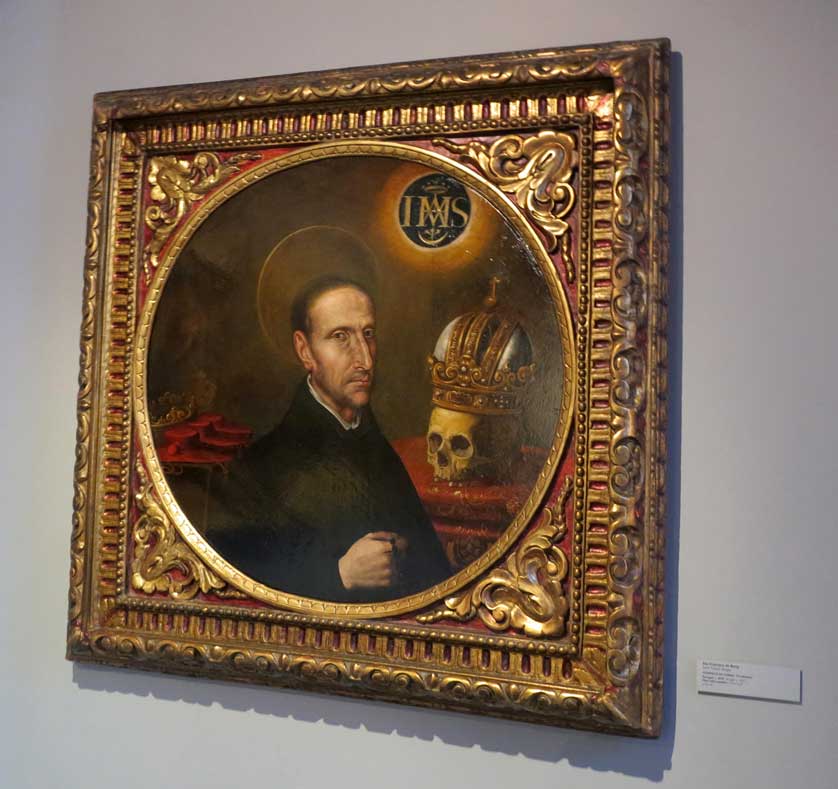
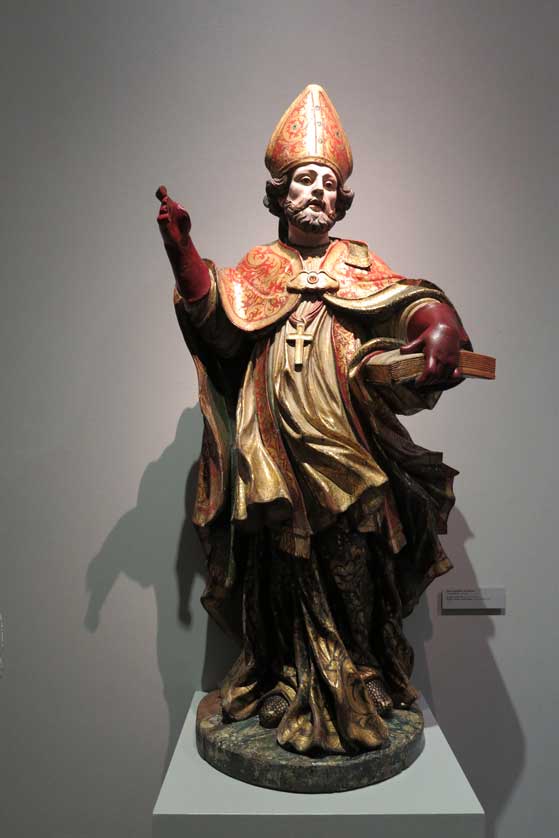
The Jesuits took possession of the original chapel in 1540. On display in this section are various liturgical items from the period of the Counter Reformation. These include reliquaries in the form of busts, monstrances and reliquaries A tabula. Also on display are a series of ampoules, pendants and sculptures.
Oriental Art
The section dedicated to Oriental art includes pieces from India, particularly Goa, Japan and Macau where the Jesuits were active during the Age of Discoveries.
Inter-cultural contacts between the Europeans and native people led to a dynamic fusion in the arts with the integration of Asian models and materials. On display are crucifixes in ivory, reliquary caskets in lacquered wood and mother of pearl from Japan and inlaid furniture pieces from Goa.

Religious Art from the Chapel of Saint John the Baptist
Commissioned by King João V, a large team of craftsmen built the Chapel of Saint John the Baptist in Rome between 1742 and 1747.
The chapel was then transported to Lisbon at great expense in three ships.
On display in this section includes a complete scale model of the chapel in polychrome and gilt wood with painting on copper.
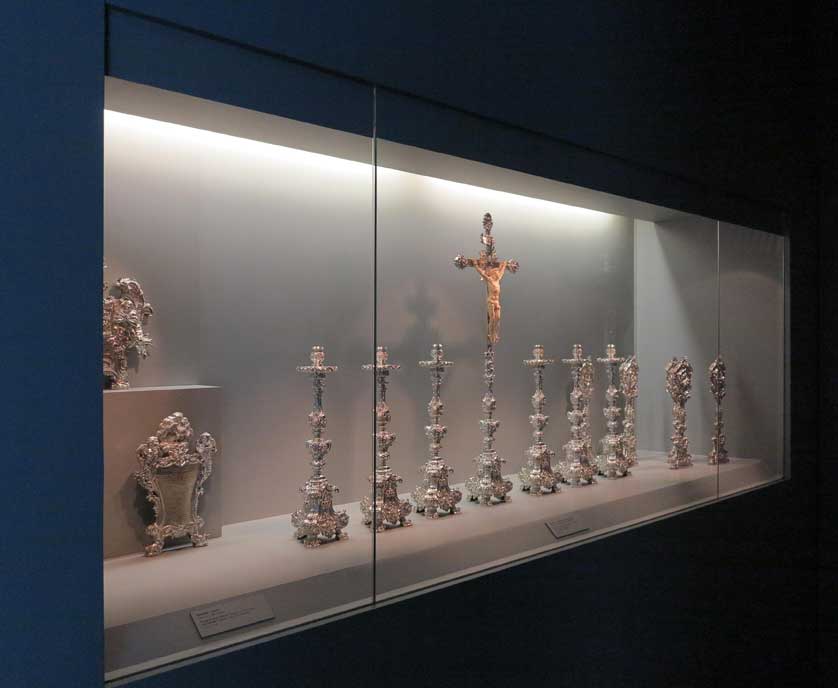
There is a also a collection of incredibly ornate golden and silver liturgical vessels and vestments that came with the chapel.


Santa Casa da Misericórdia de Lisboa
The Santa Casa da Misericórdia de Lisboa dates from 1498 and was initially installed in a cloister of Lisbon Cathedral before moving to the Church of Nossa Senhora da Conceição Velha. This was damaged in the earthquake of 1755. With the expulsion of the Jesuits from Portugal in 1759 by the Marquis of Pombal and King José I, the Santa Casa da Misericórdia de Lisboa took possession of the Church of São Roque.
This section has paintings and other objects donated or bequeathed to the Santa Casa da Misericórdia to help in its charitable work and as acts of personal faith.
Access
Largo Trindade Coelho, 1200-470
Lisbon
Hours: October - March; Monday 2 pm - 6 pm; Tuesday - Sunday 10 am - 6 pm. April - September; Monday 2 pm - 7 pm; Tuesday - Sunday 10 am - 7 pm except Thursday 10 am - 8 pm.
Closed January 1, Easter Sunday, May 1, December 25.
Admission fee.
There are reductions with the Lisboa Card.
The nearest Lisbon metro stations are Baixa-Chiado, Rossio and Restauradores. The #758 Lisbon bus runs past the church as does tram #28.
Nearby
The Funicular da Gloria is just north of the church and museum. It is also a short walk from São Roque to another much quieter church, the Convento de São Pedro de Alcântara. Jardim António Nobre (Miradouro de São Pedro de Alcântara), which has views over Lisbon, is also nearby.

Accommodation in Lisbon
Hotels in Portugal - Booking.com
Hotels in Lisbon - Booking.com
Lisbon Hop-On Hop-Off Bus, Tramcars, and Yellow Boat River Tour