Famous Portuguese People: Salazar
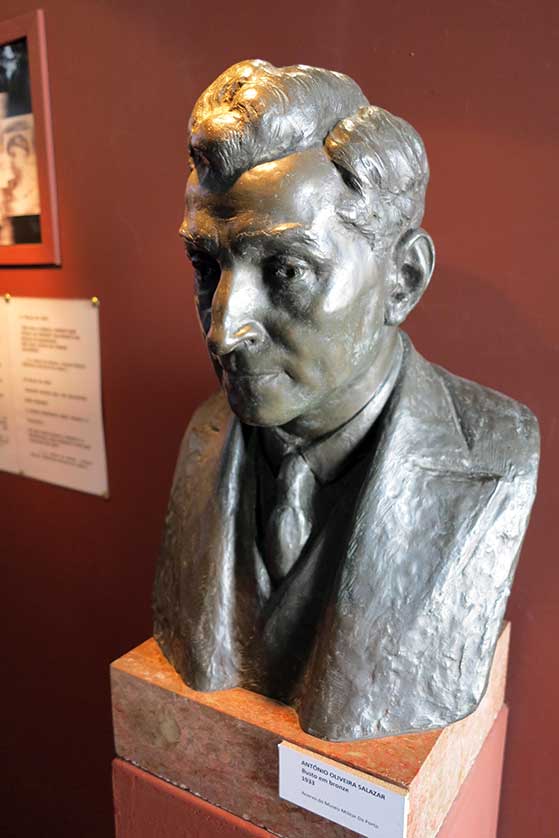
António de Oliveira Salazar (1889-1970) was the reactionary ruler of Portugal from 1932 to 1968 taking the country into a right-wing, Christian, isolationist, conservative stance from which it has struggled to emerge since his death.
Born in Vimieiro in 1889, Salazar was a country boy from a family of aristocratic lineage but of modest means. His hard-working father became an agricultural manager for a number of local landowners in the vicinity of central Portugal. Educated at a seminary in Viseu, the young Salazar considered joining the Catholic priesthood before he went on to study law at Coimbra University, where he later became a professor of political economy.
After a brief foray into politics in support of Catholic standpoints, Salazar joined the government of General Carmona in 1928 as finance minister, becoming a de facto prime minister in 1932.
Salazar's politics of the Estado Novo (New State) in the 1930-1960s were a watered-down version of the authoritarian politics of Hilter's Germany, Franco's Spain and Stalin's Soviet Union. Controlling and crushing opposition from the Left through the use of a secret police - the Polícia Internacional e de Defesa do Estado (PIDE) - Salazar's Catholic, quasi-fascist though introverted policies kept Portugal neutral during World War II. Newspapers and the media were strictly controlled as Salazar's propaganda machine offered "Fado, Fátima, and Football" for the masses.
After the war Salazar fostered the idea as Portugal as an empire and rigidly opposed the Marxist-backed independence movements in Portugal's overseas colonies. Goa, Daman and Diu in India were taken over by India in 1961 but throughout the 1960's Portugal was involved in largely successful anti-insurgency campaigns in its colonies of Angola, Mozambique, and Portuguese Guinea.
Life in Lisbon
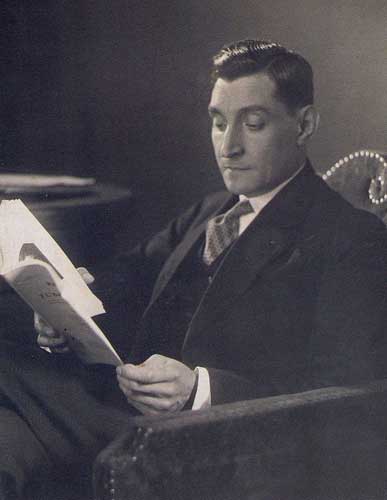
Salazar lived in Lisbon in a rented house on Rua Bernado Lima not far from the Marques de Pombal roundabout along with his house-keeper and her ward, who followed him from Coimbra.
He kept rabbits and chickens and kept himself very much to himself, worshipping at a private chapel at the house of a friend, Josué Trocado.
It was on one of these visits in 1937 that he survived an assassination attempt with a bomb. As a result of this near-miss Salazar moved to a mansion near the parliament building in São Bento. The house remains the official residence of the Portuguese Prime Minister.
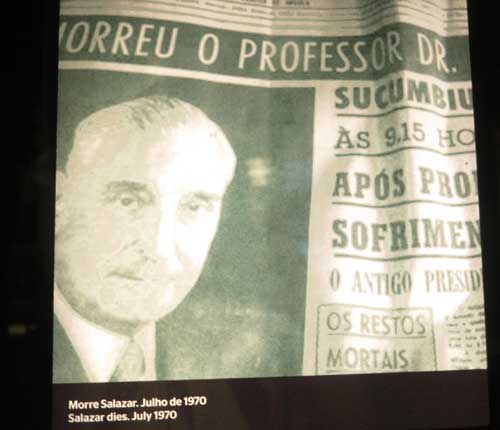
Salazar suffered a stroke in 1968 which rendered him an invalid and was succeeded by Marcelo Caetano as prime minister.
Salazar died two years later, unmarried, and believing he was still in control of the country. His Estado Novo was finally overthrown with the Carnation Revolution of 1974 as Portugal lurched to the left.