Portuguese Culture: Freedom Day (Dia da Liberdade)
Freedom Day or Liberty Day (Dia da Liberdade) is an important national holiday in Portugal.
It is observed on 25th April each year and commemorates the Carnation Revolution that occurred on that day in 1974.
History
The revolution overthrew the government of the Estado Novo (New State) that had governed Portugal since 1933, mostly under the rule of the dictator, Salazar, following the 1926 Revolution, a nationalist coup that ended the Portuguese First Republic (1910-1926).
Portuguese people were tired of both the petty and major oppressions of the authoritarian regime. Coca Cola was forbidden, groups of three or more people were not allowed to meet on the street, political opponents were liable to arbitrary arrest and torture. Many were held at the infamous Aljube Prison in Lisbon which is now a thought-provoking museum.
Salazar's politics of the Estado Novo (New State) in the 1930-1960s were a watered-down version of the authoritarian politics of Hilter's Germany, Franco's Spain and Stalin's Soviet Union.
Controlling and crushing opposition from the Left through the use of a secret police - the Polícia Internacional e de Defesa do Estado (PIDE) - Salazar's Catholic, quasi-fascist though introverted policies kept Portugal neutral during World War II. Newspapers and the media were strictly controlled as Salazar's propaganda machine offered "Fado, Fátima, and Football" for the masses.
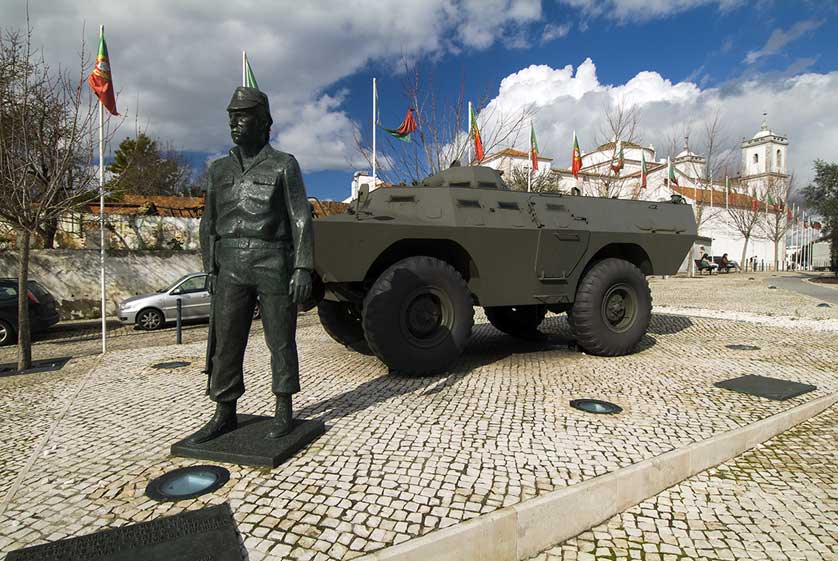
Colonial Wars
The major spark for the popular uprising was Portugal's colonial wars in Africa and the unwillingness of young Portuguese to sacrifice their lives putting down freedom movements in Mozambique, Angola and Guinea-Bissau (then Portuguese Guinea).
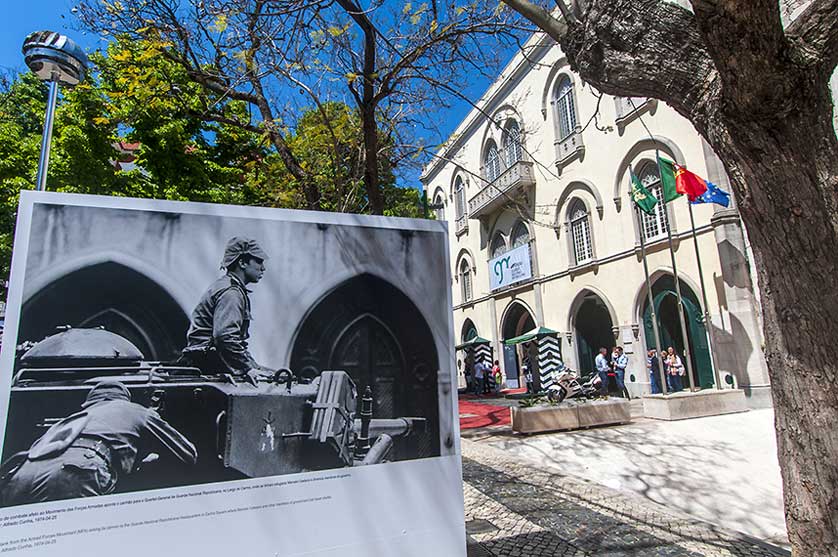
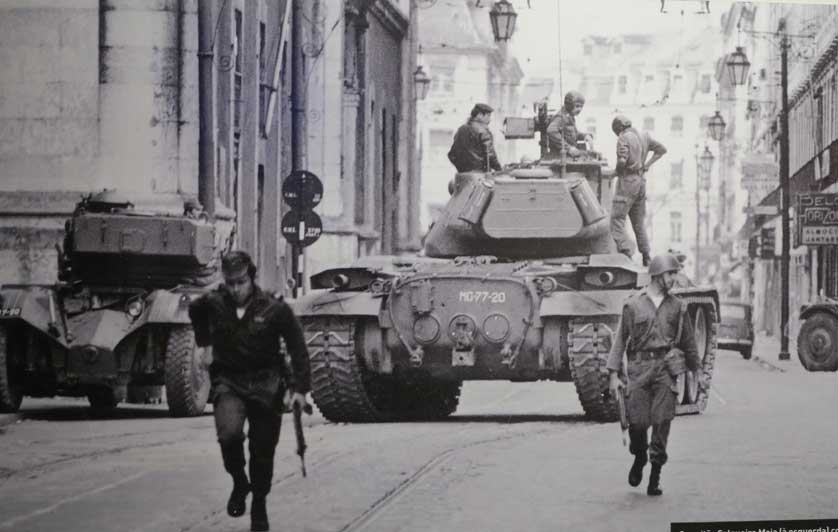
The events of the day were largely bloodless. Government ministers were surrounded by members of the Movimento das Forças Armadas (Armed Forces Movement or MFA) and eventually the serving Portuguese Prime Minister was persuaded by Salgueiro Maia and other young officers to surrender to General Spinola, the leader of the revolution.
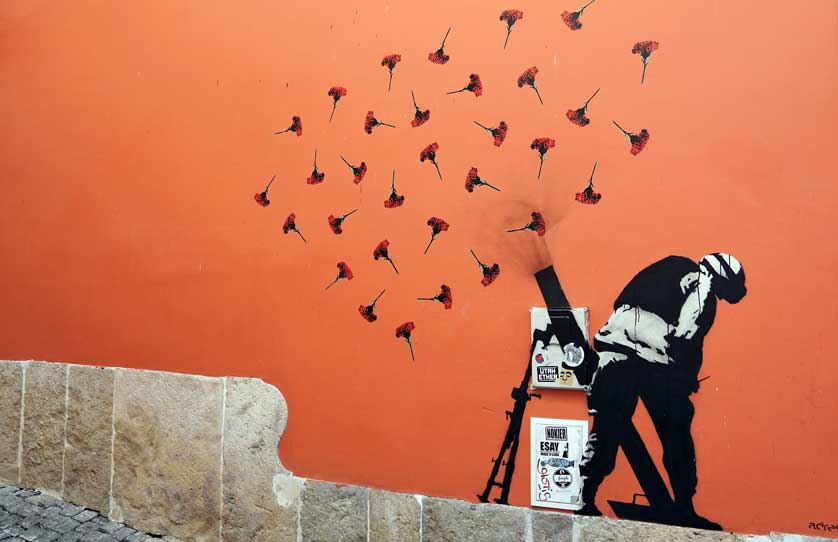
The so-called Carnation Revolution (Revolução dos Cravos) gets its name from the actions of Celeste Martins Caeiro. At the time she was a restaurant worker in Lisbon and handed out red and white carnations to the troops that had been meant for the opening of the restaurant she was working in.

25 de Abril
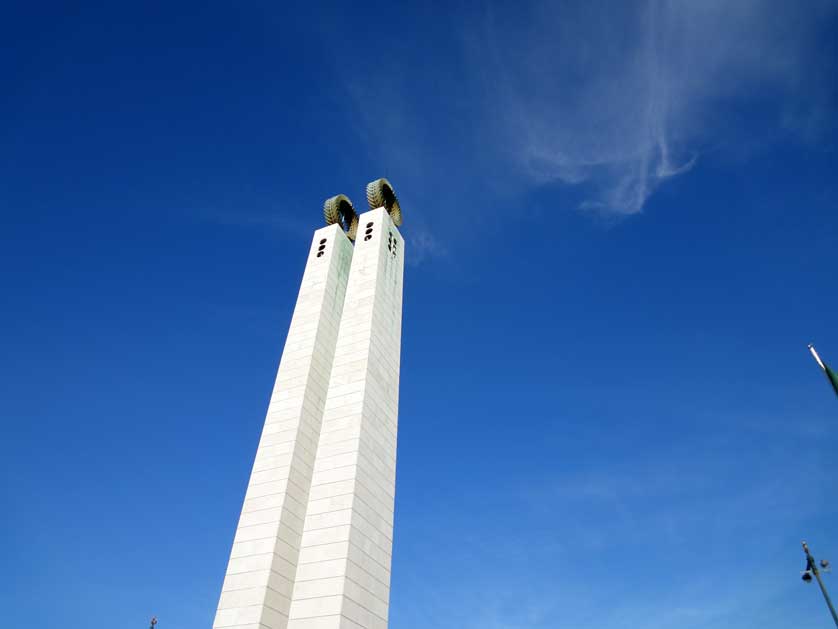
The restoration of democracy in Portugal is remembered in the date of the revolution - 25 de Abril (25th of April). The former Salazar Bridge across the Tagus in Lisbon was renamed the Ponte 25 de Abril. The 25 de Abril is also a common street name throughout Portugal.
The day itself is marked by various events across the country. These include an official ceremony in the Portuguese Parliament, political speeches, parades, exhibitions in museums, special films and live music concerts.
Following the Revolution a new Constitution was enacted (revised in 1982 and 1989). This established a semi-presidential system of government. The present Portuguese Republic consists of four sovereignty bodies - the President of the Republic, the Assembly of the Republic, the government and the courts.