Museu do Aljube Resistência e Liberdade
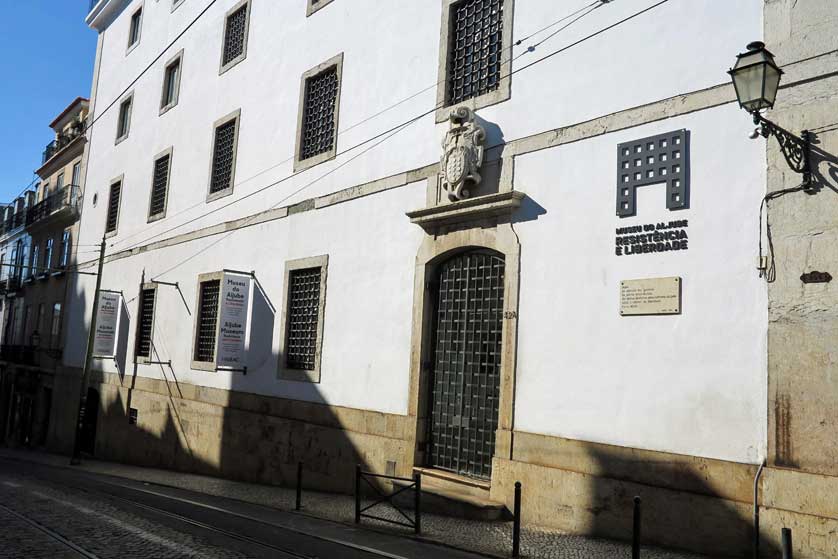
The sombre and thought-provoking Museu do Aljube in the Alfama district of Lisbon, opened its doors in 2015. The name Aljube comes from the Arabic for prison, meaning "well without water."
The museum is a must for visitors interested in the contemporary history of Portugal and the country's transition from authoritarianism under António de Oliveira Salazar and the Estado Novo (New State) to freedom and democracy in the 1970's.
To paraphrase the museum's mission statement, the Museu do Aljube fulfills the city of Lisbon's and the country's duty of gratitude to the memory of the victims of prison and torture who, sacrificing their own lives, fought for freedom and democracy.
History
The Aljube building dates back to Roman and Islamic times and was almost always a prison: firstly an ecclesiastical jail, then a women's prison, and from 1928-1965 a political prison.
Portugal was a dictatorship for 48 years after the Estado Novo (New State) was established between World War I and World War II. A corporate state, it was headed by Oliveira Salazar, supported by the military and inspired by Italian fascism.
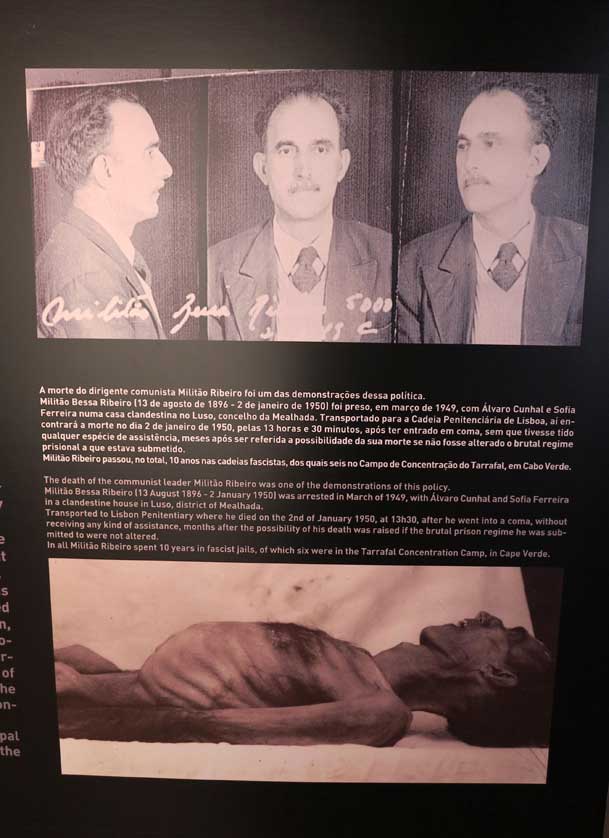
The military dictatorship (1926-1933) and the Estado Novo (1933-1974) dismantled parliamentary democracy and free trade unions in Portugal, introducing press censorship, summary justice and a system of secret jails within Portugal and exile to the country's overseas territories in Madeira, Cape Verde and East Timor.
From 1933-1945 justice was meted out to over 10,000 opponents of the regime in military courts. From 1945-1974 plenary courts overseen by the secret police (PIDE) further enforced the rule of the dictatorship.
Aljube in Lisbon, along with prisons in Caxias and Peniche, were the main jails run by the PIDE.

Exhibits
The first floor of the museum outlines the establishment of the dictatorship in Portugal and the formation of the prison regime. The Portuguese secret police received help, inspiration and guidance not only from Hitler's Gestapo and Mussolini's OVRA (Organizzazione per la Vigilanza e la Repressione dell'Antifascismo) during the 1930's and 1940's but also from 1957 onwards from the CIA in America. This collaboration with the CIA was instrumental in the systematic use of "sensory deprivation" in addition to the indiscriminate physical violence meted out to political prisoners of Salazar's rule.
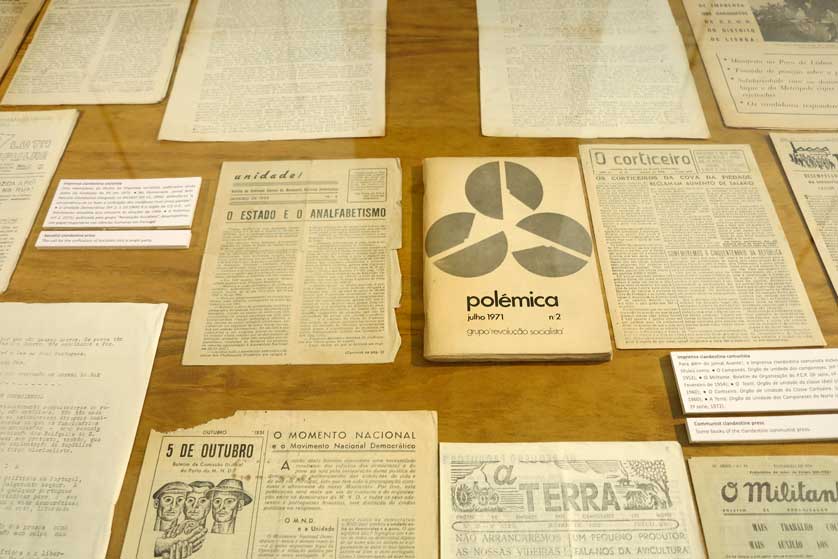
The second floor details the resistance to the regime by trade unions, the Portuguese Communist Party, the Democratic Unity Movement (MUD) and the failed presidential election attempt of the overthrow of the Estado Novo by Humberto Delgado, an air force general and erstwhile supporter of Salazar.
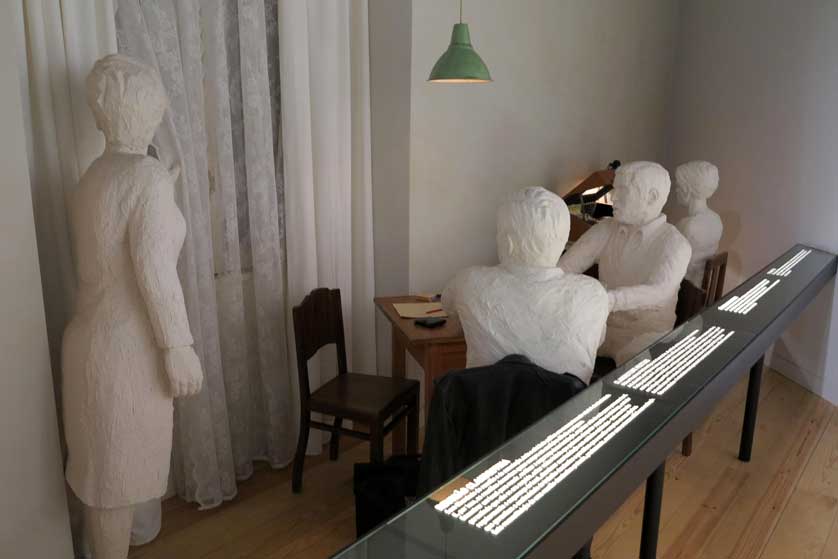
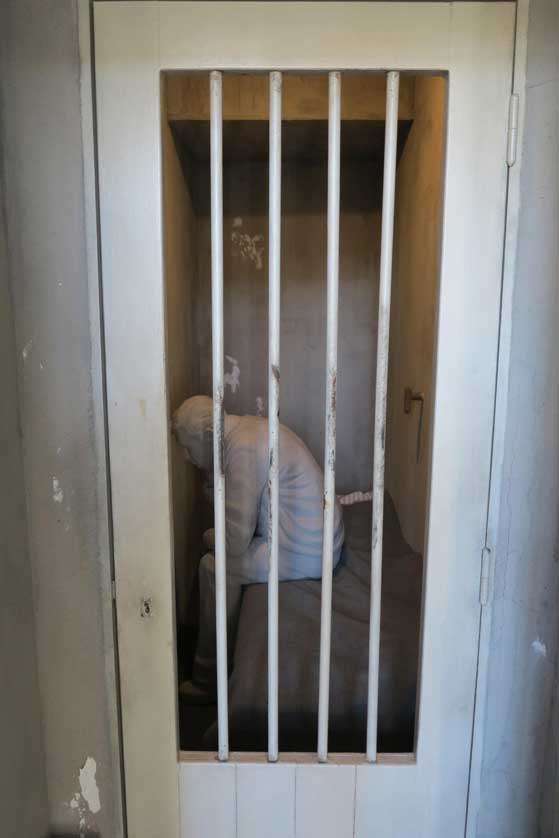
The cells and interrogation sessions of Aljube are recreated using mannequins, augmented by wall panels, sound recordings and original photographs to offer a thoroughly depressing recreation of the terrible conditions faced by inmates within the walls of the prison.
The third floor details Portugal's colonial wars in Africa, which were to lead to an increase in opposition to the regime within the junior ranks of the armed forces.
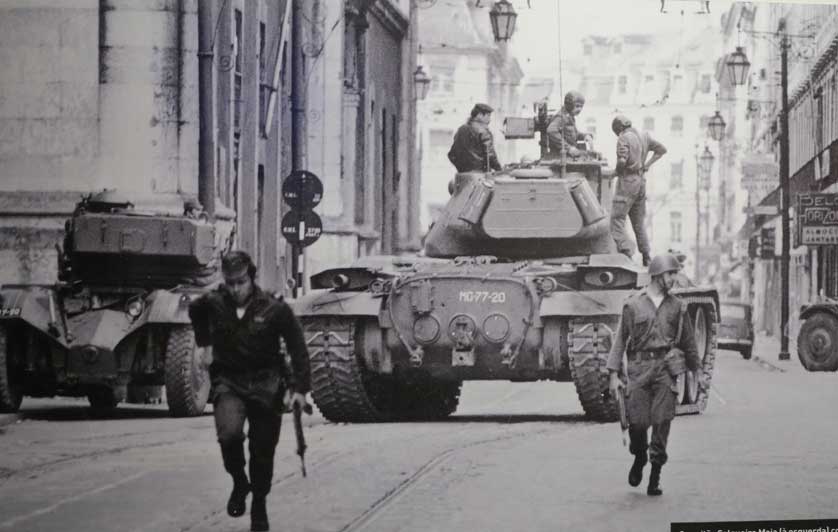
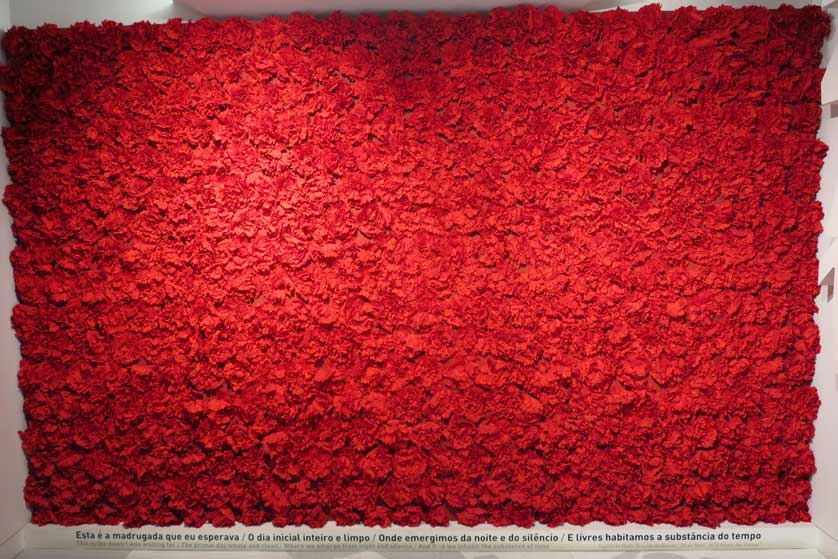
This sense of injustice, bred on foreign fields, mainly in Africa, was the catalyst for the Carnation Revolution, led by Salgueiro Maia in 1974.
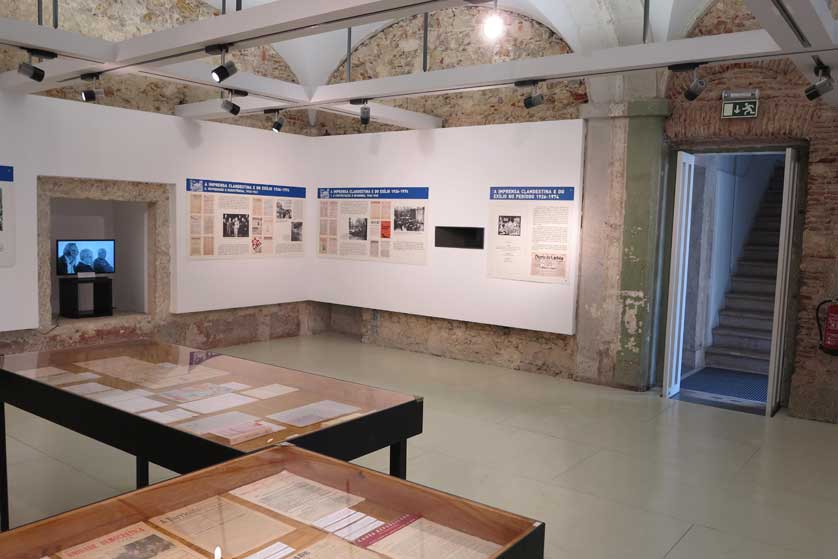
The first floor of the museum also contains archaeological remains from the Roman and Moorish periods excavated during the renovation of the building. The ground floor rooms hold temporary exhibitions on political and cultural subjects relevant to the main theme of the museum. The fourth floor hosts a cafe with views over the city and the River Tagus.
The Aljube Museum - Resistance & Freedom is a timely dedication to the memory of the fairly recent struggle against dictatorship and the resistance for freedom and democracy among the Portuguese people, which was victorious in the end.
Access
Museu do Aljube (museudoaljube.pt)
Rua de Augusta Rosa, 42
1100-059 Lisbon
Tel: 218 172 400
The nearest Lisbon metro station to the Museu do Aljube is Terreiro do Paço; Alternatively take any of Lisbon buses: #711, #714, #732, #735, #737, #736, #759, #760, #781, #782, and the AerobBus to Terreiro do Paço.
Lisbon trams #12 or #28 pass close by.
Hours: Daily (except Mondays and holidays) 10 am - 6 pm (Last entry 5.30 pm)
Admission: €3.00. Reductions apply for holders of the Lisboa Card, Cartão Jovem, students and visitors over 65.
The Museu do Aljube is close to the Praça do Comércio, Arco da Rua Augusta, Lisbon Cathedral, the Igreja de Santo António, the Casa dos Bicos and the Teatro Romano.
Book Air Tickets to Portugal & Spain
Flights From Europe with Air France
Lisbon Museum Map
Related
Freedom Day (Dia da Liberdade)