The Moors in Portugal: A History of Islamic Portugal
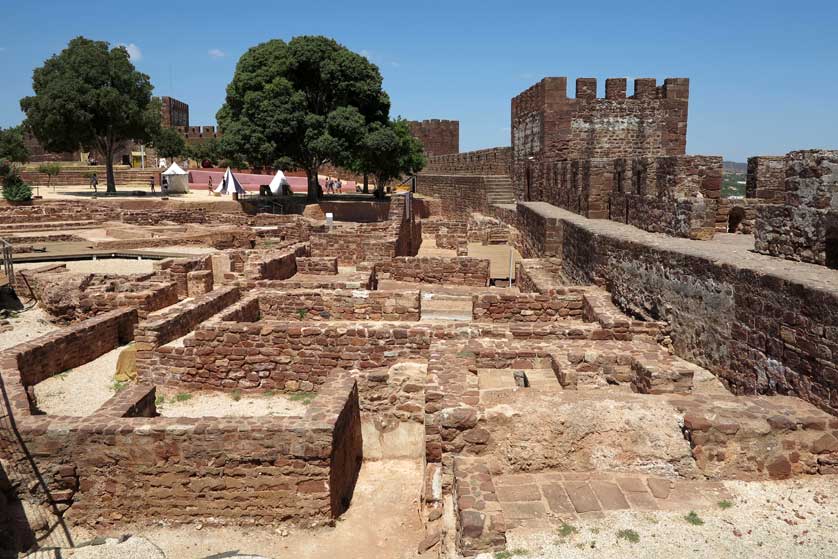
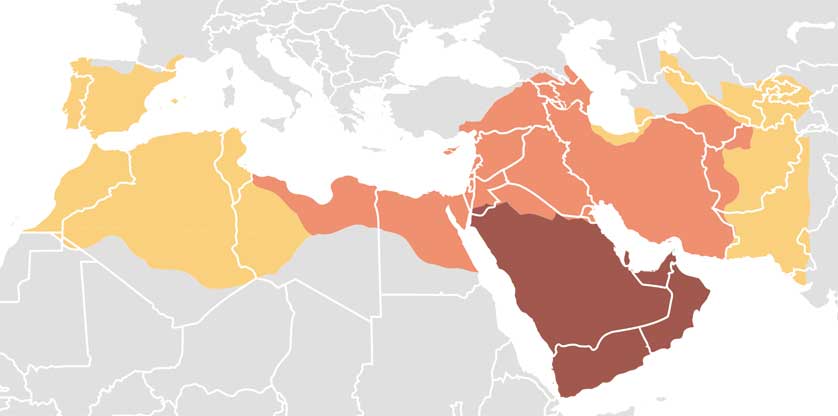
Large parts of Portugal were occupied by Islamic rulers from 711 until 1294 beginning with an invasion by the Umayyad Caliphate from North Africa.
Like the Romans before them the Moors extended their control over what is now present-day Portugal from their main power base in Spain. They came from the south and drove north and west.
Legacy of the Moorish Occupation of Portugal
This nearly 600-year control of much of the Iberian Peninsula has left a lasting legacy on the Portuguese language, agriculture, architecture, in the form of aqueducts, mosaics, calçada pavements, as well as in art, food and culture.
However, the subject is largely avoided in Portuguese schools with more emphasis placed on the Reconquista and later Age of Discovery.
The Islamic presence in Iberia is much more prominent in Spain, in the great Islamic cities of Cordoba, Granada and Sevilla than Portugal. However, Portugal has several places of interest connected with Islamic hegemony in the country, especially in Lisbon, Mertola and Silves.
Many of the country's museums are also stocked with Islamic period ceramics, coins, and mosaics. Most visitors to Portugal, not just history buffs, will be charmed by what they find. Less than 1% of Portugal's population are now Muslim but the influence of the religion and Islamic culture on the country remain strong. Indeed, it is in the blood. Scientists believe that a third of the present population of Portugal have either Muslim or Jewish ancestry.

Cuisine
The Moorish occupation of Portugal also influenced Portuguese cuisine especially in the regions of the Algarve and Alentejo. Some Arab dishes that have become part of the Portuguese diet include various soups, stews and desserts.
Cataplana, a signature dish from the Algarve, consists of seafood mixed with red and green peppers, onions and tomatoes cooked in the clam-like vessel also known as cataplana.
Açorda from the Arabic tharîd is a Portuguese dish made with thinly sliced bread with garlic, olive oil, finely chopped coriander, vinegar, water, salt and pepper with poached eggs on top.
Aletria is a dessert often served over Christmas in Portugal. Based on vermicelli (aletria) brought to Iberia by the Moors. The noodles are cooked in milk, egg yolks and flavored with cinnamon, sugar, and lemon zest.
Another dessert, Alconomias, is popular in Alentejo and is a lozenge-shaped sweet made with toasted wheat flour, honey and pine nuts.
Alfenim from the Arabic al-fānīd is a sweet made from just sugar, water and vinegar that was exported to Brazil and Mexico where it remains most popular along with the islands of the Azores. The paste is usually crafted into the shapes of animals and humans.
Escabeche is a sour sauce of marinated fish, meat or vegetables, cooked in vinegar, and enlivened with citrus, paprika, and other spices. The term derives from al-sikbaj, an Arabic sweet and sour sauce made with honey and vinegar.
In the far north of Portugal in Trás-os-Montes, Cuscos is the local variation of Arab couscous.
Here is a history of Islamic period Portugal followed by a listing of the major Islamic sites and monuments in Portugal.
History
After the decline of the Roman Empire in the 5th century, Iberia was invaded and controlled by mainly Germanic and Scandinavian peoples from the north of Europe. Alans (Iranian in background), Suevi and Vandals violently took control of the peninsula as Roman authority and military strength evaporated. The Roman city of Conimbriga, 15 km south of the city of Coimbra, was destroyed in this period. It was truly a time of frightening lawlessness and wanton terror.
These invaders duly fought amongst themselves and were in turn defeated by hordes of Visigoths entering the area from Gaul. The Visigoths had almost complete control of Iberia by 585 and their kingdom was to endure until the arrival of the Umayyads.
The Suevi and Visigoths after them formed an elite of landowners and administrators at the top of the social period but for the mass of the Hispano-Roman population ordinary life went on much as it had done under the Romans.
This partly explains why after the defeat of the Visigoths by the Moors the local people, on the whole, readily acquiesced to Islamic rule.


Muslim Conquest
In the spring of 711, a force of mainly North African Berbers led by Tariq ibn Zayad and under the command of the Umayyad Caliphate based in Syria crossed the Straits of Gibraltar.
This army completely defeated the forces of the Visigothic King Rodrigo near Algeciras in southern Spain. Rodrigo's forces may have been weakened by a recent civil war among the Visigoths. Rodrigo and most of his nobility and household troops were annihilated. The Visigothic capital in Toledo was swiftly abandoned.
Later another army under the Umayyad governor of North Africa, Musa ibn Nusayr, crossed into Iberia. Conquest was swift and largely unopposed.
Towns were given the choice of surrender and keeping their faith, property and local autonomy in return for paying tax as unbelievers. The alternative was the risk of all adult males being executed and their women and children enslaved if they resisted. Many places, as can be imagined, chose the former option.
Gharb al-Andalus
The Muslims called their territory in Iberia al-Andalus ("land of the Vandals"). Muslim Portugal was known as "Gharb al-Andalus" - western al-Andalus.
The colder and wetter lands of the Trás-os-Montes region and Beira Alta were never of much attraction to the newcomers, who preferred the drier and warmer region of the Algarve, which had more in common with the climate, landscape and geography of their homeland.
Islamic Portugal remained a rather peripheral region administered from the main power center of Cordoba in southern Spain.
During the Muslim period of control various splits occurred between local Iberian-based rulers and those in North Africa and further afield.
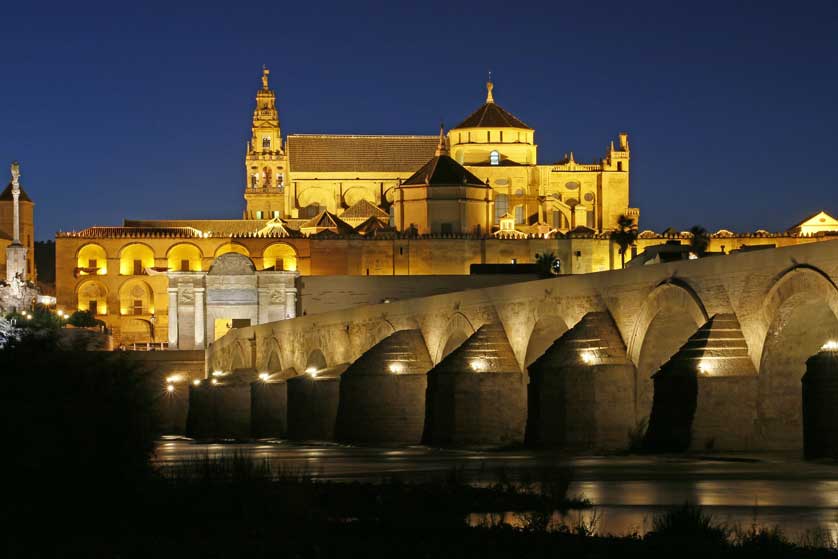
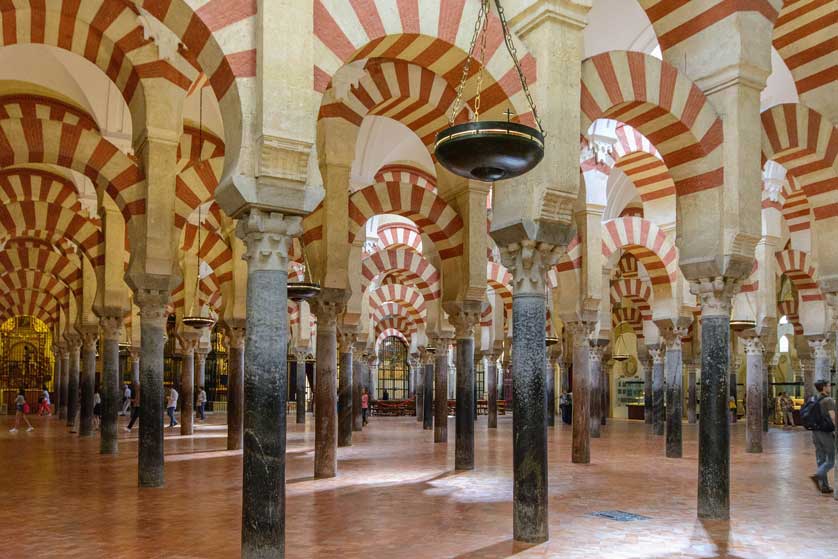
In 756 Abd al-Rahman I proclaimed himself ruler of an independent Iberian state free from the control of the Abbasid caliphate in Baghdad. In 929 his successor Abd al-Rahman III adopted the title of caliph. It was a sign of the rising importance of the region in the Islamic world of the time. Under his rule Cordoba became a magnificent city of mosques and palaces.
By the 10th century this political unity and stability had been shattered following the death of al-Mansur, a powerful chief minister. Thereafter al-Andalus became divided into a number of competing taifas or petty kingdoms. Pressure from a resurgent Christian north was also beginning. The taifas of the Islamic south began a system of paying off the Christians in the form of parias or protection money.
Relief came in 1086 with the intervention of fundamentalist Almoravids from North Africa who defeated the Christians. However, this intervention was short-lived when the Almoravids in turn lost their power base in Morocco to the Almohads.
By 1172, the Almohads had incorporated al-Andalus into their territory. It was to be the fate of this dynasty to suffer the attacks from the Christian north during the period known to the victors as the Reconquista.
Islamic Administration of Portugal
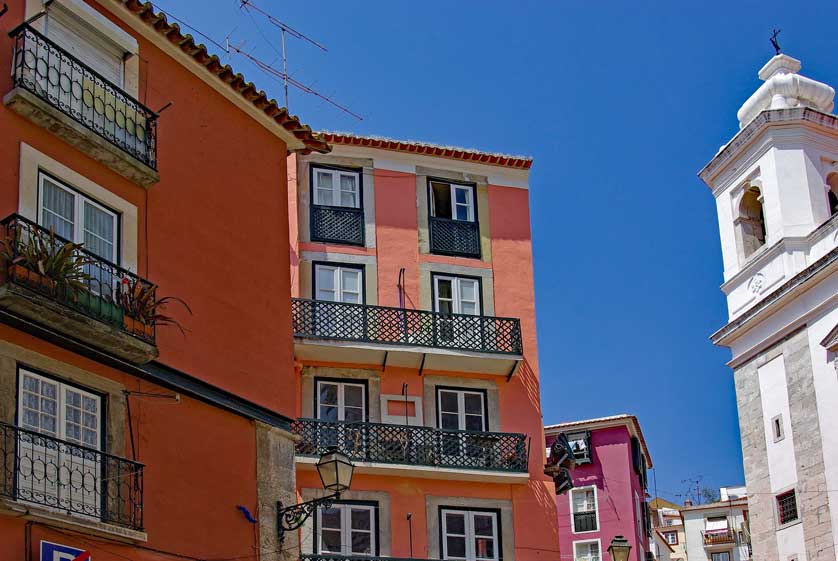
Islamic Portugal was divided into administrative units known as kuwar administered by a wali (governor). The wali were responsible for revenue collection, law and order and military defence.
Justice was dispensed by qadis (Islamic judges), though there was a different legal system for Christians and Jews.
The most important kuwar in Islamic Portugal were Alcácer do Sal, Beja, Coimbra, Idanha, Lisbon, Santarém and Silves.
Kuwar were sub-divided into medina which in turn were divided into aldeias and alcarias.
Fortified cities had an inner precinct alcáçova (from the Arabic al-qaṣabah) and a citadel, alcácer.

Islamic Society in Portugal
Muslim settlers in Portugal included mainly North African Berbers and Yemeni Arabs. The latter along with hereditary title holders formed a ruling elite known as the hassa with the remainder of the people called the amma. The hassa were mainly city dwellers with the amma tied to the land.
By the 11th century the amma consisted of mainly Christian converts to Islam - the muwallads. Christians who retained their religion were known as Mozarabs and were in the minority. Jews made up a tiny minority numbering no more than a thousand in the Algarve. Arabic became the main language spoken in al-Andalus and Islam the main religion. Over 1,000 words of Arabic origin survive in modern Portuguese and many place names such as the Alfama district of Lisbon and Alcácer do Sal derive from Arabic.
Agricultural production increased in Islamic Portugal with the introduction of such crops as rice and sorghum as well as apricots, peaches, lettuce and peaches. The cultivation of olives increased and that of grapes maintained, for fresh fruit as well as wine for non-Muslims.
Irrigation techniques improved as did the technology for digging wells and pumping water.
Below are some of the main towns in Portugal with significant Moorish remains.

Mértola
Mértola, 54 km south east of Beja, is a beautiful and historic town located at the highest navigable point of the Guadiana River, at its confluence with the smaller Oeiras River. The walls are Moorish when the town was known as Martulah and were built over the Roman originals. In the middle of the old town stands the remarkable parish church, the Igreja Matriz - a former mosque and now a National Monument built in the 12th century. The Museu Arte Islâmica has an important collection of Moorish glass, ceramics and funerary stones.

Silves
Silves is now a sleepy town of 10,000 inhabitants on the silted up Arade River but back in the 12th and 13th centuries it was a thriving and prosperous Moorish city of over 30,000 people.
Located a short journey 17 km north of Portimão and the resorts of Ferragudo and Praia da Rocha, Silves makes for an interesting day trip or a relaxing overnight or longer stay.
The Moorish citadel of Xelb thrived when vessels sailed up the Rio Arade to load up with the area's agricultural riches of cork, figs, lemons and oranges. The citrus fruits, figs and cork trees are still here but the Moors have long since departed. First defeated by King Sancho I in 1189 with the aid of an army of English crusaders, who murdered and tortured the defenders of Silves' castle after a long, drawn-out siege. The Moors briefly returned before being driven out for good in 1249 with the fall of Faro and the rest of the Algarve.
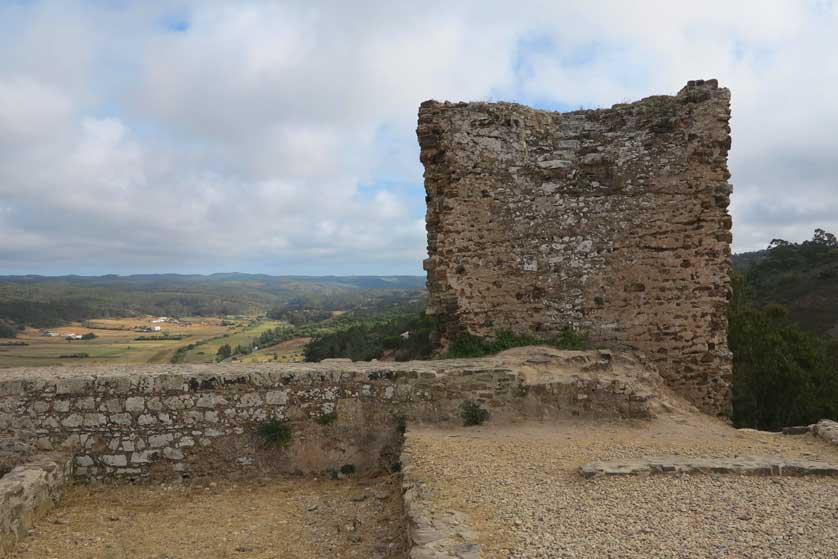
Reminders of Silves' Muslim past are the walls and shell of Silves Castle and its pleasant gardens. Silves Castle would have been the residence of its Islamic governors, their soldiers and administrators. Archaeological evidence points to the existence of palatial homes that would have been rendered with lime and mortar and then whitewashed with various decorations in stucco. Al-Mutamid is thought to have been in residence at the castle.
The impressive Torreão da Porta da Cidade (Tower of the City Gate) is one of the best preserved sections from the 12th and 13th centuries and gives access to the narrow streets of the former Muslim "medina". It is the only one of the three original Almohad Period gates to survive and is a National Monument. The Silves Municipal Archaeological Museum (Museu Municipal de Arqueologia de Silves) has exhibits on the history and archaeology during the Islamic period including an impressive well.
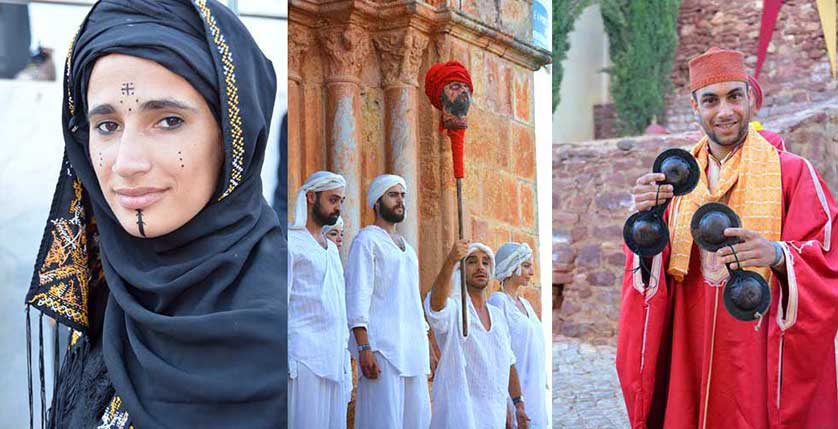
Silves Medieval Fair began in 2004 and has now grown into a large 10-day event which attracts over 130,000 visitors to watch the nightly historical dramas and re-enactments of the town's Islamic history.
Alcácer do Sal
During the era of Moorish Ummayad rule in Iberia, the town of Alcácer do Sal was part of Al-Andalus and administered from Beja to the south. The castle built by the Moors gives the town its name - Al Qaşr (The Castle) with "do Sal" referring to the importance of salt production in this part of Portugal.
The town finally fell to the Christians and D. Afonso II in 1217 during the Reconquista of the Iberian Peninsula. It was then administered by knights of the Order of Santiago who also controlled nearby Palmela Castle and Almada.
Beja
Beja is the birthplace of the poet Al-Mutamid ibn Abbad, the last Muslim ruler of Seville. Remnants of the town's Islamic past are less visible than say, Silves or Mértola but still in evidence, nonetheless.

Sintra's Castle of the Moors
The Castle of the Moors (Castelo dos Mouros) is part of the UNESCO World Heritage cultural landscape in Sintra. Now a Romantic ruin with impressive walls winding over the landscape, it was restored by Don Fernando II (1816-1885) in the 19th century.
The ruined Moorish castle is part of the magnificent Gardens of Pena (Parque da Pena) and on fine days there are views as far as Ericeira and Mafra.
Sources
A History of Portugal and the Portuguese Empire by A. R. Disney
Muslim Spain and Portugal: A Political History of al-Andalus by Hugh Kennedy
The Portuguese: A Modern History by Barry Hatton