Palmela Castle
Palmela Castle (Castelo de Palmela), in the small town wine-producing town of Palmela, is one of Portugal's most pretty castles. Perched on a hill, there are superb views out over the wine terraces and surrounding countryside.
History
The area has a history of settlement from the Neolithic Period on first by the Romans, then Visigoths and Moors. The original Moorish fortress built some time in the 8th or 9th century was expanded after the Reconquest of the area by Christian knights.
The forces of Afonso Henriques (1112-1185) took the castle in 1147, the same year as the reconquest of Lisbon, Sintra and Almada.
However the area seesawed between Christian and Muslim control until 1165.
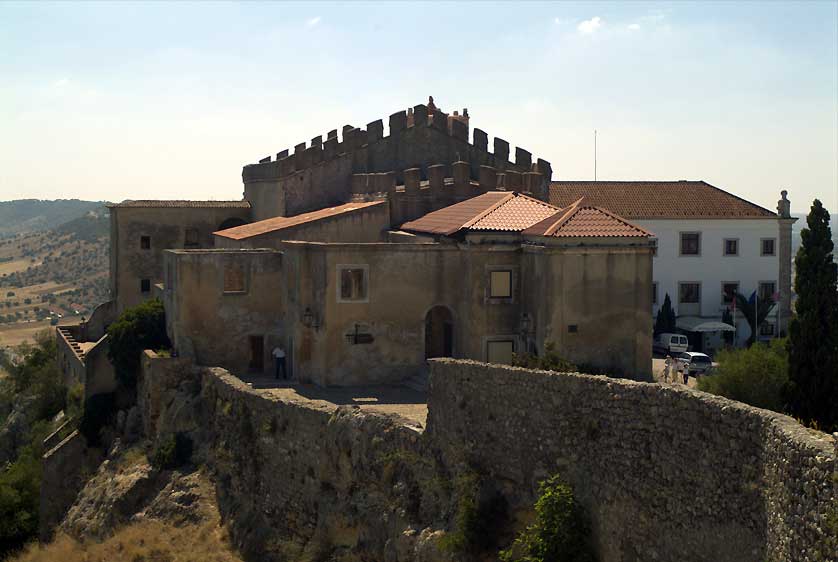
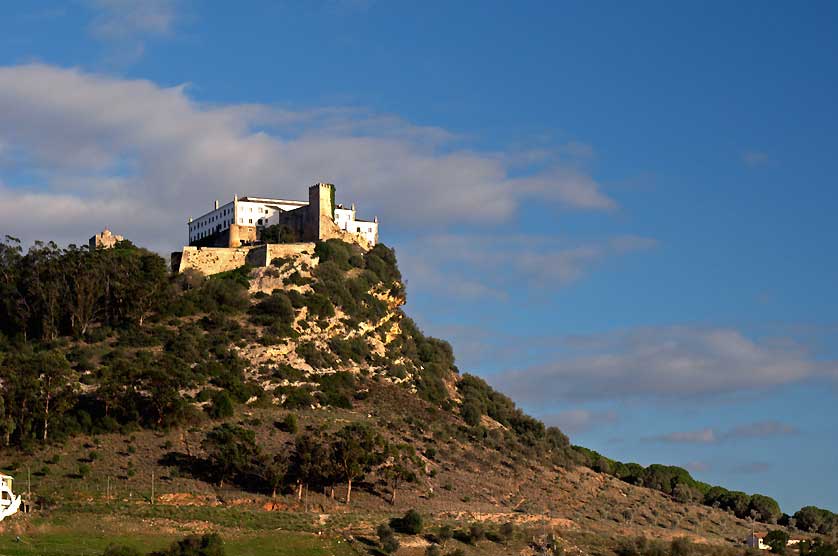
During the reign of D. Sancho I (1185-1211), the village was donated to the control of the military Order of Santiago together with Almada to the north and Alcácer do Sal to the south.
Again the Moors regrouped and the forces of the Almohad Caliphate retook these castles. It was not until the early 13th century that Palmela was finally to remain under Portuguese control.
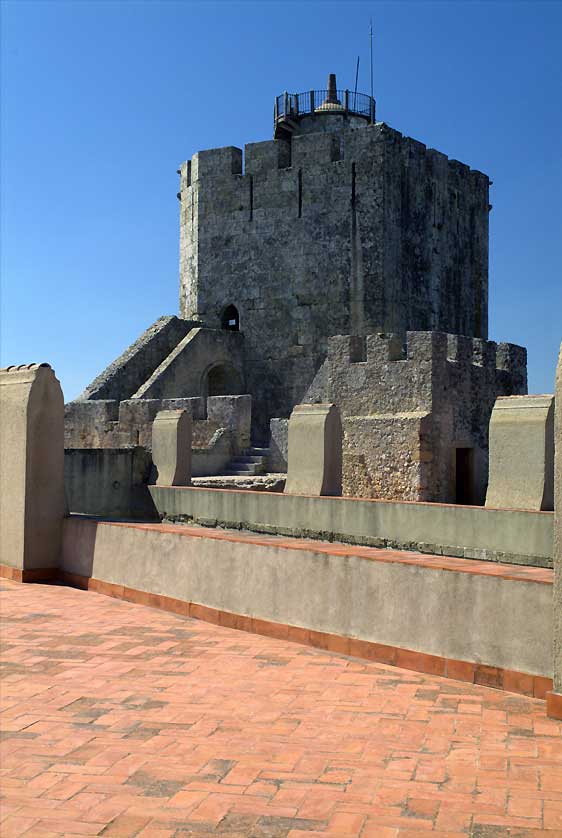
The Gothic keep dates from the 14th century and the reign of D. Dinis (1279-1325).
Further fighting at the castle took place after an incursion by Castilian forces later in the century.
The castle was expanded and reinforced by D. João I (1385-1433) and again by D. Pedro II (1667-1706).
Damaged by the 1755 Earthquake, the castle was abandoned by its monks (the successors of the Order of Santiago) after the dissolution of Portugal's monasteries in 1834. The castle was then occupied by the Portuguese military. An interesting aside is that Hermenegildo de Brito Capelo (1841-1917), known for his explorations of Africa, was born within the castle or at least in the village of Palmela.
Architecture
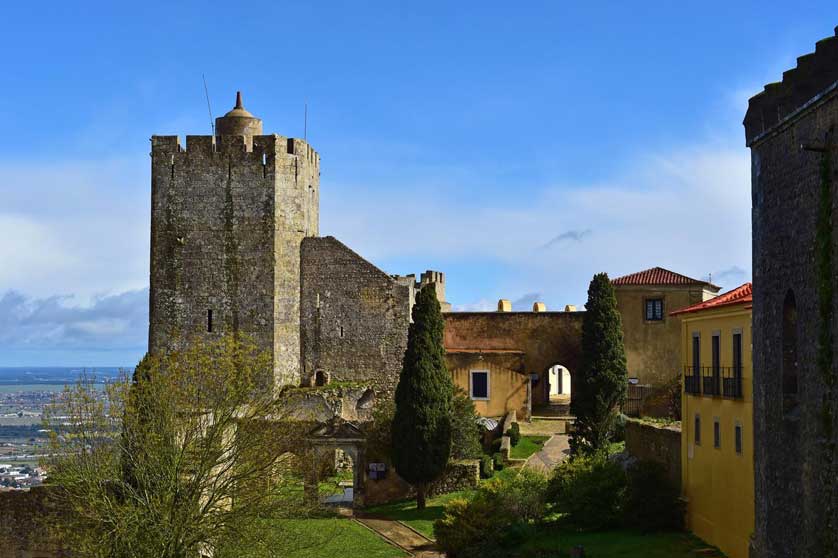
The castle stands 240 meters above sea level. The castle walls follow the terrain at the top of the hill and are defended by square and circular towers.
Within the walls is the Convent and Church of Santiago de Palmela, which forms part of the Pousada Castelo de Palmela, the Igreja de São Tiago de Palmela and the Igreja de Santa Maria. The conversion of part of the historic convent including the cloisters into a pousada took ten years between 1969 and 1979. There are tremendous views from the rooms of the castle and reaching as far as the sea on clear days.
The castle is illuminated at night.
Access
Castelo de Palmela
2950-317 Palmela
Hours: Always open
Admission: free.
Nearby
Palmela Castle is on the north eastern edge of the Parque Natural da Arrábida. The town is 10 km north of Setúbal, one stop on the Fertagus Line from Setúbal Station. Drive north on the N252 is coming by car.
The castle is some distance from the station so a taxi is the best way to reach it.
Also fairly close by if you are touring by car are the pretty wine-producing villages of Azeitão, west on the N-379.
The four-star Pousada Castelo de Palmela, within the castle walls, is the recommended place to stay in town.
Other accommodation option include the two-star Hotel Varandazul, the Retiro dos Batudes, a little to the north of the town and the Casa de Atalaia - Turismo de Habitação guesthouse with pool.
The Festival das Vindimas is Palmela's big festival and celebrates the grape harvest with processions in costume, fireworks, bull-running and traditional grape-treading.