Azeitão
Portugal City Travel Guide: Azeitão
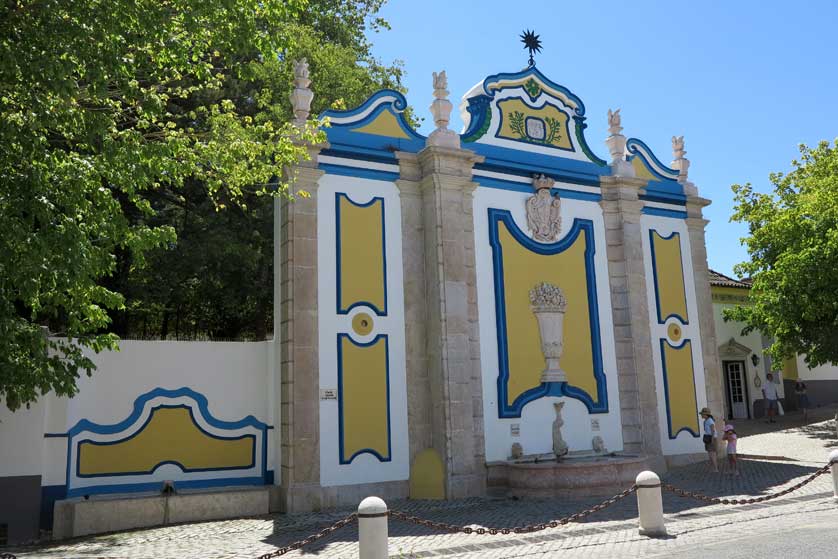
Azeitão refers to a cluster of pretty and tranquil villages 35 km south of Lisbon in the district of Setúbal.
These villages include Vila Nogueira de Azeitão, the largest, Vila Fresca de Azeitão a short way east, Aldeia de Piedade and Aldeia de S. Pedro, both south west of Vila Nogueira de Azeitão.
The area lies on the northern edge of the Parque Natural da Arrábida.
This area of Portugal is known for its runny cheese and fine, white Moscatel wine.
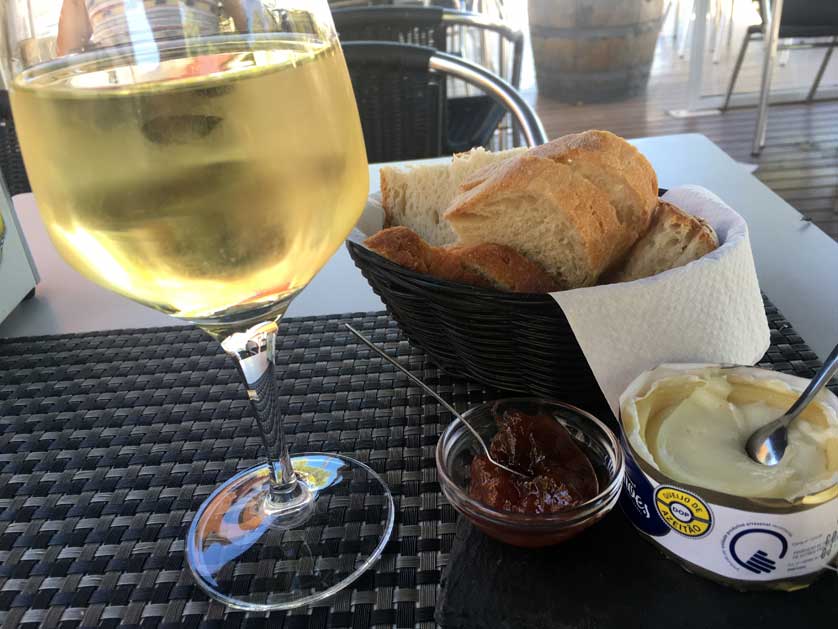
Vila Nogueira de Azeitão
Vila Nogueira de Azeitão is the largest of the villages (aldeias) and the easiest to reach on public transport from either Lisbon or Setúbal.
The village is famous for its wine production and also for several historic and photogenic fountains (chafariz in Portuguese).
These include the Pasmados Fountain (Chafariz dos Pasmados). It was built between 1764 and 1777 as part of a poverty relief scheme. The fountain bears the coat of arms of King José I. The name translates as "Fountain of the Stunned" so-called as visitors are left "stunned" by the fountain's beauty.
Other fountains are the Chafariz de Aldeia Rica and Chafariz de Oleiros. This has period tile work showing uniformed soldiers and a Roman era engraved stone. There is also a now disused public laundry here that once made use of the water supply.
There's another public laundry back near the center of the village near the turismo. This is the Sabores e Encantos de Azeitão, a restaurant on the site of the old public laundry (lavadouros). It serves both coffee and local wines along with superb cheeses and hams from the area.
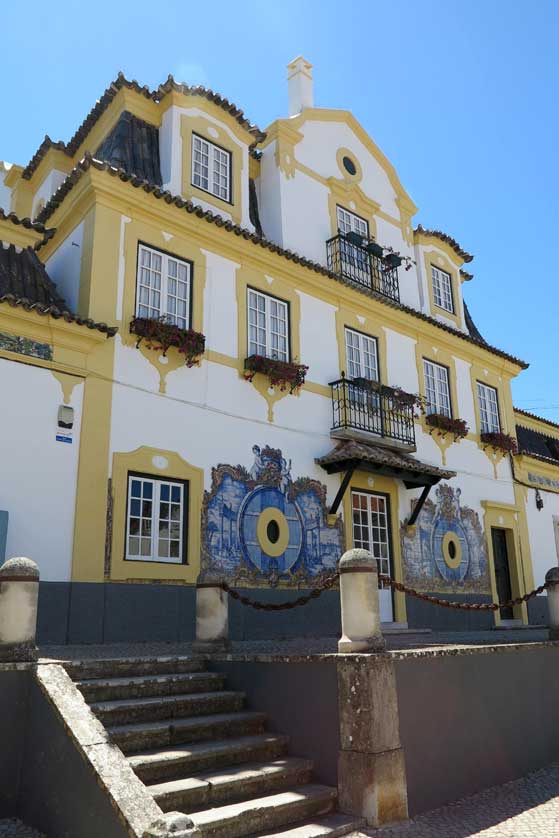

Casa-Museu José Maria de Fonseca
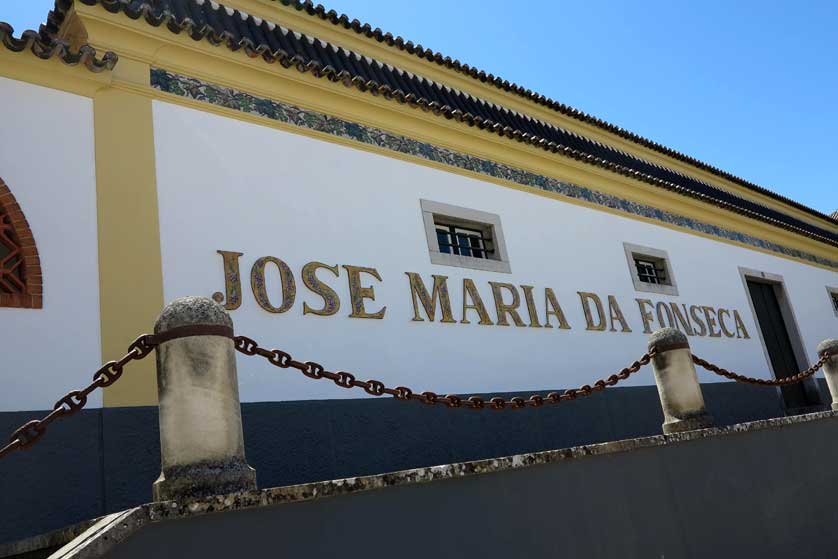
The main draw in Vila Nogueira de Azeitão, however, is the Casa-Museu José Maria de Fonseca. The company is the oldest table wine company in Portugal, dating from 1834.
Visitors can enjoy tours of the winery and tastings. The tours take in the house and garden as well as a visit to the cellar where huge vats of wine can be admired.
There is also a shop on the premises to purchase wine, cheese and other local products. In summer there are tours from 10 am until noon and then from 2.30 pm to 5.30 pm. In winter the tours end at 4.30 pm.
The house was once the family home of the Fonseca family and behind the house is the lovely garden complete with rare flowers and vines.
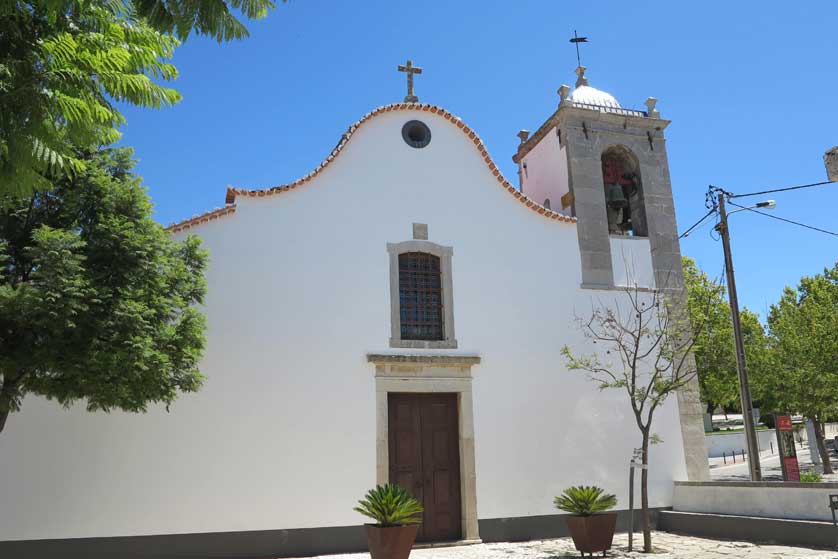
Across the road from the winery is the Igreja de São Lourenço which is the town's main church. It dates back to the 16th century. Damaged but repaired after the Earthquake of 1755, the plain exterior belies the richness of the interior which has 18th century azulejos tile work showing scenes from the Old Testament and the life of São Lourenço (Saint Lawrence). There is also earlier 16th century tile work and a beautiful marble altar with ornate wood and gold leaf carvings.
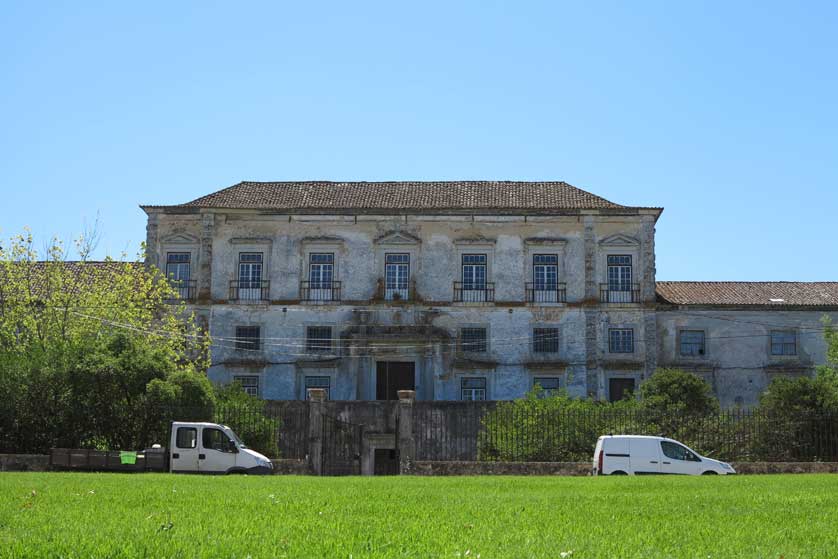
Back towards the turismo is the 17th century Palacio dos Duques de Aveiro. The building lies empty and semi-derelict. There are, however, plans to convert the building into a five star hotel.
The Dukes of Aveiro were disgraced in Portugal in the 18th century after the so-called Távora Affair, a plot to assassinate King José I and exploited by his chief minister the Marquis of Pombal to expel the Jesuits and destroy the power of the aristocracy for a time. The lands and possessions of the Duke of Aveiro were all seized by the crown and the last duke executed for treason in 1759. Outside the palace stands a pillory.
The rest of the village, which spreads out mainly north of its main road Rua José Augusto Coelho, is pleasant to stroll and admire its many fine buildings. In recent years many wealthy Portuguese have made their second homes here.

Vila Fresca
Two kilometers west of Vila Nogueira de Azeitão is Vila Fresca. Here is another fountain, the 18th century Chafariz de Vila Fresca and a church, the Igreja de São Simão. The main sight here, though is the Quinta de Bacalhôa.
This is one of the largest wineries in this area of Portugal and is now owned by the business magnate José Berardo, one of Portugal's richest people.
The palace dates from the 18th century and is stocked with art and azulejos tiles from the 15th and 16th centuries. Guided tours of the palace can be arranged at the Bacalhôa headquarters (Bacalhôa Vinhos de Portugal) back in Vila Nogueira de Azeitão.
Close to the palace is Azulejos de Azeitão where you can purchase high quality, modern azulejos tiles, made to order.

Azeitão Tourist Office
Azeitão Tourist Office is opposite the bus stop where buses arrive from Coina Station and Setúbal. Coina Station is on the Fertagus line to Setúbal Station from Roma-Areeiro Station
On the same side of the road are a couple of cafes serving food, wine and the local cheese.

Getting to Azeitão
Bus Travel in Portugal
There are frequent bus services to Lisbon (Sete Rios) as well as to Évora (95 minutes) and Faro (4 hours for the quickest buses) to Setubal.
Buses to Setubal also run from Cacilhas and Palmela. From Sete Rios Bus Station Rede Expressos buses to Setubal take 45 minutes and cost 6 Euros. There are buses from 7.30 am to 8.30 pm.
Transportes Sul de Tejo (TST) buses run from outside the main station: the 767 to Azeitão and the 768 to Palmela and Azeitão.
Bus 2 N runs from Coina Station to Vila Nogueira de Azeitão.
Train Travel in Portugal
There are daily trains to Setúbal Station from Entrecampos Station in Lisbon. The private commuter rail network Fertagus connects Lisbon (Entrecampos, Sete Rios & Campolide) with Setúbal over the River Tagus on the Ponte 25 de Abril Bridge. From Setúbal there are buses to Azeitão.
Car Travel in Portugal
Setúbal easily connects with Lisbon via the A12/IP1 and A1 motorways and to Faro and the Algarve via IC1 or E1/IP1.

From the Airport
The nearest airport to Azeitão is in Lisbon.
Portugal Hotel & Hostel Accommodation
Featured Hotel
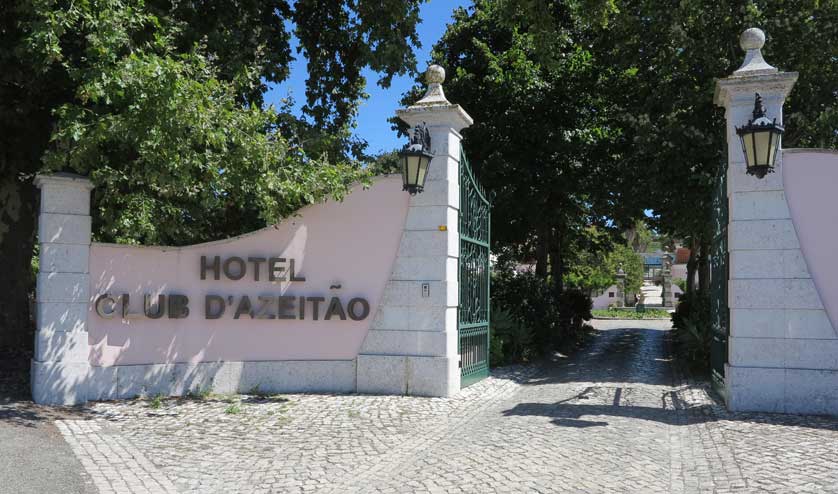
Hotel Club D'Azeitão - 4 Star, outdoor pool and air-conditioned rooms with satellite TV, Quinta do Bom Pastor - Vila Fresca de Azeitão, 2925-483 Setúbal, Portugal
Book this hotel
Book Hotel Accommodation in Azeitão
Hotels in Portugal - Booking.com
Hostels in Portugal - Booking.com
Accommodation in Azeitão is mainly holiday homes and villas including Azeitão Village, the Villa Azeitão, and Azeitão House.
See a listing of all available hotels in Azeitão.
Eating
Azeitão has some fine places to dine - try the Sabores e Encantos de Azeitão, By the Wine (owned by the José Maria de Fonseca winery) or Casa Negrito.
Drinking
Azeitão is known for its local Moscatel. You can try this is any of cafes and restaurants in town.
List your restaurant/bar/hotel/rental villa contact Advertising
The average high June temperatures for Portugal is between 22 degrees Centigrade and 26 degrees Centigrade.
Get more weather information for Portugal