Portuguese Culture: Pelourinho (Pillory)
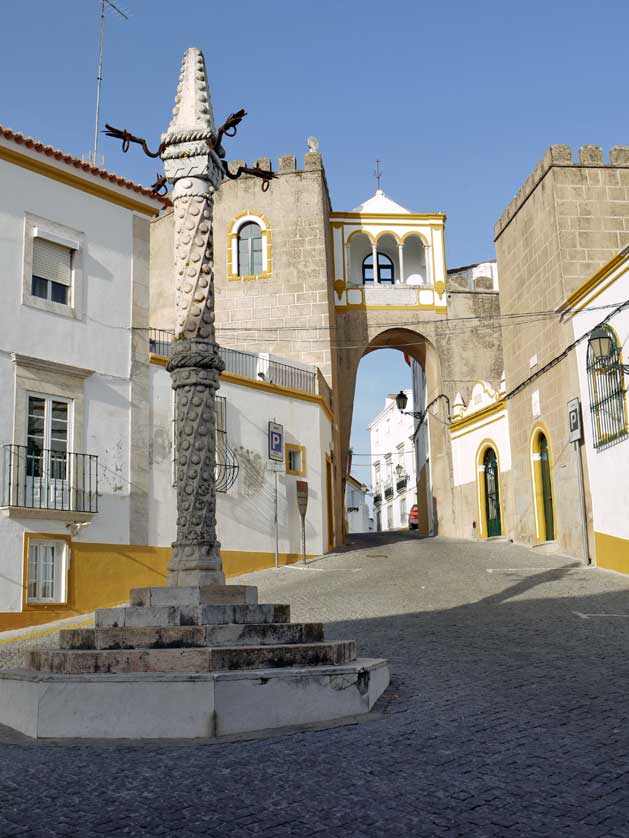
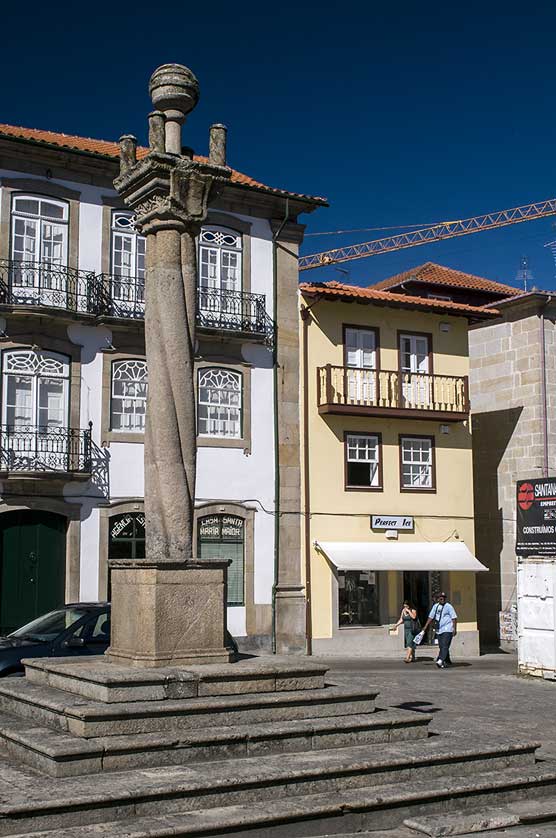
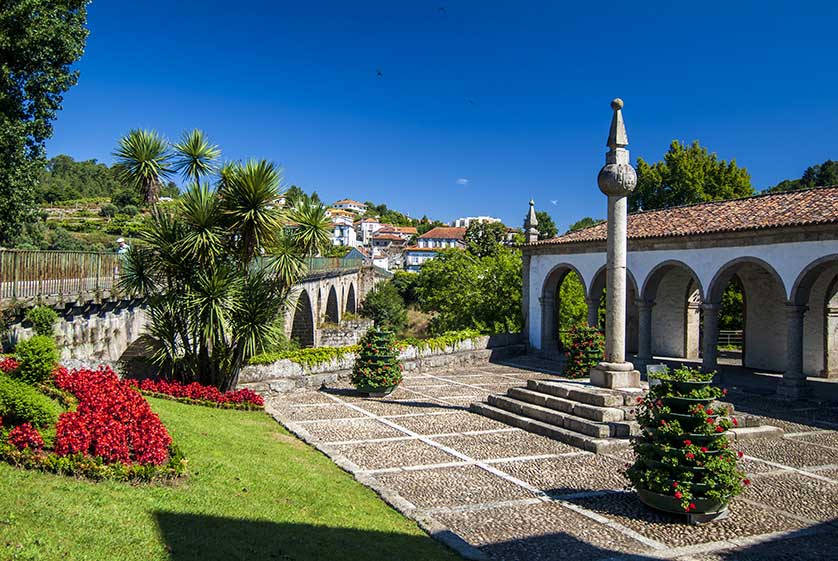
Pelourinho (pillories) are a common sight in many Portuguese towns and cities.
Frequently located in the main square or outside an important church or civic building, such as the Town Hall, these often ornate structures are frequently both marble and Manueline in design.
Pillories can be compared with the stocks in other European countries. They were initially implements of justice but later have become mere symbols of the justice and political and administrative power invested in the state.
There are many beautiful examples of pelourinho throughout Portugal. They can also be found in public squares in other European countries, notably Italy, Spain and Poland.

History
It is believed public pillories date back to the Roman period of Portuguese history.
Wrongdoers were often tied to the pillory to be exposed to public shame and in worst cases whipped or even maimed.
Some pillories still have the metal rings to which prisoners were bound.
Executions were not usually performed at the pillory but at a gallows in another location.

Pillories in Portugal
One of the finest examples of a pelourinho is in Beja where it is located close to the 16th century Igreja de Misericórdia.
Within the grounds of the walled castle in Bragança in north east Portugal is an unusual example of a pillory. The base is a stone figure of a Lusitanian wild boar (see above).
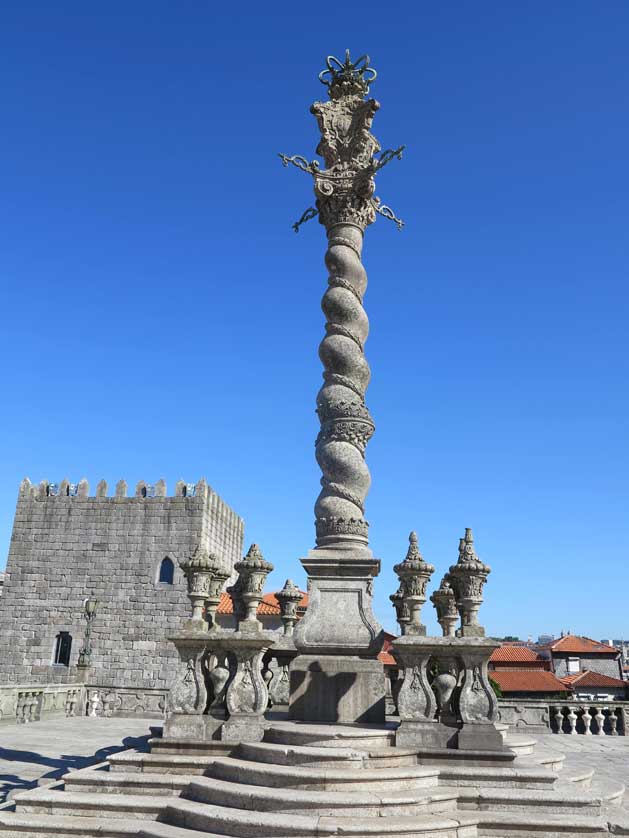
The large, twisting stone pillory outside the Cathedral (Sé) in Porto dates from the 18th century and is merely symbolic.
Similarly, the pillory in Lisbon, located in Praça do Município (City Square or Municipal Square), is purely symbolic and was never used as an instrument of punishment. The pillory was built following the 1755 Earthquake by Eugénio dos Santos de Carvalho (1711-1760), using iron, marble and stone.
The platform is octagonal in shape. The column consists of 3 elements that form a spiral. At the top of the column is a metal piece, which forms an armillary sphere, by Pêro Pinheiro. The pillory is set on a granite base with five steps. It is approximately 10 meters high.
In Braga is an historic, granite pillory with Manueline elements within the cathedral grounds.
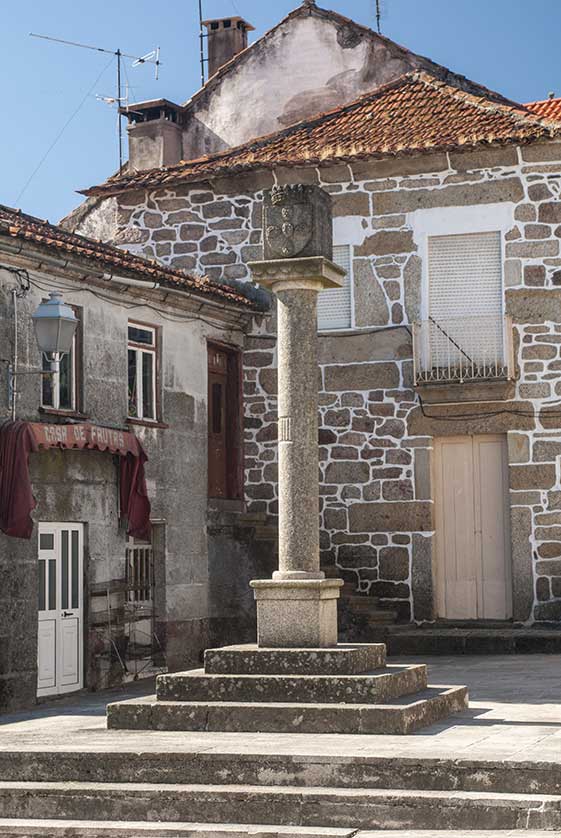
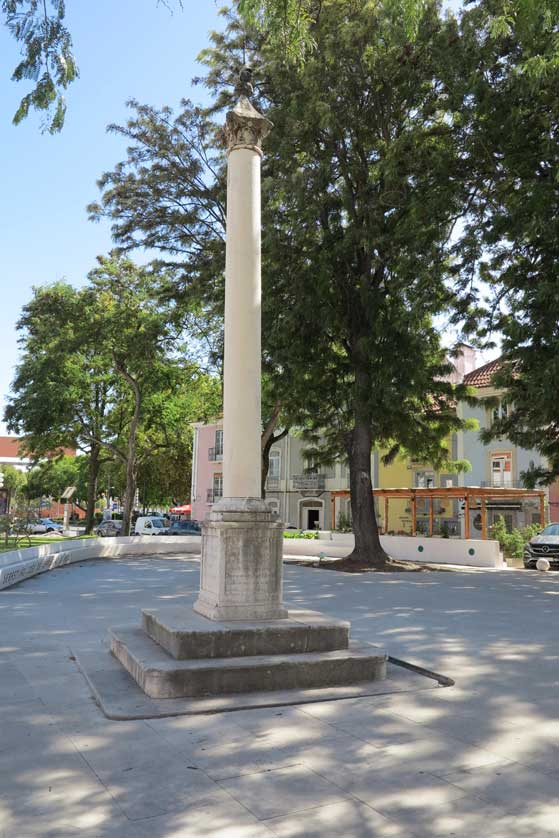
Setúbal, south of Lisbon, has a rather more plain 18th century pillory (pictured above) close to the Casa da Baía.
In Barcelos in the Minho the pillory is within the grounds of the open-air Museu Arqueológico de Barcelos (Archeology Museum), close to the famous Cruzeiro do Senhor do Galo.

Further Examples of Pillories in Portugal
Other examples of historic pillories are the Pelourinho de Aguiar da Beira near Guarda and the Pelourinho de Arcos de Valdevez, north of Braga.
Both are in granite and are two of the oldest examples in the country.
Pillories can also be seen in Arraiolos, Chaves, Lagos on the Algarve, Lousã, Monsaraz and Campo Maior in Alentejo, Póvoa de Varzim, Silves and Sintra.
In the Minho region of northwestern Portugal there are pillories in Ponta da Barca and Montalegre.
The Abade de Baçal Museum in Bragança has a collection of 1930's watercolours by Alberto de Sousa focusing on the area's stone pillories, which could be found in the smallest of villages.
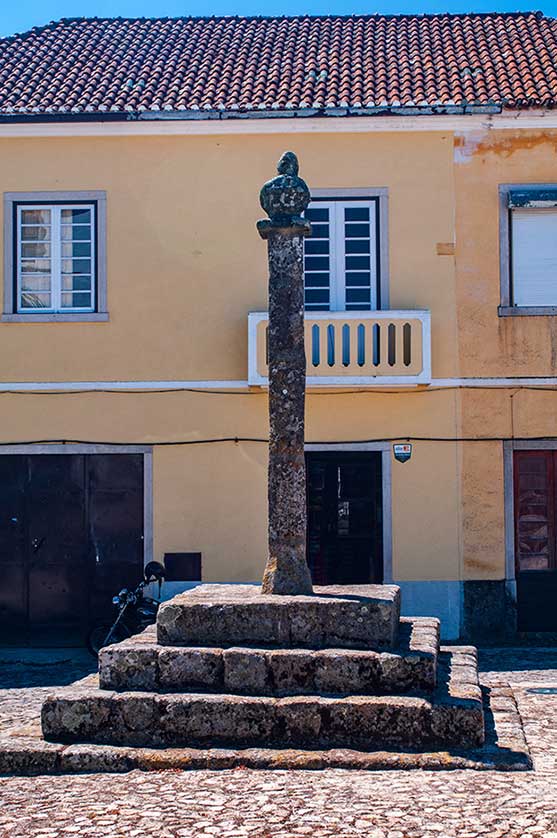
The Pelourinho de Pedrógão Grande is an historic pillory in the center of the town. It dates from the 16th century and the time of the Portuguese monarch, Manuel I. In 1513 the king granted the town a new charter (foral) and the granite pillory dates from this period. It is close to the Igreja Matriz (Igreja de Nossa Senhora da Assunção) and shows elements of Manueline architecture such as the armillary sphere on the top of the structure.

The pillory in Ansião in the historical Beira Litoral province, now the district of Leiria, dates from 1686. It once stood in front of the manor house of the Counts of Ericeira (later the Town Hall), in the center of the town but was moved in the 20th century to what is now known as Largo do Pelourinho in front of the Junta de Freguesia (Parish Council building). The monument bears the coat of arms of the Count of Ericeira.

Articles on Portuguese Culture
Pastel de Nata Workshop in Lisbon