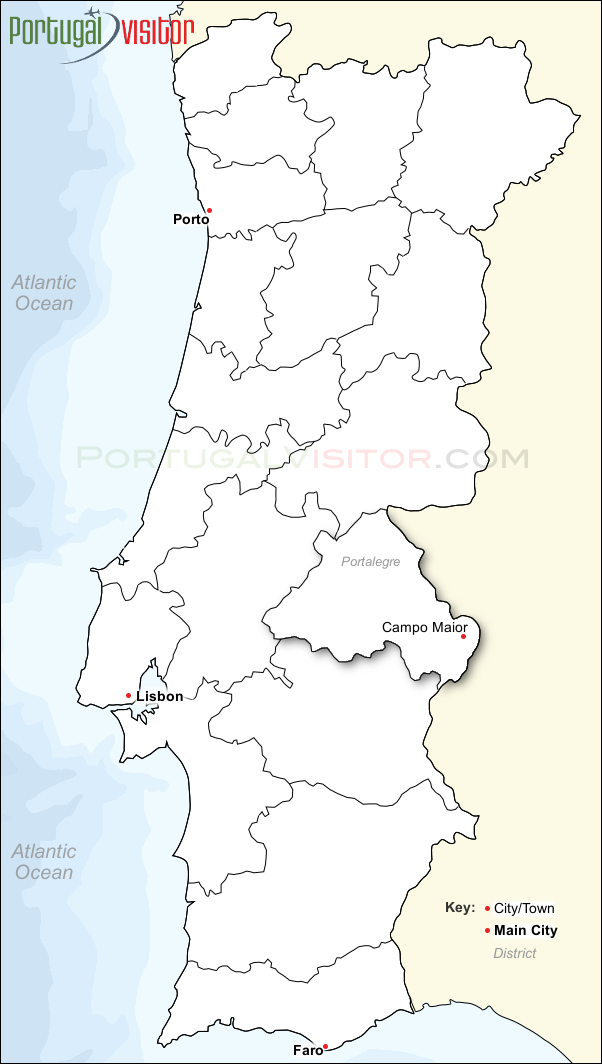
Campo Maior
- Population just over 8,000 (2021).
- Known for its castle and Capela dos Ossos (Bone Chapel).
- Historic frontier town close to Badajoz in Spain.
- Small, charming Alentejan town of churches, plazas, and historic monuments.
- Situated north of Elvas and within easy reach of both Evora and Estremoz.
- Off-the-beaten-track destination famous for its delicious olives and coffee.
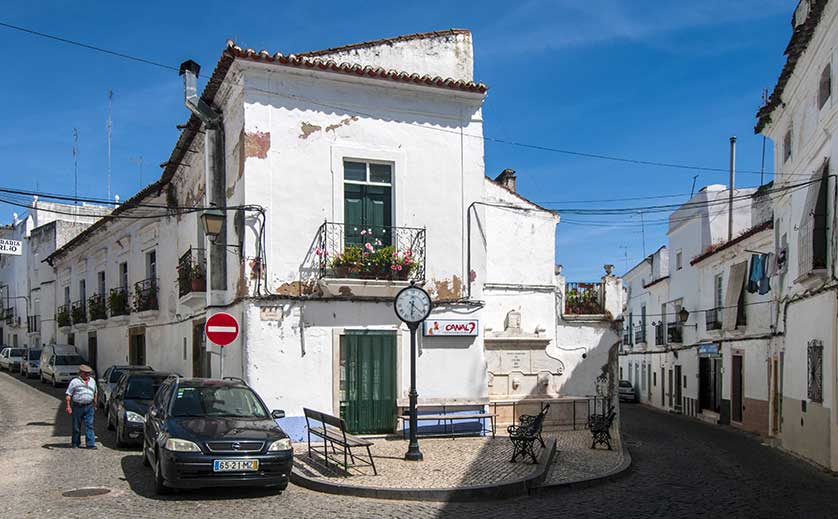
Campo Maior, located 220 km east of Lisbon, in the Alto Alentejo, is, like nearby Elvas, a picturesque fortress town, known for its historic castle, Capela dos Ossos (Bone Chapel) and relaxing atmosphere.
Campo Maior lies just 20 km from Badajoz in Spain, across the Rio Guadiana.
History
Indeed the town was part of Spain until 1297 and the Treaty of Alcanizes agreed by King Denis of Portugal and King Ferdinand IV of Castile. Under the terms of the treaty Campo Maior, Olivença and Ouguela were transferred to Portuguese sovereignty.
Before that the area has the usual history of occupation by Romans and Moors. Just east of the town is the Muro Dam, built by the Romans and maintained by the Moors. It is the largest surviving Roman dam in Portugal south of the River Tagus. The 174-meter long structure features three slight bends in its course.
West of Campo Maior is an even older historical site. This is the Povoado Pré-Histórico de Santa Vitória dating from the first half of the 3rd millennium BC. Archeologists have found evidence of defensive walls, ditches and huts.
Moving back to the medieval period of Portuguese history, the town sided with Castile during the 1383-1385 civil war and was besieged and taken by King John I of Portugal and Nuno Álvares Pereira.
Later during the Portuguese Restoration War beginning in 1640, the town's castle and walls were much strengthened to prevent attacks from across the border.
Earlier in the late 15th century many Jews fled Spain becoming a large population of so-called "New Christians" in the town.
There was further conflict in and around Campo Maior in 1712 during the during Spanish War of Succession and yet again in the Peninsular War (1807-1814), when Wellington made his base in nearby Elvas for the successful but bloody attack on the French in Badajoz.
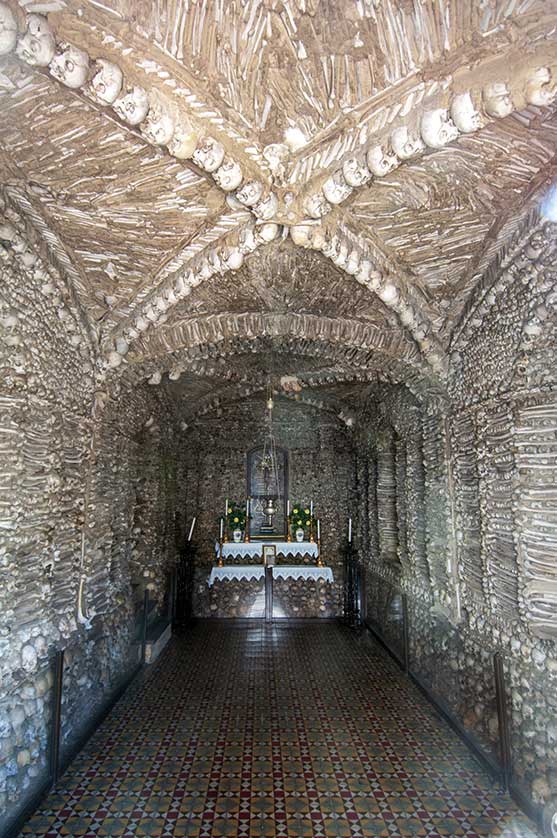
Tragedy struck the town in 1732 when a bolt of lightening caused an explosion of gunpowder and ammunition in the castle's armory killing two thirds of the population, an estimated 1,500 people. The bones of the victims can now be seen displayed in the Capela dos Ossos, adjacent to the Igreja Matriz de Campo Maior.
It is the second largest such chapel in the country after the Igreja de São Francisco & Capela dos Ossos in Evora and dates from 1766. There is a similar Chapel of Bones at the Igreja do Carmo in Faro in the Algarve, southern Portugal.

Churches
Other churches of interest in Campo Maior include the aforementioned Igreja Matriz de Campo Maior (Parish Church) on Largo Doutor Regalla which was constructed between 1570 and 1646. The sturdy church has two bell towers and three naves.
The Baroque Igreja da Misericordia on Largo da Misericórdia also has two bell towers but with a single nave. Extensive restoration has been carried out here over recent decades.
Within the castle walls is the small Capela do Senhor do Castelo (Capela do Senhor dos Aflitos) built just after the huge explosion of 1732. Nearby is the Centro Interpretativo da Fortificação Abaluartada de Campo Maior dedicated to the history of this frontier fortress.
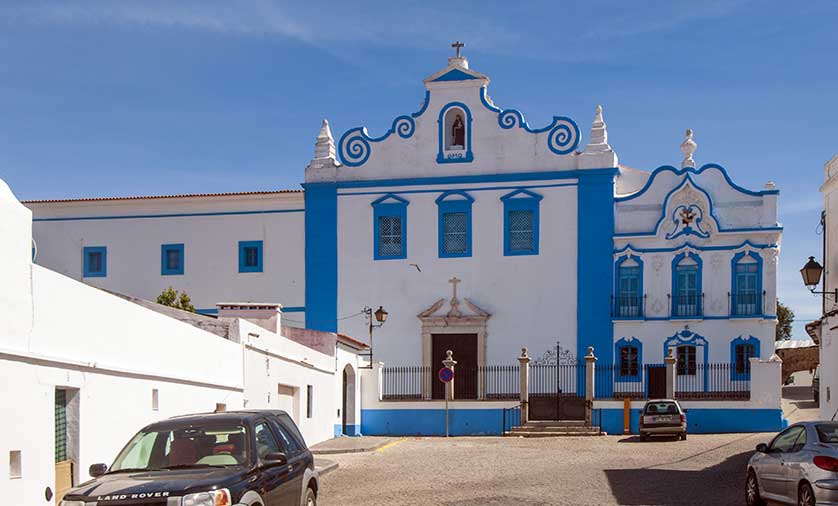
The 18th century Igreja e Convento de Santo António on Rua 5 de Outubro is another church of beauty. The interior is marked by the typical austerity of Franciscan architecture.
Museums
This area of the Alentejo is marked by its cork oaks and olive trees and is also a center of coffee packaging. Indeed, olive growing and olive oil production were the dominant activities of the local economy until the mid-20th century.
The Lagar Museu do Palácio Visconde d' Olivã maintains an historic olive press with explanations of the process of production including caring for the olives groves, picking the olives and transformation into oil. As well there are tastings of olives and olive oil for visitors.
The Museu Aberto de Campo Maior is housed in a historic building and is largely ethnographic with displays from prehistory to the present, including the town's connection to Spain. Sharing the same space is the Centro Interpretativo das Festas do Povo - Casa das Flores. It is dedicated to the major festival in the town with a number of interactive exhibits explaining the history and traditions of the event.
Also of interest is the Museu de Arte Sacra with over 150 exhibits including a collection of paintings, images, furniture and jewellery, collected from several churches in the municipality of Campo Maior. It is located in the early 19th century Capela de Nossa Senhora do Carmo on Rua de São João Baptista.
The Casa Museu de Santa Beatriz da Silva is dedicated to the early Portuguese saint Beatriz da Silva (1426-1492) who was born in Campo Maior. She was the founder of the order of the Immaculate Conception. Her brother was Amadeu da Silva (1431-1482), an important figure among the Franciscans.
The town also boasts an 18th century pillory, a 2.17 meter tall marble column in Praça da República. The pillory is topped with a statue of Justice holding a set of scales.
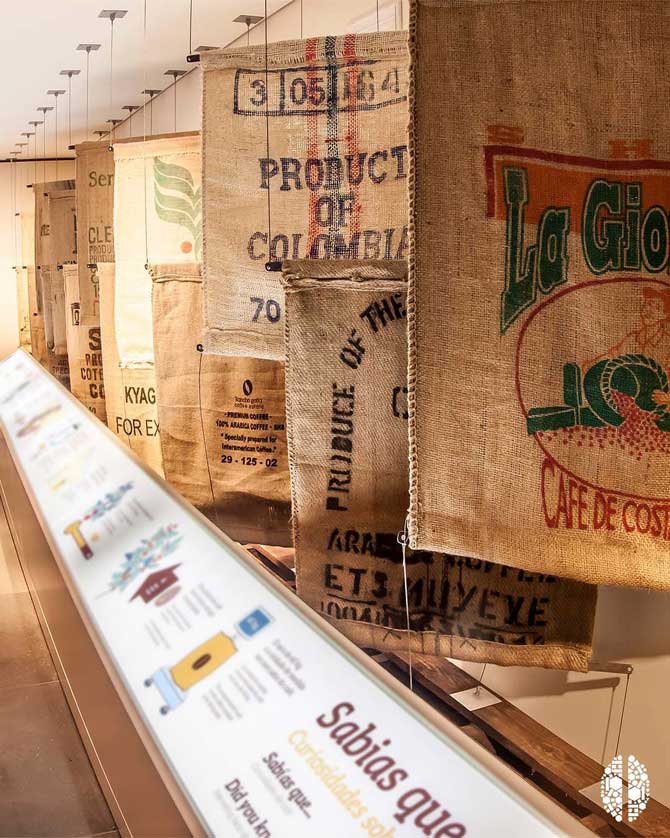
Five kilometers north of the center, the Centro de Ciência do Café is dedicated to the history and culture of coffee. This modern facility is run by one one Portugal's biggest coffee brands, Delta.
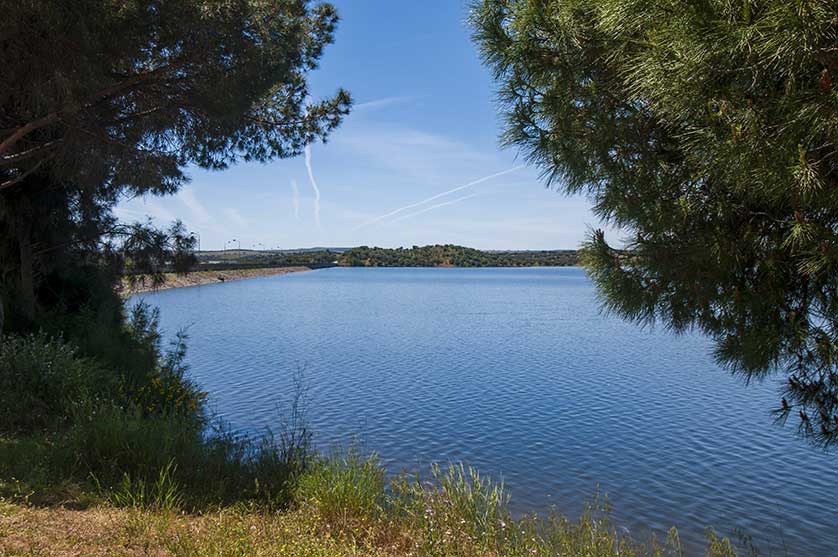
The Albufeira da Barragem do Caia is a large dam and reservoir to the west of the town that supplies water for the surrounding area and is of great natural beauty.
Festivals
Campo Maior's main festival is the wonderful Festa das Flores (Flower Festival), aka the Festa do Povo (Festival of the People) in early September. Local people decorate their districts with colorful paper flowers.
Campo Maior Tourist Office
The tourist office is located at Largo dos Carvajaes, 7370-047 Campo Maior (tel. 268 680 319) within the Espaço.Arte building.
It is open in winter from 10 am to 5 pm and in summer from 10 am to 6 pm. Closed on Mondays as well as January 1st, Easter Sunday, May 1st and December 25th.
Getting to Campo Maior
Train Travel in Portugal
The nearest station is in Elvas. There is a daily train to Lisbon (4-5 hours) changing at Entroncamento. Buses are by far the quickest option to the capital.
Car Travel in Portugal
Campo Maior is around two hours plus by car from Lisbon on the A6 highway. From Elvas take the N373. From Spain (Badajoz), take the N371.
Bus Travel in Portugal
Local buses connect Elvas and Campo Maior. The journey time is about 35 minutes. To Portalegre the journey time is just under two hours. Rede Expressos operates buses between Lisbon and Campo Maior with the journey taking from 3 hours, to 3 hours, 30 minutes.
The bus station in Elvas is outside the city wall's to the south and a short walk from Pousada Santa Luzia Elvas on the road to Spain.
Fairly infrequent buses a day make the 3 hour plus journey to Lisbon.
There are also bus connections to Evora (90 minutes), Portalegre (75 minutes), Estremoz (45 minutes), Alcácer do Sal (via Evora & Setubal; 4 hours, 25 minutes) and Faro.
Buses between Elvas and Badajoz in Spain are operated by Rodoviaria do Alentejo. The journey takes 30 minutes and a timetable can be found here - www.rodalentejo.pt. Remember Spain is one hour ahead of Portugal.
The bus runs from Monday to Friday except on National Holidays. Buses leave Badajoz at 1.15 pm and 4.30 pm arriving in Elvas at 12.45 pm and 4 pm. Buses from Elvas depart at 10.30 am and 3 pm arriving in Badajoz at 12 pm (noon) and 4.30 pm.
Portugal Hotel & Hostel Accommodation
Featured Hotel
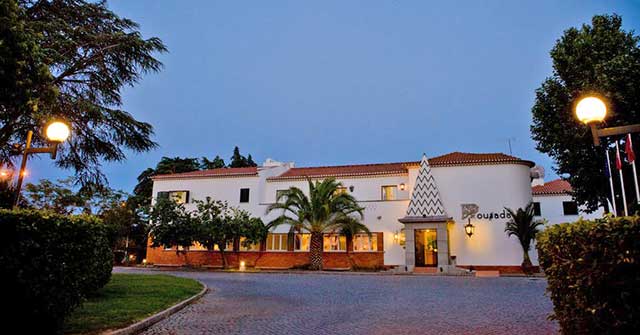
Pousada Santa Luzia Elvas Av. de Badajoz (Tel: 268 637 470); 25 luxurious rooms in Portugal's first established pousada.
Featured Guesthouses
Most places to stay in Campo Maior are guesthouses rather than large hotels. Some places to choose from include the Palacete Encantor Maior, Vintagehouse and Naturehouse, all very close together.
Featured Campsite
Camping Os Anjos is a rural campsite 1.5 km from the pretty town of Campo Maior. The campsite has 25 pitches suitable for motorhomes, caravans and tents.
Find out more here: campingosanjos.com
Estrada da Sra. da Saude 1179
7370-214 Campo Maior
GPS: 39.008339 -7.048331
Tel: 00351-965236625
Book Hotel Accommodation in Campo Maior
Hotels in Portugal - Booking.com
Albufeira Hotels - Booking.com
Book Hotels in Algarve - Booking.com
Find Hotels in Lisbon - Booking.com
Search Hotels in Porto - Booking.com
Apartments & Hotels in Madeira - Booking.com
Hostels in Portugal - Booking.com
Lisbon Hop-On Hop-Off Bus, Tramcars, and Yellow Boat River Tour
Eating
Some recommended places to eat include Taberna O Ministro on Avenida dos Combatentes da Grande Guerra and O Tarro on Rua 13 de Dezembro.
Drinking
Julius Bar and Stop Bar are two of the town's major watering holes.
List your restaurant/bar/hotel contact Advertising
Cafes
Try Iberica at Rua do Emigrante 13 or Café Fidalgo on Rua Dr. Miguel Bombarda.
The average high June temperatures for Portugal is between 22 degrees Centigrade and 26 degrees Centigrade.
Get more weather information for Portugal
Maps