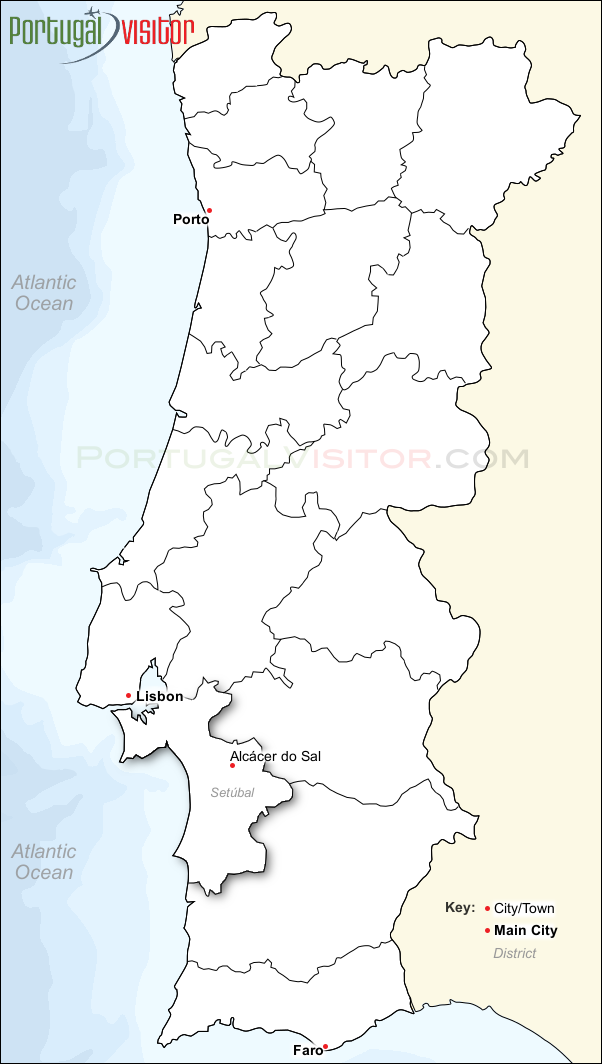
Alcácer do Sal
Portugal City Travel Guide: Alcácer do Sal

Alcácer do Sal is 52 km south east of Setúbal and directly east of Comporta on the Tróia Peninsula on the Sado River.
Located in the Baixo Alentejo region of Portugal, the town of just over 13,000 inhabitants has a long history and is one of Portugal's oldest ports.
The town has preserved its historical and cultural heritage, with well-preserved medieval architecture and a charming old town area. Visitors can explore narrow streets, historic churches, and other landmarks that reflect the town's rich past.
History
The area around Alcácer do Sal is believed to have been settled by the Phoenicians. It was later inhabited by the Romans, Moors, and later Christians.
Known during the Roman period as Urbs Imperatoria Salacia, the settlement and its environs were important for salt production as the ruins at nearby Cetobriga on the Tróia Peninsula testify.
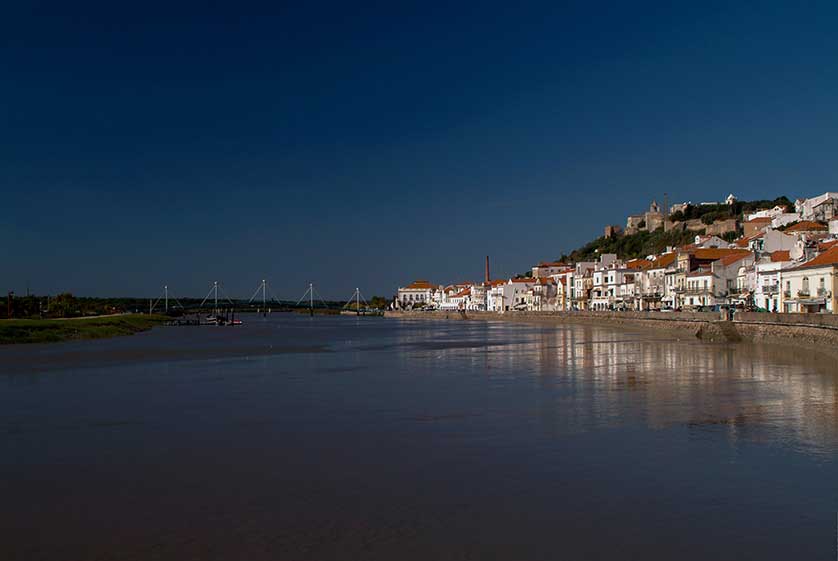
During the era of Moorish Ummayad rule in Iberia, the town was part of Al-Andalus and administered from Beja to the south. The castle built by the Moors gives the town its name - Al Qaşr (The Castle) with "do Sal" referring to the importance of salt production in this part of Portugal.
The town finally fell to the Christians and D. Afonso II in 1217 during the Reconquista of the Iberian Peninsula. It was then administered by knights of the Order of Santiago who also controlled nearby Palmela Castle and Almada.
Attractions
The castle (Castelo de Alcácer do Sal) on a hill overlooking the River Sado and its nearby rice fields is now occupied by an upmarket pousada, the Pousada Castelo de Alcacer do Sal. For a time the buildings were previously occupied by the Convento de Nossa Senhora de Aracaelli. Originally built by the Moors in the 10th century, the castle was later expanded and modified by the Christians after they reconquered the region. The castle offers panoramic views of the surrounding landscape.
Below the castle is the Cripta Arqueológica do Castelo which has exhibits from the Iron Age, as well as the Roman and Muslim periods of the castle's history. On display are part of a Roman street, Roman statues, ceramics and coins.
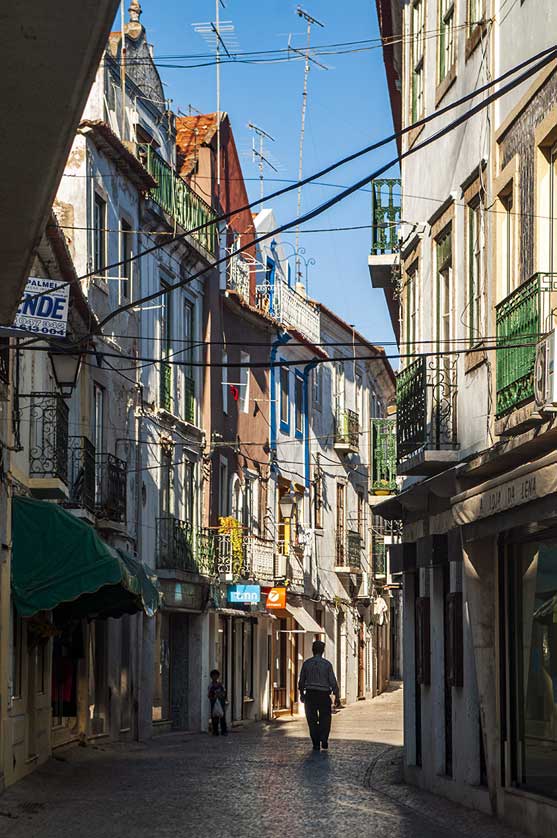
The narrow, twisting streets leading to the castle are somewhat reminiscent of the Alfama district in Lisbon.
Churches in the town include the Manueline Igreja do Espirito Santo. Legend has it that Manuel married his second wife, D. Maria de Castela in the church, but historians now consider this unlikely. He was proclaimed king here, however, in 1495.
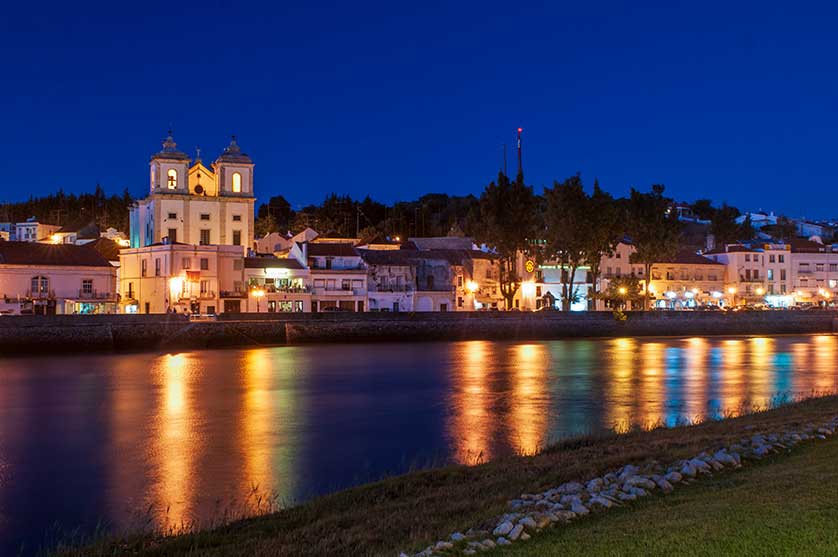
The Igreja de Santiago was built in the 18th century by King D. João V, to whom, as monarch, the Grand Mastership of the Order of Santiago was reserved, with the knights of Santiago having been administrators of the entire region since the 13th century. With two large bell towers with baroque domes, inside, the decoration is exuberant, with gilded carvings, screens and blue and white azulejos tile panels. The panels with representations of the life of Saint James and the Virgin stand out.
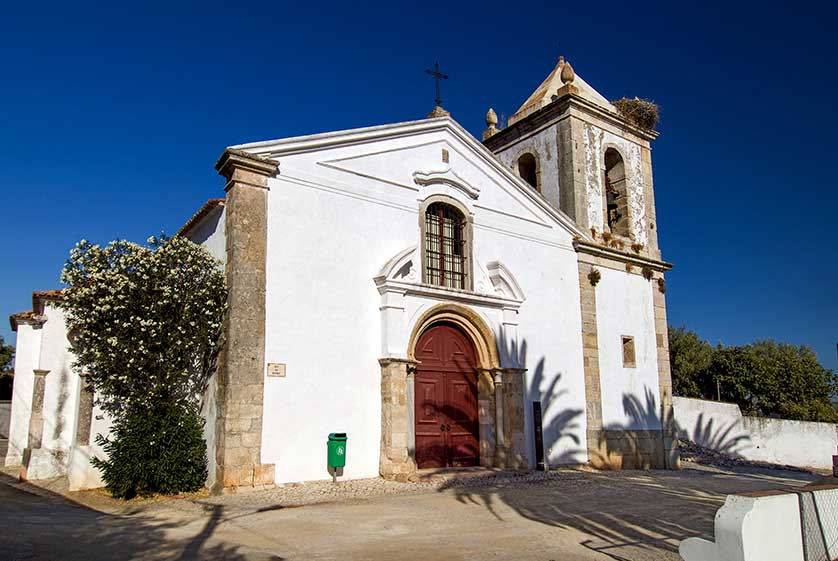
The Igreja Matriz de Alcácer do Sal (Iglesia de Santa Maria do Castelo) was founded by the Order of Santiago after the reconquest of the city by King Afonso II in 1217. Once the most important church and the main meeting place in Alcácer do Sal, its churchyard was where town council minutes and government actions were displayed during the Middle Ages.
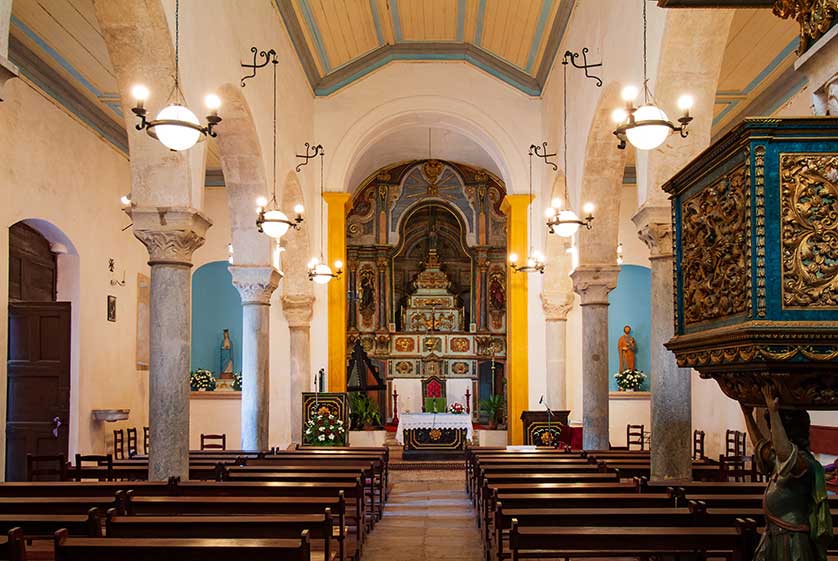
The Pedro Nunes Municipal Museum also has some interesting archaeological remains dating back to the Iron Age as well as remains from both the Roman and Muslim eras.
There is also information on the importance of the town as a river port and the mathematician Pedro Nunes, after whom the museum is named. Nunes (1502-1578) was a brilliant mathematician, cosmographer, and teacher of Jewish origin who was born in the town.
His work on navigation was important to Portugal's Age of Discovery and his statue can be seen on the Monument to the Discoveries (Padrão dos Descobrimentos) in the capital, Lisbon. He was also appointed the teacher to several children of the Portuguese royal family including the ill-fated Sebastião I.
The Sado River plays a crucial role in the region's geography and economy. The river estuary is known for its diverse ecosystem and is a habitat for various bird species. The town's connection to the river has influenced its history and development.
The area around Alcácer do Sal is known for its archaeological sites, including Roman ruins and artifacts.

Alcácer do Sal Tourist Office
Praça Pedro Nunes 1
Tel: 265 610 071
Getting to Alcácer do Sal
Bus Travel in Portugal
Buses to + from Alcácer do Sal
There are buses from Alcácer do Sal to Lisbon (Gare do Oriente), Setubal, Troia, Grândola, Elvas, Sines, Torrão and Vidigueira.
Buses to + from Setubal
There are frequent bus services from Setubal to Lisbon (Sete Rios) as well as to Évora (95 minutes) and Faro (4 hours for the quickest buses).
Buses to Setubal also run from Cacilhas and Palmela. From Sete Rios Bus Station Rede Expressos buses to Setubal take 45 minutes and cost 6 Euros. There are buses from 7.30 am to 8.30 pm.
Transportes Sul de Tejo (TST) buses run from outside the main station. These are the 413 to Freeport, the 561 to Campolide and Praça de Espanha in Lisbon, the 562 to Gare do Oriente, the 563 to Praça de Espanha and Gare do Oriente, the 605 to Palmela, the 609 to Vale Ana Gomes, the 614 to Alto da Guerra, the 767 to Azeitão and the 768 to Palmela and Azeitão. The wine-producing town of Palmela, 10 km north, is worth visiting for Palmela Castle.
Train Travel in Portugal
Alcácer do Sal Station was once on the Linha do Sul from Campolide to Tunes in the Algarve where it connects with the Algarve Line (Linha do Algarve). The station closed to passengers in 2011.
Trains to Setúbal
There are daily trains to Setúbal Station from Entrecampos Station in Lisbon. The private commuter rail network Fertagus connects Lisbon (Entrecampos, Sete Rios & Campolide) with Setúbal over the River Tagus on the Ponte 25 de Abril Bridge.
Car Travel in Portugal
Alcácer do Sal is approximately a 40-minute drive from Setúbal on the A2 or IC1 highways.
Setúbal easily connects with Lisbon via the A12/IP1 and A1 motorways and to Faro and the Algarve via IC1 or E1/IP1.
From the Airport
The nearest airport to Alcácer do Sal is in Lisbon.
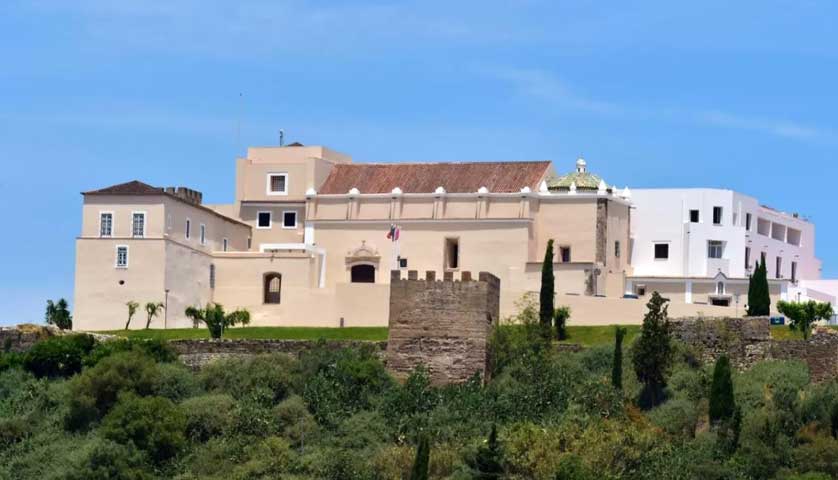
Pousada Castelo de Alcacer do Sal - 4 Star, outdoor swimming pool & restaurant, Castelo de Alcácer, 7580-123 Alcácer do Sal
Book this hotel
Portugal Hotel & Hostel Accommodation
Featured Hotels
Other recommended places to stay in Alcácer do Sal include the Hotel Cegonha, ValentinaPlace, Hotel Ordem de Santiago, and Hotel Rural da Barrosinha - a couple of kilometers southeast and offering an outdoor pool and excellent facilities close to the Sado River.
See a listing of all available hotels in Alcácer do Sal.
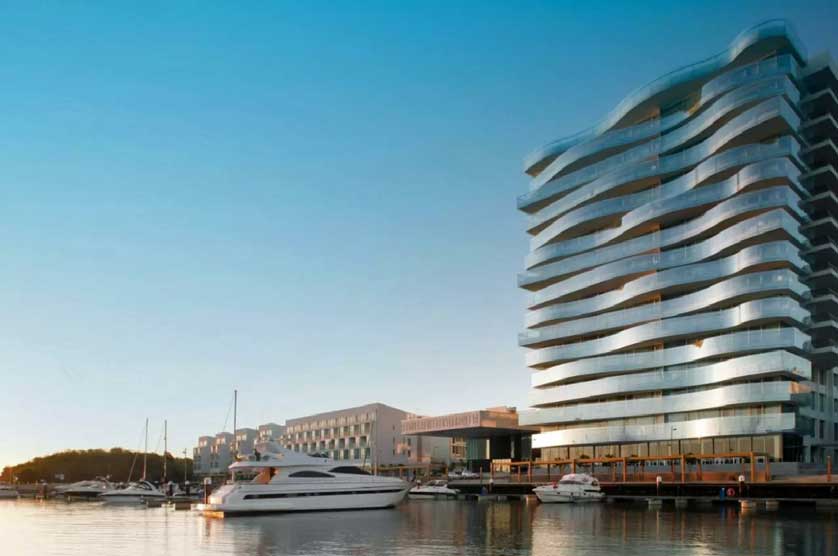
Troia Design Hotel - 5 Star, casino, a spa and two outdoor swimming pools, Tróia - Carvalhal, 7570-789
Book this hotel
Book Hotel Accommodation in Alcácer do Sal
Book Hotels in Portugal - Booking.com
Search Hotels in Portugal - Agoda
Find Hostels in Portugal - Booking.com
If visiting on a day trip from Setúbal, there is a cluster of hotels located near Setúbal Station including the recommended four star Meliá Setúbal Hotel, the Hotel Arangues, three stars and the four star Luna Esperanca Centro Hotel.
See a listing of all available hotels in Setúbal.
Eating
Some recommended places to eat are Salinas on Praceta da Chaminé, O Cantinho da Ribeira Velha on Largo da Ribeira Velha and Sabor & Arte at Rua D Eugénia Marreiros 55.
Drinking
For a drink try the Cervejaria Conventual at Rua José Pomba Cupido 22.
List your restaurant/bar/hotel/rental villa contact Advertising
The average high June temperatures for Portugal is between 22 degrees Centigrade and 26 degrees Centigrade.
Get more weather information for Portugal
Map