Lisbon District Guides: Alfama
Alfama

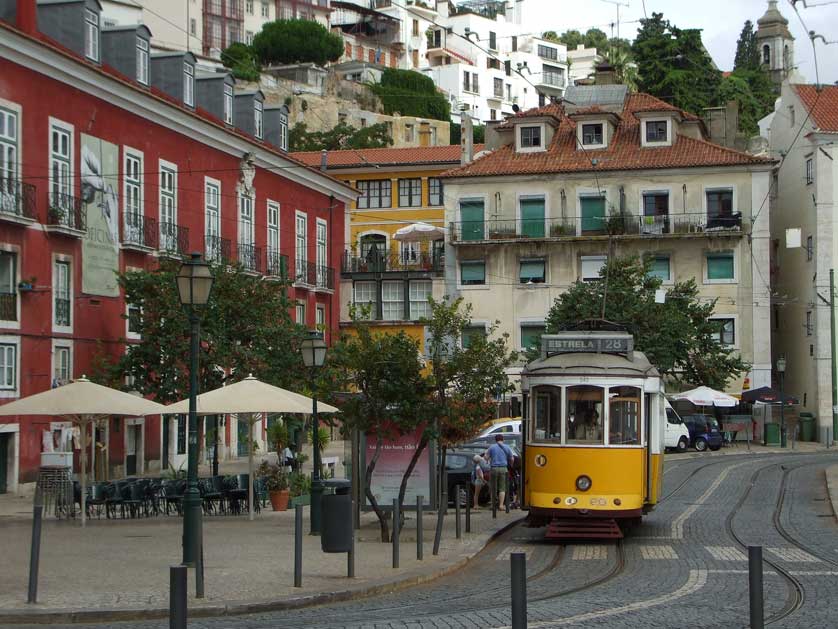
Alfama (from the Arabic alhama, "hot springs") is the oldest part of Lisbon and its narrow, winding streets and atmospheric alleys sit below the Castelo de Sáo Jorge, once a castle of the Moors, and run down to the River Tagus.
This is Lisbon at its most traditional and local but also its most touristy and commercialized.
Like other over-touristed areas of Europe such as Barcelona and Venice, visitors should act with sensitivity and politeness to the local people during the peak periods over summer.
Your visit may be just for a few days but this is home for a lifetime for the families and communities that still live here.
History
Alfama is the ancient heart of Lisbon and was once occupied by the Phoenicians, a thousand years before Christ.
In turn came the Romans, then the Visigoths followed by the Moors. This is the usual order and recurring pattern of historical settlement in large parts of central and southern Portugal.
It was to be the Moors who gave the lasting name to this area of the capital and they who have imposed the architecture of the souk (a marketplace or commercial quarter) on this area of the capital.
The Alfama is not the richest of Lisbon's districts. Its streets are too narrow, its properties too small and too old for that.
Lisbon's wealthiest people now choose to live further north on Avenida da Liberdade and close to Parque Eduardo VII and Marquis de Pombal Square.
The Lisbon Earthquake of 1755 damaged but did not destroy the area, protected from flood and fire by the hill where Lisbon Castle stands today.
The maze of narrow streets and tiny squares, such as Largo de São Miguel, lived on to continue as the most communal district of the city, famous for its fado and festivals.
In his book Queen of the Sea: A History of Lisbon, author Barry Hatton describes Alfama as a relic of the period before the 1755 Earthquake - "the medieval city preserved in miniature."

Attractions
The Alfama is home to many of the city's most important attractions: the Castelo de Sáo Jorge, once a castle of the Moors, Lisbon Cathedral (Sé), the city's main church, and the historic Casa dos Bicos dating from the early 16th century.
Also in the Alfama are the Museu do Teatro Romano with echoes of the Roman city, the huge Sáo Vicente de Fora and Feira da Ladra (Thieves' market).
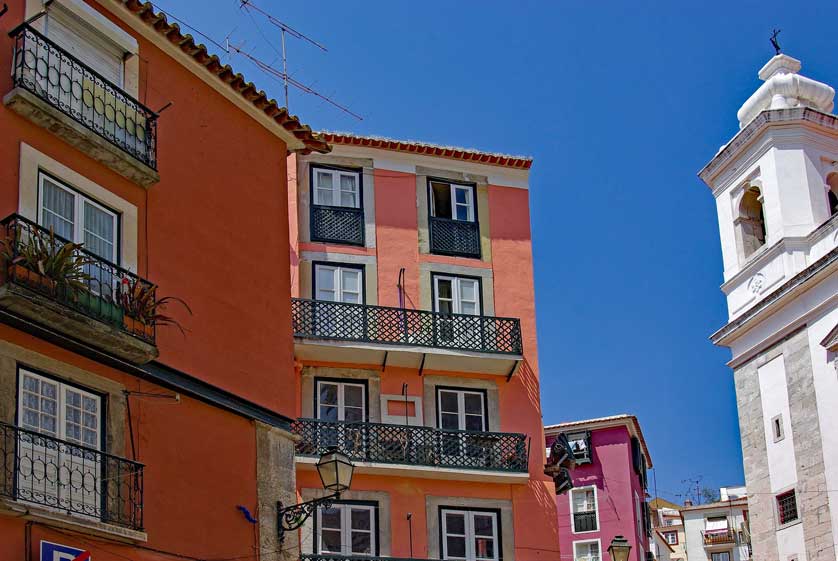
The Igreja de Santa Engrácia aka National Pantheon (Panteão Nacional) holds the tombs of various famous Portuguese figures. Other churches include the Igreja de São Miguel and the Igreja de Santo Estêvão. The former was completely rebuilt between 1673 and 1720 in Mannerist and Baroque style by architect João Nunes Tinoco. The church has a single nave with six side chapels and is full of beautifully-preserved ornate gilded woodwork (talha dourada) and exquisite paintings. The Igreja de Santo Estêvão is perched on a hill and is a distinctive feature of the skyline of this part of the capital city.
A must-see for an insight into the national music of Portugal is the Museu do Fado. Housed in a fine building, the museum exhibits over 14,000 items from Fado performers, including musical instruments, paintings, photographs, records, clothes and magazines. The museum also examines the place of fado in Portuguese culture in a series of paintings by artists such as José Malhoa, Constantino Fernandes and João Vieira.
For a darker history of the city head to the excellent Museu do Aljube which details the repression of the Estado Novo (New State) and the Salazar dictatorship.
The Miradouro da Graça (Largo do Graça) near the Baroque church of Igreja do Graça has great views of the castle, the River Tagus and the Ponte 25 de Abril.
Lisbon's highest viewpoint or miradouro is north of Lisbon Castle on Rua da Senhora do Monte in the square in front of the Capela de Nossa Senhora do Monte.
Parts of the ancient Medieval city walls - the Cerca Moura or Cerca Velha are still visible here and there.

Eat & Drink
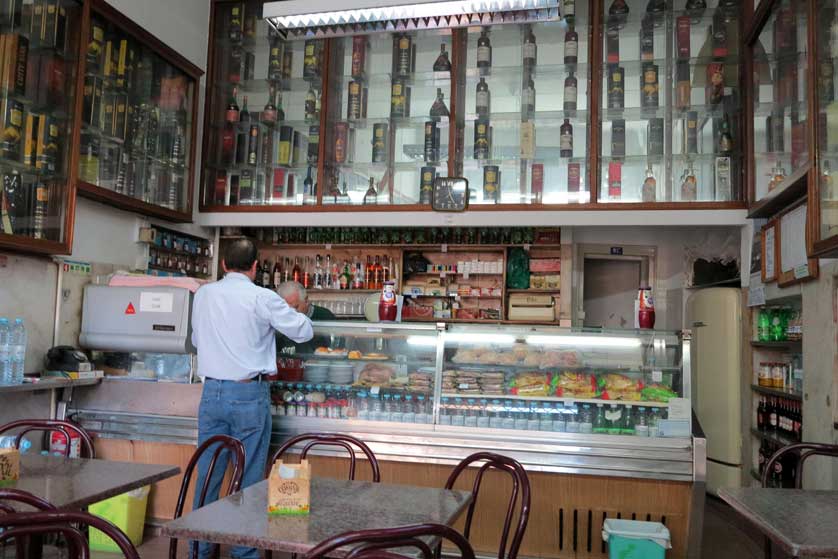
Some recommendations of where to eat and drink in Alfama are Medrosa d'Alfama on Largo de São Rafael, O Zé da Mouraria on Rua João do Outeiro is a neighborhood tasca, which along with Tasca Zé dos Cornos are recommended for traditional Portuguese cuisine. For something more contemporary try Pois Cafe, Cruzes Credo or Os Gazeteiros.
Lux Frágil is housed in a converted meat warehouses in the docks near Santa Apolónia Station and is one of Europe's top clubs.
Portas do Sol is a cafe/bar superb views from its outdoor terrace. DJs do their thing on Friday and Saturday nights.
Alfama is the heart of Lisbon's Fado scene along with neighboring Mouraria. Try Clube de Fado, A Baiuca Fado or Mesa de Frades. Reservations may be necessary.
Access
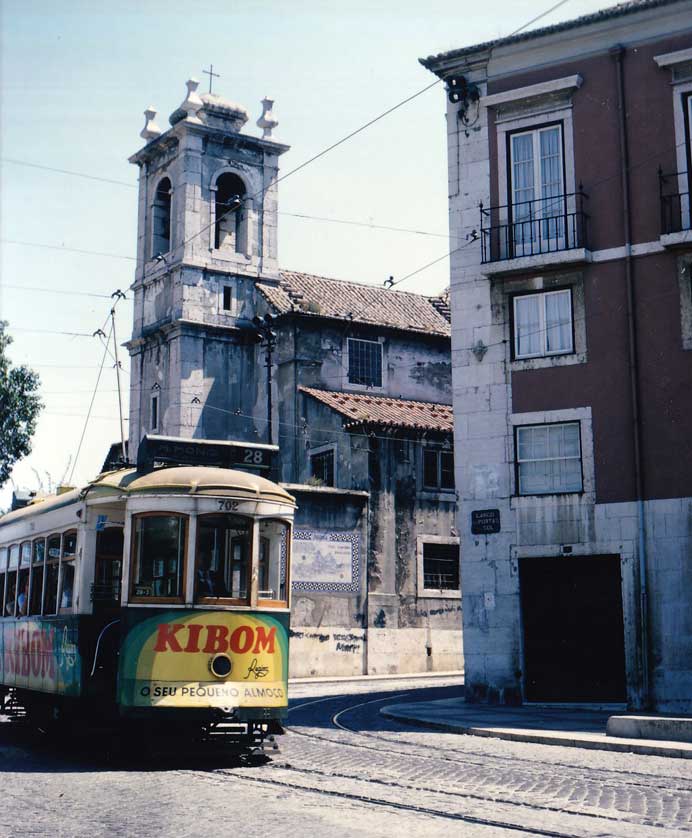
The nearest metro station is Santa Apolónia Station on the Blue Line (Linha Azul). Lisbon buses that run through the area include the #37 as well as Lisbon trams numbers #12 and #28. Buses #206, #210, #728, #735, #759 and #794 all stop on Av. Infante Dom Henrique near the River Tagus.
Electric tuk-tuks ply the narrow streets and alleyways ferrying tourists around the sights including some striking local street art.
Local pickpockets and their competitors from Eastern Europe prowl the trams in summer. Take care of your belongings.

Nearby
Within reasonable walking distance of Santa Apolónia Station are the Museu Militar and the Museu Nacional do Azulejo.
Accommodation
Places to stay in the Alfama district are numerous. They range from high class hotels to private lets, apartments and budget guest houses.
Some recommendations include the four-star 1908 Lisboa Hotel, the three-star Hotel Convento do Salvador and the Alfama - Lisbon Lounge Suites.
Other well-liked places to stay include the Palacete Chafariz Del Rei, housed in a 19th century aristocratic family home and the four-star Memmo Alfama, also located in a 19th century building with outdoor pool with views of the River Tagus.
Book Flights to Lisbon Portugal
Flights from Europe with budget airlines