Lisbon District Guides: Mouraria
Mouraria
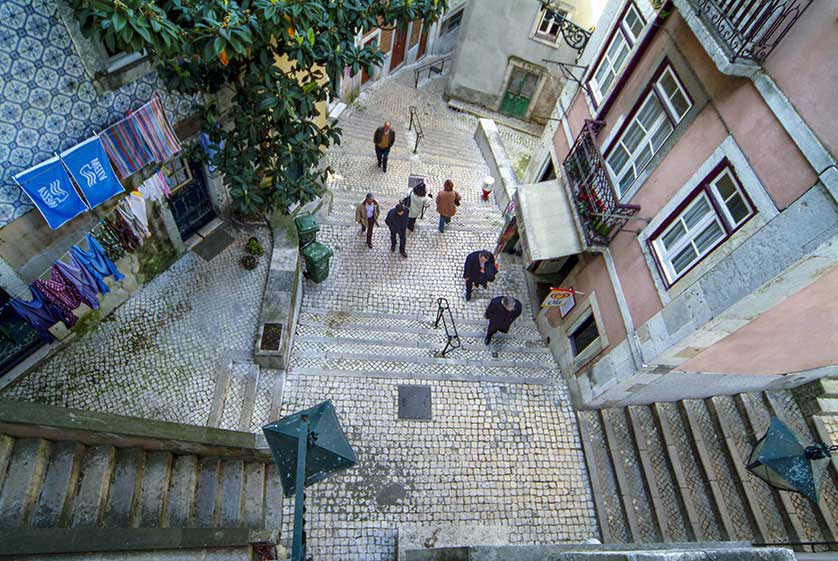
Like nearby Alfama, Mouraria is an historic district of Lisbon around the slopes leading to Castelo de Sáo Jorge.
Less-visited than Alfama, Mouraria is very much local Lisbon. As well, over the previous decades the district has become one of the most diverse, multi-cultural areas of the capital.
An influx of migrants who have settled in the area means that as well as traditional Portuguese cuisine, you will also find African, Bangladeshi, Chinese, Indian, Pakistani, Thai and Vietnamese restaurants and stores. In all, over 50 different nationalities reside here.
Mouraria's heart is the large square at Martim Moniz metro station and the hilly streets radiating south and west from it.
The area is not without its social problems of poverty and crime but makes for an interesting stroll to admire the striking street art and escape the traffic.
In his book Queen of the Sea: A History of Lisbon, author Barry Hatton describes Mouraria as long known as "a poor, scruffy neighbourhood and an infamous gathering place for ne'r-do-wells."
History
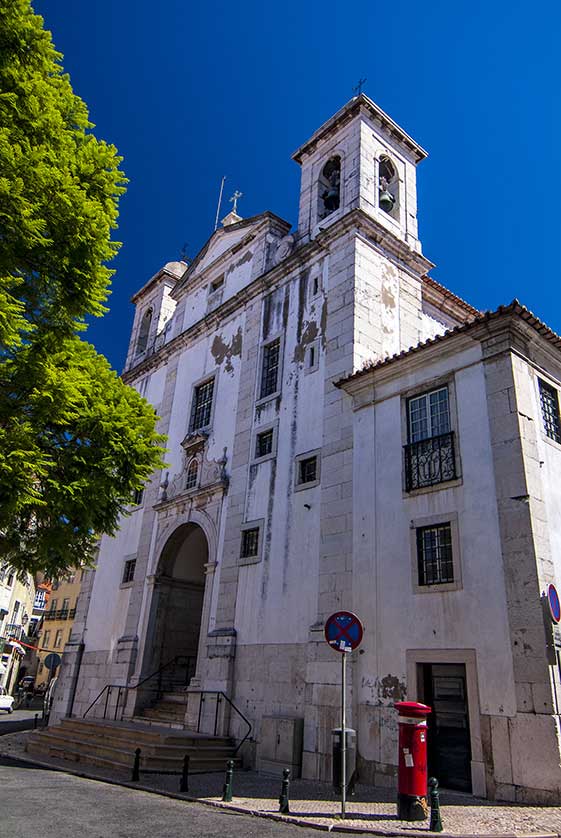
Mouraria means "Moorish quarter" and it was to this area (outside the city walls of the time) that the victorious Afonso Henriques banished the Moors. Those lucky enough, that is, to have survived the vicious assault and sacking of Lisbon Castle by English and German crusaders in 1147.
Both Jews and Muslims settled here in the succeeding centuries until 1497 when they were either forced to convert and become "New Christians" or leave.
Like neighboring Alfama it is largely working class. Its narrow, hilly streets and stairs unsuitable for the construction of large houses for the wealthy. Also along with Alfama, the district is important in the genesis of fado - indeed contemporary superstar Mariza, herself the child of an immigrant father from Mozambique grew up in Mouraria. Several popular fado clubs can be found here still.
Maria Severa Onofriana, Lisbon's first fado singer, lived in the district on Rua do Capelão in the early 19th century and sung in its seedy taverns and bordellos.
Attractions
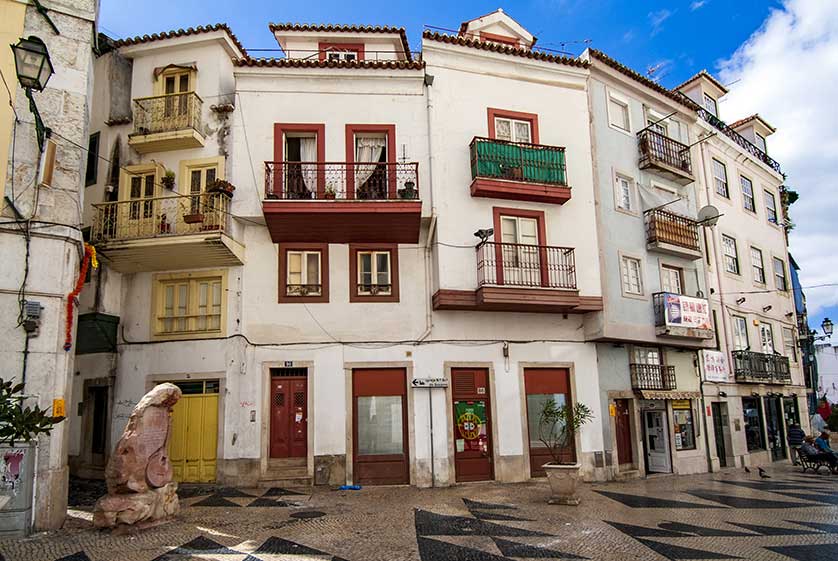
Things to see in Mouraria include a couple of historic churches, Igreja de São Cristóvão and the Igreja de Nossa Senhora da Saúde as well as Lisbon's oldest house - an extraordinary dwelling on Largo da Achada.
Igreja de São Cristóvão at the top of the Escadinhas de São Cristóvão was originally built in the 13th century, but the church we can see today is mostly from the 16th century. The ceiling is richly painted and its interior walls are hung with paintings. Several are canvases in oil with gilded frames by the master Bento Coelho da Silveira (1617-1708). Miraculously the church was spared the worst of the Lisbon Earthquake of 1755.
The Igreja de Nossa Senhora da Saúde on Rua Martim Moniz fared worse in the earthquake but was subsequently repaired and went on to enjoy patronage from the monarchy and nobility. Within the squat church are azulejos tile panels by António de Oliveira Bernardes. Since the 16th century, on the first Sunday of May, a procession and festival in honor of the Virgin takes place from the church.


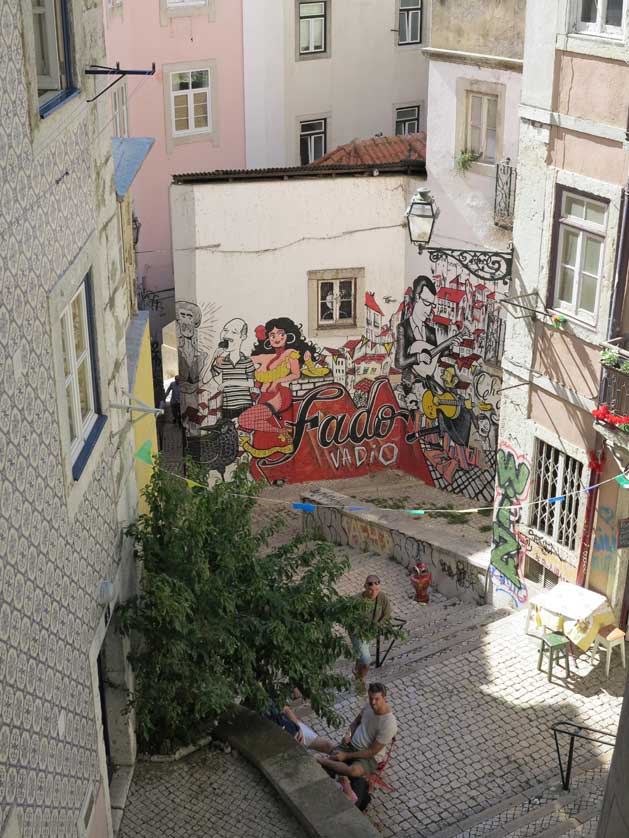
The area's street art is another draw. Some famous pieces include "Fado Vadio" on the Escadinhas de São Cristóvão which pays homage to Mouraria's rich fado heritage and "Selfie" which depicts an old woman spraying with red paint a bearded hipster holding a selfie-stick.

Praça Martim Moniz
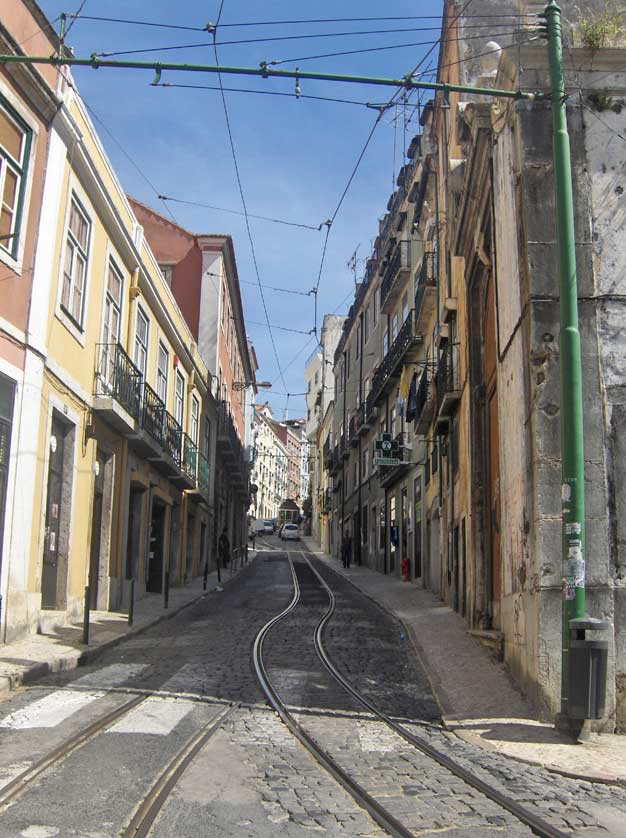
The wide square at Martim Moniz is the starting or finishing point for a tour of Mouraria. The iconic 28 tram (eléctrico) winds its way from here through the Alfama and Graça to Prazeres.
The Martim Moniz metro station on the Green Line of the Lisbon metro network is also of interest. The artwork in the station by Maria Keil depicts the siege of Lisbon and the legend of Martim Moniz, who wedged his dying body in the castle's gate to ensure his fellow knights could enter.
Largo do Intendente
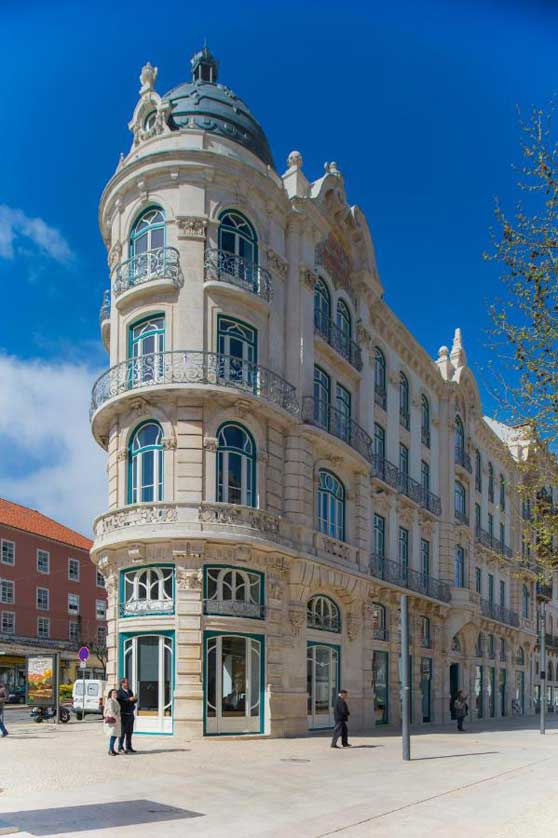
Largo do Intendente has been restored over the previous years and is now an attractive square. The Art Nouveau Hotel 1908 (built in 1908) makes for an atmospheric place to stay. The are also several places to eat and drink in the square which has a cast-iron sculpture by contemporary artist Joana Vasconcelos.
Eat & Drink
Visitors usually come for the variety of ethnic food on offer. One place we like is The Food Temple at Beco do Jasmim 18, for vegan cuisine in Lisbon.
To experience food from Mozambique head for Cantinho do Aziz at Rua de São Lourenço 5, nearby is Tentações de Goa for Goan food and for Chinese-style Vietnamese there is Pho Phu on Rua do Benformoso.
Zé da Mouraria offers traditional Portuguese food and is well-liked for its large portions and excellent wines.

Access
The nearest metro station is Martim Moniz Station on the Green Line (Linha Verde).
Two trams the 12E to Praça da Figueira and the 28E to Campo de Ourique stop at Martim Moniz. The following Lisbon buses also stop here - the 208 running between Cais do Sodré and Estação Oriente, the 708 to Parque das Nações Norte, the 734 to Santa Apolónia Station, and the 760 connecting Gomes Freire and the Cemitério da Ajuda as well as AeroBus#1 from Cais do Sodre to Lisbon Airport.
Electric tuk-tuks ply the narrow streets and alleyways ferrying tourists around the sights.
Local pickpockets and their competitors from Eastern Europe prowl the trams in summer. Take care of your belongings.
Nearby
Walking west from Martim Moniz takes you quickly to both Rossio and Restauradores squares with their grand buildings and fountains. North along Rua da Palma and Av. Alm. Reis is Anjos and the Interdente metro station.
Accommodation
Places to stay in the Mouraria district are numerous and varied. They range from a select few high class hotels to smaller private lets, apartments and budget guest houses.
Some recommendations include the four-star 1908 Lisboa Hotel, the two-star Mouraria Lisboa Hotel and the four-star Hotel Mundial with great views over Lisbon from its rooftop terrace.
Other upmarket hotels are Torel Palace Lisbon and Portugal Boutique Hotel another 4-star property
In neighboring Alfama well-liked places to stay include the Palacete Chafariz Del Rei, housed in a 19th century aristocratic family home and the four-star Memmo Alfama, also located in a 19th century building with outdoor pool with views of the River Tagus.
