Lisbon Metro: Green Line (Linha Verde)
Lisbon Metro: Linha Verde

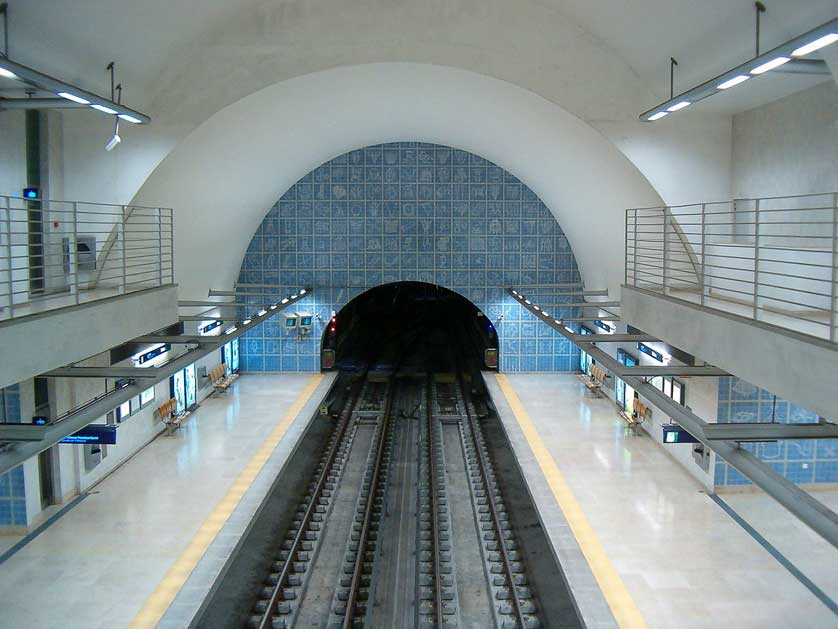
The Linha Verde (Green Line) is one of the four lines of the Lisbon metro (Metropolitano de Lisboa).
The others lines are the Linha Azul (Blue Line), Linha Amarela (Yellow Line), Linha Vermelha (Red Line).
The Green Line runs 9 km from the northern terminus of Telheiras to Cais do Sodré. Some of the stations on the line date from the first opening of the metro in 1959.
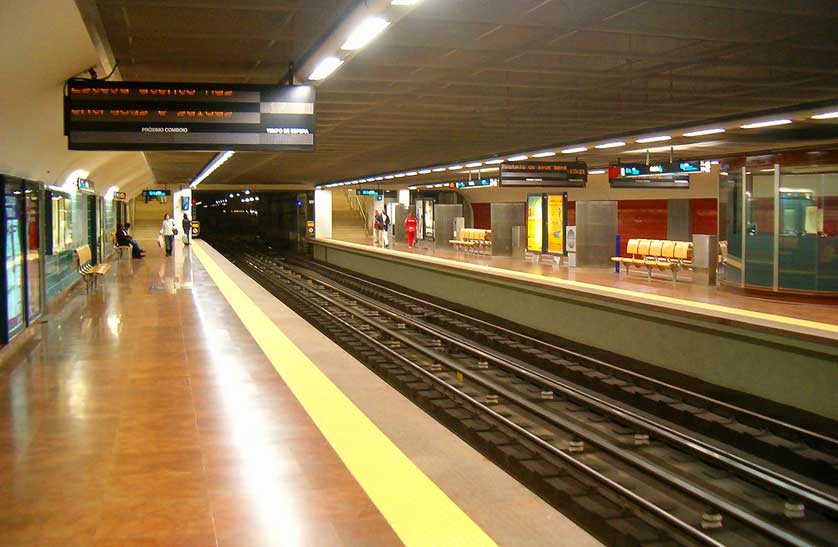

Stations on the Green Line
There are 13 stations on the line which is both underground and above ground.
Telheiras
Telheiras Station is close to the Igreja de Nossa Senhora da Porta do Céu. The following Lisbon buses stop at the station: the 747, 767 and 778. Estádio José Alvalade and the Sporting Museum are a short walk east.
Campo Grande
Campo Grande is the major bus station for long-distance buses to destinations mainly north of Lisbon. Campo Grande Bus Station has buses to such towns as Ericeira, Loures, Mafra, Nazaré and Obidos. Many local Lisbon city buses also stop at Campo Grande. Campo Grande is also on the Green (Linha Verde) and green (Linha Verde) lines of the Lisbon Metro. The Campo Grande metro station was designed by architect Ezequiel Nicolau with art work by Eduardo Nery.
Campo Grande is located very close to the Museu de Lisboa Palácio Pimenta, the University of Lisbon, Universidade Lusófona, the Museu Bordalo Pinheiro, The National Archive of Torre do Tombo (Arquivo Nacional da Torre do Tombo) and Estádio José Alvalade.
Lisbon city buses operated by Carris to Cais de Sodré (206 & 736).
Alvalade
Alvalade Station opened in 1972. The station is now fully wheelchair friendly with lifts to and from the platforms. Lisbon buses 206, 735, 755 and 767 stop at the station.

Roma
Roma Station is close to Roma-Areeiro Station on the Fertagus line over the River Tagus south to Setúbal Station in Setúbal and the Sintra Line (Linha de Sintra) west to Sintra. Parque de Jogos 1º de Maio is nearby.
Areeiro
Areeiro Station is also within easy walking distance of Roma-Areeiro Station. The station is a major hub for buses in the capital. Carris buses 206, 208, 705, 708, 717, 720, 722, 727, 735, 756, 793, AeroBus#1, Rodoviária de Lisboa buses 319, 320 and 321 and Transportes Sul do Tejo buses 160, 161 and 190 all stop at the station.
Alameda
Alameda Station connects with the Red Line of the Lisbon metro. Buses stopping at the station include the 206, 706, 708, 713, 716, 717, 718, 720, 735 and AeroBus#1.
Arroios
Arroios Station is located on a busy intersection of Avenida Almirante Reis and Rua Morais Soares.
At present the station is closed as the platforms are lengthened to 105 meters to allow trains with six carriages to stop and to make the station fully accessible to wheelchair users.
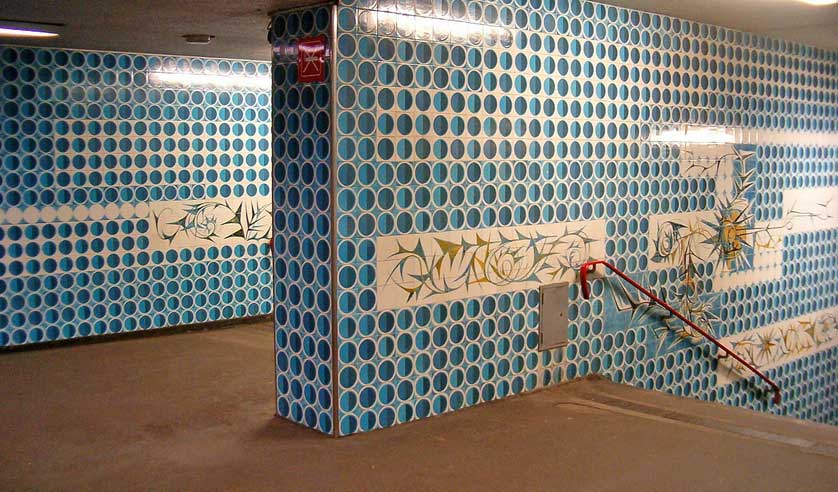
There is some excellent modern tile work in the station by Maria Keil. Several hotels are located nearby including the 3-star Empire Lisbon Hotel. A statue of the adventurer and explorer Ferdinand Magellan stands at the intersection.
Anjos
Anjos Station is on Avenida Almirante Reis. There are a number of places to stay nearby such as the 3-star Hotel Travel Park Lisboa and the 2-star Sete Colinas. Lisbon buses AeroBus#1, 208, 708, 712, 726 and 730 stop here.
Intendente
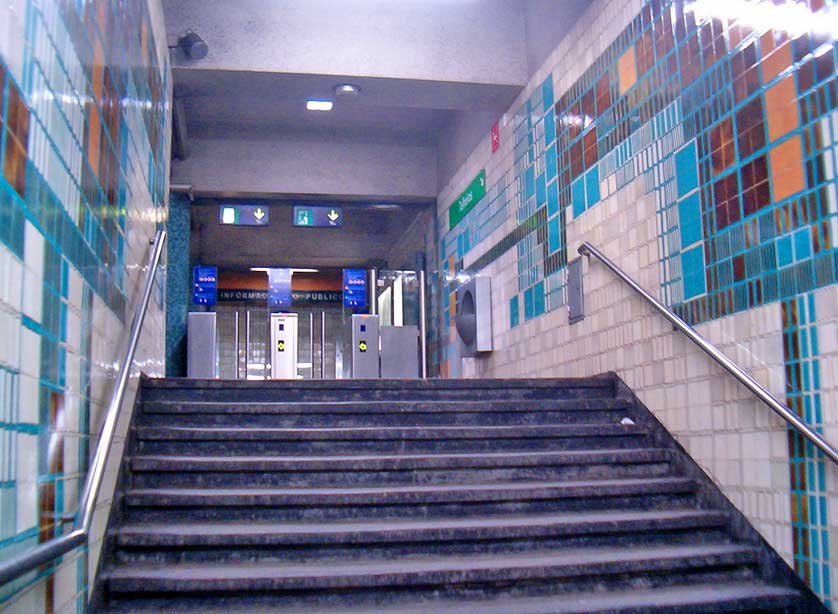
Intendente Station is on the north-south Avenida Almirante Reis. A number of Lisbon buses stop here (208, 708, and 734) as well as the AeroBus#1 to Lisbon Airport. The 28E tram also stops at the station. Hotels in the area include the WC by The Beautique Hotels, the Residencial Roxi, and the Residencia Almirante.
Martim Moniz
Martim Moniz Station is a stop for several Lisbon trams and buses including the 12E, 28E, 208, 708, the 734 and the 760 services as well as AeroBus#1.
The station has artwork by the Portuguese artist Maria Keil.
Rossio
Rossio Station in central Lisbon is a temple of Neo-Manueline architecture and a major transport hub. The late 19th century building complete with horseshoe shaped arches and ornamental clock was designed by José Luís Monteiro and is the main rail gateway to Sintra.
The following bus services connect with Rossio: #736, AeroBus#1, AeroBus#2 (from Cais do Sodre to the Airport), #709 #711, #732, and #735.
Hotels within easy reach of the station include the classic five star Avenida Palace, the three star Rossio Garden Hotel and the five star Altis Avenida Hotel with views over Rossio Square from several of its spacious rooms.
Cheaper alternatives are the Lisbon Destination Hostel, the Rossio Hostel and the Pensão Lafonense.
Baixa-Chiado
Baixa-Chiado Station is the intersection station with the Linha Azul (Blue Line). Being right in the downtown centre of Lisbon, there is a lot to see in Baixa-Chiado. Close to the metro station are a number of Lisbon attractions: Convento do Carmo, Igreja da Nossa Senhora da Encarnação, Cervejaria Trindade and Cafe A Brasileira.
Cais do Sodré
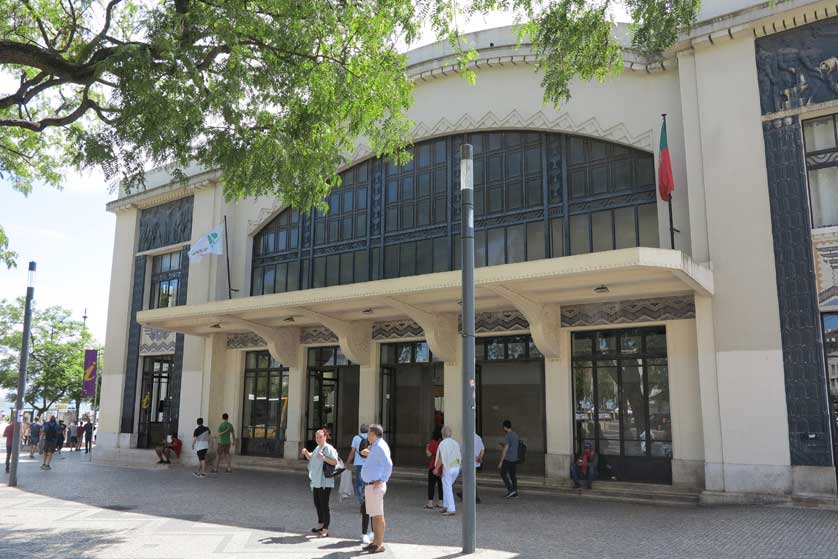
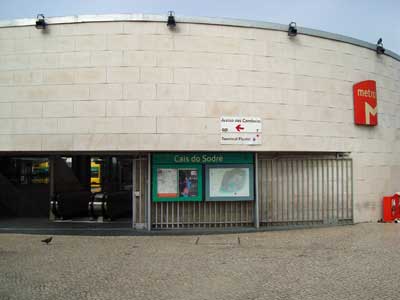
Cais do Sodré Station on the banks of the River Tagus is a major transport hub for the Lisbon city bus, subway, taxi, ferry, and tram network.
Cais do Sodré is also a suburban train station on the Cascais Line (Linha de Cascais) that has connecting trains to Santos, Alcantara Mar, Belem, Algés, Cruz Quebrada, Caxias, Paco de Arcos, Santo Amaro, Oeiras, Carcavelos, Parede, S. Joao, S. Pedro, Estoril, Monte Estoril and Cascais.
There are buses (Aerobus #1) from Cais do Sodré via Rossio, Restauradores and Marquês Pombal to Lisbon Airport.
There are also ferries across the River Tagus from Cais do Sodré to Cacilhas, Seixal and Montijo.
The area around the station, once Lisbon's red light district, teems with trendy bars, cafes and clubs.
Via Viagem
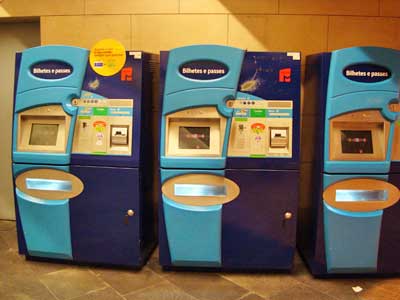
A good way of getting around on the Lisbon metro is to purchase a Viva Viagem card. This is a rechargeable electronic card that can be used on Lisbon's metro, buses (except the AeroBus to and from Lisbon Airport), ferries, trams and urban trains to and from Sintra and Cascais. The Viva Viagem card costs 0.50 cents to first buy and is valid for one year from the date of purchase.