The Romans in Portugal: Roman Remains in Portugal
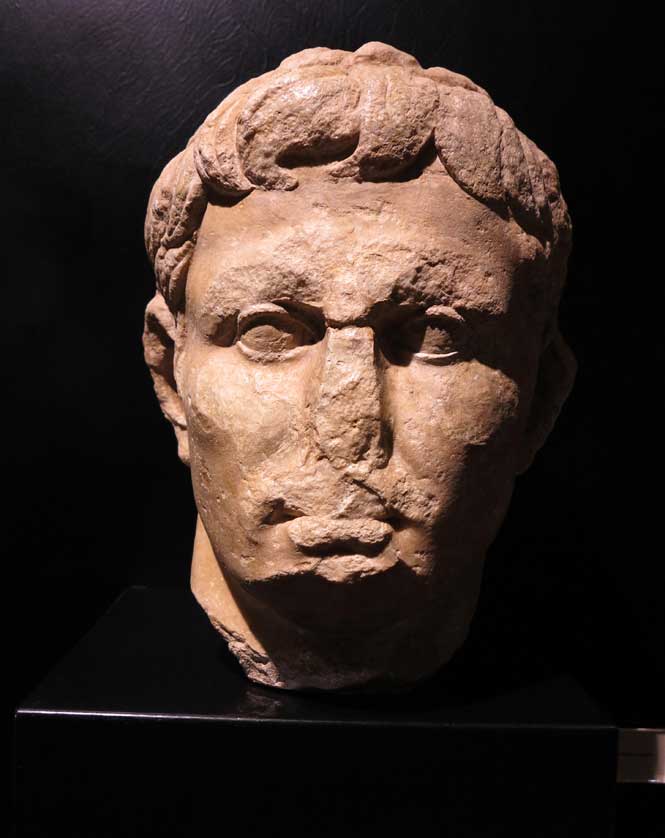
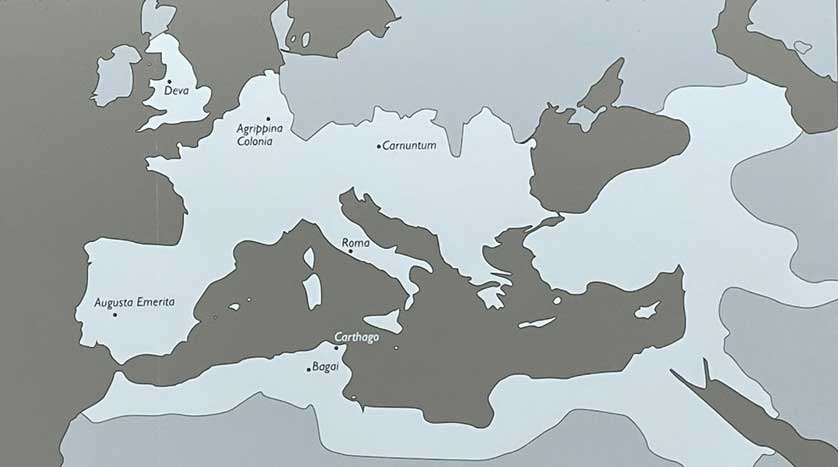
The Romans occupied Portugal from the 3rd century BC to the 4th century AD.
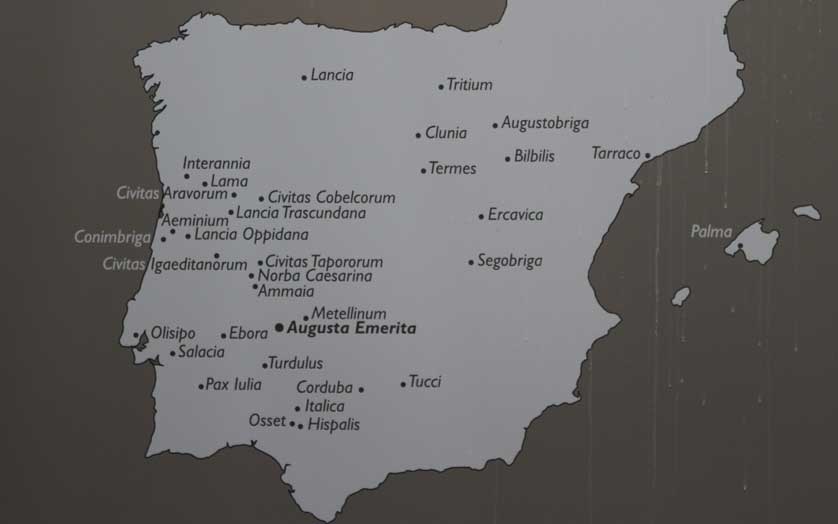
From 210 BC onwards the Romans gradually extended their control over what is now present-day Portugal from their main power base in Spain (Hispania). They invaded from the south and drove northwards.
The province became known as Lusitania after the tribes they found there. Fierce local resistance led by the leader Viriathus (Viriato) was eventually defeated through treachery.
Lasting legacies of Roman domination of the area are: the Portuguese language, which directly derives from Latin and the production of wine.
Aqueducts, mosaics and calçada limestone pavements also have their antecedents in Roman rule.
The very name Portugal derives from Portus Cale, the Latin name for present day Porto.
Christianity began to spread in the area from the first century AD.
Portugal has a number of important Roman remains. Many of the country's museums are also stocked with Roman coins, ceramics and mosaics. Most visitors to Portugal, not just history buffs, will be charmed by what they find.
Here is a listing of the major Roman sites and monuments in Portugal.
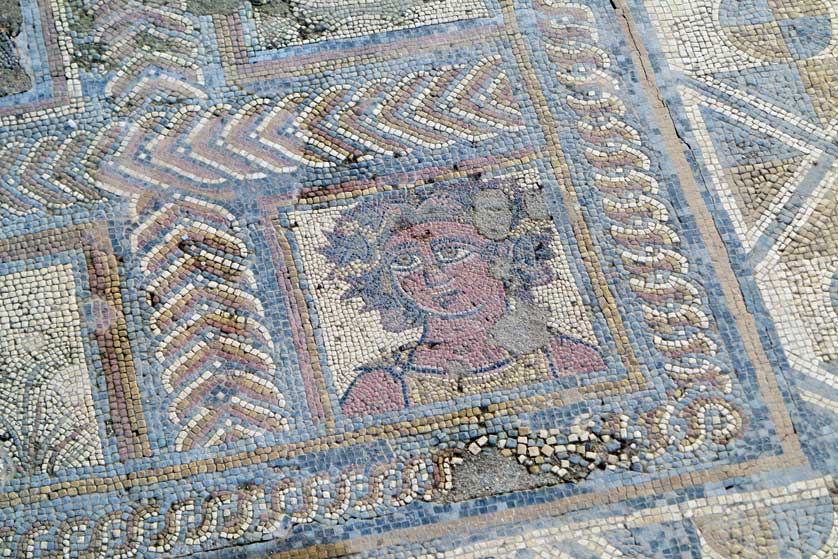

Conimbriga
Conimbriga (Ruínas de Conímbriga) is Portugal's most significant Roman site. It is about 15 km south of the city of Coimbra, and close to the market town of Condeixa-a-Nova.
The settlement at Conimbriga was first inhabited from the end of the second millennium BC during the Bronze and Iron Age periods, through the Roman era when Portugal was the Roman province of Lusitania.
Only around 20% of the total historical, urban area has been excavated but the remains give a fascinating insight in to the life and culture during the Roman occupation of Portugal.
There are mosaics, walls, baths and an excellent museum, the Museu Monográfico de Conímbriga, to investigate.


Evora
Under the Romans, Evora was known as Liberalitis Julia. The superb Templo Romano is the city's most significant Roman monument.
Experts date the temple, the best preserved Roman period structure in Portugal, from the 1st century with additions in the 2nd and 3rd centuries.
No-one knows for sure who the temple was dedicated to - popularly referred to incorrectly as a temple of Diana, the goddess of hunting, it could also have been made in honor of Augustus or even Julius Caesar.
Fourteen Corinthian columns still stand, topped in places with Estremoz marble built on top of a granite podium. The ruin is illuminated at night.
The temple was used as a slaughterhouse in the Middle Ages and is remarkably well-preserved.
Other Roman remains in the UNESCO World Heritage Listed city include the Termas Romanas (Roman baths) discovered under the Câmara Municipal (town hall).
Roman Bridge in Chaves
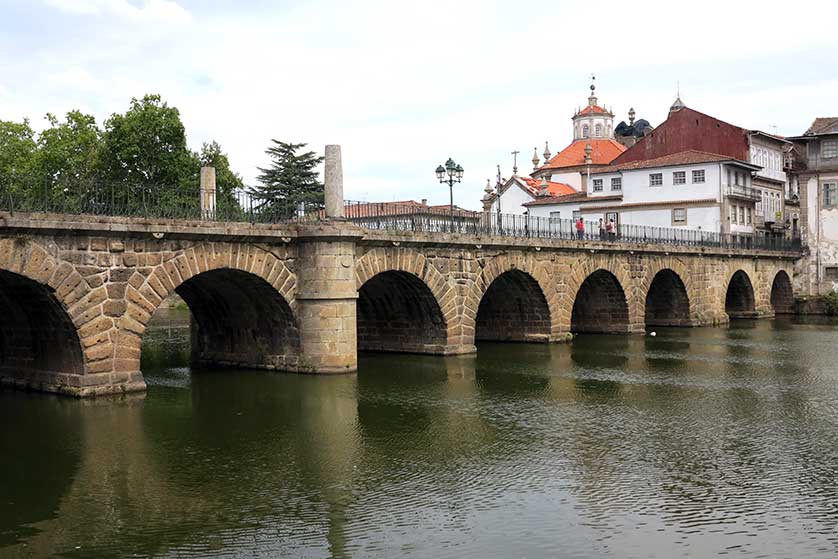
The city of Chaves (Aquae Flaviae) in the Trás-os-Montes region of northern Portugal is home to the wonderful Ponte Trajano (Trajan Bridge).
140 metres long, the bridge dates from from the reign of the Emperor Trajan in the early second century AD. The bridge is now pedestrianized and is the finest Roman bridge in Portugal. It was part of the Roman road from Braga to Astorga in Spain.
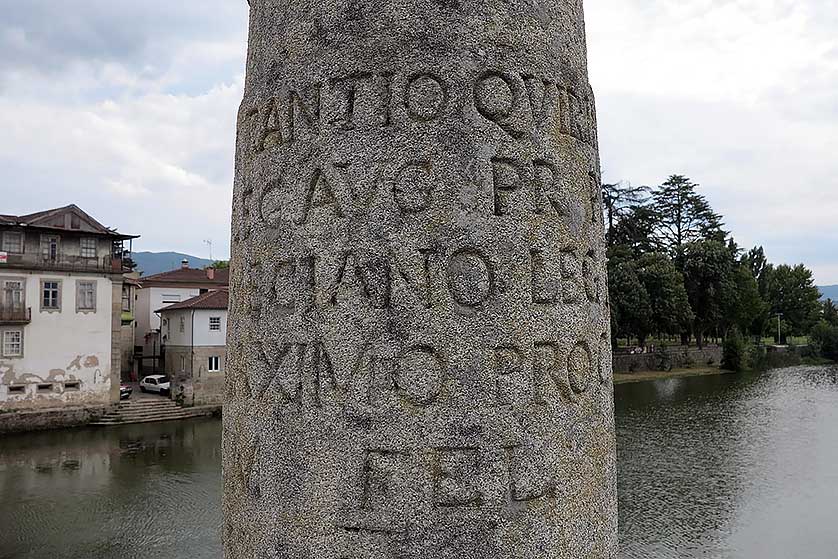
Two columns from the Roman period stand on the bridge and have inscriptions. The first column is known as the Padrão dos Povos (People's Standard), dates from 79 AD and is dedicated to the Roman emperors Vespasian and Titus as well as other notables. The second column has a shorter inscription referring to the fact that the bridge was built by the local people and dedicated to Trajan.
Tavira in the Algarve also has a smaller bridge (the Ponte Romana) with seven arches, parts of which date from the Roman period.
Teatro Romano, Lisbon
Present-day Lisbon was known as Olisipo under the Romans. Alas, not so much remains from the original Roman city compared with other sites. However, the ruins of the Teatro Romano can still be seen along with an impressive, modern museum.
The Teatro Romano was built in the early 1st century AD during the reign of Emperor Augustus. It was renovated in 57 AD by Caius Heius Primus during the time of the Emperor Nero. It is thought the theatre had a seating capacity of around 4,000 and was a symbol of the power of Roman rule.
Part of the orchestra, the proscaenium (stage) wall and the seating sections are still visible from the street outside the main museum building. A painted backdrop shows what the theatre would have looked like in its pomp.
The Teatro Romano was buried until building work in 1798 after the devastating 1755 Lisbon earthquake. The remains of the structure were unearthed during Lisbon's reconstruction following the disaster.
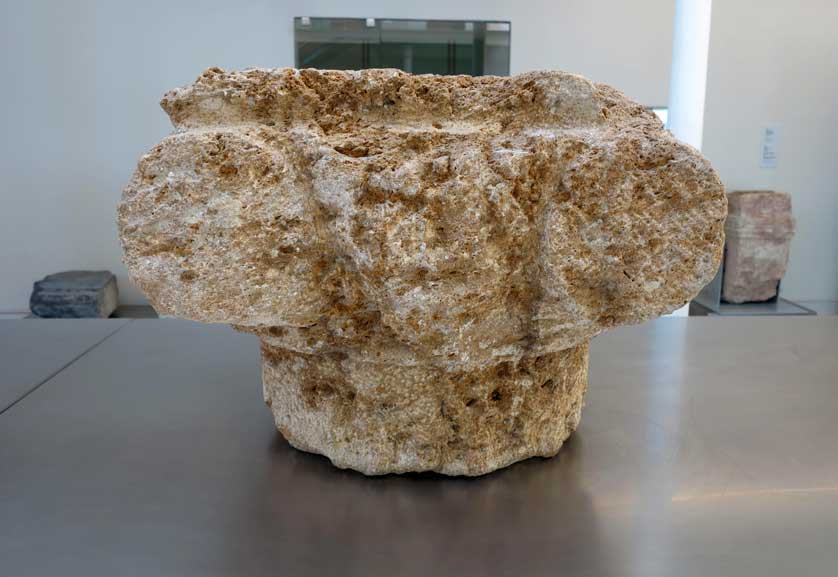
The modern interior of the museum recreates Roman Lisbon with archeological finds including stone columns, steles and statues, ceramics and glassware.
Roman foundations are also visible under a glass floor at the nearby Casa dos Bicos.
Ruinas de Milreu, Faro
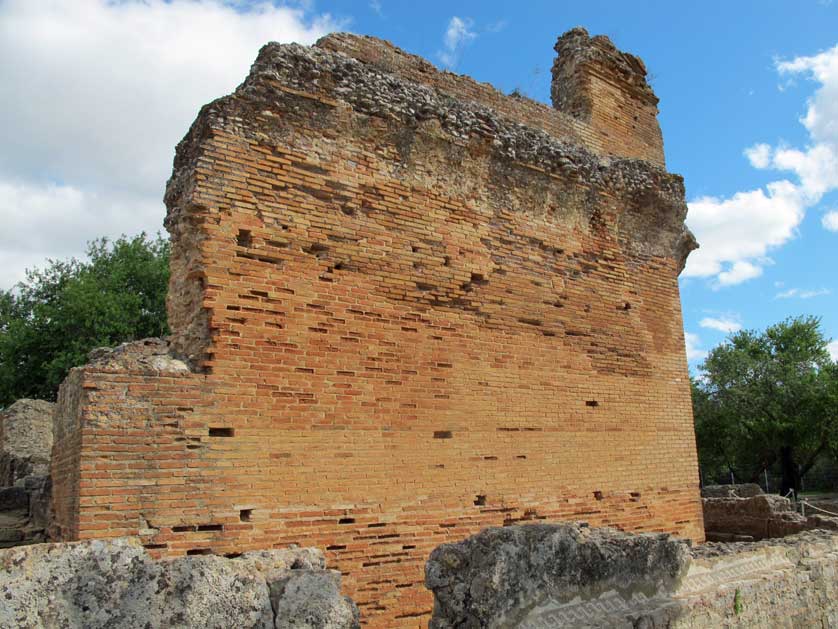
The quaint village of Estói just 10 km north of Faro in the Algarve is home to a set of 1st century AD Roman ruins known as the Ruinas de Milreu, situated just off the N2 Highway.
The ruins were excavated in 1877 and are thought to be the remains of a Roman villa and bath complex, in some way connected to the main Roman settlement of Ossonoba (modern day Faro).
The Ruinas de Milreu include a number of well-preserved mosaics featuring fish in the bathing area, a nymphaerium or water sanctuary that was later converted into a church by the Visigoths in the 3rd century and a small museum with interesting panel displays explaining the history of the site and a number of objects that were discovered on site.
The bathing area contains, besides the friezes, ruins of the changing room (apodyterium), the frigidarium or cold plunge and evidence of the sophisticated, brick under-floor heating system.
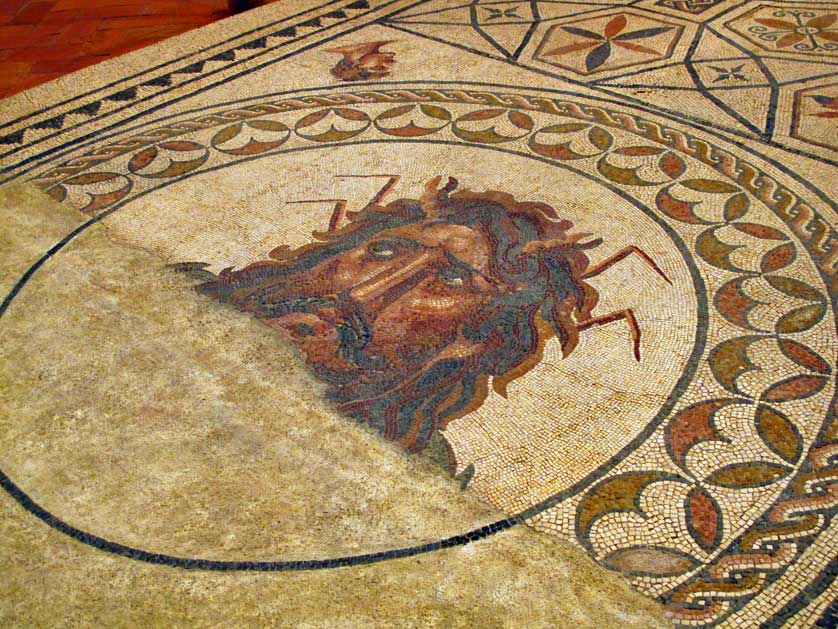
The Municipal Museum of Faro contains a large 3rd century Roman mosaic showing Oceanus, the god of the sea, which was discovered near Faro Railway Station.
Braga
Braccara Augusta was the Roman name for Braga, the provincial capital of Gallaecia. Better known for its Medieval churches, such as the spectacular Sé de Braga, the city's Roman past can be discovered at the Museu Dom Diogo De Sousa. Nearby is the large Thermae of Maximinus (Termas Romanas de Maximinos), a site still under excavation.
São Cucufate
The ruins of São Cucufate are the remains of a late Roman villa or farm house in the southern Alentejo region of the country. Later in the 9th century a convent was built over the now ruined Roman structure. This, too, was later abandoned. Large brick arches and parts of the walls of the large buildings are visible. There have been a number of important finds here including a bronze statue of an emperor, ceramics, coins, glass and metal tools. The site is north of the town of Beja, home to the Ruinas Romanas de Pisões. These are the remains of a large Roman villa rustica.
Ammaia
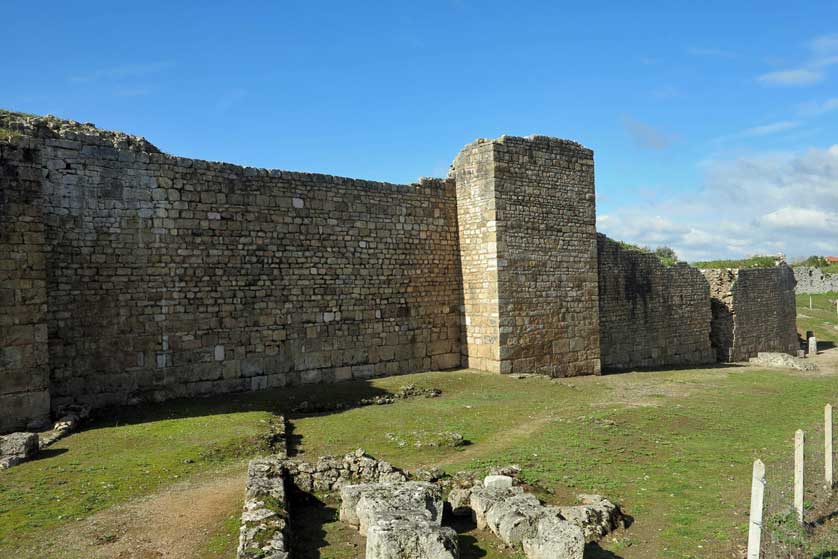
The Roman ruins of Ammaia are located 7 km south of the hilltop village of Marvão on the road to Portalegre in Alto Alentejo. The Roman town of Ammaia is believed to have been founded during the reign on the Emperor Claudius in the 1st century. Structures that still stand include parts of a Roman wall with gate and towers as well as remains of a residence, public bath, forum and temple. A small Visitor Centre/Museum offers further information on this important site that was linked by road to Emerita Augusta (present-day Mérida in Spain). Some of the pottery, glass and metal work found at the site is displayed in the Visitor Center, while other pieces have been transferred to the National Museum of Archaeology in Lisbon.
Cetobriga Roman Ruins
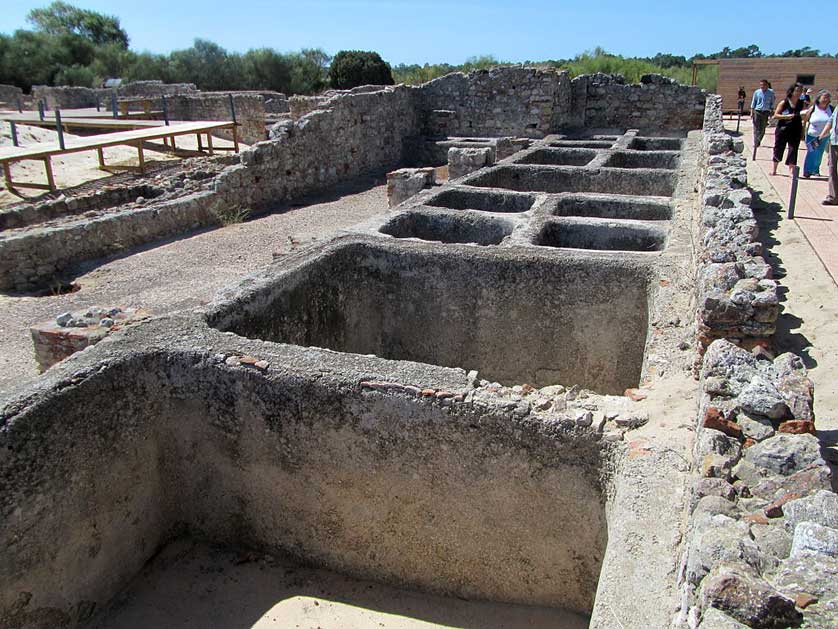
The Acala Island ruins (aka Cetobriga Roman Ruins or Ruínas Romanas de Troia) on the Troia Peninsula south of Setúbal were once the largest fish salting center in the Roman Empire and were in use until the 6th century.
They are open from October to March, Tuesday to Sunday from 10 am - 1 pm and from 2.30 pm to 6 pm. The rest of the year they are open for guided tours by an archaeologist only in June and September on Saturdays at 3 pm and July and August on Wednesdays and Fridays at 10.30 am.
The Cetobriga Roman Ruins have applied to become a UNESCO World Heritage Site.

Miróbriga
The Roman settlement of Miróbriga close to Santiago do Cacém in the Alentejo has some of the best-preserved Roman remains in the country. There are two bath buildings, possibly for men and women, temples, houses, shops, a bridge, paved roads and the foundations of a Hippodrome or Roman Circus.
The Forum or temple dedicated to the Imperial cult is the most impressive structure with a few of its original, decorative columns still standing.
A modern Interpretative Centre has been constructed which provides information on the entire site.