Portugal Regions: Alto Alentejo
The region of Alto Alentejo is east of the capital Lisbon and the name means "Upper Alentejo" to differentiate it from Baixo or "Lower" Alentejo. The word Alentejo derives from além do Tejo - beyond the Tejo.
Alto Alentejo is south of Beira Baixa and to the east of Ribatejo. Together with Baixo Alentejo to the south, Alentejo covers around a third of the country and is an important agricultural center. Taken as a whole the Alentejo is the largest province in Portugal as well as the poorest and least populated.
Main Towns
The main towns in the region are Evora, Elvas, Estremoz and Portalegre.

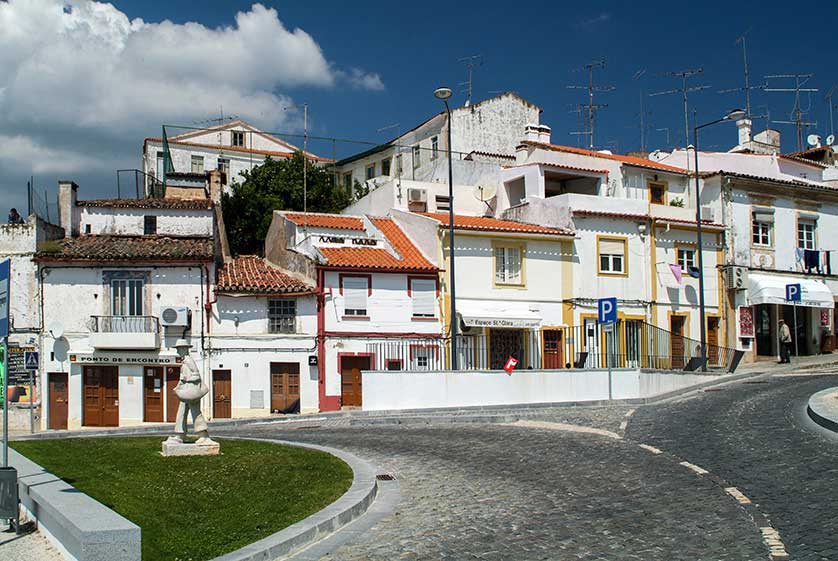
Portalegre is a charming town of whitewashed buildings and historic monuments, somewhat off the tourist track.
Elvas and Estremoz are more visited being close to the UNESCO World Heritage town of Evora.
Elvas is famous for its superb fortifications. Estremoz is another fortified hilltop town known for fine marble and earthenware.
Castelo de Vide is a lovely town with a castle in the region. It can easily be visited along with nearby Marvão with which it has several similarities.
Castelo de Vide has a castle as its name suggests and also a spa. It is also larger, more a small town of around 3,500 inhabitants in the wider municipality, rather than a village of mainly elderly people, like Marvão.
Getting to Portalegre
Train Travel in Portugal
There are daily trains to Lisbon (3 hours, 30 minutes) from Portalegre changing at Abrantes - take a shuttle bus from the bus station to the Estação de Portalegre. To reach Elvas and Estremoz you will need to take a bus from Sete Rios bus terminal in Lisbon.
Car Travel in Portugal
Portalegre is around two-three hours by car from Lisbon on the A2, the A6 and IP2 highways. From Elvas or Spain (Badajoz), head north from Elvas on the N246.
Bus Travel in Portugal
The bus station in Portalegre is just off Rossio on Rua Nuno Alvarez Pereira.
Fairly frequent daily buses make the 4 hour plus journey to Lisbon.
There are also bus connections to Elvas (90 minutes), Evora (90 minutes), Castelo Branco (110 minutes) and Estremoz (50 minutes).
Portugal Hotel & Hostel Accommodation
Places to stay in Portalegre include the centrally-located Rossio Hotel, the bed and breakfast Dona Maria, the budget Hostel Portalegre and the homely Casa Dom Manoel.
See here for a full listing of accommodation in the Alentejo region of Portugal.
Eating
The Alentejo region of Portugal is known for its delicious bread, soups and cheeses. Alentejo is the breadbasket of the nation so you will often find its bread as an ingredient in the region's many soup dishes.
Cozido de grão is a well-known local stew of pork and chickpeas. Porco preto (black Iberian pork) appears on many menus. Vegetarians should seek out the area's delicious tomato soup.
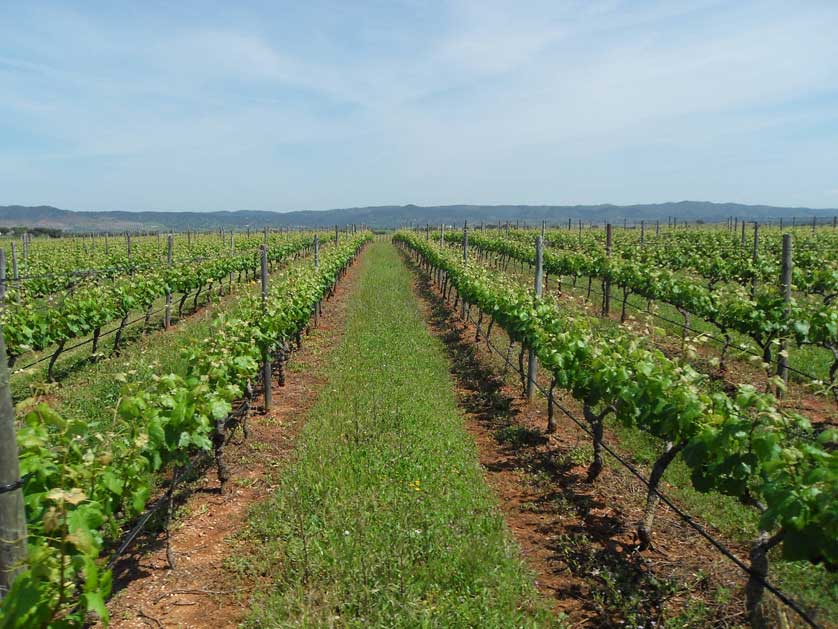
Wines from the Alentejo area include varieties of reds, whites and rosés, though red wine is preeminent. The Alentejo area as a whole has 8 demarcated wine regions (DOC): Portalegre, Borda, Evora, Redondo, Reguengos, Videguejra, Granja Amareleja and Moura.
The slightly cooler temperatures in Portalegre mean the area produces some more subtle flavours.
Wine production in Alentejo dates back to Roman times.
The savannah-style plains of the Alentejo are known as montado in Portuguese. They are home to a unique habitat of cork and holm oaks as well as olive trees. As well, the montado provides an environment for deer and wild boar (which feed on the acorns from oak trees) as well as endangered birds such as Bonelli Eagles.
The average high June temperatures for Portugal is between 22 degrees Centigrade and 26 degrees Centigrade.
Get more weather information for Portugal
