Sevilla Guide
Spectacular Sevilla, Spain - City of Carmen, Tapas & Flamenco
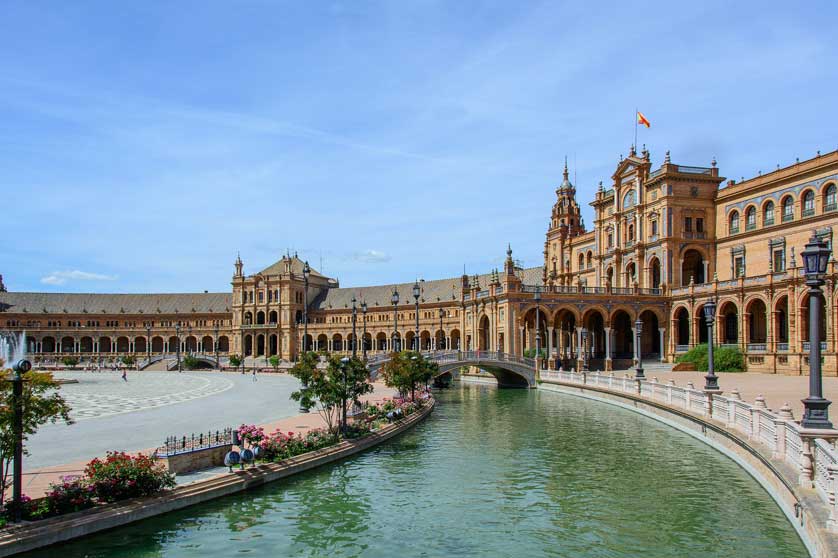
Sevilla (Seville) has a population of over 680,000 people. It is the largest city in Andalusia, the fourth largest city in Spain and the capital of the province of Sevilla.
Its historic past is visible through its amazing architecture and rich cultural heritage. Its grand monuments, plazas and churches were financed by the gold and silver brought back from Spain's former colonies in the Americas.
History
Sevilla has a long history dating back thousands of years. It was founded as the Roman city of Hispalis. It became a significant Roman settlement due to its strategic location along the Guadalquivir River.
In 711 AD, the Moors, led by Tariq ibn Ziyad, captured the town. It became a thriving Moorish city, known as Ishbiliya, under Islamic rule.
In the 13th century, Sevilla was recaptured by the Christian forces during the Reconquista. The city became part of the Kingdom of Castile.
The city also played a pivotal role during the Age of Exploration, serving as a major port for expeditions to the New World.
In 1492 Columbus set sail from Palos de la Frontera in nearby Huelva. However, Huelva was badly damaged in the 1755 Lisbon Earthquake and the center of the transatlantic trade moved to Sevilla. The subsequent conquest and colonization of Central and South America then transformed the economy of the city.
In the 16th and 17th centuries, the city became a hub for the arts and sciences, and its architecture flourished with the construction of landmarks like Seville Cathedral and the Alcázar, both UNESCO listed along with the nearby Archivo de las Indias.
After World War II, Seville underwent significant modernization, with the city experiencing economic growth and infrastructure development. The 1992 Universal Exposition (Expo '92) had a transformative effect on the city, leading to the construction of modern structures like the Metropol Parasol.
Attractions
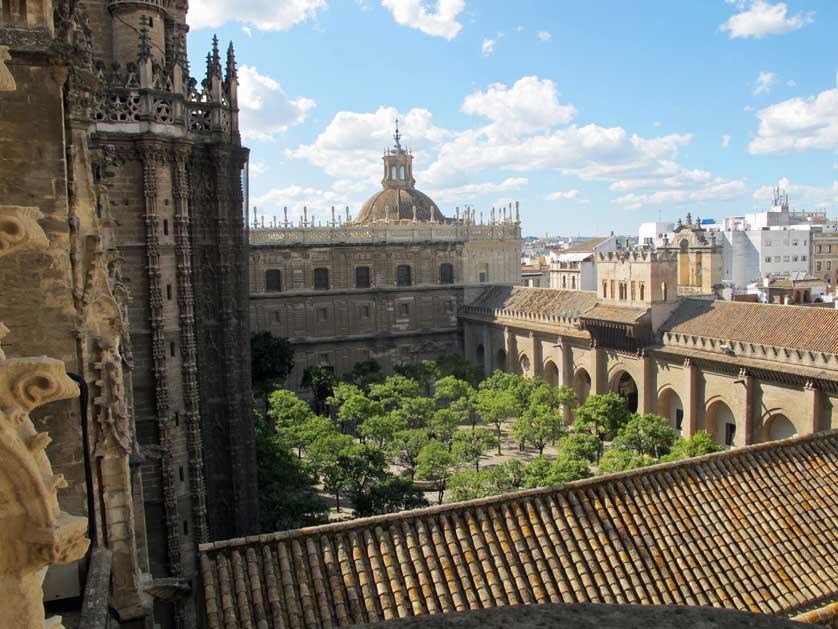
Seville boasts a blend of architectural styles, from Moorish to Gothic and Baroque. Notable landmarks include Seville Cathedral, which is the largest Gothic cathedral in the world and a UNESCO World Heritage Site.
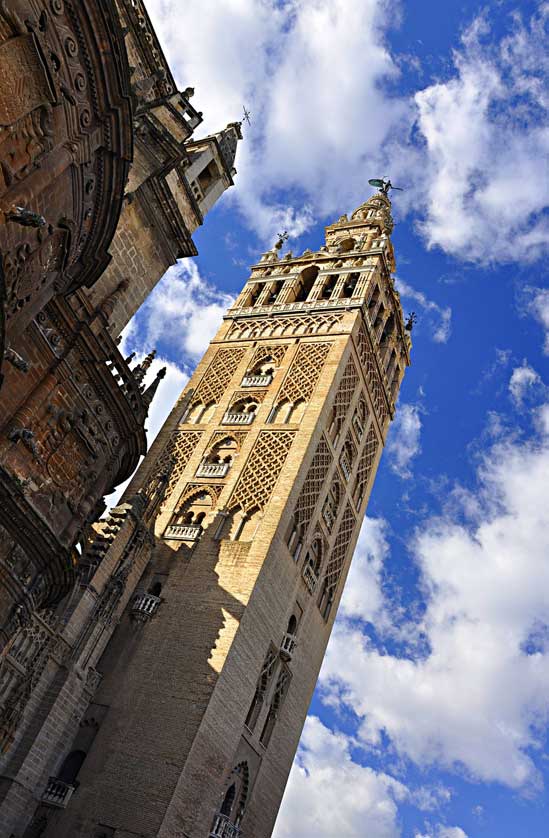
Catedral de Santa María de la Sede
Seville Cathedral (Catedral de Santa María de la Sede) was built to replace the city's previous mosque after the Reconquista, the Christian reconquest of the Iberian Peninsula from the Moors. Construction of the cathedral began in 1401 on the site of the former mosque and continued for over a century.
One of the most distinctive features of the cathedral is the Giralda, a bell tower that was originally constructed as the minaret of the mosque. It stands 104 meters (341 feet) tall and is a prominent symbol of the city. Visitors can climb to the top for panoramic views.
The interior of the cathedral is lavishly decorated with numerous chapels, altars, and religious art. The most famous of these is the Capilla Mayor, the main chapel, which houses the high altar and the tomb of Christopher Columbus. His remains were moved to the cathedral from the Dominican Republic in the early 20th century. The cathedral also has a vast and impressive collection of religious paintings, sculptures, and decorative elements.
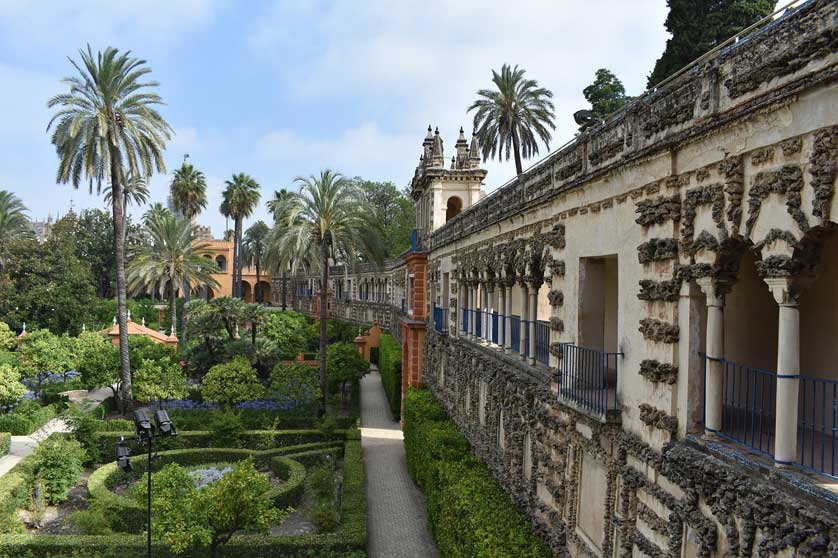
Real Alcázar de Sevilla
The Alcázar of Seville (Real Alcázar de Sevilla) is a stunning royal palace with lush gardens and intricate tilework, reflecting both Moorish and Christian influences. It was originally constructed as a fortress in the 10th century for the ruling Islamic Caliphs. Over the centuries, it was expanded and transformed, with various rulers leaving their architectural and artistic marks on the complex.
It is a remarkable architectural fusion of various styles, including Islamic, Moorish, Gothic, Renaissance, and Baroque. The palace complex features beautiful courtyards, intricate tilework, stucco decoration, making it an exquisite example of Mudejar architecture. Some of its most notable features include the Courtyard of the Maidens, the Hall of Ambassadors, and the Hall of the Catholic Monarchs.
The stunning gardens are divided into different sections, each with its own character and design. The gardens include the Garden of the Poets, the Garden of the Dance, and the Garden of the Princesses, all showcasing a blend of Moorish and Renaissance influences. The Alcázar gardens were used as a filming location for the hit TV series "Game of Thrones." They served as the Water Gardens of Dorne, a fictional palace in the series.
The palace has been used as a royal residence by various Spanish monarchs throughout its history. The upper levels of the complex are still used by the Spanish royal family for official functions and visits to this day.
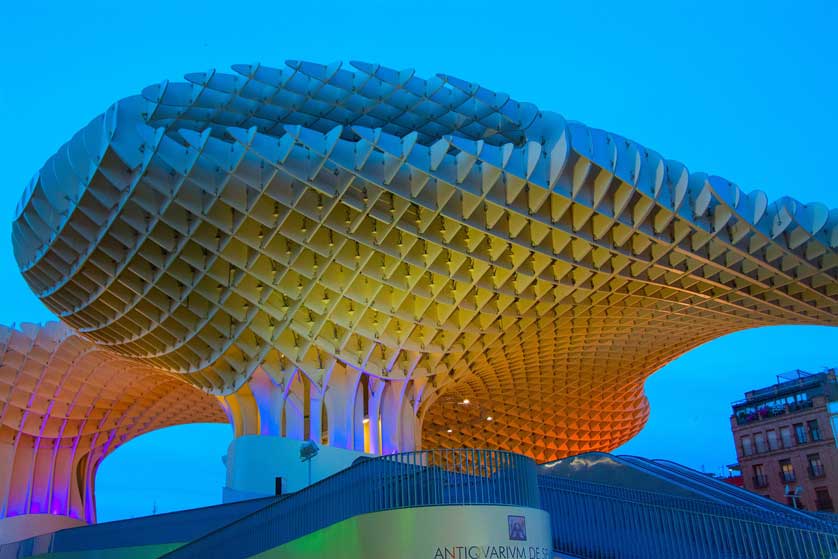
A contemporary architectural marvel is the Metropol Parasol, a modern wooden structure, stands out. Designed by German architect, Jürgen Mayer-Hermann and engineered by Arup the structure was completed in 2011 after 6 years in construction. The project went way over the proposed budget. Built in wood, granite, and concrete, the architect was inspired by the vaults of Seville Cathedral and wished to create a "cathedral without walls."


The Archivo de las Indias is one of Spain's most important historical institutions, preserving an immense collection of documents related to the Spanish Empire's administration in the Americas and Asia. Established in 1785 by King Charles III, the archive was created to centralize records that had previously been scattered across various institutions in Simancas, Madrid, Cádiz, and Seville. It was first housed in a grand Renaissance building originally designed as a merchants' exchange by Juan de Herrara, the architect of the El Escorial. Along with the nearby Cilla Cabildo, it contains millions of pages of manuscripts, maps, and official correspondence dating from the 16th to the 19th centuries. These records provide invaluable insight into exploration, colonization, trade, and governance during Spain's imperial period, making the archive a crucial resource for historians and a UNESCO World Heritage Site recognized for its cultural significance.
The Torre del Oro was part of the city's defences during the Islamic period of Spain's history. It was linked to the Real Alcazar, Torre de la Plata and the other city walls built by the Moors. The base of the 36 meter-tall tower has 12 sides. Constructed in 1220 during the Almohad Caliphate, the tower served as a lookout, and had a counterpart tower on the other side of the Guadalquivir River. A chain stretched between the two to prevent ships sailing upriver.
One of Seville's most popular attractions is its bullring - the Plaza de Toros de la Maestranza. First built during the late 18th century the Plaza de Toros de la Maestranza is a majestic sight with its white and ochre walls and the dramatic sand of the interior ring. Tours of the bullring begin from the main entrance on Paseo de Colon and include a view of the interior bullring from some of the over 12,000 seats in the arena and then continues inside with a number of rooms dedicated to the history of bullfighting in Spain and Seville with paintings, swords, weapons, capes, costumes and other articles connected with bullfighting on display. The tour is conducted by the guide in both Spanish and English.

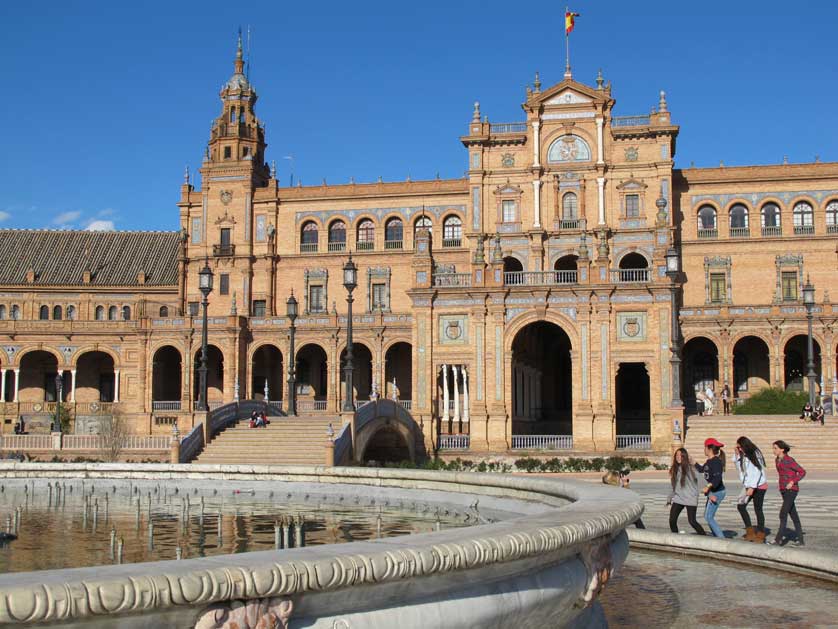
The Plaza de España is part of the Parque de María Luisa and was built south of the city center for the Ibero-American Exposition of 1929. The Parque de María Luisa, designed by the French landcape architect, Jean-Claude Nicolas Forestier, hosted the Ibero-American Exposition of 1929. The work of Aníbal González in a vast half-circle, the Plaza de España hosted Spain's exhibits on industry and technology and was the centerpiece of the event. It is the most beautiful legacy of the 1929 Expo with its fountains, flowerbeds and grand boulevards. Overall, it is a successful mix of architectural styles including Baroque Revival, Moorish Revival (Neo-Mudéjar), and Renaissance Revival styles. The large Plaza de España is within easy strolling distance of several of Seville's major attractions including the Universidad de Sevilla, and the Real Fábrica de Tabacos de Sevilla, forever associated with the story of Carmen as well as the Moorish Real Alcázar. The nearest stop on the Seville metro is Prado de San Sebastian. From there it is just a 7-minute walk south.
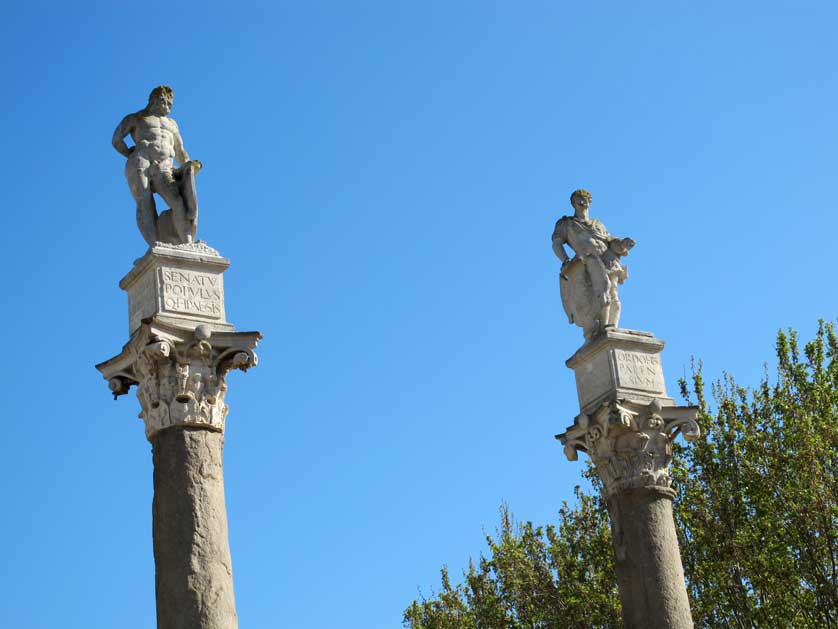
The Alameda de Hércules is a small, urban square containing two original Roman columns with statues. The statues are of Hercules and Julius Caesar. The other two statues in the square are more modern reproductions. They have lions with shields on top which represent Seville and Spain.


Museums
There is a wide variety of museums in Sevilla.
The Museo de Bellas Artes de Sevilla is housed in a former convent and is one of the most important art museums in Spain. It features an extensive collection of paintings, sculptures, and decorative arts, with works from renowned Spanish artists like Velázquez, Murillo, and Zurbarán.
The Museo Arqueológico de Sevilla (Archaeological Museum of Seville) showcases archaeological finds from the region of Andalusia, covering various periods, from prehistoric to Roman times. The collection includes ancient artifacts, sculptures, and Roman mosaics.
The Museum of Arts and Traditions of Seville (Museo de Artes y Costumbres Populares) lies in the Mudejar Pavilion at the Maria Luisa Park, this museum focuses on traditional Andalusian culture and displays a wide range of folk art and crafts.
The Flamenco Dance Museum (Museo del Baile Flamenco) is dedicated to the art of flamenco, The museum explores the history and cultural significance of flamenco. It also holds live performances.
The Centro Andaluz de Arte Contemporáneo or CAAC (Contemporary Art Center of Andalusia) is housed in a former monastery and focuses on contemporary art. It features works by local and international contemporary artists, as well as temporary exhibitions and cultural events.
The Carriages Museum (Museo de Carruajes) was situated in the former convent of Los Remedios. On display were a diverse collection of 25 horse-drawn carriages. It closed in 2020.
The Naval Museum (Museo Naval de Sevilla) is located in the Golden Tower (Torre del Oro). It explores the maritime history of Seville and features models of ships, navigational instruments, and naval artifacts.
The Centro de Arte Contemporáneo Andaluz showcases contemporary art by Andalusian artists and hosts rotating exhibitions.

Churches
There seems to be a church on almost every street in Sevilla. Besides the vast Gothic Catedral de Santa María de la Sede and its bell tower La Giralda there are many other fine churches to admire.
The baroque Iglesia Colegial del Divino Salvador (Church of the Divine Saviour) is one of Seville's most important religious buildings after the cathedral. The church stands where the Roman basilica once did and was constructed over a former mosque. The mosque, which had been reconsecrated as a church, was mostly demolished in 1671 and a new building rose in its place. The architect was Leonardo de Figueroa. He incorporated the base of the minaret in the church's bell tower. It is known for its ornate facades and its impressive interior, which features a high altar with a statue of Christ and a beautiful dome.

The Church of Santa Ana (Iglesia de Santa Ana) is in the historic neighborhood of Triana and is a fine example of Mudejar architecture. It is known for its beautiful ceramic tiles and its connection to Triana's rich flamenco tradition.
Another baroque masterpiece is the Iglesia de San Isidoro known for its stunning interior, including a remarkable altarpiece.
The fine Church of San Ildefonso (Iglesia de San Ildefonso)is close to the Metropol Parasol and features an impressive baroque facade and a richly decorated interior. It's known for its ornate altarpieces and frescoes.
Located in the Macarena district, the Church of San Lorenzo (Iglesia de San Lorenzo) is known for its role in the famous Semana Santa (Holy Week) processions. It also houses the image of the Virgen de la Macarena, one of the most venerated religious figures in Seville.
The Renaissance Church of the Annunciation (Iglesia de la Anunciación) features a beautiful courtyard with orange trees.
Situated in the historic Jewish Quarter of Seville, the Church of Santa Maria la Blanca (Iglesia de Santa María la Blanca) is known for its Mudejar and Gothic architectural elements.
Known for its featuring an opulent interior and intricate decoration the Church of San Luis de los Franceses (Iglesia de San Luis de los Franceses) is another fine example of Spanish baroque architecture.

Festivals
The Feria de Abril (April Fair) is a week-long celebration featuring traditional Spanish music, dance, and horse shows, along with elaborate flamenco dresses and lively atmosphere. Semana Santa (Holy Week) is another important religious and cultural event, with processions, music, and religious observances.

Sport
Sevilla FC and Real Betis Balompié are the city's two football teams with a strong rivalry. Each of them plays at home alternatively every week, so you can always catch a game during the season. Sevilla FC play their home games at Ramon Sanchez-Pizjuan Stadium.
Betis play at the 50,000 capacity Estadio Benito Villamarín. The Estadio Benito Villamarín lies on Avenida la Palmera south of the historic city center and not far from Plaza de Espana. Access to the stadium is fairly straight forward by either bus or taxi. Walking would take about 45 minutes from the cathedral area.
The 42,700 capacity Ramon Sanchez-Pizjuan Stadium was built between 1955 and 1958 and opened in 1958 with a friendly against Jaén. The stadium has also been subsequently renovated in 1996 and 2017.
Originally the stadium had a capacity of over 70,000 but this was reduced to an all-seater capacity of 42,700 in the renovations of the 1990s.


Sevilla Tourist Offices
Oficina de Turismo de Sevilla
Pl. del Triunfo, 1-3
41004 Sevilla
Tel: 954 78 75 78
Hours: Monday to Friday from 9 am to 7.30 pm; weekends 9.30 am to 7.30 pm.
Santa Justa Station
Avenida Kansas City s/n (next to platforms 6-7)
41008 Sevilla
Tel: 954 782 002
Hours: Monday to Friday from 9 am to 7.30 pm; weekends 9.30 am to 3 pm.
P.º Alcalde Marqués del Contadero, s/n
41001 Sevilla
Tel: 955 47 12 77
Hours: Monday to Friday from 9 am to 3 pm; weekends and holidays closed.

Getting to & from Sevilla
Bus
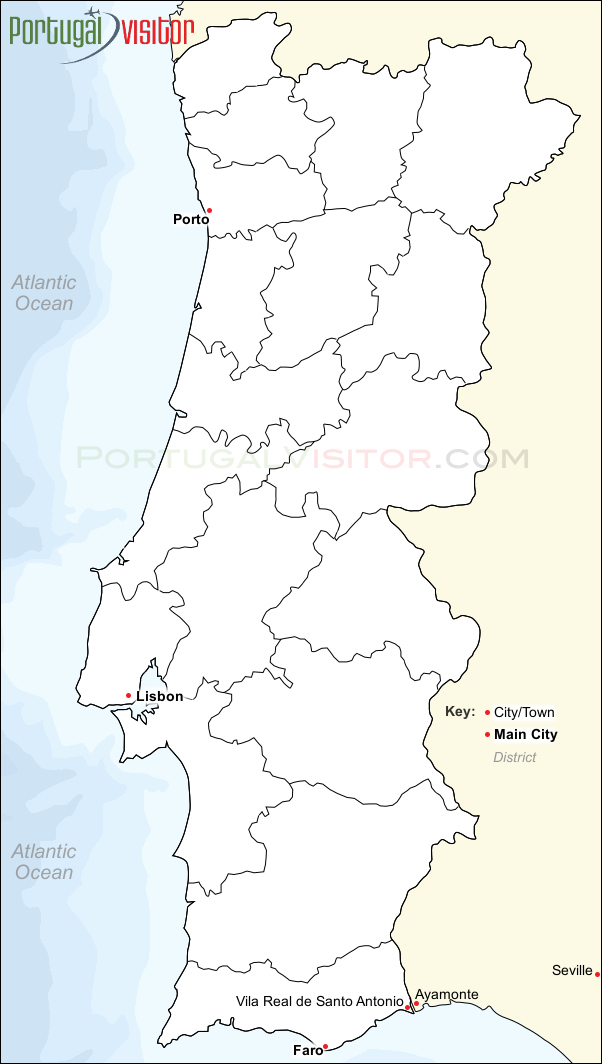
A bus links the resorts of the Algarve with Seville in Spain. The buses, jointly operated by Eva and Damas leave Lagos early in the morning, calling in Portimao 30 minutes later, Lagoa, Albufeira (after about one hour) and then Faro then taking about 3 hours and 20 minutes to reach Seville via Olhão, Tavira, Vila Real de Santo Antonio on the Spanish border, then to Ayamonte, Huelva and then Sevilla Bus Station in Plaza de Armas.
Train
Sevilla has rail connections to Huelva and Cordoba as well as Madrid and Barcelona from Seville-Santa Justa railway station.
There are also trains from Santa Justa to Cadiz, Málaga, Algeciras, Almería, and Jaén.
Metro
Seville's metro system (Metro de Sevilla) is a quick and easy way to get around. A light rail system, the Sevilla metro travels both above and below ground.
Initially planned to have 4 lines, at present only one line, Line 1 is in operation and opened in 2009. Line 1 runs west to east from Mairena del Aljarafe (Ciudad Expo), San Juan de Aznalfarache, Montequinto (Dos Hermanas) to Oliviar de Quintos with a total of 21 stations at present.
Car
The city is 140 km east of Ayamonte and the border with Portugal, the River Guadiana, and the Portuguese town of Vila Real de Santo Antonio. The A49 connects Ayamonte and Sevilla in about 90 minutes. From Córdoba the journey by car is also about 90 minutes on the A-4. Badajoz is about 2 hours and 20 minutes north on the N-432 and A-66.
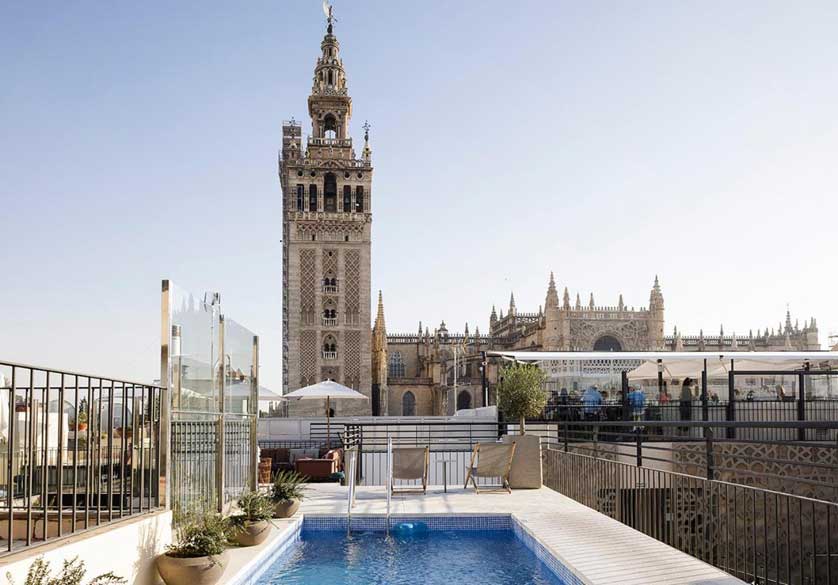
Sevilla Hotel, Apartment, & Hostel Accommodation
There is a very wide and abundant range of accommodation available in Sevilla. The following is a recommended selection, listed from high-end to budget.
EME Catedral Hotel is located next to Seville Cathedral and only 60 meters from La Giralda which can be seen from the rooftop pool. There is a spa and free Wi-Fi.
The Ayre Hotel Sevilla offers four star accommodation opposite to Seville's Santa Justa Station. Sánchez Pizjuan Stadium is just 600 meters away.
The four-star Hotel Inglaterra overlooks Plaza Nueva and has rooms with classic-style décor, and private balconies a short distance from the cathedral.
Hotel America in Plaza del Duque has rooms with good facilities close to Seville Cathedral and the Giralda.
Hotel Baco in Plaza Ponce de Leon was once a labor union office building and the staircases and little anterooms are covered in beautiful tile-work. The 25 available rooms are quite small but are spotlessly clean and all have wireless internet connections. The staff are remarkably friendly and helpful and speak English.

Book Hotel Accommodation in Sevilla
Book Hotels in Sevilla - Booking.com
Search Hotels in Huelva - Booking.com
Find Hotels in Vila Real de Santo Antonio Portugal - Booking.com
Hotels in Monte Gordo Portugal - Agoda
Hostels in Portugal - Booking.com

Eating
There are many restaurants, bars and cafes in Sevilla.
Some iconic dishes include gazpacho (a cold tomato soup), salmorejo (a thicker version of gazpacho), and a wide range of tapas, like jamón ibérico and espinacas con garbanzos (spinach with chickpeas).
Some recommended restaurants in Sevilla include Terraviva in Plaza Nueva, Mareaviva on Calle Luis Arenas Ladislao and Restaurante El Sella Triana at Calle Pureza, 4, near Puente de Triana.
Vegetarians and vegans should head for Veganí, Vegan Rock or Veganitessen in the Mercado del Arenal.
Drinking
Try the iconic El Rinconcillo, said to be the birthplace of tapas. Located in the La Macarena district of the historic city, El Rinconcillo dates back to the 1670s and the atmospheric, woody interior is the setting for some great food and drink. Specialties include Huelva hams, vegetarian chickpeas and spinach, and the catch of the day from Cadiz. Wash down your tapas with some fine wines, while your bill is totted up on the wooden counter of the large barrels that serve as tables.
Remember it is standing room only in the bar area and there are no seats. If you wish to sit there is a separate restaurant area with tables and chairs. El Rinconcillo is close to the Iglesia de Santa Catalina and the Iglesia de San Pedro, where the painter Velazquez was baptized.
The city is also considered the birthplace of flamenco, a passionate and expressive style of music and dance. The city is thus home to numerous tablaos (flamenco venues) and offers visitors the opportunity to experience this vibrant dance. The Museo del Baile Flamenco is a museum dedicated to the art form.
List your restaurant/bar/hotel for FREE contact Advertising
Algarve Resorts
Other places to visit in the Algarve region of Portugal include Albufeira, Alcoutim, Aljezur, Alvor, Cabanas, Cacela Velha, Faro, Ferragudo, Fuseta, Lagos, Loulé, Monchique, Olhão, Portimão, Praia da Rocha, Sagres, Silves, Vilamoura and Vila Real de Santo Antonio.
Maps

Gallery


