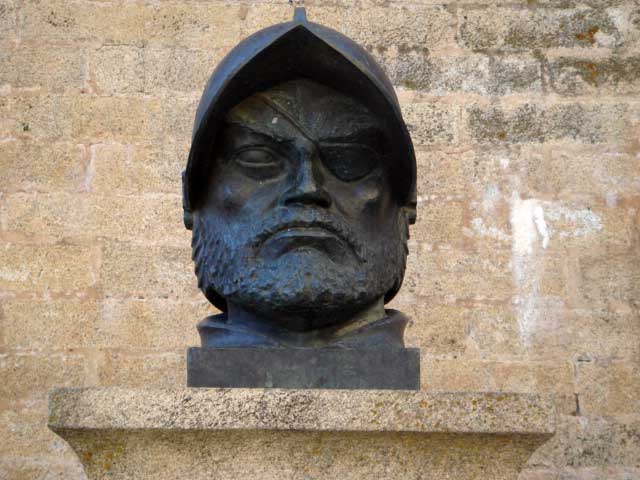
Trujillo Guide
Trujillo (Extremadura, Spain)
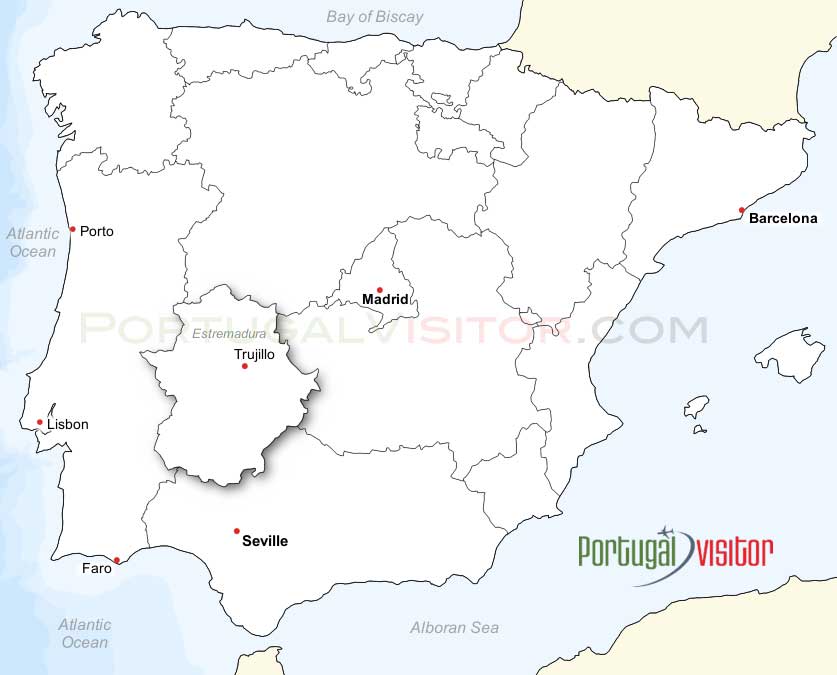
Trujillo in many respects is a smaller version of Cáceres, just 45 km to the west.
A UNESCO World Heritage Site, the historic old city is home to the towers and mansions of many conquistadors who made their fortune in South America and brought this plundered wealth back to their hometown.
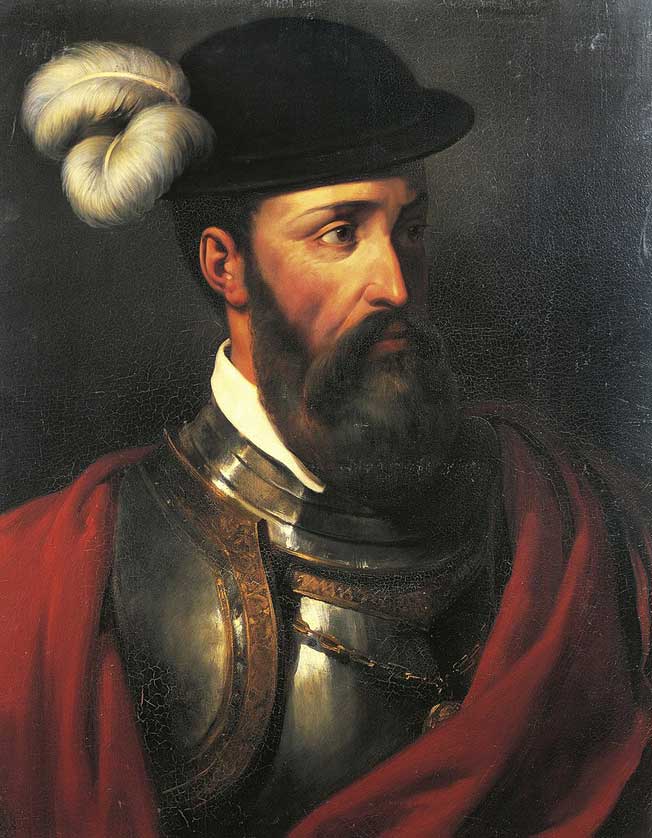
Chief among them are Francisco Pizarro, the conqueror of Peru and his brothers as well as Francisco de Orellana, the first European to explore the Amazon River.
Natives of the city also exported the very name "Trujillo" to the Americas. For example, Diego García de Paredes founded Trujillo in Venezuela in 1557, while Francisco de las Casas began the city of Trujillo in Honduras, which once served as the Spanish capital. There is also a Trujillo in Peru named in honor of Pizarro by one of his accomplices, later turned enemy, Diego de Almagro.
History
The area that now comprises Cáceres province of which Trujillo is part has a long history. The region has been inhabited since as far back as the Stone Age.
During the Roman period the city was called Turgalium with connections to Emerita (present-day Mérida), the major Roman settlement in the area.
The end of the Roman Empire heralded the coming of the Visigoths before it was taken by the Moors in 711.
During the period of Islamic control of the Iberian Peninsula, the city (now known as Turjalah in Arabic) was a base for raids on the Christian north.
In 1232 the city fell to the Christians supposedly with the help of the Virgen de la Victoria (Virgin Mary), if legend is to be believed.
The city had a large Jewish quarter located outside the city walls until their expulsion by Queen Isabella I of Castile and King Ferdinand II of Aragon, the so-called "Catholic Monarchs" in 1492. This was the same year the Christopher Columbus set sail for the Americas.
It is believed up to 600 men from Trujillo went to Mexico and South America as Conquistadors. Chief among them were the Pizarro brothers: Francisco, Juan, Gonzalo and Hernando. The latter was the only brother not to die a violent death and passed away in Trujillo in 1578. Hernando Pizarro is buried in the Iglesia de San Francisco.
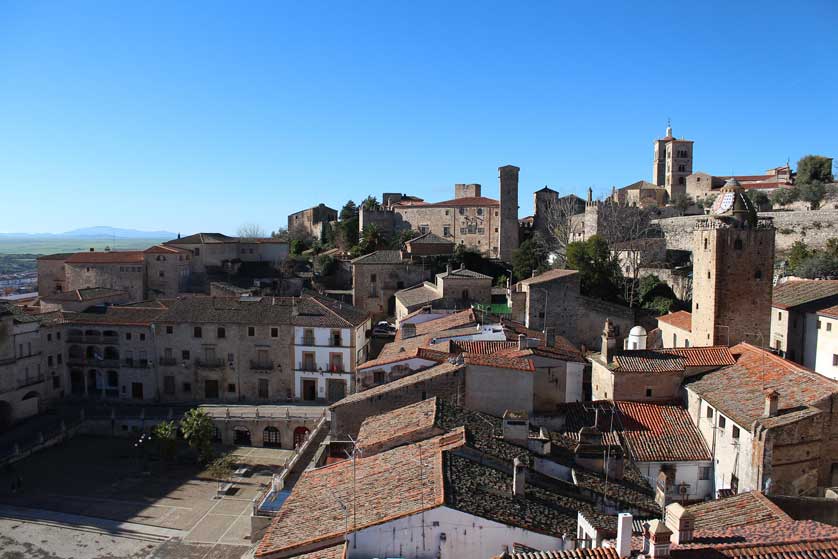
They and others ploughed their great wealth plundered from the Incas into mansions and towers around Plaza Mayor. From the 1530s onwards the city enjoyed a construction boom creating the many Renaissance palaces and mansions we see today.
Attractions
Trujillo has a population of less than 10,000 inhabitants but there is much to see.
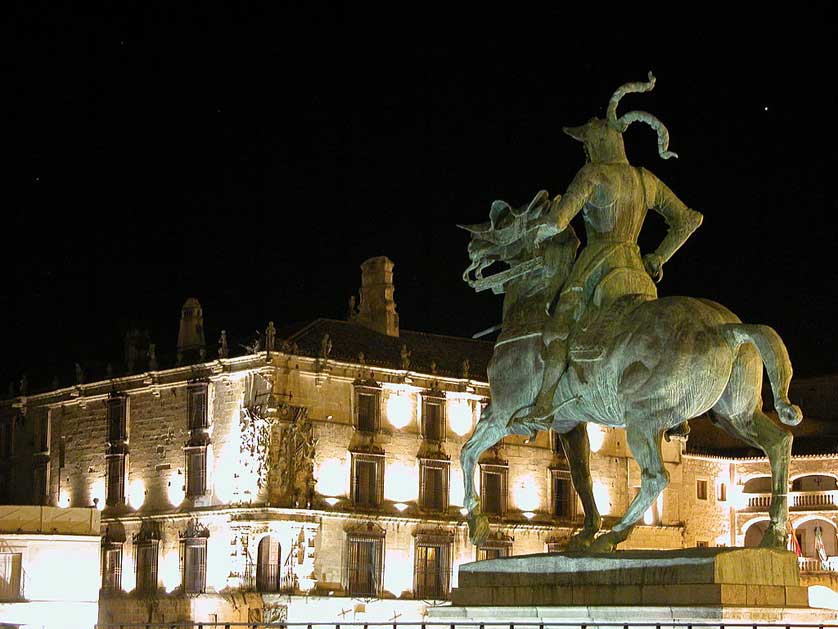
The Plaza Mayor is the main square and here stands the bronze, equestrian statue of Francisco Pizarro, the conqueror of Peru. Supposedly, the figure by American sculptor, Charles Cary Rumsey (1879-1922), is of Hernán Cortés and was meant for Mexico City. The Mexicans, not surprisingly, did not want it, so Rumsey offered it to Trujillo instead.
The Palacio de la Conquista was built in 1652 for Hernando Pizarro and his wife and niece, Francisca Pizarro Yupanqui, daughter of Francisco Pizarro and his Inca lover Ines Yupanqui, sister of the Inca emperor Atahualpa. There are carved images of the Pizarro clan on the corner of the facade of the building, which lies to the south of Plaza Mayor.
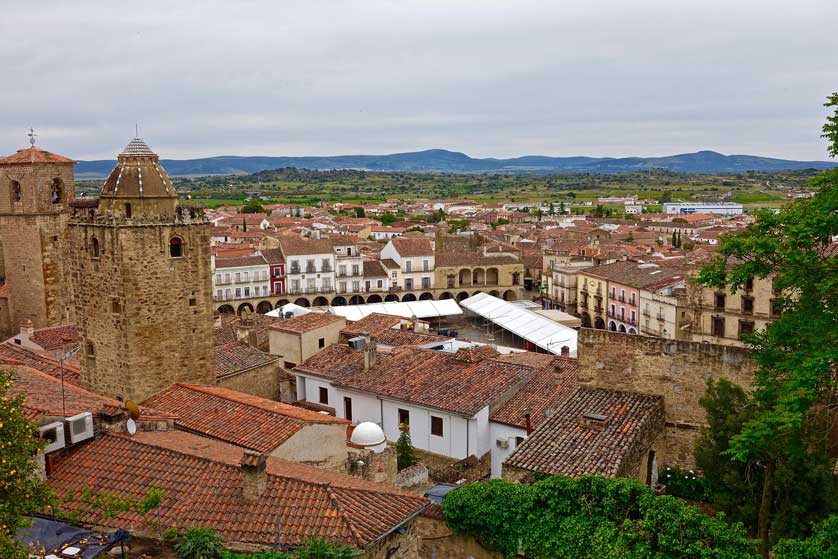
The Iglesia de San Martín and the Iglesia de Santa Maria de Mayor stand opposite each other on the northern side of Plaza Mayor.
The Iglesia de San Martín has a fine painted ceiling and superb stained glass windows along with an 18th century organ. Construction of the church began in the 14th century but continued into the 16th century. Inside are important Renaissance tombs belonging to different important families from the city. The church has a sturdy, square bell tower as well as a smaller clock tower protruding from the facade.
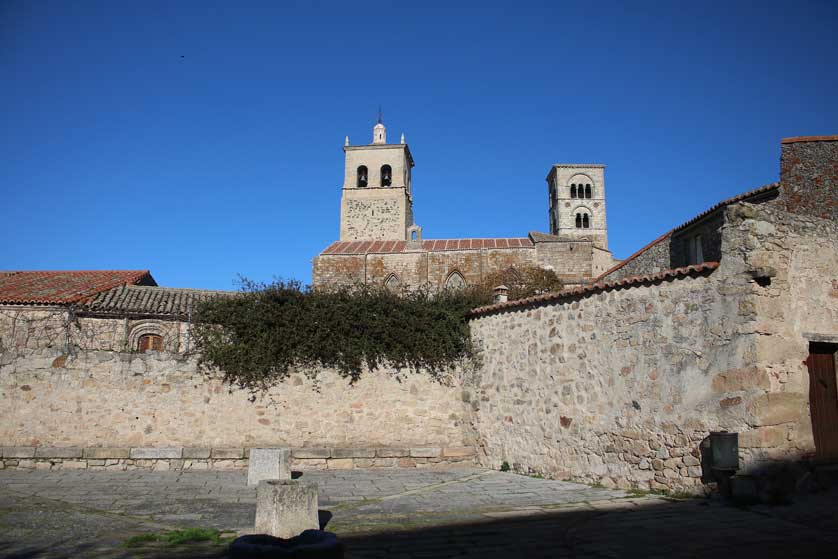
The Iglesia de Santa Maria de Mayor stands adjacent and is older. Originally constructed in the 13th century in the Romanesque style, the church was remodeled in the Gothic style during the 15th and 16th centuries. Historians believe the church was built over a former mosque.
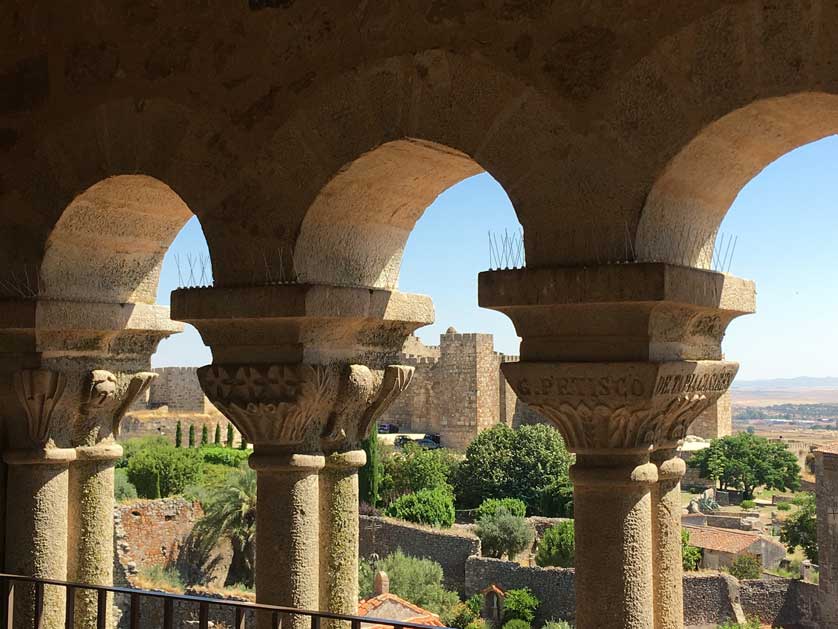
Highlights are the 15th century altarpiece and the rebuilt 20th century bell tower. The bell tower had been badly damaged by the Lisbon earthquake of 1755 and was reconstructed in the 1970s. The stonemason on the project Antonio Serván cheekily added in the crest of his favorite football club Athletic Bilbao as he had run out of inspiration for the last of the 52 capitals, a quirky detail beloved by tour guides of the city.
The church contains the tombs of several important figures from the city's history including the famous warrior, Diego García de Paredes, who is mentioned in Don Quixote.
The magnificent Alcazaba (El castillo de Trujillo) was built in the 10th century by the Moors and stands on top of a hill, the highest point in the city. The walls have superb views over the town and surrounding countryside. The castle was strengthened after the Reconquista and one of the surviving towers has an image of the the Virgen de la Victoria, the patron saint of Trujillo.
The Palacio de los Duques de San Carlos stands on a corner of Plaza Mayor. It dates from the 16th century and now serves as a convent for nuns of the Order of Saint Jerome (Hieronymites). The original Plateresque façade is reminiscent of similar decorative buildings in Salamanca.
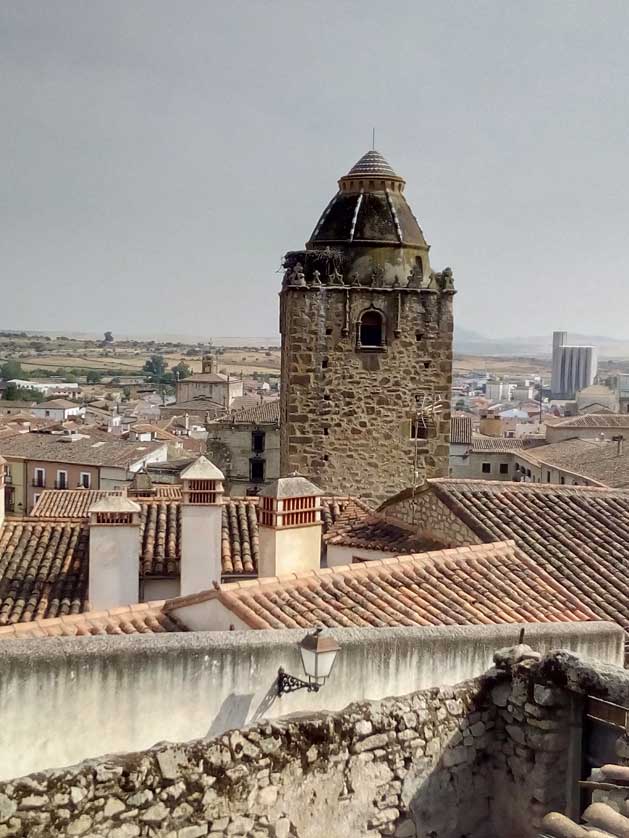
The Torre del Alfiler was once a tower in the Moorish walls of the city that later became an aristocratic dwelling, the Casa de la Cadena. It now houses a museum (Centro de la Interpretación) on the history of Trujillo and the wider Extremadura region. There are great views over the city from the top.
The Romanesque Iglesia de Santiago is the oldest church in Trujillo, founded back in the 13th century by Knights from the Order of Santiago. The scallop shell is their emblem. The interior is noted for its 14th century sculpture of Cristo de las Aguas.
Museums include the Casa Museo de Pizarro, the two-story family home of Francisco Pizarro. The first floor recreates his 16th century childhood home while the second floor is dedicated to his time in South America.
The Museo de la Coria is located in a former convent and has exhibits on the relationship of Extremadura and Latin America including such figures as the priest Bartolomé de las Casas, Mexican writer and philosopher Sor Juana Inés de la Cruz and Chilean poet Pablo Neruda.
Areas of green space are found mainly outside the 900 meters of city wall encircling the town.
These include the Llanos de Cáceres y Sierra de Fuentes between Trujillo and Cáceres.
The main festival in Trujillo is the Chíviri on Easter Sunday with singing, dancing and merry-making in Plaza Mayor accompanied by a band playing popular folk songs.
The National Cheese Festival is also held here in May.
Accommodation
The city has a wide range of hotels, guest houses and private rentals to suit all budgets.
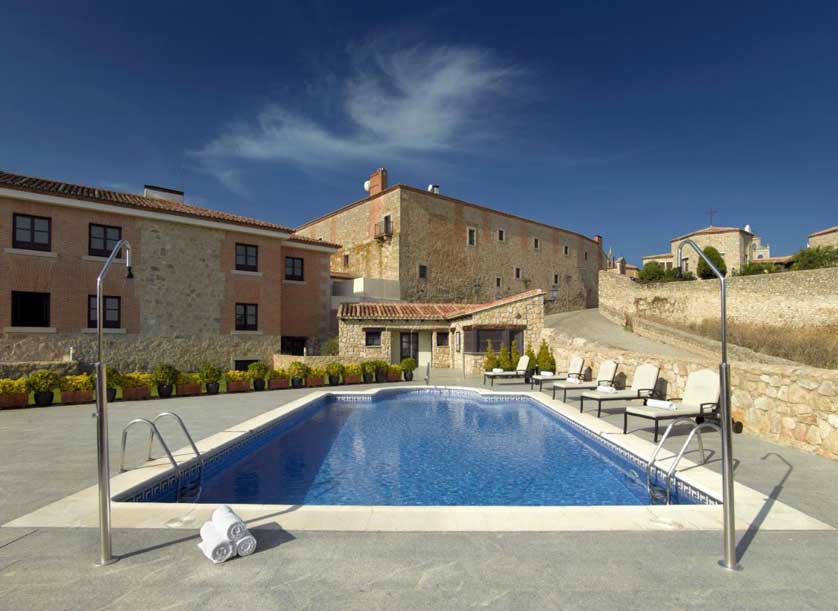
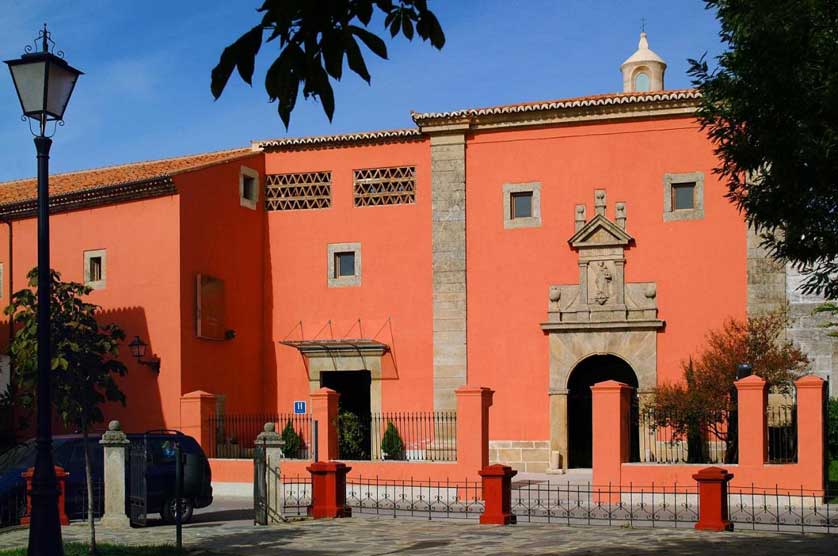
The Parador de Trujillo is housed in the former historic convent of Santa Clara with its beautiful cloisters. It offers upscale accommodation with a swimming pool and restaurant/bar.
The four-star Hotel Izan Trujillo occupies the former San Antonio convent which dates back to the 16th century. Facilities include an outdoor swimming pool.
The Eurostars Palacio de Santa Marta is again housed in an historic building, dating from the 16th century. There is a swimming pool and free WiFi.
Other places to stay include Hostal Cuzco offering affordable accommodation, a short walk from Plaza Mayor.
Palacio Chaves Hotel has three-stars and is again part of an historic building with spacious, well-furnished rooms.
See a listing of hotels in Trujillo
Access
Trujillo is connected by bus to other parts of Spain. There are bus connections to Madrid, Badajoz (2 hours), Cáceres (40 minutes), and Mérida.
Maps of Trujillo
Gallery