Tui Guide
Tui (Galicia, Spain)
Tui (aka Tuy) is a small town on the River Minho that borders Valença in Portugal across the river.
Located in the province of Pontevedra in Galicia, northwestern Spain, the pleasing town has a population of around 17,000.
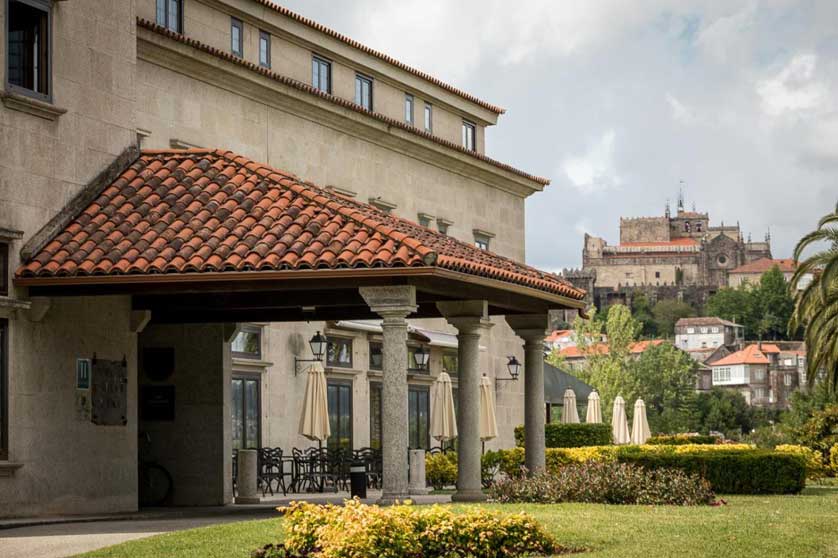
Tui is best known for its fortress-like cathedral that stands on a hill in the center of the old town.
History
The area has been inhabited as far back as Prehistoric times. The Romans also mention the town of Tude. A Roman milestone from the road connecting Braga to Tui can be seen within the walls of Valença across the border.
The inscription reads: Tiberius Claudius Caesar Augustus Germanicus Pontifex Maximus. Imperator V Consul III, Tribunicia Potestate III. Pater Patriae Bracara XLII. It was erected on the orders of the Emperor Claudius in the first century AD.
The town was occupied later by the Visigoths. During the period of Islamic control of the Iberian Peninsula Tui and the surrounding area was largely a buffer zone between Christians and Moors.


Attractions
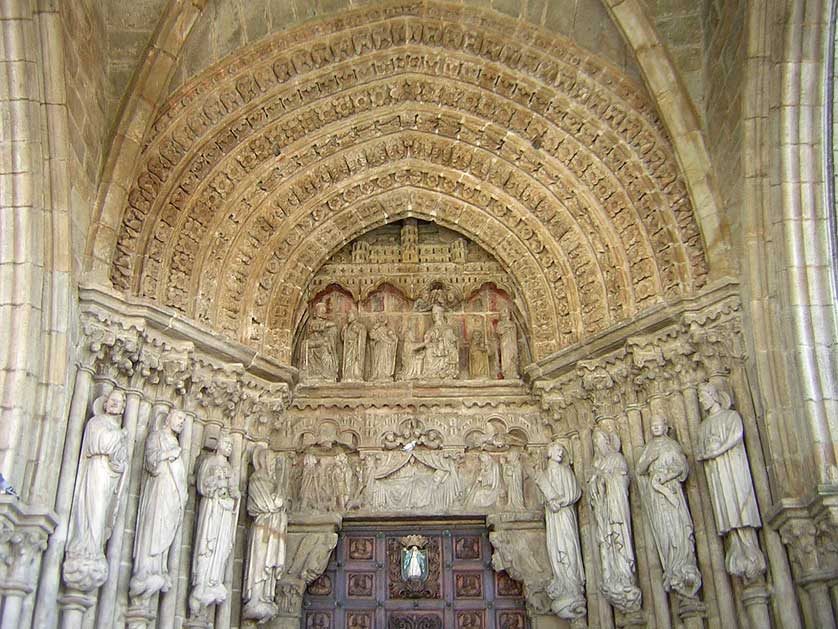
The main draw in Tui is its superb and huge cathedral (Catedral de Santa María de Tuy). It is a co-cathedral with the one in Vigo forming the Diocese of Tui-Vigo. Building work began in the 12th century but most of what we see today is from later. Only the overall layout and North Portal date from the church's Romanesque origins.
Later additions and renovations are largely Gothic. Highlights include the Chapter House, one the largest in Spain and the exceptional Gothic façade, created by stonemasons from France.
The cloister dates from the second half of the 13th century, in the Cistercian Gothic style.
In the old chapel of Santa Catalina is the Cathedral Museum with several religious treasures on display.
There are a couple of other museums in and around Tui, too. The Museo e Arquivo Histórico Diocesano is housed in an historic, restored manor house near the cathedral with a permanent collection of sacred and religious art.
The Centro de Interpretación do Monte Aloia explains the flora and fauna of the surrounding Parque Natural do Monte Aloia.
Tui is also the start of a short version of the Portuguese Way of the Camino de Santiago. It is 116 km (72 miles) on foot from here to Santiago de Compostela - thus sufficiently long for pilgrims to obtain a pilgrim's certificate.
Two bridges now link Tui in Spain and Valença in Portugal here. The Eiffel-inspired road and railway bridge, the Ponte Rodo-Ferroviária de Valença dates from 1886 with a later road bridge to the south. The older 318-meter-long bridge is also referred to as the Ponte Internacional Tui-Valença, the Ponte Internacional de Tui or Ponte de Valença.
Southwest of the old city where the E-1 highway comes over the modern road bridge near the entrance and exit roads are a series of outlet malls with contemporary shopping and dining. There's a Lidl supermarket, and branches of Mercadona and Gadis.



Accommodation
The town has some great places to stay if you are not on a day trip from Portugal.
The Parador de Tui is a popular hotel set in an historic building in a delightful, natural environment. Facilities include a pool, bar and restaurant.
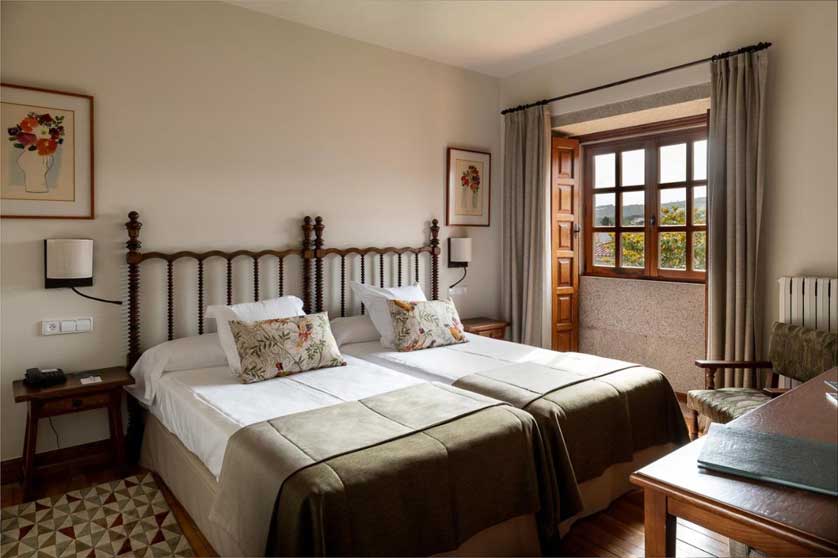
The Hotel A Torre do Xudeu has large rooms again in an historic property. The River Minho is close by with views over into Portugal.
Other places include Albergue Ideas Peregrinas on Rúa Porta da Pía, which offers more budget lodgings.
Hostal San Telmo is another budget option opposite Tui Station.
See a listing of hotels in Tui
Access
Trains from Tui run north to Vigo on the coast for connections to the Cíes Islands by ferry but do not head to other destinations in Spain. The next station on the line heading to Vigo Station is O Porriño followed by Redondela.
There are Celta trains twice a day connecting Vigo to Campanhã Station and São Bento Station in Porto. The Celta train also stops at Valença Station, Viana do Castelo Station and Nine. The service is operated by Comboios de Portugal.
At Vigo-Guixar Station, the terminus of the line, it is possible to transfer to RENFE regional trains to the cities of Pontevedra, Santiago de Compostela, A Coruña (La Coruna) and also take trains to Ourense, Madrid-Chamartin and Barcelona-Sants.
It is a 4.4 km walk between Tui and Valença stations.
Map
