Ciudad Rodrigo Guide
Ciudad Rodrigo (Castile and León, Spain)
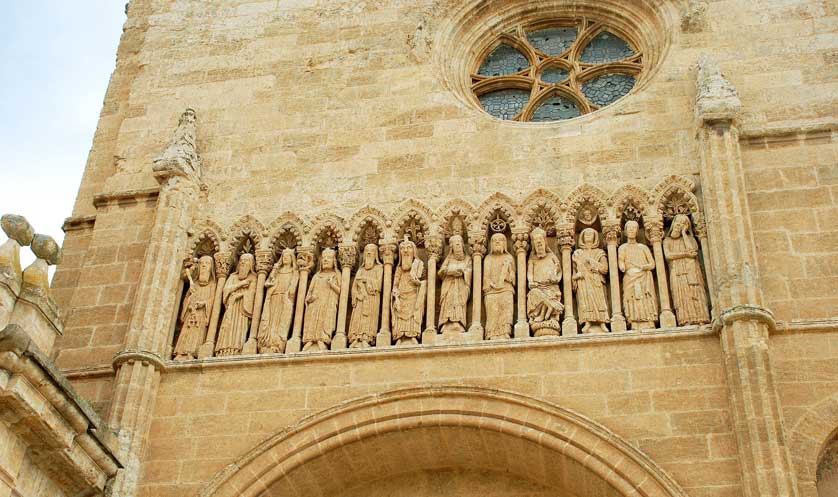
Ciudad Rodrigo in the Province of Salamanca is a small city of less than 15,000 people known for its preserved Medieval core of historic buildings.
The city on a rise above the River Águeda boasts a cathedral, a castle (now partly occupied by a parador), several mansions and a few museums of interest.
History
The city on the Águeda River was occupied during Celtic times when it was possibly known as Mirobriga. The surrounding area has been inhabited since the Stone Age. The Romans later called the city Augustobriga.
The city's strategic importance on the road from Portugal to Salamanca meant it has played a dramatic role in the history of both countries. During the Peninsular War (1807-1814), British forces stormed the city with great loss of life on both sides, French and British, as well as the hapless Spanish civilians in the city. The British commander, Arthur Wellesley (the Duke of Wellington) then went on to capture Badajoz in an even more bloody battle.
Despite early opposition from Republicans at the start of the Spanish Civil War, the city was taken and held by the Nationalists for the duration of the conflict.
Attractions
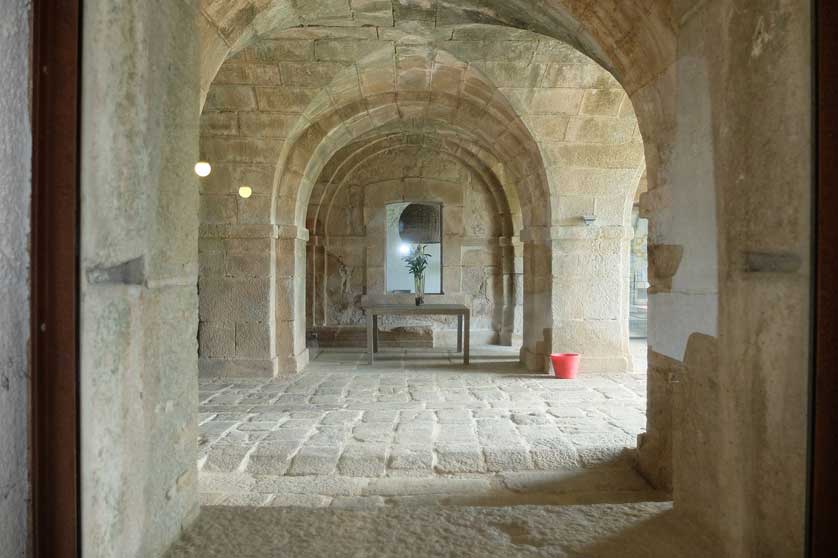
Like Salamanca 90 km away, Ciudad Rodrigo is famous for its plateresque architecture. This is an architectural style "in the manner of a silversmith" characterized by ornate decorative facades often depicting floral motifs and fantastic beasts.
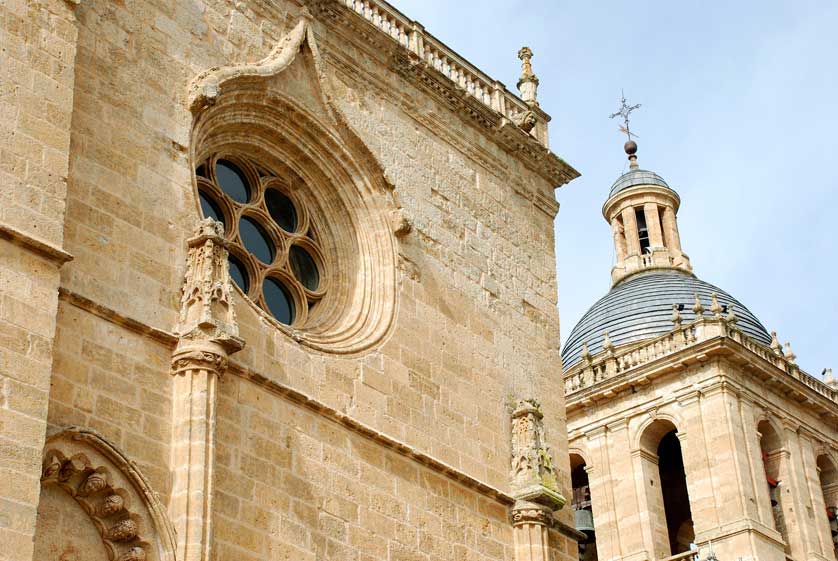
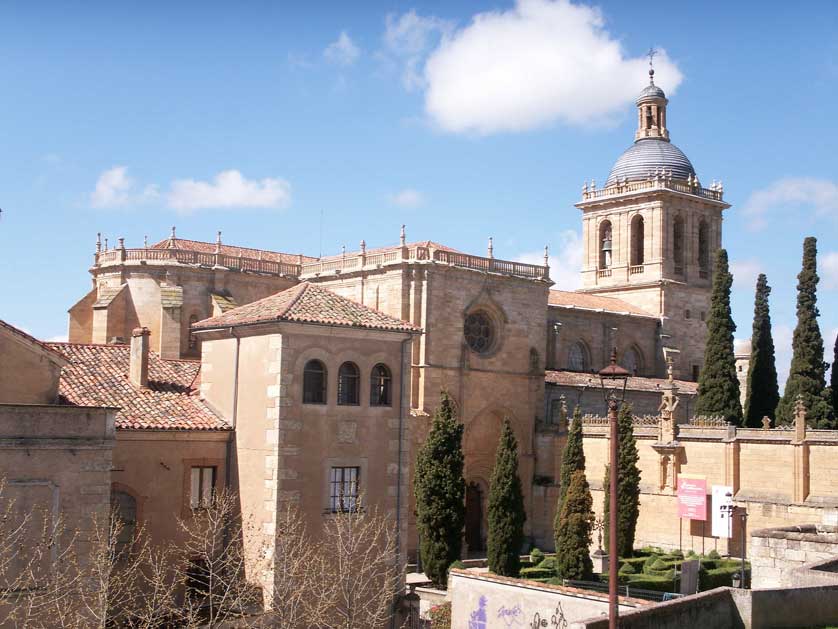
The sandstone Catedral de Santa María on Plaza de San Salvador dates from the 12th century. Highlights are the Old Testament reliefs on the Puerta de las Cadenas and the fine woodwork within the church. The tower can be climbed and offers superb views.
The city's walls (Muralla) are still intact here and there, just over 2 km of the walls can be walked with views over the surrounding plain.
The arched Roman bridge (Puente Romano) dates originally from the 1st century but has been much restored over the following centuries.
Plaza Mayor is the main square and is surrounded by several mansions including the 16th century Casa del Marques de Cerralbo decorated in plateresque fashion. Many bars and restaurants are clustered here.
Other buildings of note include the 15th century Palacio de los Ávila y Tiedra now known as the Palacio Montarco and a wedding venue and the Hospital de la Pasión, built over a former synagogue after the expulsion of the Jews in 1492 by Ferdinand and Isabella.
The Palacio de los Águila is the largest palace in the city and was constructed in the 16th and 17th centuries by a governor of the city's castle, Don Antonio del Águila.
The Capilla de Cerralbo is a beautiful 16th century church built as a funeral pantheon by Cardinal Francisco Pacheco de Toledo. The cardinal was a busy and wealthy man. He served also an ambassador in Rome, viceroy of Naples and the archbishop of Burgos.
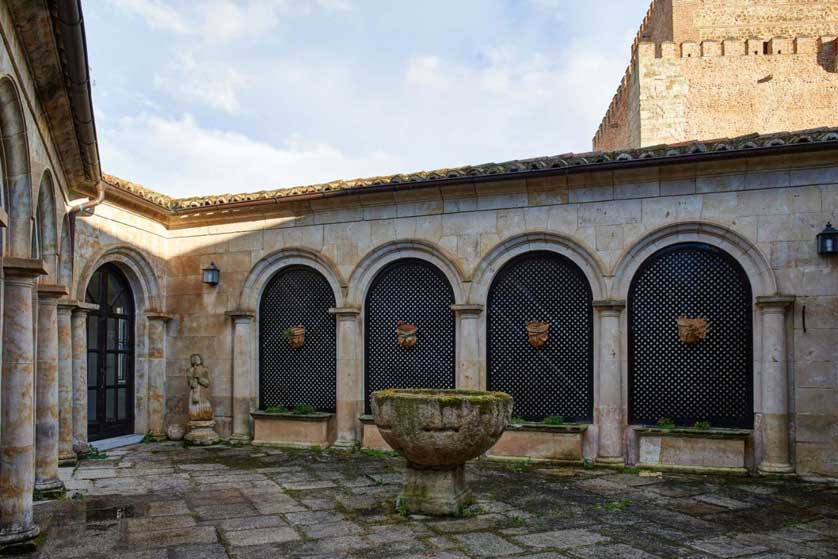
The Castillo de Enrique II dates from back in the 14th century with its antecedents even earlier during the reign of Fernando II of León. The square 17 meter-high keep is impressive. Now parts of the castle are the grounds and buildings of the city's wonderful parador (see below).
La Iglesia de San Pedro y San Isidoro has elements dating from the 12th century through to the 16th century. Within the painting of the Virgen de Guadalupe by Juan Correa is from 1700. The porticoes of the cloister are also wonderful.
Ciudad Rodrigo also has a few museums well worth seeking out. The bizarre Museo del Orinal has a collection of over 1,300 chamber pots and spittoons from all over the world! There are pieces in aluminum, brass, clay, glass, iron, porcelain, and even wood. Some are inlaid with gold and silver, and others, paintings or drawings. The oldest piece is an Islamic chamber pot dating from the 13th century.
Accommodation
The city has well over 200 hotels and other accommodations that offer a range of lodgings to suit every budget from 5-star luxury hotels to more homely guest houses and pensions.
The 3-star Hotel Arcos is close to Plaza Mayor and the cathedral with Wifi and a buffet breakfast.
With 4 stars the Parador de Ciudad Rodrigo is a luxury property set in part of the 14th century castle. Facilities include WiFi, bar and restaurant.
The Hotel Conde Rodrigo I is close to the city's cathedral and housed in a lovely, restored 16th century mansion. Enjoy local cuisine and fine wines in the hotel's restaurant and bar.
Other places include Hotel Puerta Ciudad Rodrigo with three stars and Hotel La Bodega just north of the old center on C. Badajoz.
See a listing of hotels in Ciudad Rodrigo

Access
Ciudad Rodrigo has frequent buses to Salamanca. From there are rail connections to Avila, Madrid-Chamartin, and Valladolid-Campo Grande.
From Salamanca buses operated either by Alsa or Avanza run to Avila, Leon, Madrid, Segovia, Valladolid and Zamora.
A visit to Ciudad Rodrigo can be combined with a holiday in Portugal as it lies on the bus route from Porto via Aveiro, Viseu and Guarda.
Buses to Porto in Portugal are operated by ALSA/Internorte and take 6 hours and 15 minutes from Salamanca and 9 hours, 15 minutes from Madrid. The service calls at Ciudad Rodrigo. The bus station in Porto where these international buses depart back to Spain is at Casa da Musica on the Porto metro.
Presently the bus leaves Salamanca bus station at 12.45 pm and arrives in Porto at 6 pm. Returning to Spain from Porto the bus leaves Casa da Musica at 10.15 am and should arrive in Salamanca at 5.30 pm. There is a pit stop on the border.
By car it is an approximately 90 km drive southwest on the A-62 from Salamanca to Ciudad Rodrigo. It is 74 km (around an hour by car) from Ciudad Rodrigo to Guarda in Portugal on the A-62 and A25 highways.
Maps
