Alameda de Hércules, Sevilla
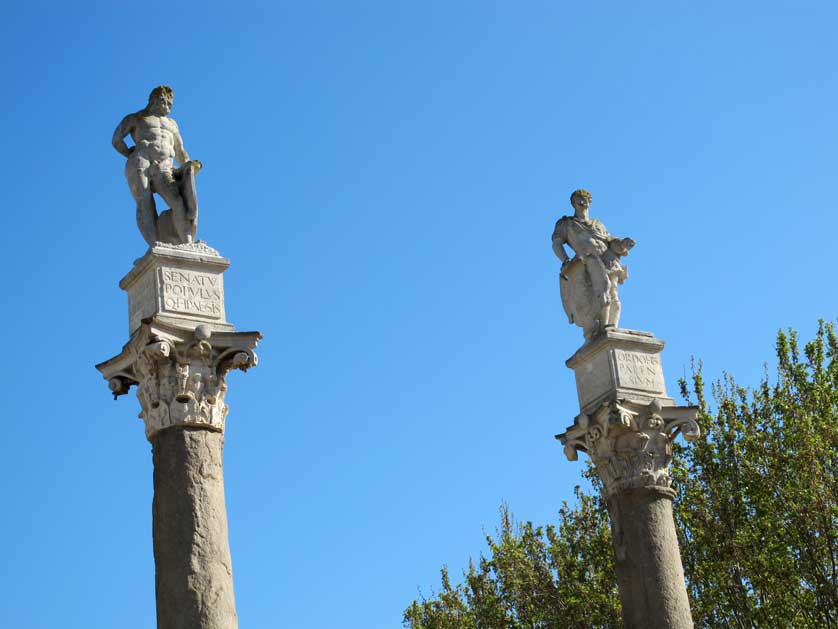
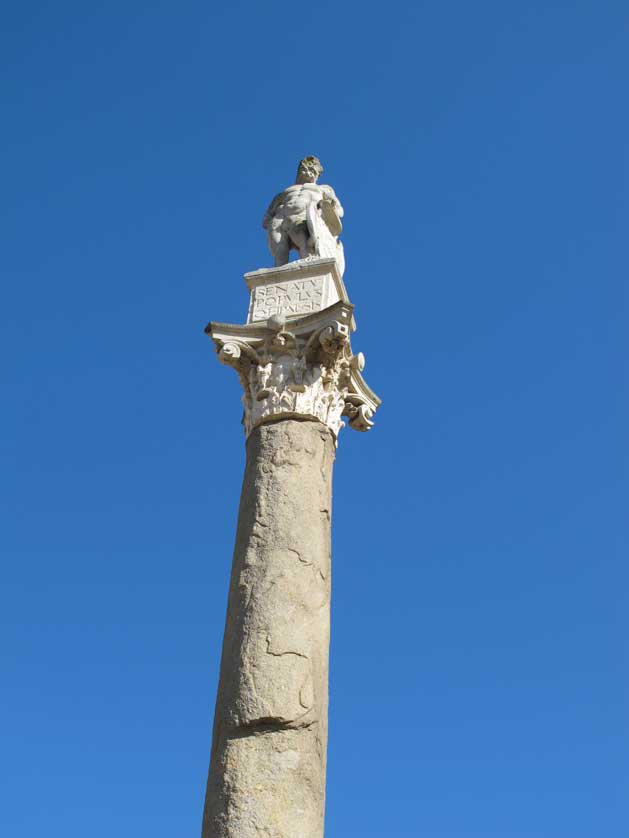
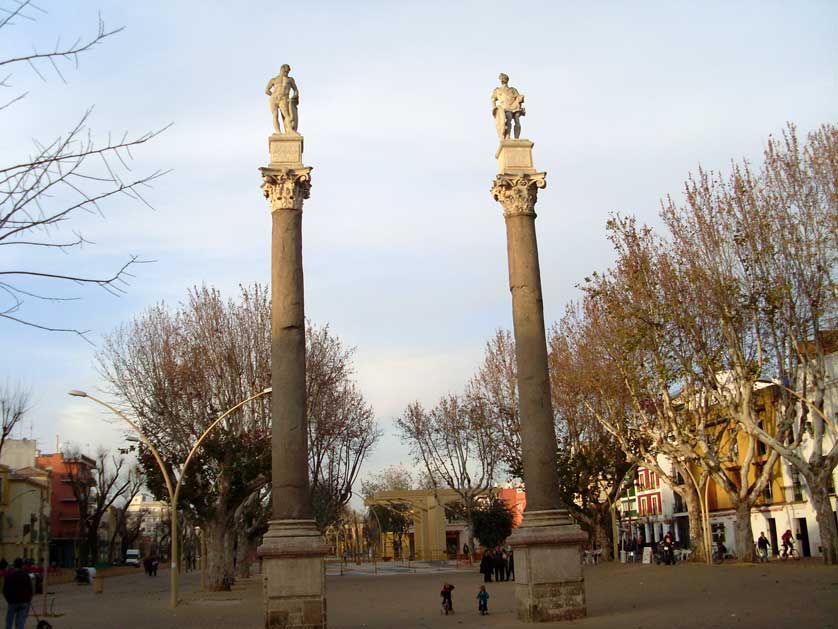
The Alameda de Hércules in Seville is a small, tree-lined boulevard and urban square containing two original Roman columns with statues. The statues are of Hercules and Julius Caesar and were added to the columns later.
The other two statues in the square are more modern reproductions from the 18th century. They have lions with shields on top which represent Seville and Spain.
History
The Alameda area was once a marsh that was drained and converted into a promenade in the 16th century. The two Roman columns were brought from the remains of a Roman temple that once stood at Calle Mármoles.
The boulevard was given its name by King Alfonso X after Hercules (the city's mythological founder).
Once a red light district, nowadays the area is known for its lively, artistic, and alternative, gay-friendly nightlife rather than street walkers and pimps. Numerous bars, cafes, and restaurants with al fresco seating line the plaza and it has become a popular spot for families to stroll, and young people to meet at night among the benches, kiosks and pretty fountains. The area also regularly hosts outdoor performances and flea markets.
Other Attractions in Sevilla
Sevilla is one of Spain's most attractive cities with grand monuments, plazas and churches financed by the gold and silver brought back from Spain's former colonies in Central and South America.
As a result of its Islamic past and leading the way in the plunder of the Americas, the city has much to see and do. Indeed, it is a veritable treasure trove of historical buildings. Must-sees include the UNESCO listed Catedral de Sevilla, La Giralda and the superb Real Alcázar with its beautiful palaces and garden.
Other historical sights are Parque de María Luisa, Plaza de España, part of the Parque de María Luisa, the Iglesia Colegial del Divino Salvador, the Torre del Oro, a piece of the city's defences during the Islamic period as well as the Plaza de Toros de la Maestranza - the city's bull ring.
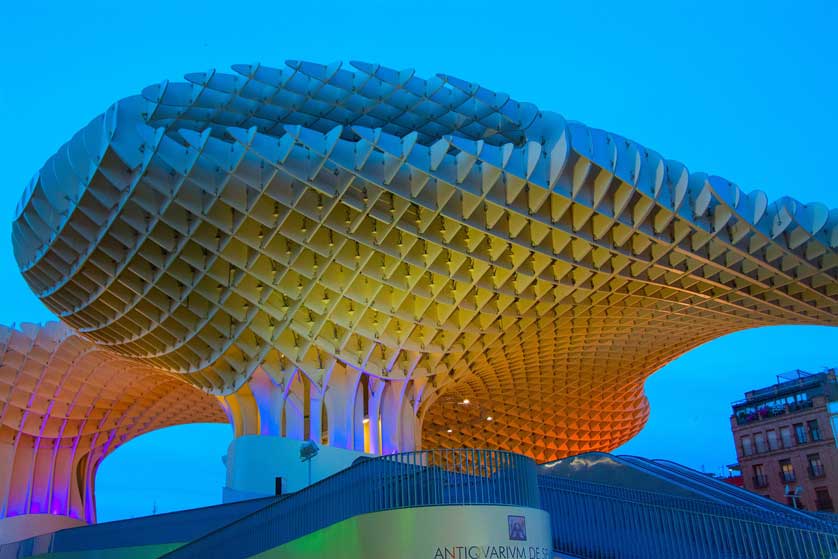
A more modern attraction is the Metropol Parasol aka Las Setas de la Encarnación, which claims to be the largest wooden structure in the world. Designed by German architect, Jürgen Mayer-Hermann and engineered by Arup the structure was completed in 2011 after 6 years in construction.
Football fans should not miss a visit to the city's soccer stadiums the Ramon Sanchez-Pizjuan Stadium, La Cartuja and the Benito Villamarín Stadium - home of Betis.
Access
Alameda de Hércules, s/n, 41002 Sevilla
The square is a 30 minute walk west of Santa Justa Station or take a C2 bus from José Laguillo and get off at Resolana (Barqueta).
Getting around the city is easy either on foot or on the Sevilla Metro.

Accommodation in Sevilla
There is a very wide and abundant range of accommodation available in Sevilla. The following is a recommended selection, listed from high-end to budget.
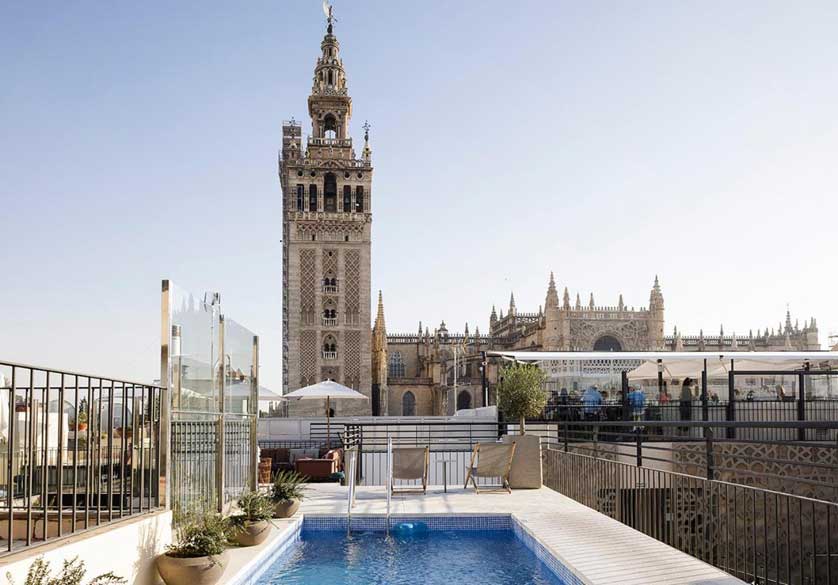
EME Catedral Hotel is located next to Seville Cathedral and only 60 meters from La Giralda which can be seen from the rooftop pool. There is a spa and free Wi-Fi.
The Ayre Hotel Sevilla offers four star accommodation opposite to Seville's Santa Justa Station. Sánchez Pizjuan Stadium is just 600 meters away.
The four-star Hotel Inglaterra overlooks Plaza Nueva and has rooms with classic-style décor, and private balconies a short distance from the cathedral.
Hotel America in Plaza del Duque has rooms with good facilities close to Seville Cathedral and the Giralda.
The Hotel Baco is a more budget option close to El Rinconcillo - the birthplace of tapas and Sevilla's oldest eatery.
Book Hotel Accommodation in Sevilla
Hotels in Sevilla - Booking.com
Maps of Seville
