Real Alcázar, Sevilla (Spain)

The Real Alcázar in Seville with its beautiful palaces and gardens is a must-see along with the city's other UNESCO listed sights, the Catedral de Sevilla and La Giralda.
The palace has been used as a royal residence by various Spanish monarchs throughout its history. The upper levels of the complex are still used by the Spanish royal family for official functions and visits to this day. Indeed, it is the oldest royal palace still in use in Europe today.
History
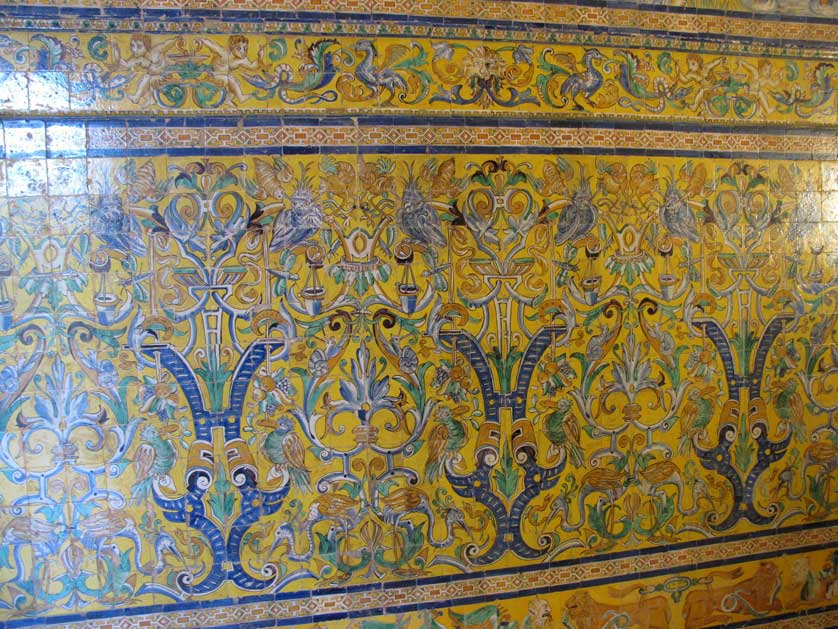
The Alcázar of Seville (Real Alcázar de Sevilla) is a stunning royal palace with lush gardens and intricate tilework, reflecting both Moorish and Christian influences. It was originally constructed as a fortress in the 10th century for the ruling Islamic Caliphs. Over the centuries, it was expanded and transformed, with various rulers leaving their architectural and artistic marks on the complex.
Originally constructed around 913-914 as the Dar al-Imara (Governor's Palace) for Abd al-Rahman III, it was later expanded by Almohad rulers. After the Christian conquest in 1248, kings such as Alfonso X began modifications. Peter of Castile (Pedro I) later built the iconic 14th-century Mudéjar palace, integrating Islamic art with Christian patronage. From the 16th Century on the palace was expanded, hosting major events like Charles V's wedding in 1526. Over centuries, it added Renaissance and Baroque elements, including serving as a government center and evolving into a major tourist site.
Architecture
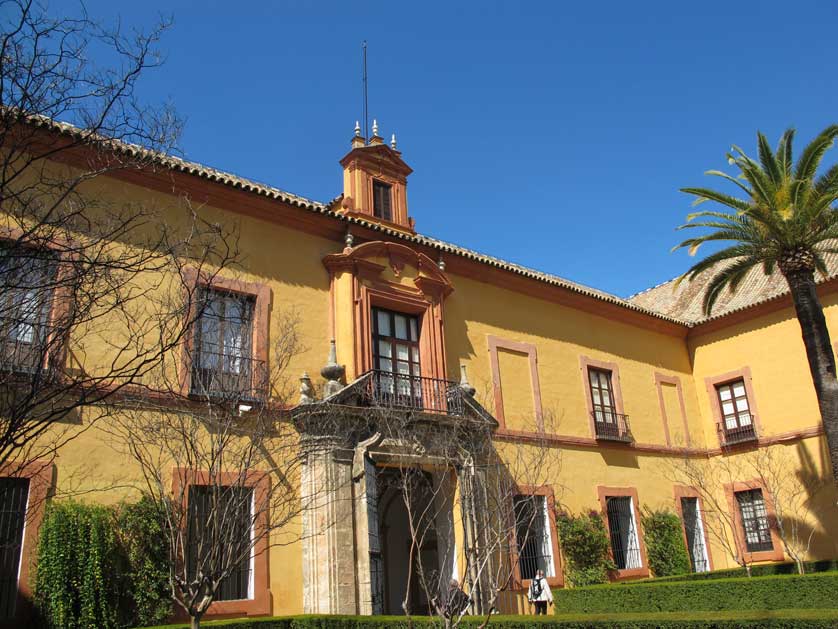
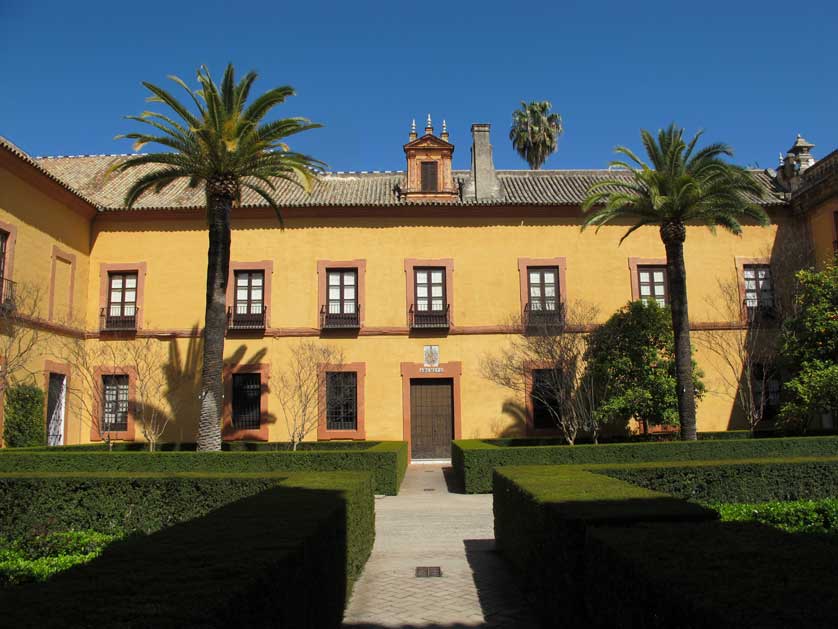
The complex is a remarkable architectural fusion of various styles, including Islamic, Moorish, Gothic, Renaissance, and Baroque. The palace complex features beautiful courtyards, intricate tilework, stucco decoration, making it an exquisite example of Mudejar architecture. Some of its most notable features include the Courtyard of the Maidens, the Hall of Ambassadors, and the Hall of the Catholic Monarchs.
The Courtyard of the Maidens (Patio de las Doncellas) is a central, 14th-century courtyard in the complex with stunning Mudéjar architecture with intricate arches and stucco work. Built for King Pedro I, it features a central reflecting pool, sunken gardens, and a second-floor Renaissance addition. The name refers to a legend claiming Moorish rulers demanded an annual tribute of 100 virgins from Christian kingdoms in Iberia.
The Hall of Ambassadors (Salón de Embajadores) also commissioned by King Pedro is the palace's main throne room and another masterpiece of 14th-century Mudéjar art. It features a spectacular golden, hemispherical wooden dome representing the universe, intricate plasterwork, and a long history of royal receptions and diplomatic ceremonies.
The Hall of the Catholic Monarchs (Sala del Techo de los Reyes Católicos) is a 15th-century space located within the Upper Royal Apartments (Cuarto Real Alto). Added by Ferdinand and Isabella, it is characterized by its ornate ceiling decorated with their symbols: the yoke, sheaf of arrows, and the motto "Tanto monta, monta tanto" (They amount to the same, the same they amount to). In a way it represents the Christianization and expansion of the palace by the monarchs who authorized Columbus's journey to the New World and oversaw the conquest of Granada, establishing unified Christian rule in Spain. It is thus a distinct departure in style from the earlier Islamic-influenced, Mudéjar palace of Pedro I.
Gardens
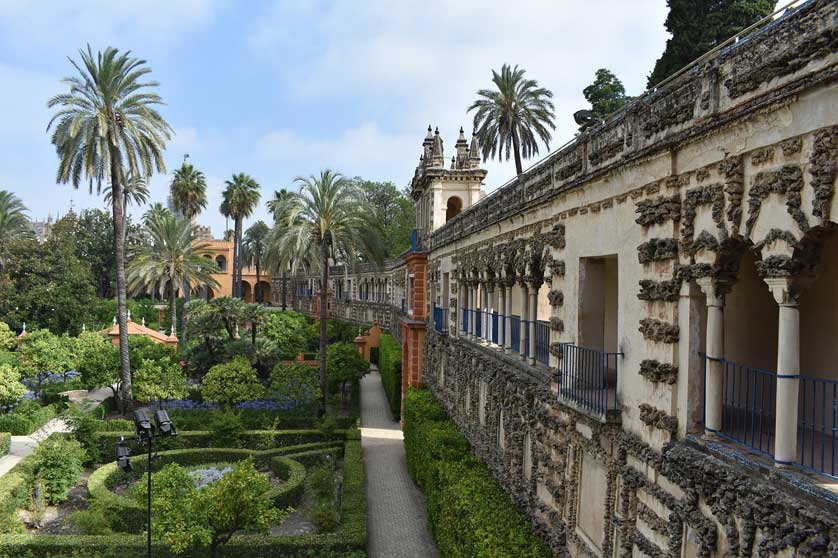
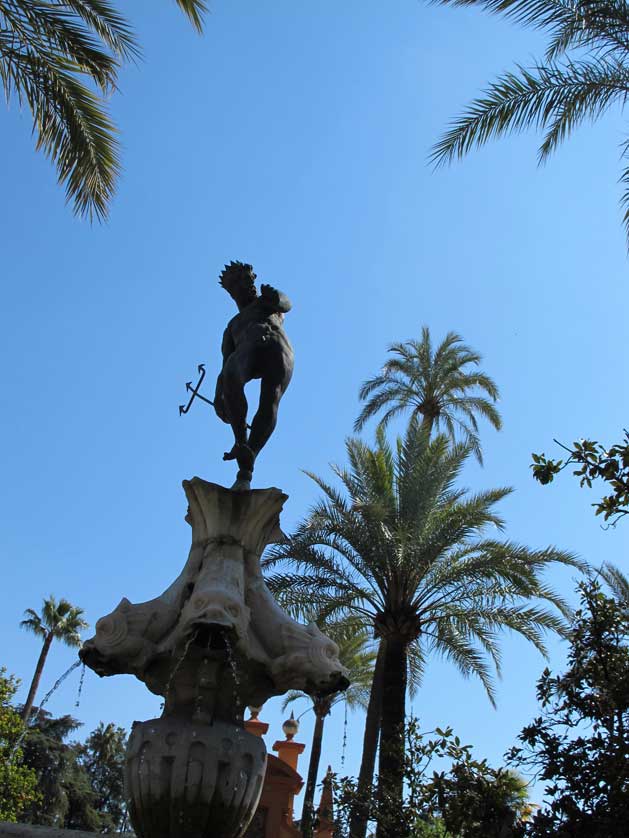
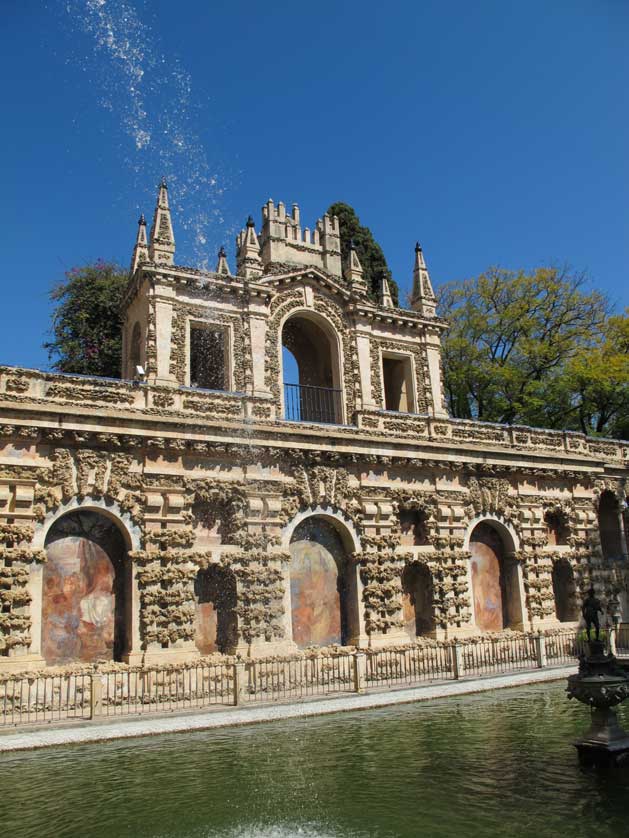
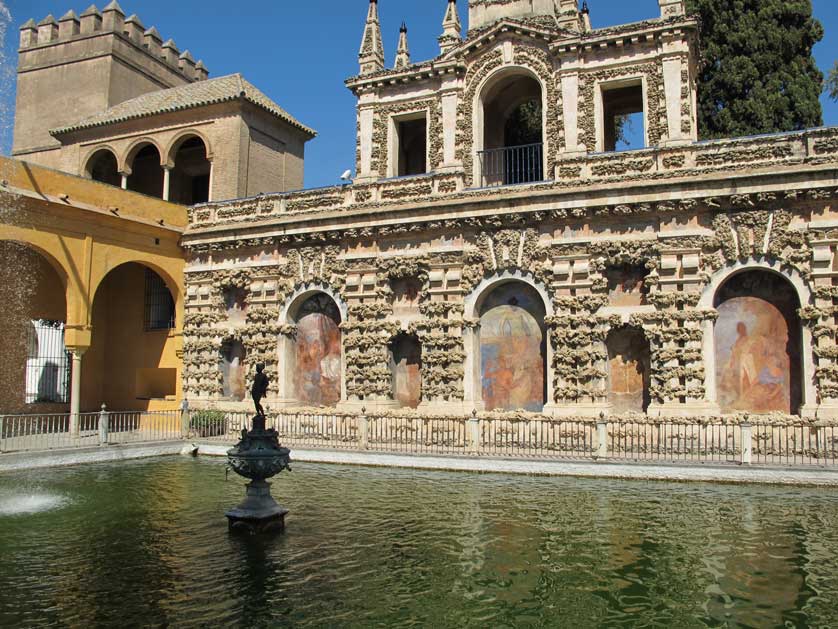
The stunning gardens are divided into different sections, each with its own character and design. The gardens include the Garden of the Poets, the Garden of the Dance, and the Garden of the Princesses, all showcasing a blend of Moorish and Renaissance influences. The Alcázar gardens were used as a filming location for the hit TV series "Game of Thrones." They served as the Water Gardens of Dorne, a fictional palace in the series.
Other Attractions in Sevilla
Sevilla is one of Spain's most attractive cities with grand monuments, plazas and churches financed by the gold and silver brought back from Spain's former colonies in Central and South America.
As a result of its Islamic past and leading the way in the plunder of the Americas, the city has much to see and do. Indeed, it is a veritable treasure trove of historical buildings.
Other historical sights are the Roman Alameda de Hércules, the Parque de María Luisa, Plaza de España, part of the Parque de María Luisa, the Iglesia Colegial del Divino Salvador, the Torre del Oro, a piece of the city's defences during the Islamic period as well as the Plaza de Toros de la Maestranza - the city's bull ring.
A more modern attraction is the Metropol Parasol aka Las Setas de la Encarnación, which claims to be the largest wooden structure in the world. Designed by German architect, Jürgen Mayer-Hermann and engineered by Arup the structure was completed in 2011 after 6 years in construction.
Football fans should not miss a visit to the city's soccer stadiums the Ramon Sanchez-Pizjuan Stadium, La Cartuja and the Benito Villamarín Stadium - home of Betis.
Access
Patio de Banderas, s/n, 41004 Sevilla
The palace is a 30 minute walk south west of Santa Justa Station or take a 28 bus to Avda. Carlos V and walk a few minutes or alternatively a 21 to Menéndez Pelayo (Juzgados) or an EA bus to Prado San Sebastián.
Getting around the city is easy either on foot or on the Sevilla Metro. The nearest metro stations to the palace are Prado de San Sebastián and Puerta Jerez.

Accommodation in Sevilla
There is a very wide and abundant range of accommodation available in Sevilla. The following is a recommended selection, listed from high-end to budget.
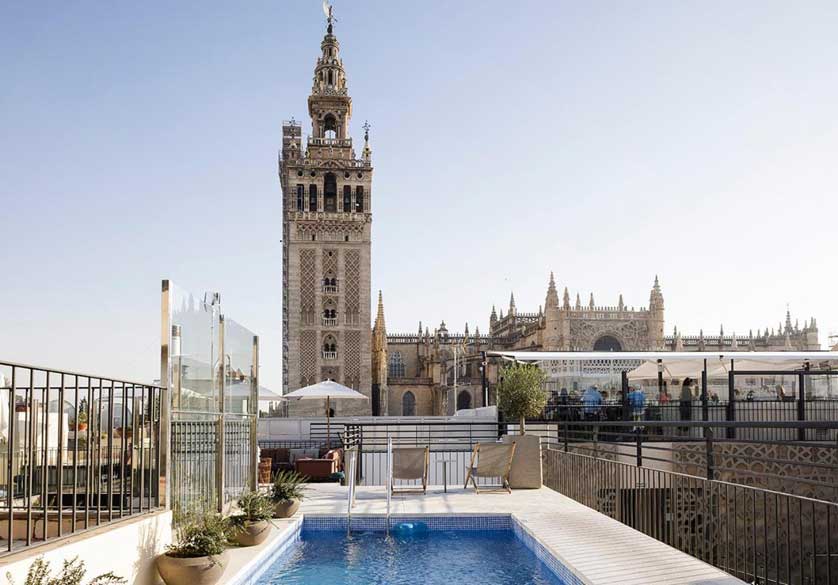
EME Catedral Hotel is located next to Seville Cathedral and only 60 meters from La Giralda which can be seen from the rooftop pool. There is a spa and free Wi-Fi.
The Ayre Hotel Sevilla offers four star accommodation opposite to Seville's Santa Justa Station. Sánchez Pizjuan Stadium is just 600 meters away.
The four-star Hotel Inglaterra overlooks Plaza Nueva and has rooms with classic-style décor, and private balconies a short distance from the cathedral.
Hotel America in Plaza del Duque has rooms with good facilities close to Seville Cathedral and the Giralda.
The Hotel Baco is a more budget option close to El Rinconcillo - the birthplace of tapas and Sevilla's oldest eatery.
Book Hotel Accommodation in Sevilla
Hotels in Sevilla - Booking.com
Maps of Seville
