Churches in Evora
The UNESCO World Heritage Listed city of Evora has many beautiful and historic churches.
See a listing of churches in Evora in the Alentejo region of eastern Portugal.
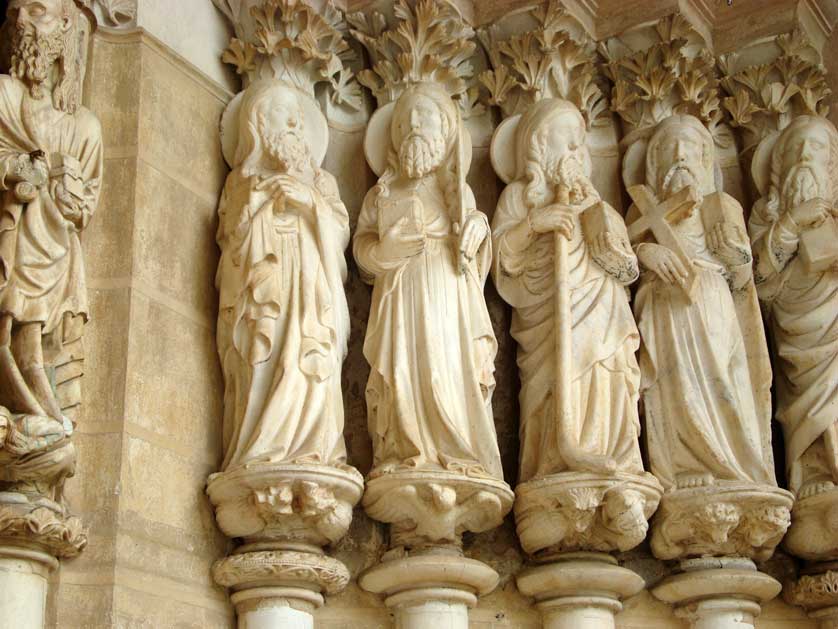
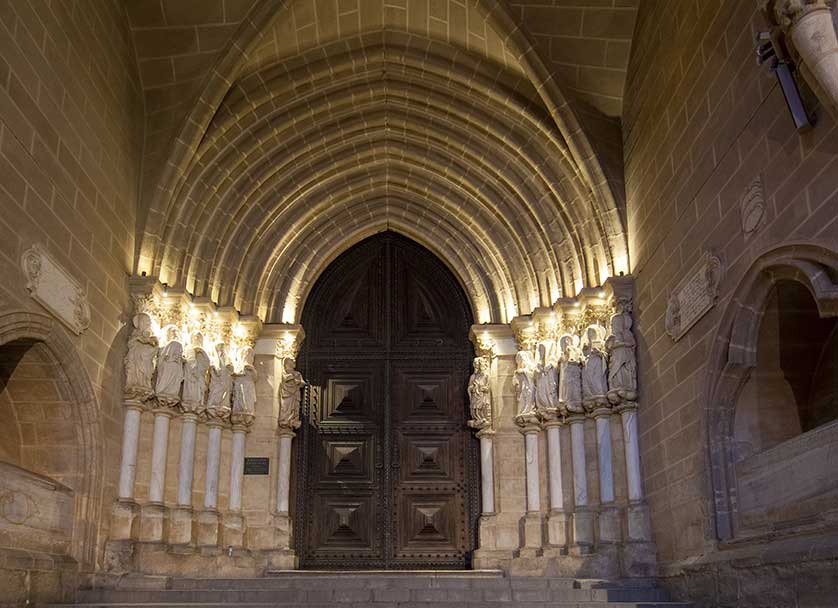
Evora Cathedral
The ornate, fortress-like Sé (Cathedral) on Largo do Marques de Marialva in the center of Evora is one of the most impressive churches in Portugal.
Begun at the end of the 12th century, Evora Cathedral has some splendid Gothic additions such as the chancel and the cloister. The interior is beautifully lit with the light from two rose windows.
The granite church stands on the highest point in Evora and the exterior of the building is reminiscent of Lisbon's Cathedral. The church has an interesting sacred art museum full of jeweled, religious artifacts in the south tower, including a gorgeous, gem-encrusted reliquary purportedly containing slivers of Christ's Cross.


Igreja de Sao Francisco
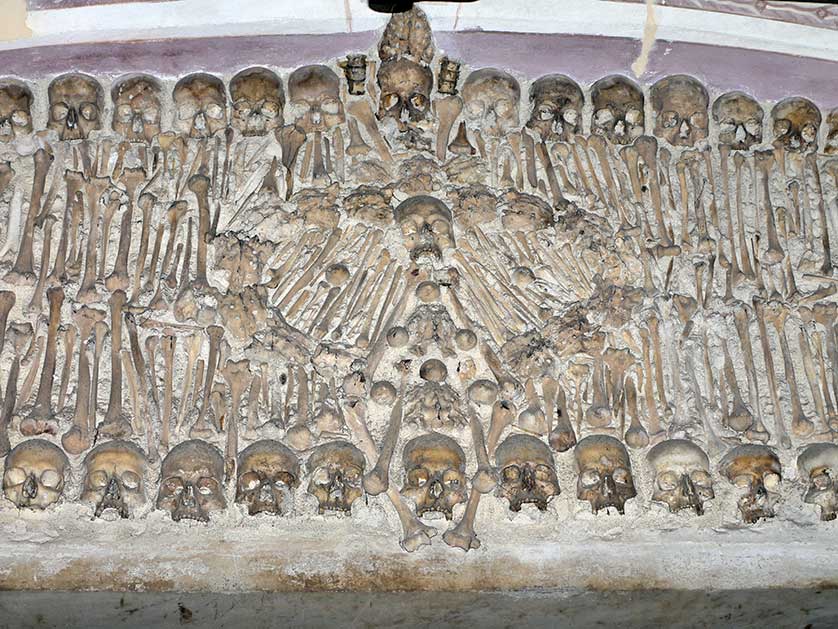
One of the most unusual sights in Evora is the Igreja de São Francisco and its macabre Capela dos Ossos (Chapel of Bones).
The huge Gothic/Manueline church of São Francisco (Church of St. Francis) dates from the early 16th century and has a large and ornate cloister lined with blue and white azulejos tiles.
The Capela dos Ossos (Chapel of Bones) is a small chapel covered with the bones of around 5,000 people to serve as a reminder of the brevity of life and the certainty of death. The bones and skulls are arranged in an intricate pattern complete with two desiccated corpses (one of which is a child) hanging from the walls. The bones were collected here from 42 overflowing monastic cemeteries, which were taking up valuable space in the small town, and are held in place on the chapel walls by cement.
Above the entrance to the chapel is the immortal inscription: "Nos ossos que aqui estamos pelos vossos esperamos," roughly translated as "Our bones await yours."
The entrance to the chapel is to the right of the main entrance and a small admission charge is levied. Recent additions to the church include exhibitions of religious art and also an amazing collection of nativity scenes from around the world.
There is a similar Chapel of Bones at the Igreja do Carmo in Faro in the Algarve, southern Portugal.
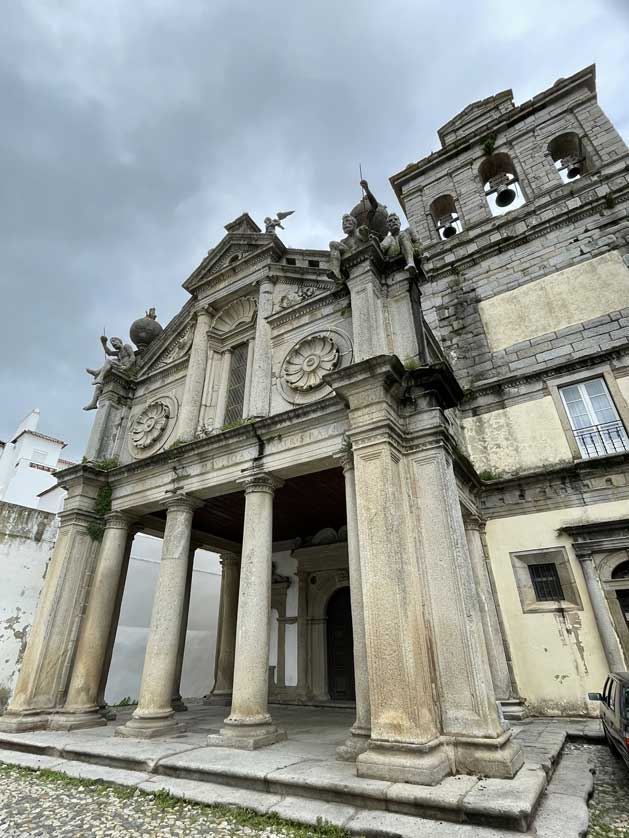
Igreja da Nossa Senhora da Graça
The Igreja da Nossa Senhora da Graça is noted for its 16th-century facade. Four huge stone figures of Atlas adorn the building, which is only viewable from outside. In Greek mythology, Atlas was a Titan who supported the heavens. The church was founded in 1511 and was designed by the architect Miguel de Arruda. Following the dissolution of Portugal's monasteries in the 19th century, the building fell into disrepair.
It was restored in the 20th century and the structure is now used by the Portuguese military. The building to the right of the church is now the Officers' Mess of the Évora garrison. The church itself serves as the Chaplaincy of the Southern Military Region.

Igreja do Espírito Santo
The Igreja do Espírito Santo, an early Jesuit church was completed in 1574. The exterior has seven granite arches, while the spacious interior has ten side chapels. The church has connections with the nearby University of Evora.
Interestingly, the transcept has an empty tomb chest constructed for Dom Henrique, the first king of Portugal. Henrique, however, is buried in the Mosteiro dos Jerónimos in Belem, Lisbon.
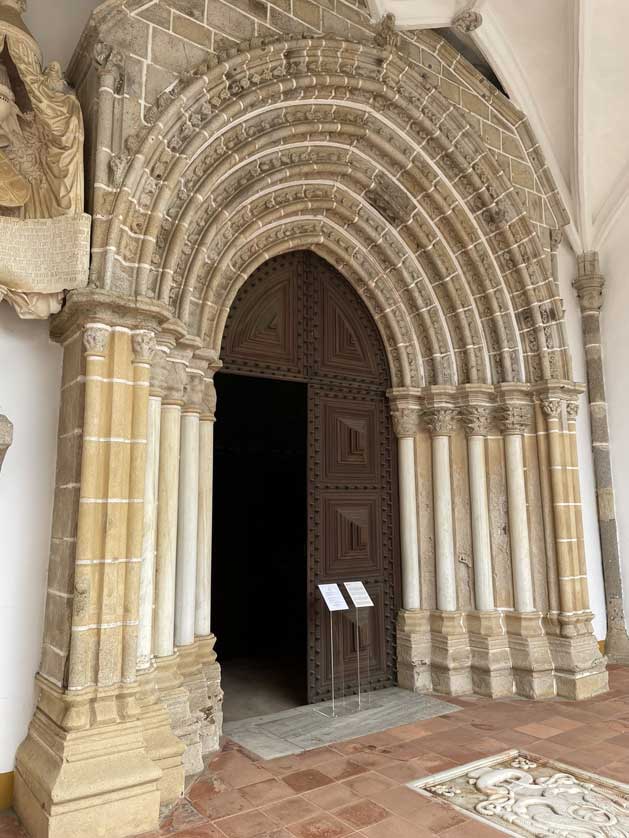
Igreja de São João Evangelista
The Igreja de São João Evangelista (aka Igreja dos Lóios) dates from 1485 and is one of the most beautiful churches in the city. It is directly opposite the ancient Templo Romano.
The church was originally part of the Convento dos Lóios which is now the Pousada Convento de Evora. The convent was built on the site of a previous Moorish castle that was badly damaged in the devastating Earthquake of 1755.
Enter the church through the magnificent Gothic portal to discover some amazing gilded wood carving and azulejo tile panels within.
The azulejos depict scenes from the life of St Lawrence Justinian (1381-1456), the first Patriarch of Venice. They date from 1711 and are by the master António de Oliveira.
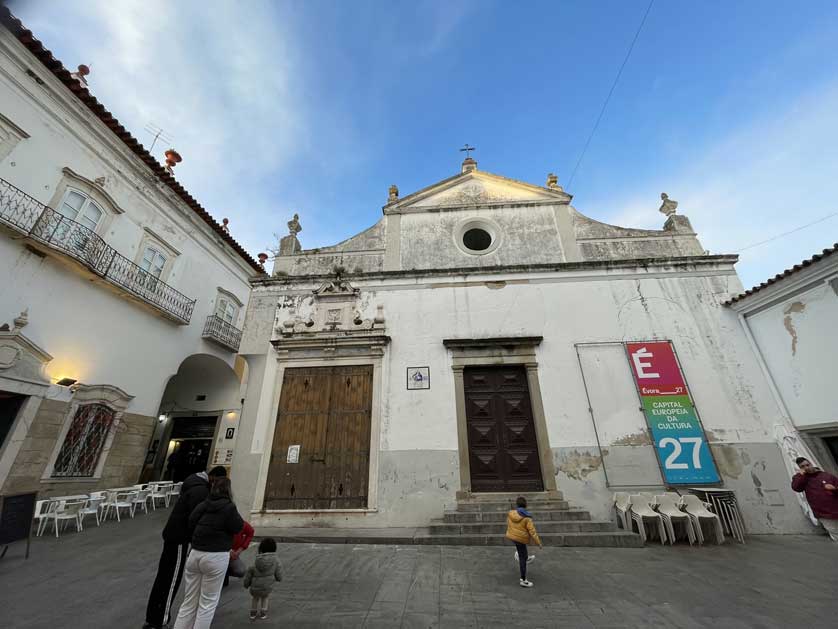
Igreja de São Vicente
The small Igreja de São Vicente dates from 1560. The former church has three naves divided by robust granite pillars, supporting a hemispherical dome, with special emphasis on the altarpiece of the main altar and the Chapel of Our Lady of Victory.
São Vicente is associated with the legend of the Martyrs of Évora, saints Vincent, Sabina and Cristeta martyred in the Roman persecutions of Christians in Évora during the 4th century. In the presbytery there is a stone where, according to tradition, the footprint of the martyr Saint Vincent is preserved. The side walls of the main chapel are whitewashed and have no decoration.
The building is no longer a functioning church. It is now used as an exhibition space and also hosts other cultural activities. Entrance is free.

Igreja de Santo Antão
The Igreja de Santo Antão stands at the northern end of the Praça do Giraldo. Construction of the Renaissance-style church began in 1557. It has three naves and some spectacular internal decoration including gilded altars, paintings and marble work. In front of the church is a marble fountain, Chafariz da Praça do Giraldo with eight spouts symbolizing the eight main streets that radiate out from the square. The fountain is the work of architect Afonso Álvares and was built in 1571 in white marble topped with a bronze crown..

Igreja de São Tiago
The dates originally from 1550 though it was rebuilt in 1680. However the church still retains some remains from the Manueline era, such as the battlements still visible in the south wing of the church.
The interior, with a single nave, is richly decorated in the style of the Baroque era. The vault is covered in fresco paintings, while the side walls are decorated with tile panels representing biblical scenes by the famous ceramicist Gabriel del Barco.

Igreja da Misericórdia
The Igreja da Misericórdia was built in the 16th century as part of the charitable organization "Santa Casa da Misericórdia," which was established to provide social and medical assistance to the poor and sick. The plain exterior hides a treasure house of Baroque riches within. This dichotomy symbolizes the enhancement of the soul (the interior) as opposed to the body (the exterior).
The superb azulejo tiles are by António de Oliveira Bernardes, the master artist who was also responsible for the tile work in the Igreja de São João Evangelista. The gilded woodwork is by João Correia. The superb altarpiece is also of note as are the many paintings within the church by such artists as José Xavier de Castro and Francisco Lopes Mendes.
Hotels
Places to stay in Evora include the luxury Convento do Espinheiro, located in a restored 15th-century convent and surrounded by beautiful gardens. Other recommended places to stay include the five-star M'AR De AR Aqueduto, housed in a 16th century palace and the four star Vitoria Stone Hotel with pool.
See here for a full listing of accommodation in the Alentejo region of Portugal.