Churches in Braga
The city of Braga, in the Minho region of north west Portugal, north of Porto, is known as the "Rome of Portugal" due to its rich ecclesiastical heritage.
There are many churches, convents and monasteries in and around the city of historical importance. Indeed, there are over 30 churches in this northern city of around 190,000 people.
These include the important pilgrimage site of Bom Jesus do Monte just 5 km outside the city and the spectacular Sé de Braga (Braga Cathedral).

Mosteiro de Tibães
The Mosteiro de Tibães is the oldest Benedictine monastery in Portugal. It is set in verdant, fertile grounds with an unbelievably ornate chapel. Highlights are the beautiful cloisters, azulejos, gardens and vineyards and the monk's quarters.

Bom Jesus do Monte
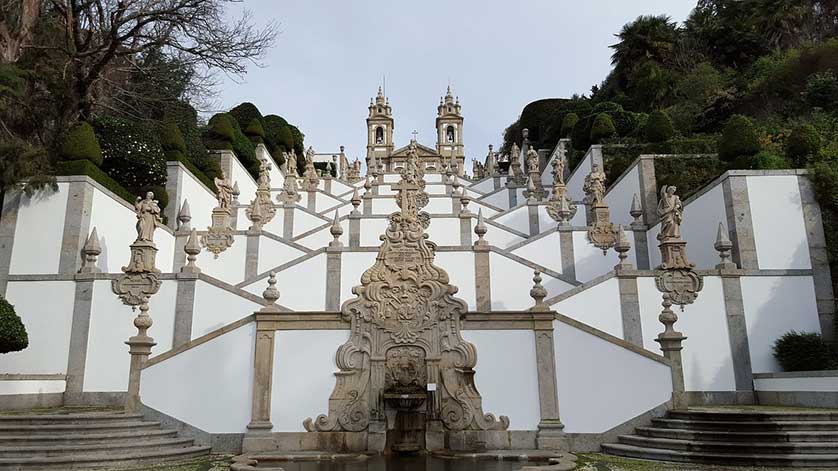
Bom Jesus do Monte, 5 km east from the center of Braga is still an important pilgrimage site and is the city's number one tourist destination. A plain neoclassical church stands on top of a wooded hill that is reached by the superb zig-zagging Baroque staircase, done in granite with a white façade, the Escadaria do Bom Jesus. There are superb views including the sunset from the terrace at the top.

Santuário do Sameiro
The Santuário do Sameiro is another pilgrimage site close to Bom Jesus do Monte, around 5 km east from the center of Braga.
The huge white-domed church is 1.5 km by road from the bottom of the staircase leading up to Bom Jesus or a 20-minute walk through the pine woods at the top.
Santuário do Sameiro was built in the 19th century and has become an important place of Marian pilgrimage, second only behind Fatima.
Building began in 1863, the inspiration of the local priest Martinho da Silva. However the structure was badly damaged during a storm which caused a fire in 1883 and had to be rebuilt.
The building was finally completed in 1904 and attracted a huge crowd of half a million people to its official opening.
The huge dome was added later in the 1930's and topped with a massive cross in the 1940's.
Pope John Paul II visited in 1982.
Sé de Braga
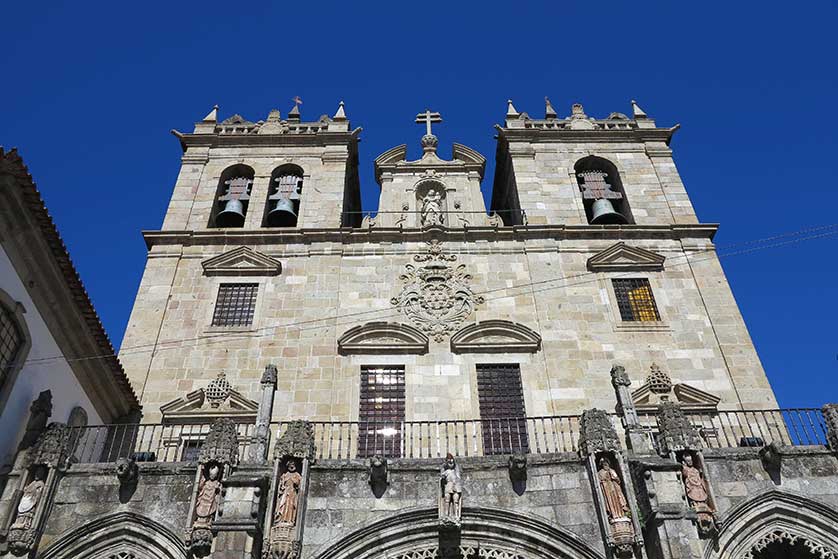
The Sé de Braga (Braga Cathedral) is the seat of the Archdiocese of Braga. The archbishop of Braga is the primate of all Portugal, somewhat equivalent to the archbishop of Canterbury in England.
Braga Cathedral is the oldest cathedral in Portugal and one of the oldest cathedrals on the Iberian Peninsula.
The twin-towered building originally dates from the 11th century and is a mix of different architectural styles as renovation and rebuilding took place over the succeeding centuries.
The first Diocese of Braga dates back to the Roman period in the 3rd century AD. After the end of the Roman Empire, the invading Suevi tribes were converted to Christianity by Saint Martin of Braga in the 6th century. Martin was to become an early archbishop of Braga.
The importance of the diocese declined under the Visigoths and disappeared altogether with the arrival of the Moors.
It was only in 1071 after the expulsion of the Muslims that a new cathedral was begun over what was once a mosque and possibly a Roman temple before that. Only the Romanesque main door and the Western façade, with its gargoyles and sculptured figures of the medieval legend of Raynard the Fox, survives from this period. The twin towers of cathedral were added later above this portal in the 18th century.

Igreja de São Paulo
The Igreja de São Paulo (Church of St. Paul) is a Jesuit church dating from 1589.
The austere, granite facade hides a superb, decorative interior with the altars masterpieces of gilded woodwork by such master sculptors as Thomas de Araújo, Francisco Ferreira and Luis Vieira da Cruz.
The church has a single nave with seven side chapels dedicated to Mary, Joseph, John the Baptist, Francis Xavier and other saints. The decorative work on the interior continued during the 17th and 18th centuries with beautiful blue and white azulejos tiles from Lisbon also added to the church.
Igreja de São João do Souto
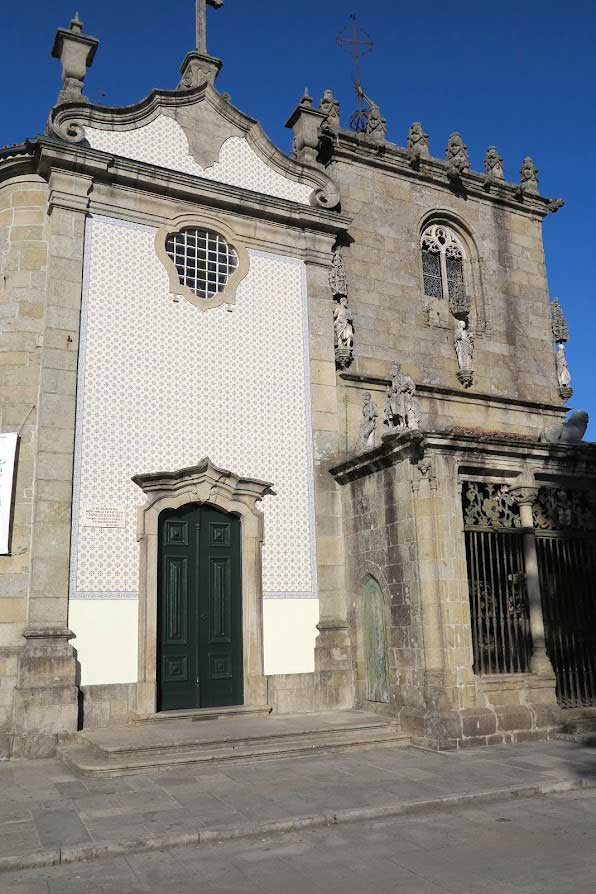
The Church of São João do Souto dates from the end of the 18th century, though a church has stood here since the 12th century. The philosopher and physician Francisco Sanches (c.1550-1623) was baptized in the church, according to a plaque on the church wall. The current church was built by Archbishop D. Gaspar de Bragança and is connected to the Coimbras Chapel. The patron saint of the church is S. João Baptista and it was here that what are now the great Festivals of São João de Braga began.
Igreja de Santa Cruz
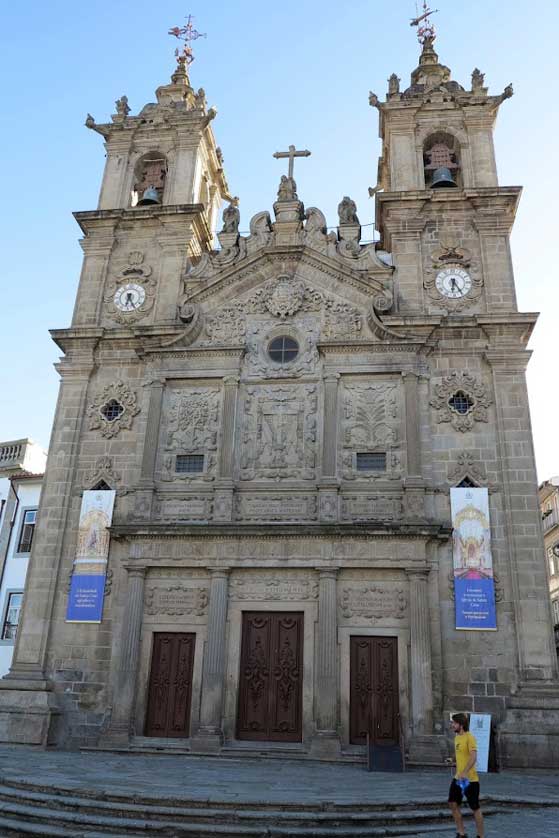
The Igreja de Santa Cruz (Church of the Holy Cross) in Largo Carlos Amarante dates from the 17th century. The exterior is entirely made of carved stone with central symmetry. The interior of the church was designed by Frei José de Santo António Vilaça. Of note are the gilded carving of the organ and pulpits in the interior of the church.

Igreja de São Marcos
The Igreja de São Marcos dates from the 18th century and was designed by architect Carlos Amarante. The church stands in a square named after him - the Largo Carlos Amarante. On the façade of the church is a statue of Saint Mark, patron saint of the church who was bishop of the Eastern Orthodox Church at the time of Emperor Constantine. Relics from the body of the saint lie within the church. Life-size statues of the apostles also adorn the impressive façade. The Igreja de São Marcos stands on the site of a hospital built by Diogo de Sousa (c. 1461-1532), an Archbishop of Braga, for the poor and also for pilgrims visiting the city. The building is now the property of the Santa Casa da Misericórdia de Braga.
Igreja de Santiago da Cividade
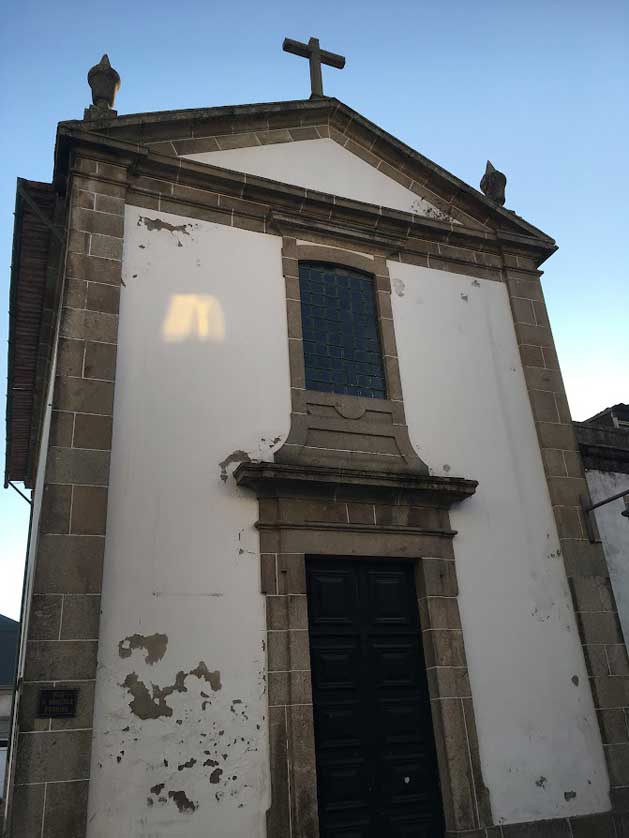
The present Igreja de Santiago da Cividade stands on the site of a much older church, possibly Romanesque, in Largo de São Paulo. It consists of a single nave, with a side chapel and a chancel. The most notable thing inside is the chapel of the Santíssimas Chagas, built in 1597. The structure as a whole was remodeled in the last decade of the 18th century.

Capela de Nossa Senhora da Torre
The historic Capela de Nossa Senhora da Torre in Largo de São Paulo stands near the Arco de Santiago an entrance to the city from the south. The church is the work of André Soares and was built to give thanks to the Virgin Mary for the city surviving the Lisbon Earthquake of 1755 largely unscathed. The tower is part of the nearby Pius XII Museum and its five floors document the history of Braga. There are great views of the city from the top floor.
