Churches in Guimarães
The lovely city of Guimarães, parts of which are designated a UNESCO World Heritage Listed Site has several beautiful and historic churches.
See a listing of churches in Guimarães.
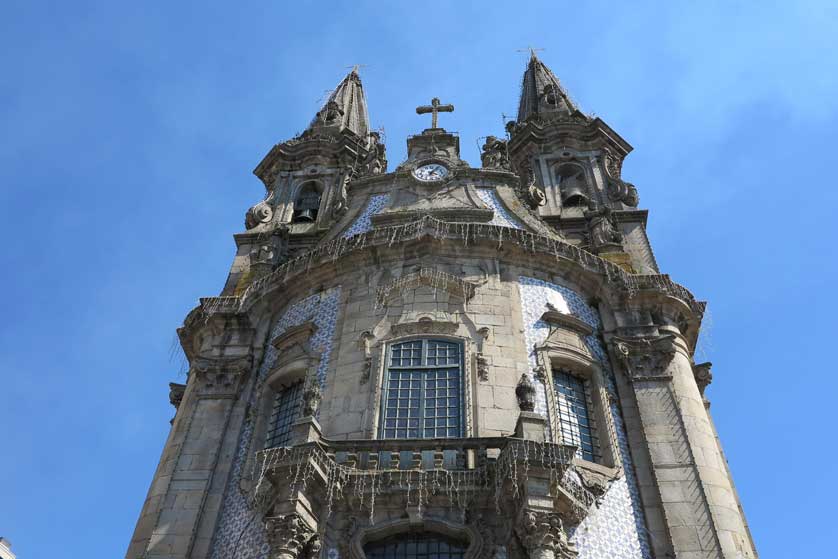
Igreja do Senhor dos Passos
The origins of the Igreja do Senhor dos Passos go back to a small chapel, dedicated to Nossa Senhora da Consolação, built in 1576. The Baroque church we see today dates from 1785 with the design by architect Andrés Soares. The façade of the church is lined with azulejos tile panels. The pleasant square outside the church, Jardim do Largo da República do Brasil, consists of lawns, flower beds and clipped, boxed hedges.

Igreja de Nossa Senhora da Oliveira
The Igreja de Nossa Senhora da Oliveira's origins go back to a Benedictine monastery founded on the site in 949 by Countess Mumadona Dias. In the 12th century the building had a Romanesque makeover but little remains from this period except for a chancel preserved in the adjacent Alberto Sampaio Museum. The church was again renewed in the 14th century, this time in Gothic style, to give thanks for the Portuguese victory over Castile at the Battle of Aljubarrota in 1342. The church is dedicated to the Virgin Mary represented in the church's name - the "Lady of the Olive Tree." The church's bell tower, which dates from 1513 is Manueline in its design. In the 17th century the main chapel was enlarged by Dom Pedro II (1648-1706). Just outside the church is the Padrão do Salado, built in the 14th century to celebrate a famous victory over the Moors by combined Spanish and Portuguese armies.

Church of São Miguel do Castelo
The medieval Church of São Miguel do Castelo is within the grounds that encompass Guimarães Castle and the Palace of the Dukes of Braganza (Paço dos Duques de Bragança). This small, squat Romanesque chapel, with little decoration, is of particular importance in the history of Portugal - if (and it is a big if) the legend that the infant Afonso Henriques was baptized here is, in fact, true. Plaques within the church proclaim that this was indeed the case but the historical evidence would seem to prove otherwise.

Igreja de Nossa Senhora do Carmo
The Igreja de Nossa Senhora do Carmo dates from the late 17th century with construction beginning in 1685. The church was dedicated to Saint Teresa, a Spanish Carmelite nun, active as a reformer in the 16th century. The main altar however is dedicated to Nossa Senhora do Carmo (Our Lady of Mount Carmel), the name for the Virgin Mary as the patroness of the Carmelite Order. This gives this small but beautiful, Baroque church its name. The body of the church is divided from the chancel by a stone arch, and is enriched by two side altars: that of the Gospel, dedicated to Saint Anne and of the Epistle, Nossa Senhora do Carmo. In the old choir reached by a set of stairs there is yet another altar, dedicated to the Crucified Christ. With the official dissolution of the religious orders in Portugal in the 1830's, the Church and the Convent passed into the possession of the State, and the building was for a time used as a military hospital. From 1862, the building began to house the current Lar de Santa Estefânia, a lay Christian movement.
Capela de Santa Cruz
The small Capela de Santa Cruz is situated close to Guimarães Castle, on the old Rua de Santa Cruz. It was built in the 17th century on a rectangular plan with a single nave preceded by a porch and chancel.
Igreja de São Dâmaso
The Igreja de São Dâmaso is north of the castle. It was built during the 17th and 18th centuries. The chancel has a notable gilded altarpiece by the Portuguese sculptor Pedro Coelho. The church also has some beautiful, interior azulejos tile panels.
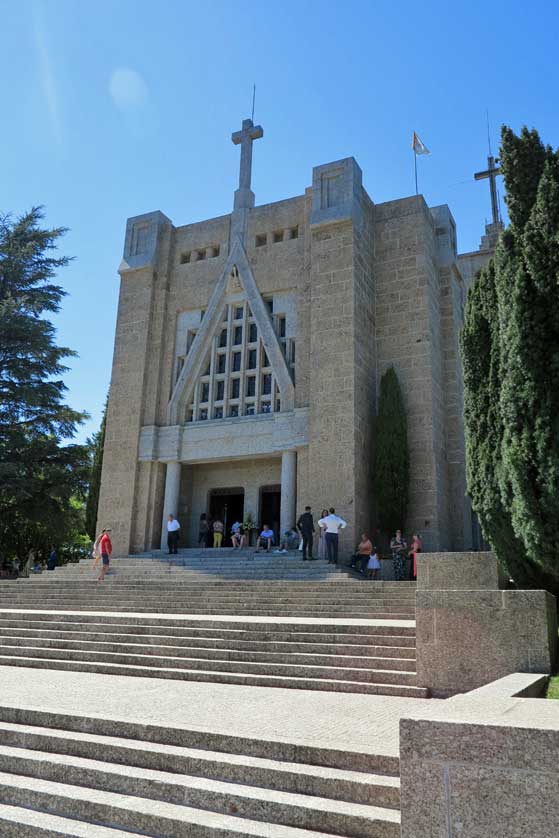
Santuário da Penha
The Santuário da Penha located on the summit of Mt. Penha is dedicated to Nossa Senhora do Carmo de Penha. Work began on construction in 1930 but was not completed until 1947. The rather austere church is the work of the Porto-based architect José Marques da Silva (1869-1947) who also designed São Bento Station, the São João National Theatre and the Serralves House and Gardens all in his home city.

Convento de Santo António dos Capuchos
The Convento de Santo António dos Capuchos is a 17th century convent that was purchased in 1842 by the Santa Casa da Misericórdia do Porto. This was founded in 1498 by D. Manuel I and Queen Leonor and continues to provide public charity and social assistance to the people of Portugal into the modern era. The larger parts of the original building still function as a hospital. The part of the Convento de Santo António dos Capuchos open to visitors includes the beautiful 17th century sacristy, as well as several cloisters and courtyards. Also on display are religious paintings as well as frequent temporary collections of more contemporary art.
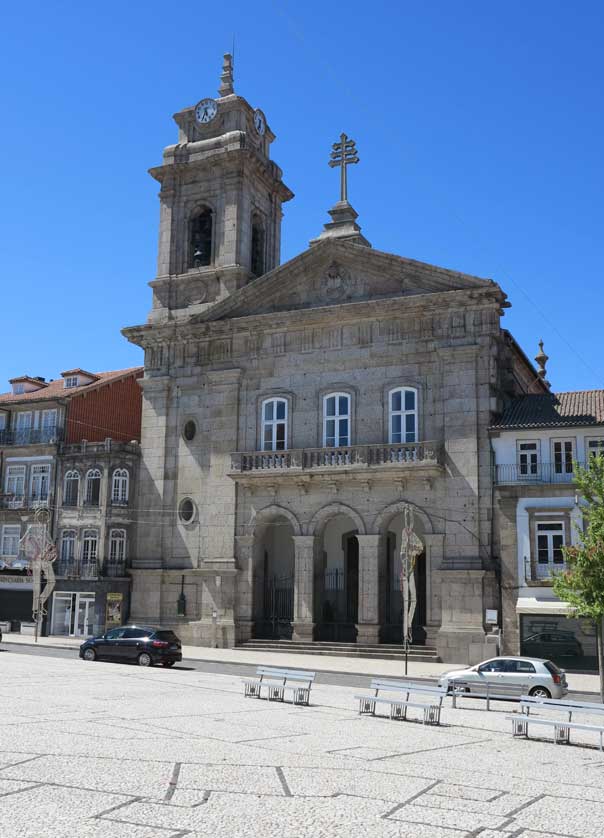
St. Peter's Basilica
St. Peter's Basilica (Basílica de São Pedro) is located in Largo do Toural. Neoclassical in design, the church originally dates back to the 17th century, though the church we see today dates from the 18th century. The church was occupied by French troops during the Peninsular War and used as a stable. Only one of the two planned towers was ever built.
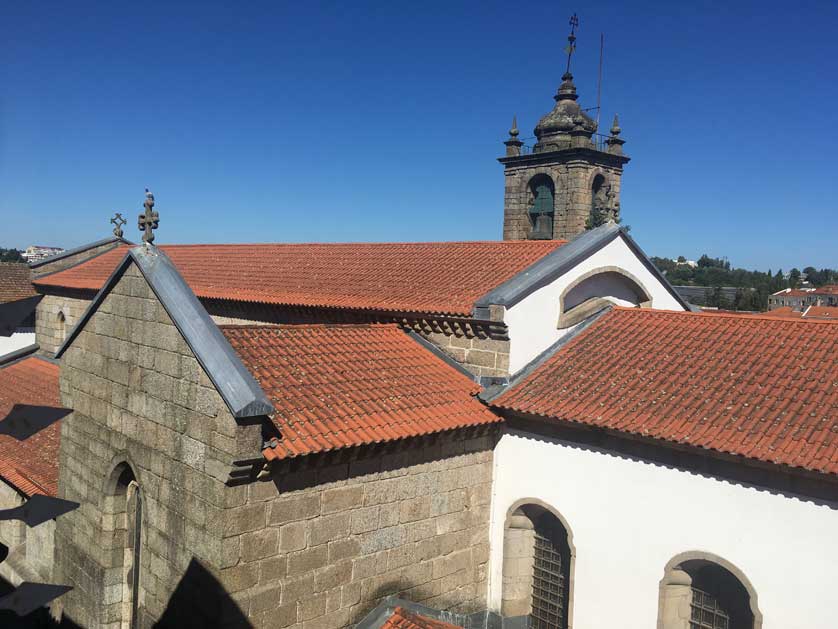

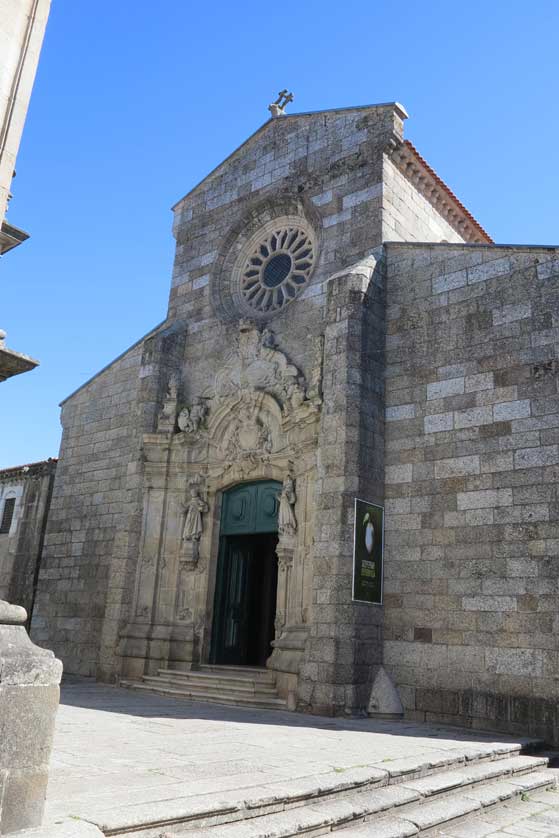
Convento de São Domingos
The Convento de São Domingos is located close to Largo do Toural and the Museu da Sociedade Martins Sarmento. The church has a long history dating back to the 14th century and before, though the present church has alterations and restorations made after that particularly in the 19th and 20th centuries. The church has elements of Romanesque, Gothic and Baroque architecture. The cloister which now forms part of the Museu da Sociedade Martins Sarmento is particularly beautiful.
Igreja de São Francisco
The Igreja de São Francisco dates from the very beginning of the 15th century. The Franciscan church and convent was sponsored by D. João I. The interior is full of treasures including tile panels dedicated to Santo António, the cloister and the main altarpiece, designed by Miguel Francisco da Silva, and painted by Manuel da Costa Andrade.
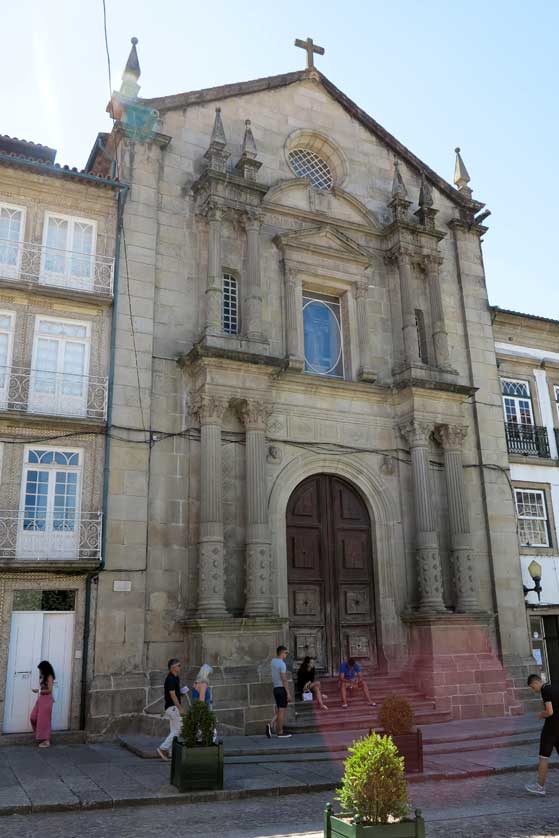
Igreja da Misericórdia
The Igreja da Misericórdia was inaugurated in 1606 after eight years in construction. Within is a single nave and rectangular chancel. The main altarpiece, organ and the 18th century pulpits are highlights.
Hotels
Hotels in Guimarães include the four star Santa Luzia ArtHotel, the four star EMAJ Boutique Hotel and the Hotel do Carmo, also four star.
Other hotels in Guimarães are the four star Hotel de Guimarães and the pleasant Stay Hotel Guimarães Centro, adjacent to Guimarães Station. The budget HI Hostel Guimarães - Pousada de Juventude is also in this area.