Acueducto de San Lázaro & Termas de San Lázaro, Mérida
San Lázaro Aqueduct (Extremadura, Spain)

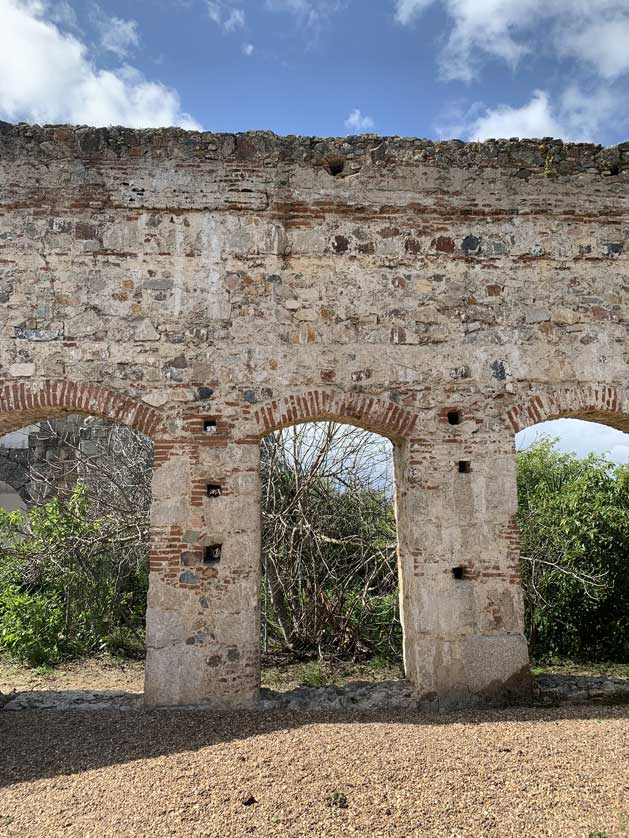
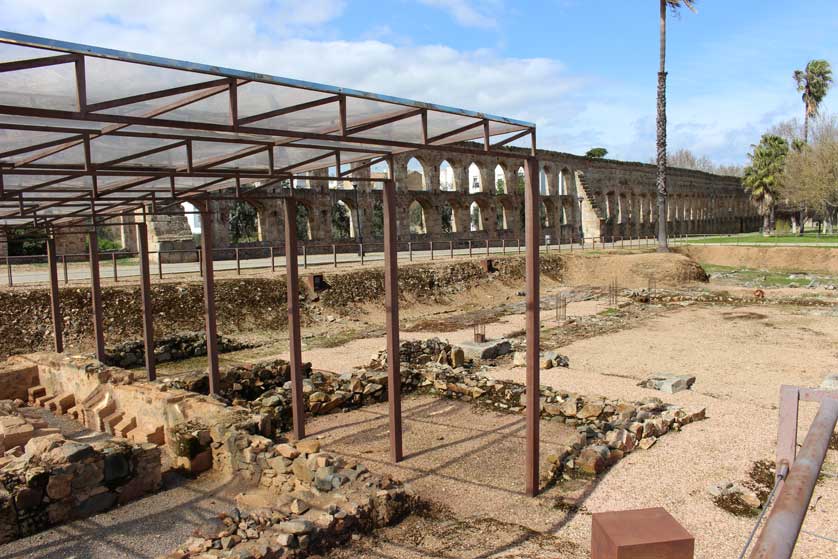
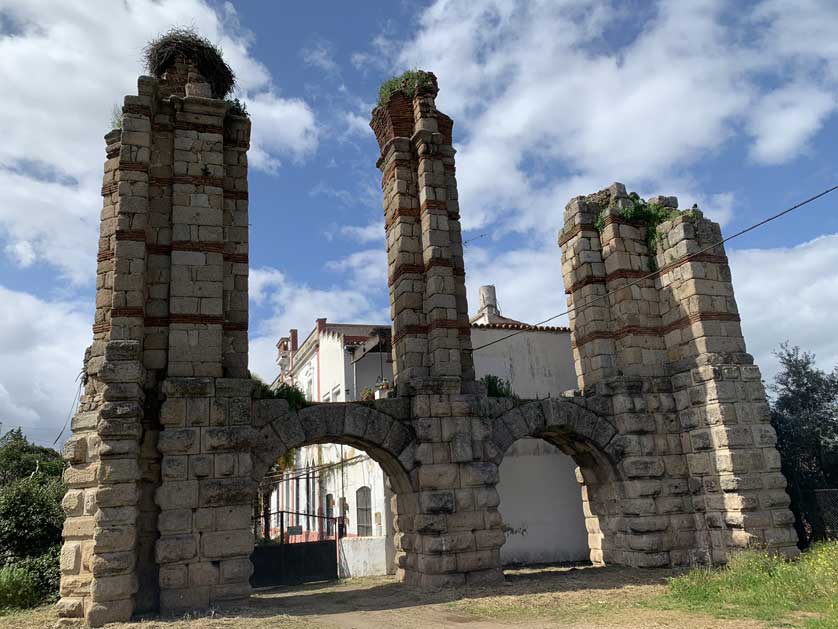
The San Lázaro Aqueduct (Acueducto de San Lázaro) in Mérida is the remains of a 1st century Roman aqueduct. Only a few sections remain as it was rebuilt in the 16th century. Nearby are the Termas de San Lázaro, the remains of a 2nd century Roman baths which were supplied by water from the aqueduct.

History
The aqueduct dates from the 1st century AD during the Roman occupation of Hispania and was built to supply water to the ancient city of Augusta Emerita, now known as Mérida. This aqueduct primarily sourced water from springs such as Las Tomas, Valhondo, and Casa Herrera, situated to the north and northeast of the city. The majority of its course was subterranean, with above-ground structures, including arches and pillars, erected to traverse the Albarregas River valley.
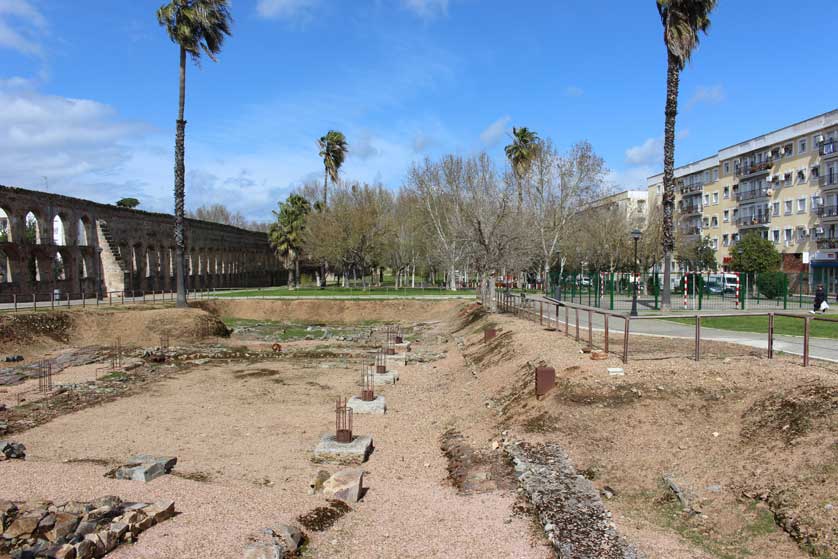
In the 16th century, rather than restoring the deteriorated Roman structure, the city opted to construct a new aqueduct in the Renaissance style, utilizing materials from the original. This newer aqueduct, which has been preserved in its entirety, features arches reaching a maximum height of approximately 15 meters.
Today, remnants of the original Roman aqueduct, including three pillars and their corresponding arches, can still be observed near the Roman circus and the 16th-century aqueduct. These structures, along with other Roman water management systems in Mérida, are recognized as some of the best-preserved examples from the Roman era.

Termas de San Lázaro
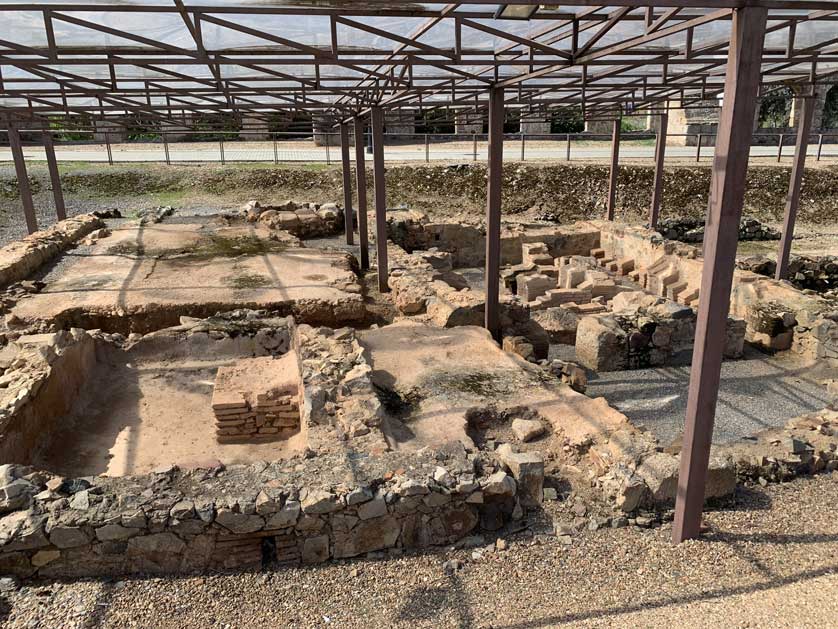
The nearby Termas de San Lázaro are the remnants of a Roman public bath complex that once served the city. Situated near the San Lázaro Aqueduct and the circus, these baths played a significant role in the daily lives of Augusta Emerita's citizens.
Though now in ruins visitors can still discern the layout of the bath complex. The foundations and partial walls outline the various sections.
These probably consisted of a changing room which gave access to a steam room, two hot water pools, and a cold water pool.
The water from the baths drained into the nearby river, the Albarregas. There was also an open space for sports (palestra) and a large outdoor pool.
Access
Av. de Juan Carlos I, 1, 06800 Mérida
The aqueduct and baths are both a short, 15-minute walk east from Mérida Station. Also nearby is the Basilica Santa Eulalia.
Mérida train station has rail connections to Alcázar de San Juan, Almendralejo, Badajoz Station in Badajoz, Cabeza del Buey, Madrid-Chamartin, Cáceres, Don Benito-Villanueva de la Serena, Zafra, Sevilla and Plasencia.
The bus station in Mérida is across the Puente Lusitania on the opposite bank of the River Guardiana. It is about 30 minutes on foot.
Accommodation in Mérida
The city has a wide selection of hotels, guest houses and pensions.
The Hotel Ilunion Mérida Palace in Plaza de España offers an outdoor pool and rooftop terrace in a restored 15th century palace.
The four-star Hotel Ilunion Las Lomas slightly outside the center has an outdoor pool, a bar and restaurant.
The Hotel Velada Mérida is also four-star. Facilities include a pool and cafe-bar.
Other places to stay in this lovely city include the luxury Parador de Mérida once an 18th century convent. Enjoy the traditional-style inner courtyard and beautiful gardens and dine at the hotel restaurant.
Hotel Cervantes is a budget two-star property for travelers on a tighter budget.
See a listing of hotels in Mérida

Maps
