Basilica of Santa Eulalia, Mérida
Historic Basilica of Santa Eulalia (Extremadura, Spain)

The Basilica of Santa Eulalia in Mérida close to the nearby San Lázaro Aqueduct (Acueducto de San Lázaro) and Termas de San Lázaro, is an historic church, thought to be the first Christian place of worship erected in Hispania after the Peace of the Emperor Constantine in 313CE.
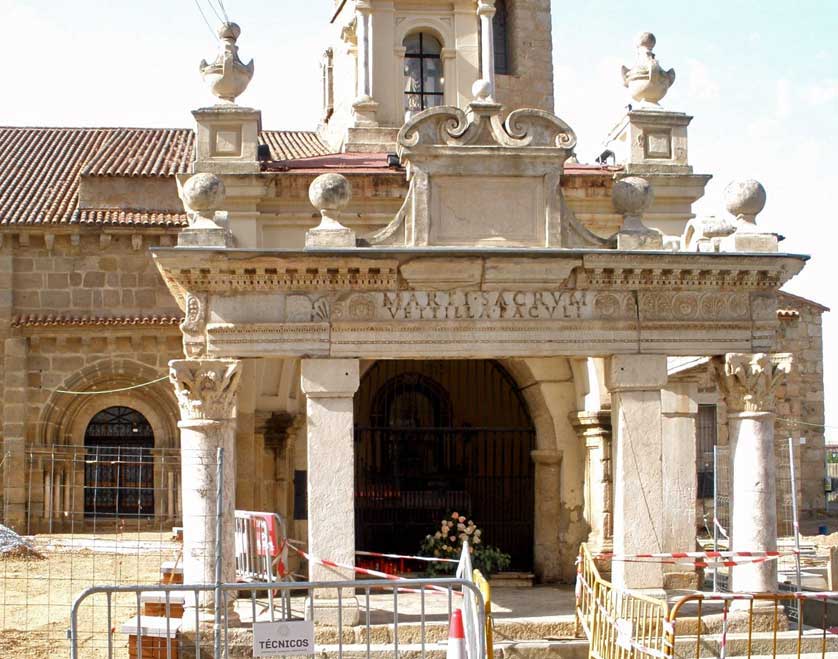
Next to the church is the Hornito de Santa Eulalia, a small chapel that used the remains of a Roman temple dedicated to Mars in Augusta Emerita (present-day Mérida) and marks the site of Saint Eulalia's martyrdom.


History
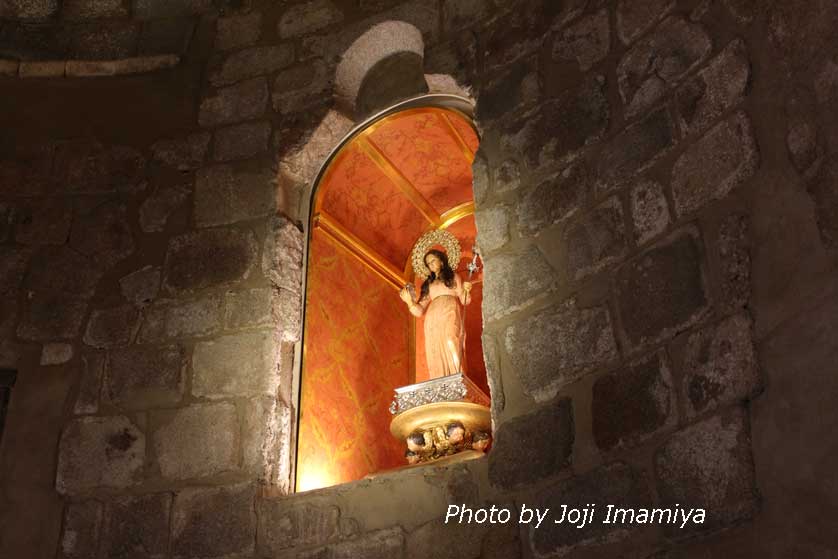
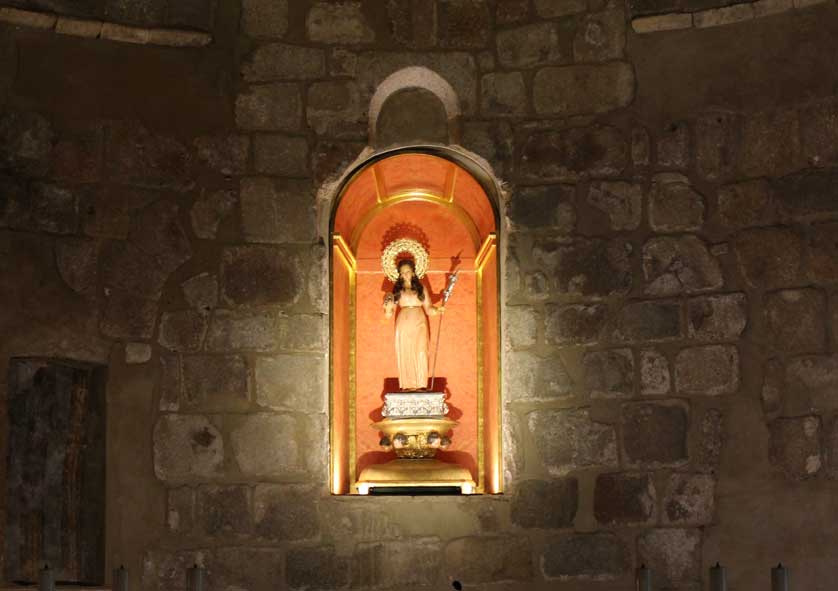
The basilica is dedicated to Saint Eulalia, a young Christian martyr from Mérida who was executed during the Diocletianic Persecution (around 304 AD) during the Roman occupation of Hispania. Eulalia later became a local and national symbol of Christian martyrdom and she is honored with an annual festival and procession in the city on December 9th.
The first Christian basilica was likely built in the 4th century in an area that was once a district of Roman housing, shortly after the Edict of Milan legalized Christianity. The church became a major pilgrimage site during the Visigothic period, and numerous reconstructions followed over the centuries.
During the Islamic occupation, the basilica was both damaged and abandoned. After the Reconquista of Mérida in 1230 by Alfonso IX, the current Romanesque-style church was constructed on the same sacred ground, integrating earlier elements.
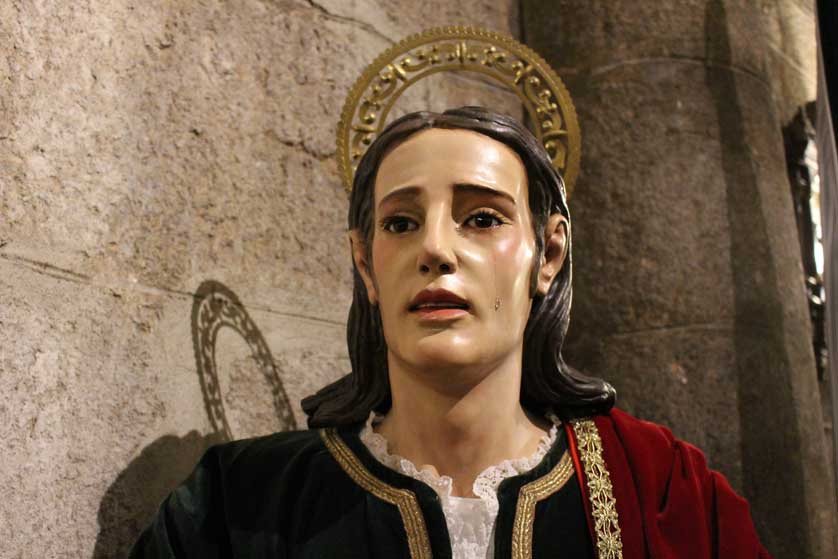
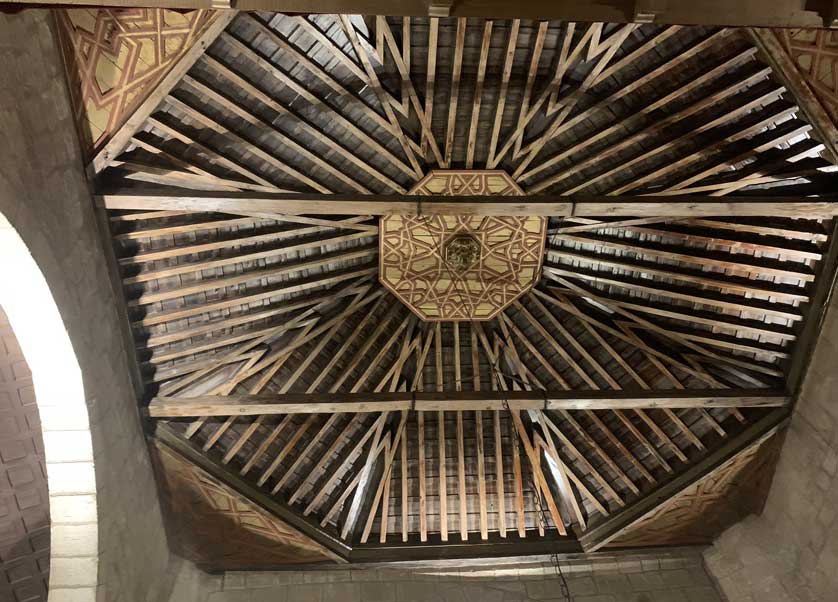
Architecture
The basilica has a Romanesque foundation with later Gothic and Baroque additions. A simple stone façade, arched windows, and minimal ornamentation reflect the building's early medieval origins.
The church has three naves separated by columns and rounded arches. There is also a semi-circular apse at the eastern end, consistent with early Christian and Roman basilica plans. Recycled Roman materials (spolia) are evident in columns and capitals throughout the structure.
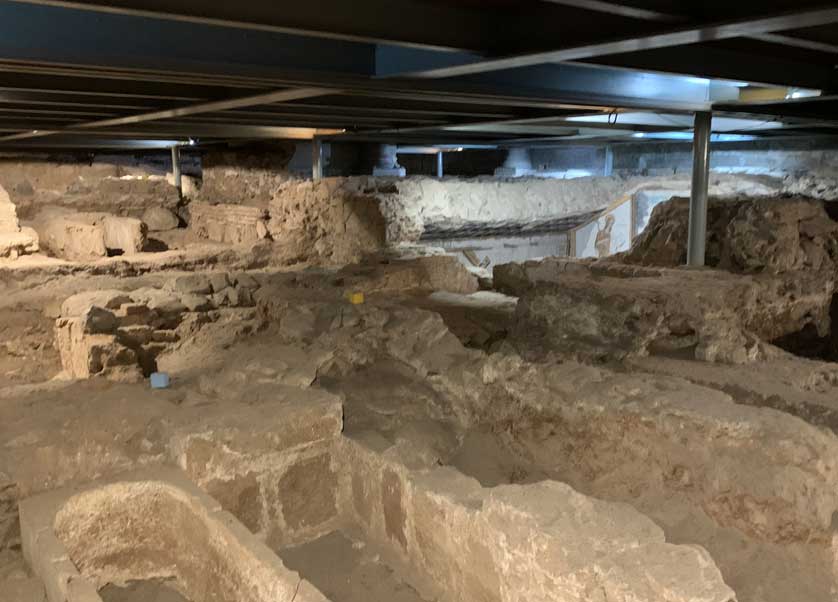
Crypt
The crypt (discovered and excavated between 1990 and 1992) has remains of earlier Roman and Visigothic structures, including tombs, walls, mosaic fragments, and an ancient road. Early Christian tombs and sarcophagi, some decorated with Christian symbols can also be seen.
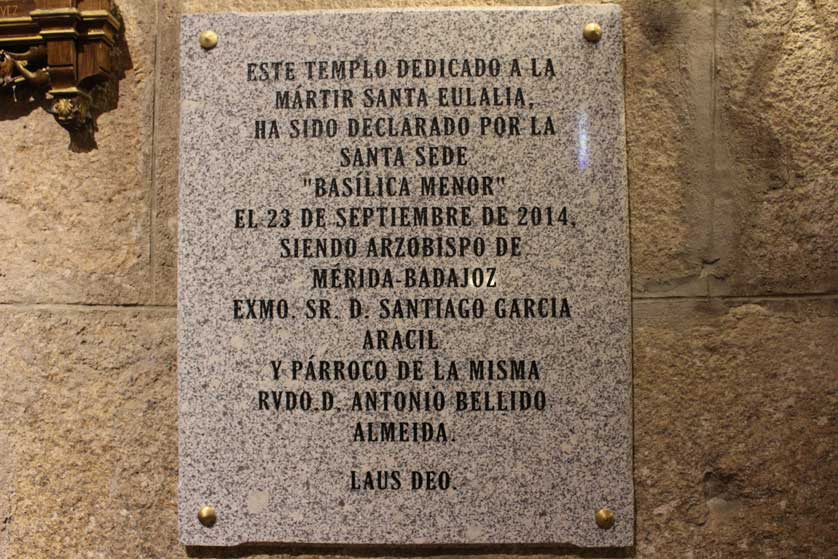
Access
Av. Extremadura, 13, 06800 Mérida, Badajoz
Admission: presently 6 Euros or as part of a combined ticket - (Theatre-Amphitheatre, Alcazaba, Roman Circus, Morería, Crypt of the Basilica of Santa Eulalia and House of Mithraeum-Columbarium).
Hours: Monday to Saturday: 10.30am to 2 pm and 3.30 pm to 6 pm; Sundays: 3.30 pm to 6 pm (entry through the Crypt)
Hours of worship: Monday to Saturday: 9.30 am and 7.30 pm (entry through main door); Sunday: at 9.30 am, 12 pm and 7.30 pm (entry through main door)
The church is a short, 5-minute walk from Mérida Station. Mérida has rail connections to Alcázar de San Juan, Almendralejo, Badajoz Station in Badajoz, Cabeza del Buey, Madrid-Chamartin, Cáceres, Don Benito-Villanueva de la Serena, Zafra, Sevilla and Plasencia.
The bus station in Mérida is across the Puente Lusitania on the opposite bank of the River Guardiana. It is about 30 minutes on foot.
Accommodation in Mérida
The city has a wide selection of hotels, guest houses and pensions.
The Hotel Ilunion Mérida Palace in Plaza de España offers an outdoor pool and rooftop terrace in a restored 15th century palace.
The four-star Hotel Ilunion Las Lomas slightly outside the center has an outdoor pool, a bar and restaurant.
The Hotel Velada Mérida is also four-star. Facilities include a pool and cafe-bar.
Other places to stay in this lovely city include the luxury Parador de Mérida once an 18th century convent. Enjoy the traditional-style inner courtyard and beautiful gardens and dine at the hotel restaurant.
Hotel Cervantes is a budget two-star property for travelers on a tighter budget.
See a listing of hotels in Mérida

Maps

Gallery