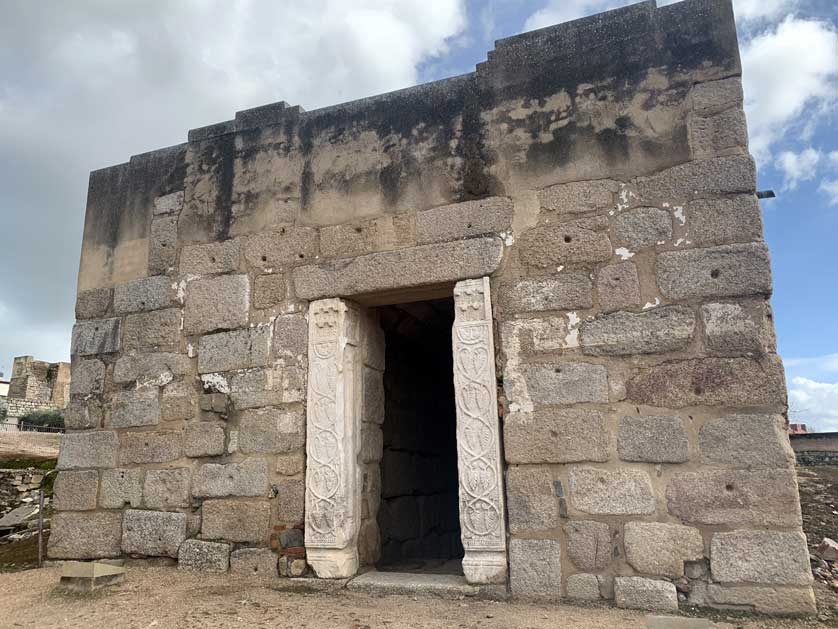
Alcazaba of Mérida, Spain
Mérida Alcazaba (Extremadura, Spain)
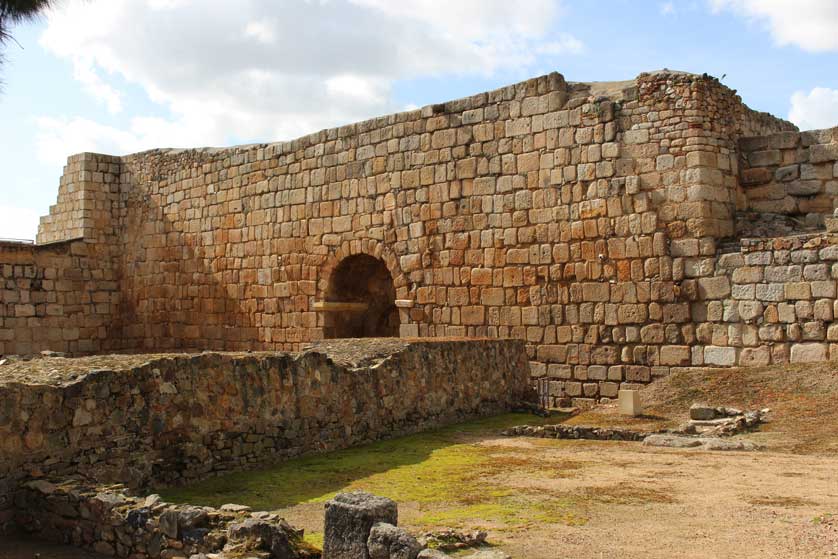
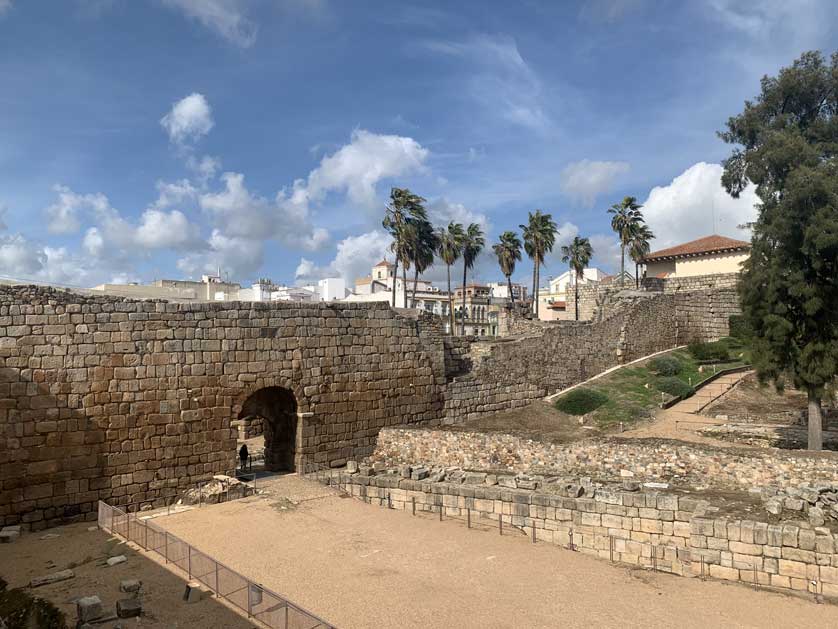
The Alcazaba of Mérida is a historic Islamic fortification located in the heart of Mérida in western Spain, just beside the Roman Bridge and close to the Guadiana River. While Mérida is best known for its Roman heritage, the Alcazaba is a striking example of the layers of history that have shaped this ancient city.

History
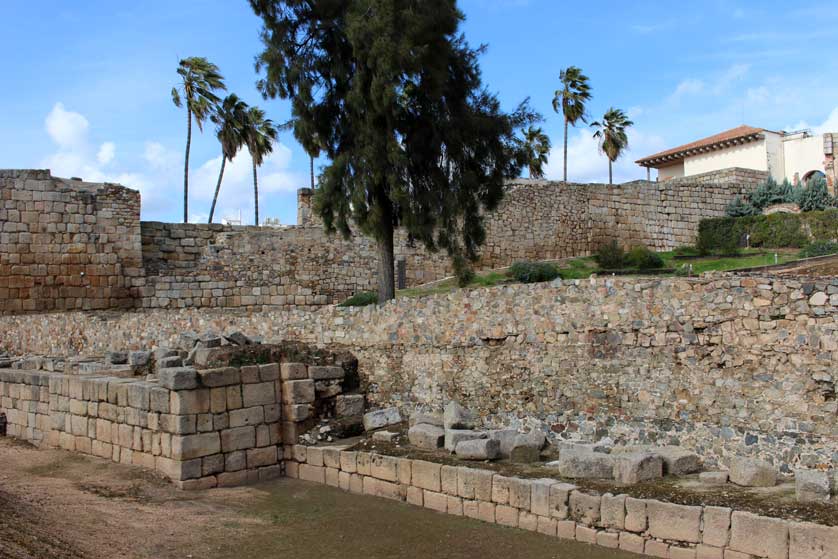
Before the Alcazaba was built, the area was part of the Roman city of Emerita Augusta, founded in 25 BCE. Remnants of Roman architecture, including roads and walls, lie beneath the current structure. Later, during the Visigothic period, parts of the old Roman city walls were reused and modified.
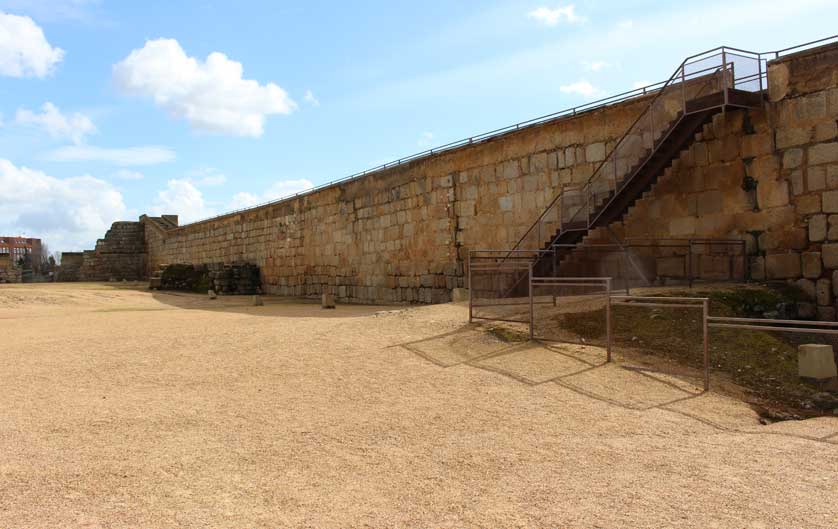
The Alcazaba as we see it today was built in 835 CE by Abd ar-Rahman II, the Umayyad Emir of Córdoba. It was one of the first Muslim fortresses constructed in the Iberian Peninsula and served to reinforce Muslim control over Mérida, a city known for its resistance to Arab rule during the early Islamic conquest.
The fortress played a key role in the defense of the city and the surrounding territory, guarding the strategic Roman Bridge across the Guadiana River. Mérida was taken by Christian forces in the 13th century during the Reconquista, and the Alcazaba was repurposed as a military garrison and administrative center. Over the centuries, the structure underwent minor modifications but retained much of its original form.

Architecture
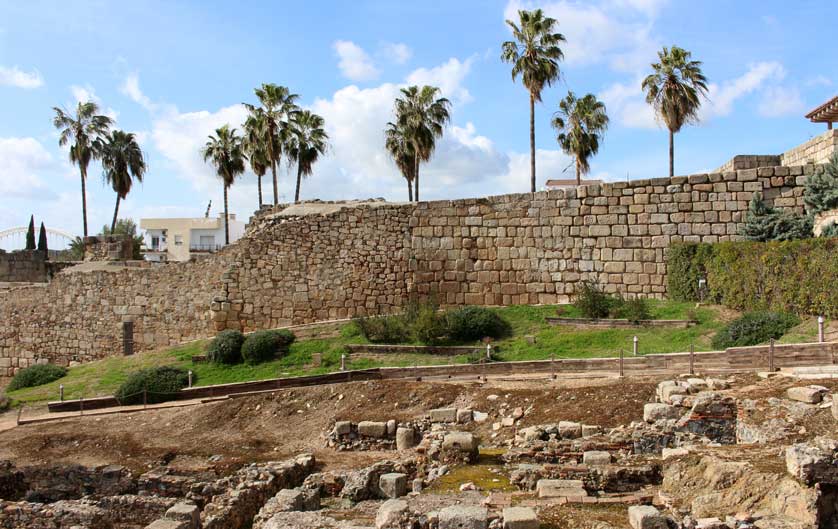
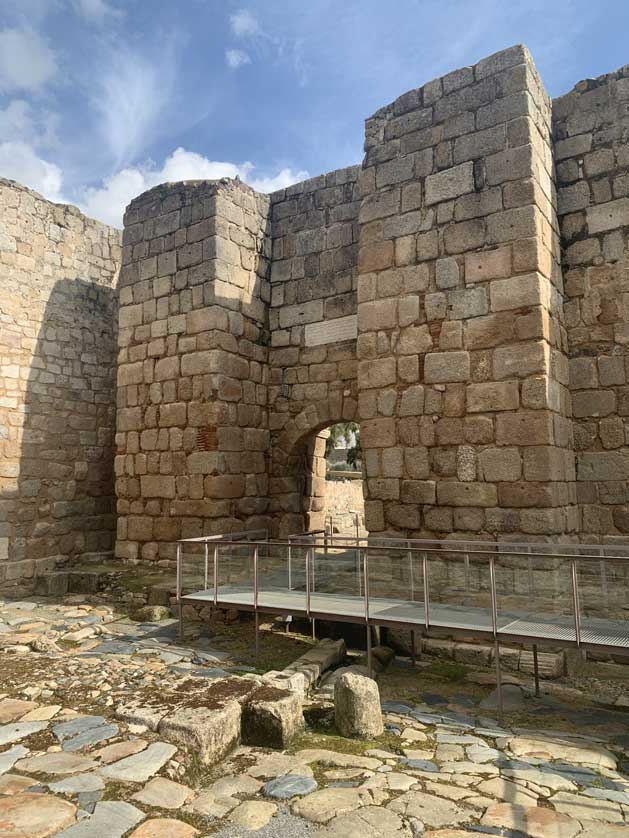
The Alcazaba is rectangular, measuring roughly 130 meters x 95 meters. The walls are made of granite blocks reused from former Roman buildings. It has 25 solid towers, all square in shape, spaced at regular intervals. The walls are topped with battlements and walkways, offering panoramic views largely across the river below.
Inside the Alcazaba, visitors can see parts of a Roman street and domestic structures, which were integrated into the Islamic fortress. This layering of history is visible throughout the site.
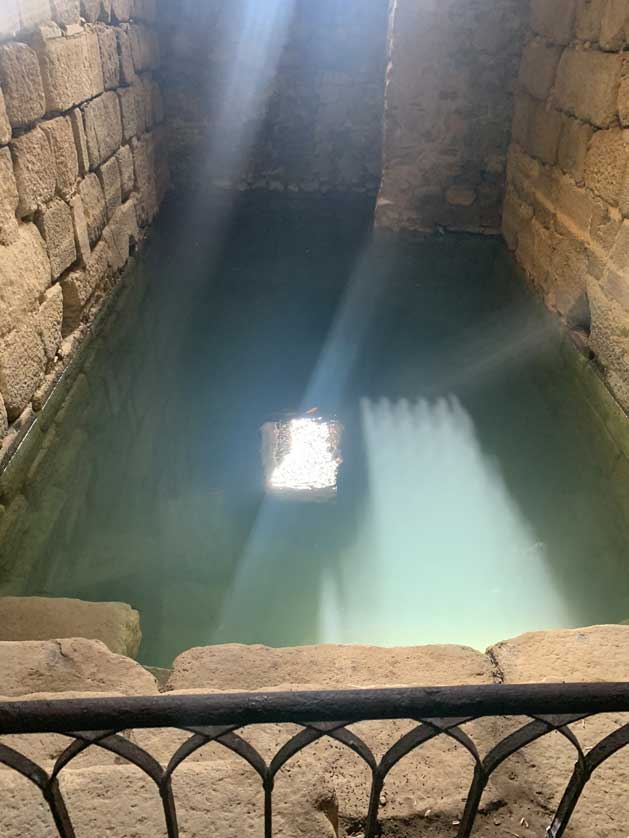
One of the most remarkable features is the cistern, an underground water reservoir. It reused a Roman cistern, expanded by the Moors. You can descend a staircase to view the original hydraulic system, which channeled water from the Guadiana River. The cistern was a vital part of the Alcazaba's self-sufficiency.
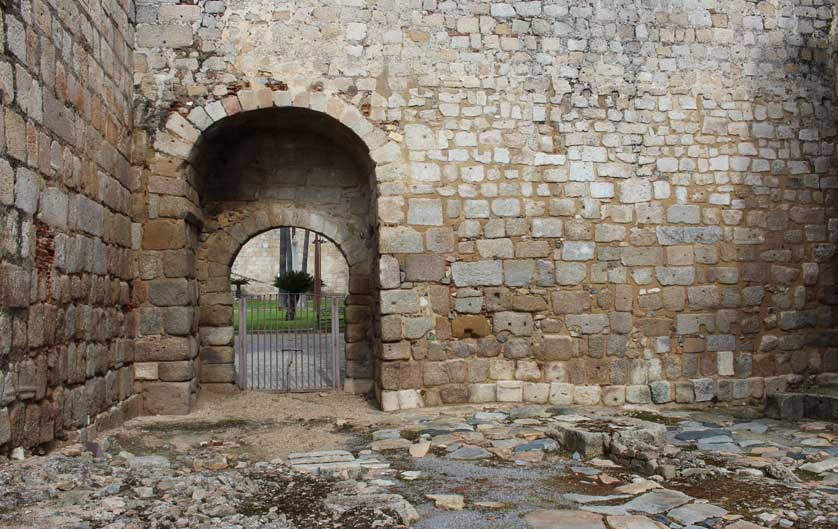
The main gate (Puerta de la Alcazaba) was heavily fortified and connected to the Roman bridge. It featured a horseshoe arch, a classic element of Islamic architecture. In the later Christian period, the Order of Santiago established their headquarters here. Some parts of the Alcazaba were converted into living quarters and administrative rooms.
Access
Paseo de Roma, s/n, 06800 Mérida, Badajoz, Spain
Admission: presently 6 Euros or as part of a combined ticket 15 Euros - (Theater-Amphitheatre, Alcazaba, Circus, Morería, Crypt of the Basilica of Santa Eulalia and House of Mithraeum-Columbarium). Hours: October 1 to March 31; daily 9 am to 6.30 pm; April 1 to September 30; daily 9 am to 9 pm; closed December 24, 25, 31 and January 1.
The Alcazaba is a 20 to 25-minute walk from Mérida Station.
Mérida train station has rail connections to Alcázar de San Juan, Almendralejo, Badajoz Station in Badajoz (which also has its own historic Alcazaba - the Alcazaba de Badajoz), Cabeza del Buey, Madrid-Chamartin, Cáceres, Don Benito-Villanueva de la Serena, Zafra, Sevilla and Plasencia.
The bus station in Mérida is across the Puente Lusitania on the opposite bank of the River Guardiana. It is about 30 minutes on foot.
Accommodation in Mérida
The city has a wide selection of hotels, guest houses and pensions.
The Hotel Ilunion Mérida Palace in Plaza de España offers an outdoor pool and rooftop terrace in a restored 15th century palace.
The four-star Hotel Ilunion Las Lomas slightly outside the center has an outdoor pool, a bar and restaurant.
The Hotel Velada Mérida is also four-star. Facilities include a pool and cafe-bar.
Other places to stay in this lovely city include the luxury Parador de Mérida once an 18th century convent. Enjoy the traditional-style inner courtyard and beautiful gardens and dine at the hotel restaurant.
Hotel Cervantes is a budget two-star property for travelers on a tighter budget.
See a listing of hotels in Mérida

Maps

Gallery