Seat of Learning: University of Salamanca
University of Salamanca (Universidad de Salamanca)
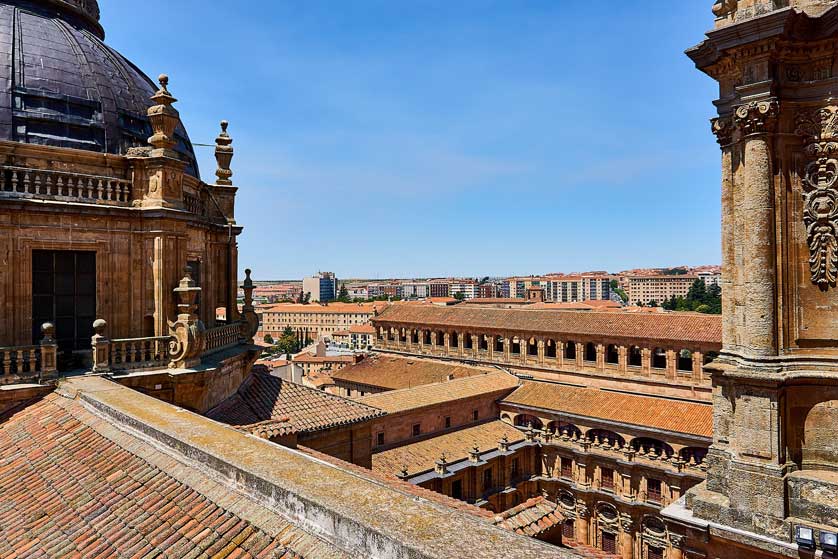
The University of Salamanca (Universidad de Salamanca) in Salamanca is the fourth oldest university in Europe (there are older institutions in the Islamic world) after the University of Bologna in Italy, and Oxford and Cambridge in England. Though some historians claim Salamanca as older than Cambridge.
History
In 1218 Alfonso IX of León gave a royal charter to the University of Salamanca. The university was at its height during the 15th and 16th centuries and home to various schools of thought important to the growth of the rights of the individual in Europe.
The university was a center for the study of law, theology, and philosophy and played an important role in the early debates about the rights of indigenous peoples in the Americas following Spanish colonization. Its motto, Omnium scientiarum princeps Salmantica docet ("The University of Salamanca teaches all branches of knowledge"), reflects its historic commitment to a broad academic curriculum.

Architecture
The university's architecture is a superb example of Spanish Plateresque style, especially evident in its famous façade on the university's main building. The façade, completed in the early 16th century, is a masterpiece of detailed stonework, with carvings of Catholic monarchs, medallions, and religious symbols.
One of the most popular traditions among visitors is to find the frog carved atop a skull - a symbol tied to luck and academic success.
Inside, the Escuelas Mayores (Main Schools) feature cloisters and lecture halls with heavy wooden ceilings and Gothic details. The Library of the University of Salamanca, housed within the same complex, is one of the oldest in Europe and contains ancient manuscripts and incunabula.


Pontifical University of Salamanca
Founded in 1940 by Pope Pius XII, the Pontifical University of Salamanca (Universidad Pontificia de Salamanca) was created to continue the ecclesiastical faculties that had been part of the University of Salamanca before secularization and the expulsion of the Jesuits in 1767. It is now affiliated with the Vatican and under ecclesiastical jurisdiction. The university offers degrees in theology, philosophy, canon law, education, communication, and psychology.
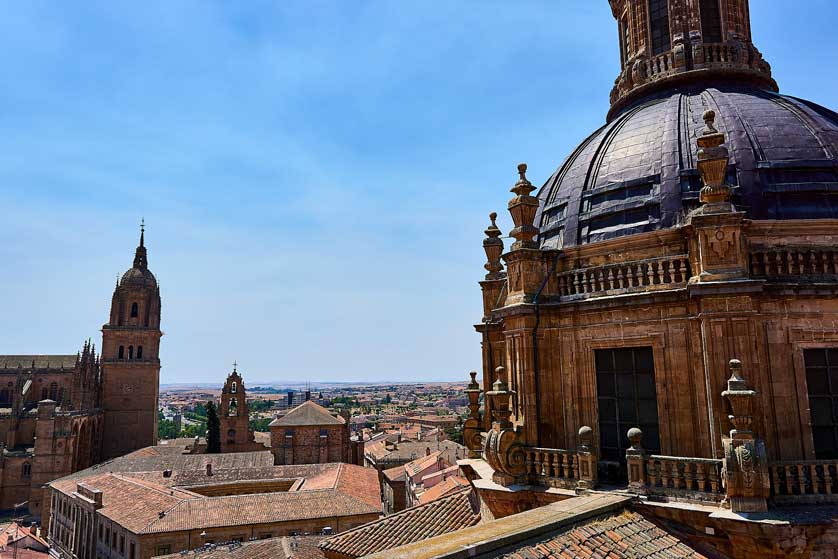
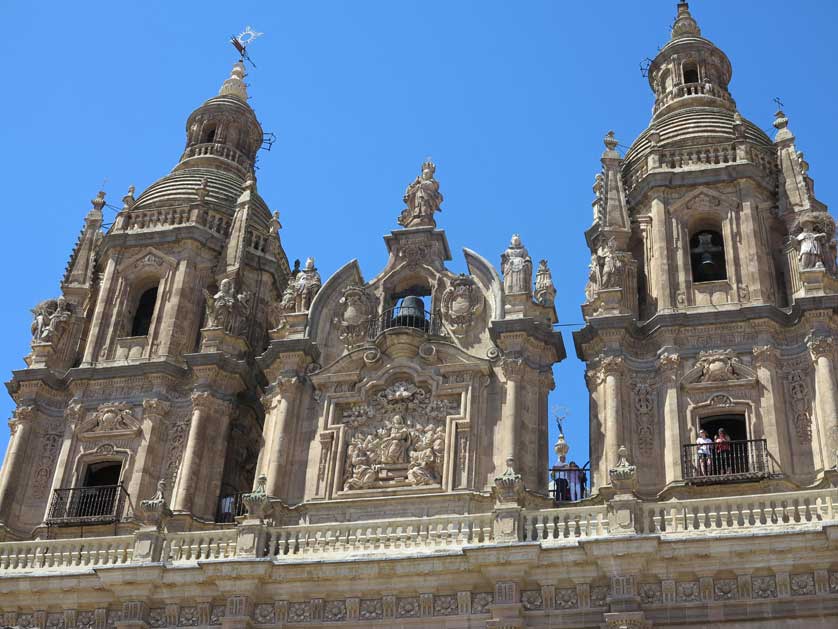
The administrative offices and classrooms of the university are located throughout the historical building of La Clerecía. La Clerecía (the former Jesuit college of Real Colegio del Espíritu Santo) is one of Salamanca's most impressive Baroque monuments. It dates from 1617, but wasn't fully completed until the 18th century. The building was commissioned by Queen Margaret of Austria, wife of King Philip III.
Tours
The tour of the University of Salamanca (Universidad Civil) takes in the university library, the oldest university library in Europe on the first floor with its Cielo de Salamanca, a 15th-century astrological fresco, and the Aula de Fray Luis de León, a preserved lecture hall, on the ground floor named after the 16th century writer and theologian (1527-1591).
The staircase between the two floors has a beautifully carved balustrade - the Escalera de la Universidad.
Visitors can also climb the university's bell tower for a panoramic view of the historic city.
Outside see if you can spot the frog carved into the facade, if you can see it it is supposed to bring you luck.
Most tours begin at the Patio de Escuelas, the courtyard that connects the main university buildings.

Accommodation
The city has well over 200 hotels and other accommodations that offer a range of lodgings to suit every budget from 5-star luxury hotels to more homely guest houses and pensions.
The 4-star Hotel Catalonia Plaza Mayor Salamanca is close to Plaza Mayor with conference rooms and a recommended restaurant.
South of the river, the Parador de Salamanca is a popular hotel set in a modern property with great views over the city. Facilities include a pool, bar and restaurant.
The Gran Hotel Corona Sol is a 10-minute walk from the city's Plaza Mayor and offers good rooms close to many of the city's bars and restaurants.
Other places include Hotel Condal on Plaza Santa Eulalia, offering pleasant, more than adequate 2-star lodgings.
Hotel Castellano Centro is another budget option not far from Salamanca Station.
See a listing of hotels in Salamanca

Access - Getting to Salamanca
Address: Patio de Escuelas, 1, 37008 Salamanca, Spain
The university is within walking distance of the city's major attractions including the Casa de las Conchas (House of the Shells) and Plaza Mayor. There are also campuses of the university in Ávila, Béjar and Zamora.
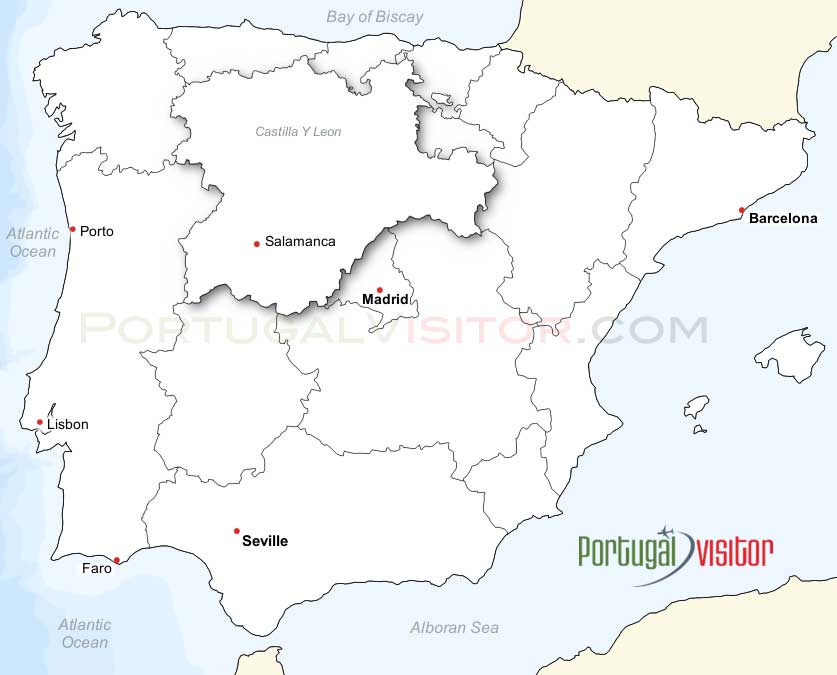
Located in Castile and León, northwestern Spain, directly south of Zamora, the city of Salamanca has a population of over 140,000 inhabitants.
Salamanca is very well-connected to other parts of Spain. There are rail connections to Avila, Madrid-Chamartin, and Valladolid-Campo Grande.
Buses operated either by Alsa or Avanza run to Avila, Cáceres, Ciudad Rodrigo, Leon, Madrid, Segovia, Valladolid and Zamora.
Buses to Porto in Portugal are operated by ALSA/Internorte and take 6 hours and 15 minutes from Salamanca and 9 hours, 15 minutes from Madrid. The bus station in Porto where these international buses depart back to Spain is at Casa da Musica on the Porto metro.
By car it is a straight 65 km drive north on the A-66, the old Roman road, from Salamanca to Zamora.
Map