Torre de Hércules - The Tower of Hercules, A Coruña, Galicia
A Tower of Strength, Lighting the Way Since the Romans
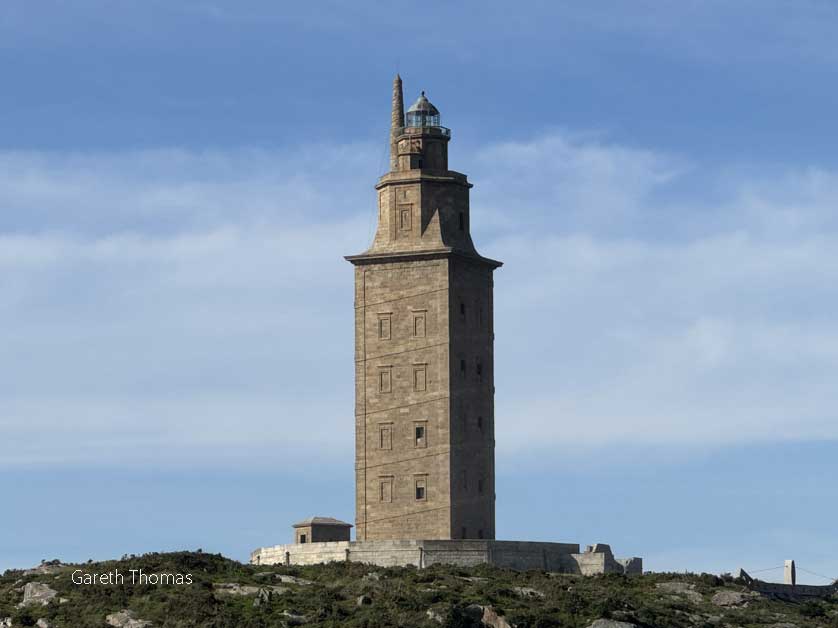
Perched dramatically on a rugged headland overlooking the Atlantic Ocean, the Tower of Hercules stands as one of Europe's most extraordinary historic landmarks.
Located in the coastal city of A Coruña, this ancient lighthouse is not only a striking symbol of Galicia but also the oldest functioning Roman lighthouse in the world.
For travellers exploring northern Spain, a visit to this legendary tower combines breathtaking coastal scenery, fascinating history, and a touch of myth.
History
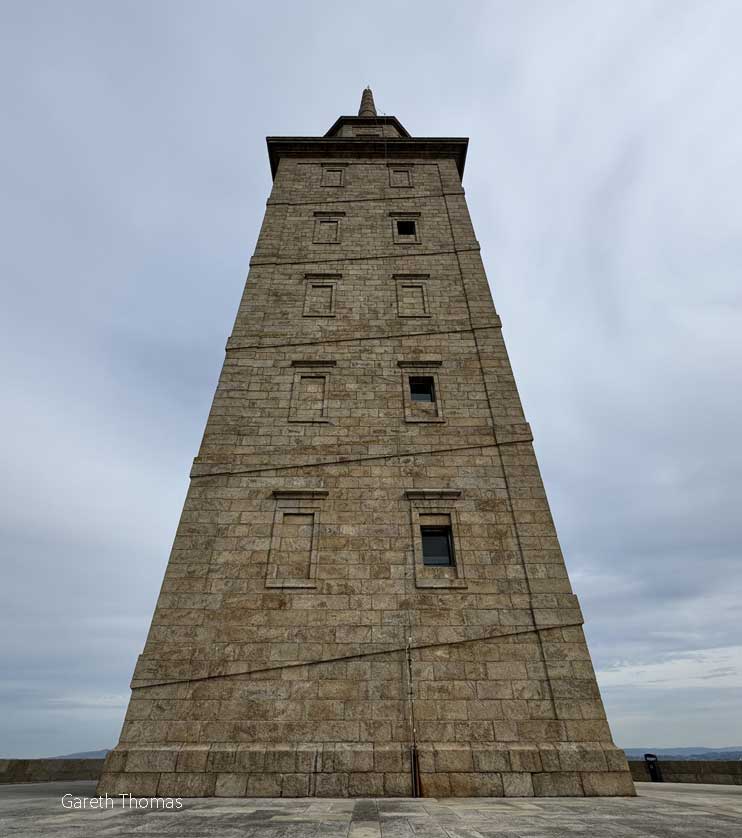
Built by the Romans in the late 1st or early 2nd century AD, the Tower of Hercules was designed to guide ships safely along Galicia's treacherous coastline. The structure was likely commissioned during the reign of Trajan, one of Rome's greatest emperors, and engineered by the Roman architect Gaius Sevius Lupus, whose name still appears on an inscription at the base of the tower.
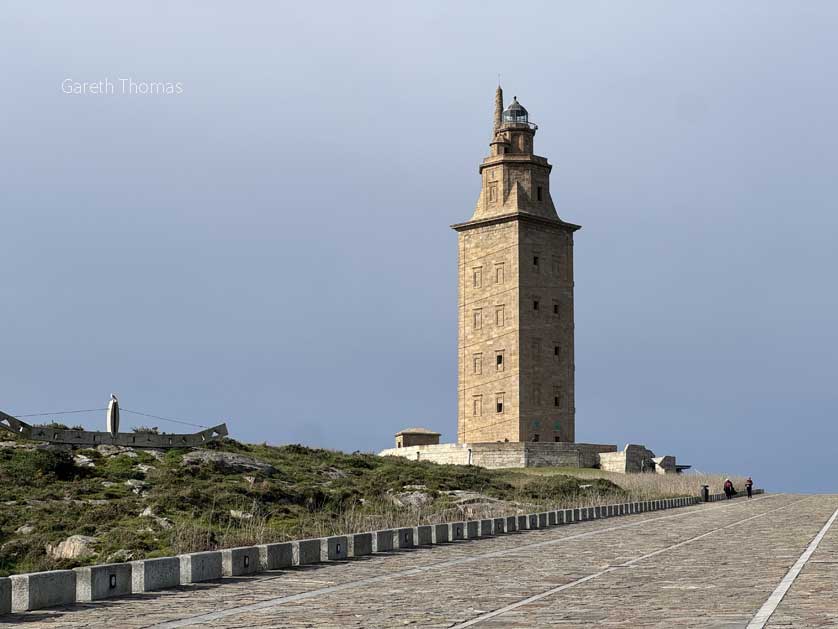
Standing 55 meters (180 feet) tall today, the lighthouse has undergone several restorations over the centuries, most notably by architect Eustaquio Giannini in the 18th century when the exterior was remodeled into the elegant neoclassical form visitors see today.
Despite these changes, the original Roman core remains intact.
In recognition of its historical significance, the Tower of Hercules was designated a UNESCO World Heritage Site in 2009.
Like many ancient landmarks, the tower is steeped in myth. According to Galician legend, the hero Hercules defeated the giant tyrant Geryon on this very spot after a three-day battle. After burying the giant's head, Hercules built the tower as a victory monument.
Local tradition says the nearby city of A Coruña grew from the first settlement established around the monument. The tower even appears on the city's coat of arms, with the skull of Geryon depicted beneath it.
The Lebor Gabála Érenn tells the legend of Breogán, who conquered Spain, founded Brigantia (modern A Coruña), and built a great tower - linked to the Tower of Hercules. His son Íth later sailed to Ireland after spotting the green isle from the tower but was killed. His descendant Míl Espáine then led a successful invasion, defeating the Tuatha Dé Danann and taking control of the whole of Ireland. A statue of Breogán stands in the surrounding Sculpture Park.

Tips for Visiting the Tower
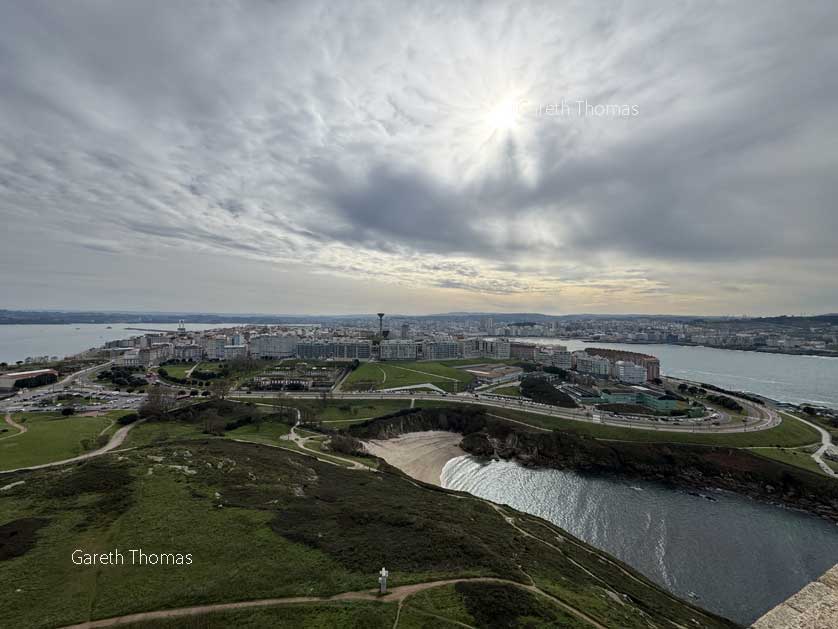
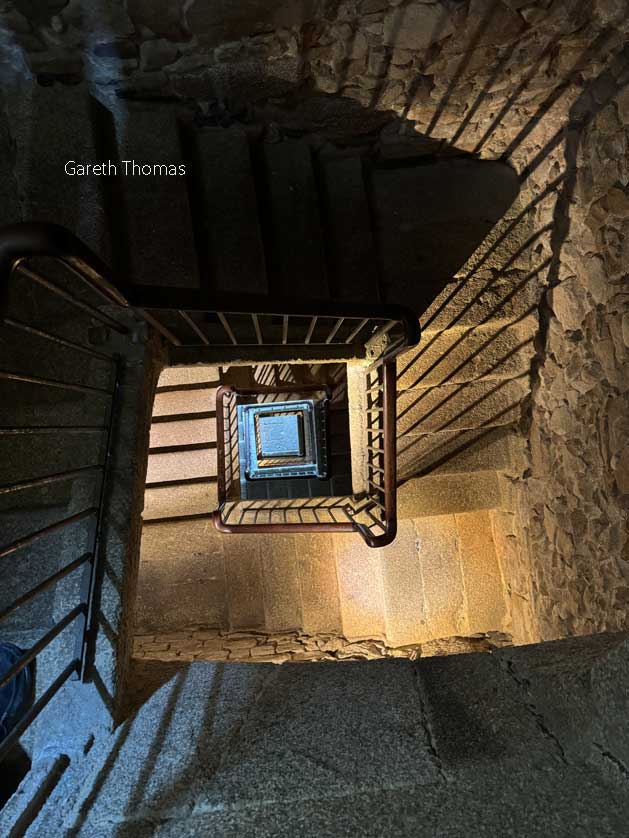
Visitors can climb the 234 steps to the top of the lighthouse for spectacular panoramic views of the Atlantic and the Galician coastline.
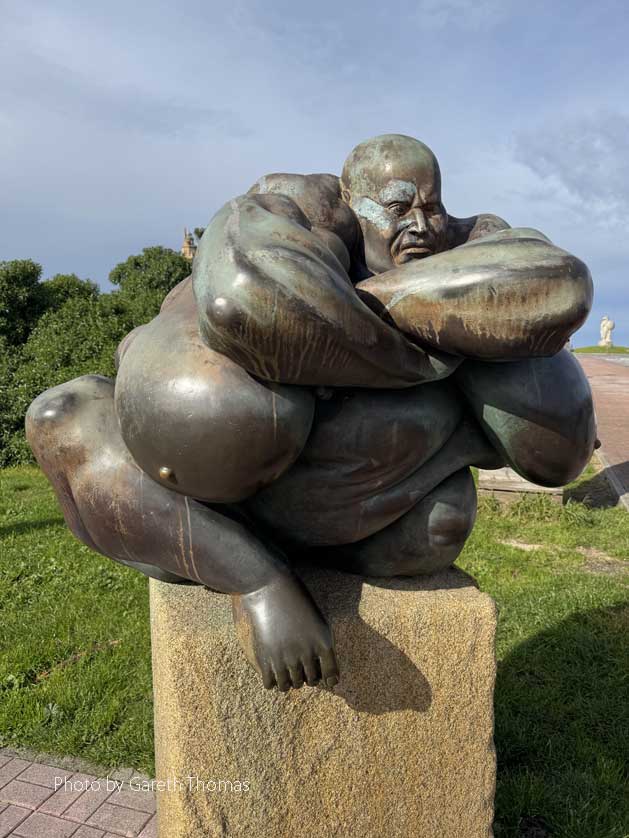
The surrounding park, the Sculpture Park of the Tower of Hercules, is dotted with contemporary artworks inspired by Celtic and maritime traditions. Walking trails weave through grassy hills and along the rocky shoreline, making it a perfect place for a relaxed coastal stroll.
How to Plan Your Visit
- Book in advance online as visits are limited to 20 people every 30 minutes, starting at 10.15 am.
- Last admission: 3.45 pm (Sept 16 - June 15); 7.45 pm (June 16 - Sept 15)
- Best time to visit: Late afternoon for golden light over the Atlantic.
- Getting there: The tower is about a 30-minute walk from central A Coruña.
Gareth Thomas

Accommodation
The town and surrounding area has some great places to stay.
The DoubleTree by Hilton offers 4-star accommodation near the Convention Center.
The NH Collection A Coruña Finisterre is a 5-star property. Facilities include 3 outdoor pools, sea views, bar and restaurant.
Eurostars Atlántico has large rooms in a pleasant 4-star hotel.
Other places include Hotel Alda Orzán a 2-star property, which offers more budget lodgings near the beach.
Hotel Brisa is another budget option close to Riazor beach and stadium.
See a listing of hotels in A Coruña
Access - Getting to A Coruña
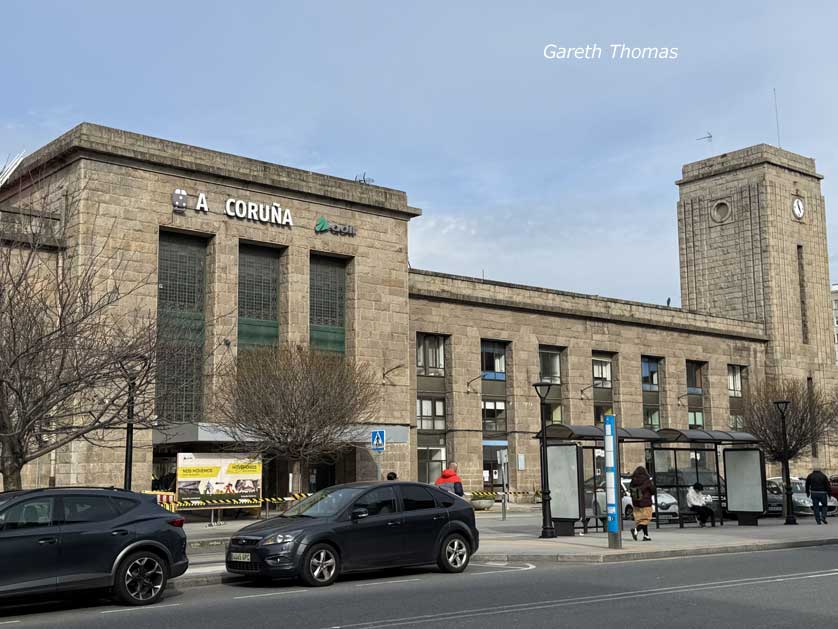
The railway station (A Coruña-San Cristovo) is at Avenida del Ferrocarril 10. High-speed rail services link the city with Santiago de Compostela, Ourense-Empalme, Pontevedra and Vigo-Guixar. Regional trains provide connections to Lugo, Monforte de Lemos and Ferrol, while intercity services run to Madrid, Barcelona and Bilbao.
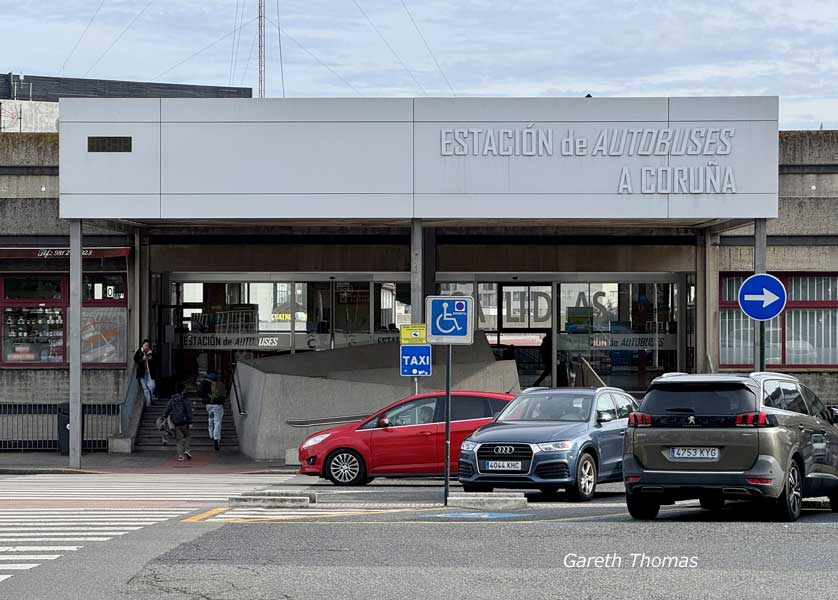
The bus station at Rúa Caballeros 21, 15009 has buses from A Coruña to Madrid, Barcelona, Bilbao, León-Valladolid, Ourense, Salamanca, Santiago de Compostela (1 hour), Verín, Vigo (about two hours, 30 minutes) and Zamora. There are also buses south to Aveiro, Braga, Porto (3 hours, 30 minutes), Fatima and Lisbon (9 hours to Oriente; 9 hours, 30 minutes to Sete Rios) in Portugal as well as a long-distance service to Paris in France.
Map


Eat & Drink
Some recommended places to eat and sample the local wines are Pulpeira de Lola la Antigua de Melide (Tel: 981 23 61 64) for excellent octopus, mussels and cheese plates on Ronda de Outeiro and the Michelin-starred Taberna 5 Mares which has fine food and sea views at Parque Monte San Pedro (Tel: 981 10 08 23).

Other Attractions
The city's main square, Praza de María Pita is named after local heroine María Pita, who drove off the invading English back in 1589.
The beautiful Town Hall and other fine buildings line this large public space. The Town Hall was built between 1908 and 1912 and houses a free Clock Museum (Museo de los Relojes) with over 80 historic clocks from Spain, England, France and The Netherlands.
The town's two main city beaches are Orzán Beach and Riazor Beach which both get very busy in summer. The local football team Deportivo de La Coruña play at the nearby Estadio Abanca-Riazor.
The galerías of A Coruña are glass-enclosed balconies that line many of the city's waterfront buildings, especially along Avenida da Mariña. Built mainly in the 19th century, these white-painted structures were designed to maximize available sunlight while shielding homes from the often strong Atlantic winds and rain. Their continuous rows of windows create a bright, reflective façade facing the harbor, earning A Coruña the nickname "City of Glass."
