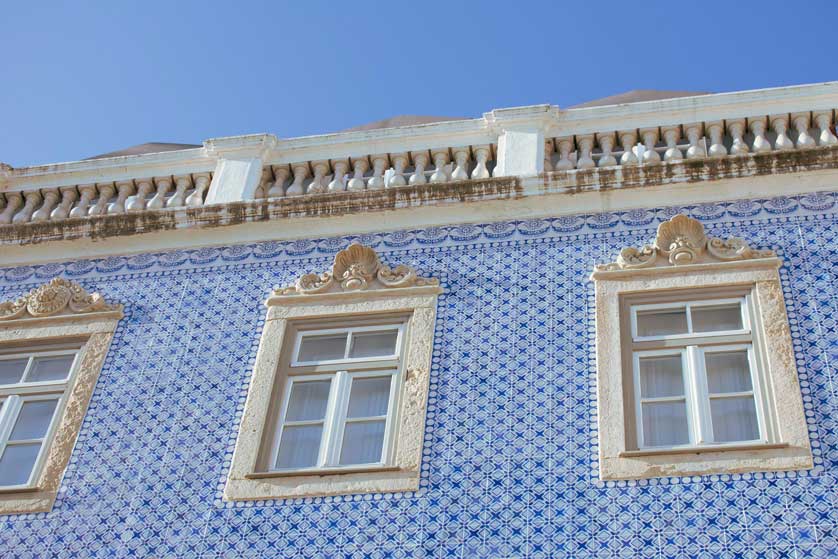
Portuguese Culture: Azulejos
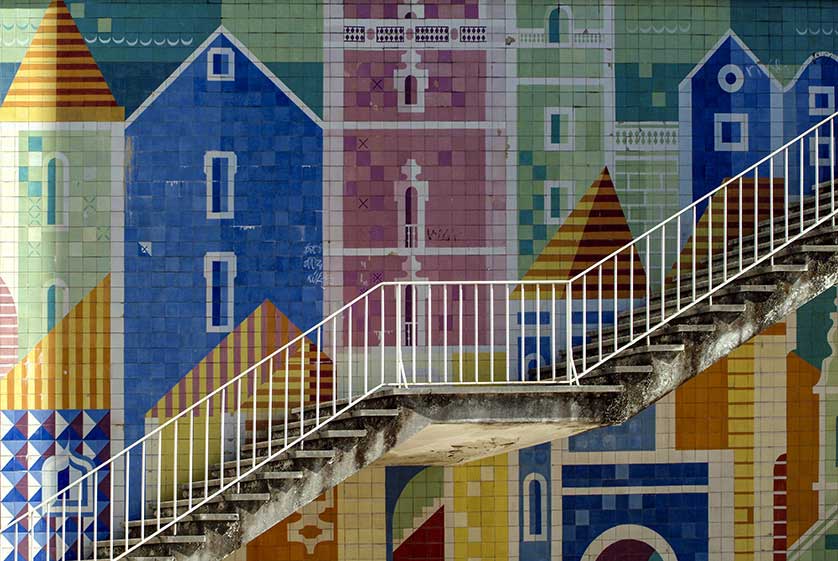
Azulejos, (from the Arabic al-zillīj meaning "polished stone"), is a characteristic Portuguese art form seen throughout the country and also in former Portuguese territories overseas.
As quintessentially Portuguese as bacalhau, calçada and fado, azulejos decorate the exteriors and interiors of churches, civic buildings, palaces, railway and metro stations, schools and even more mundane housing. They are both decorative and functional, helping to control the temperature of interiors and provide insulation and fire-proofing for exteriors.
History
The origins of azulejos go back to Roman mosaics and more specifically Moorish tiles.
The center of Moorish tile production on the Iberian Peninsula was Sevilla in Spain and they were introduced to Portugal during the reign of King Manuel I (1495-1521). The Portuguese would also have encountered Arabic tile work during their military expeditions to North Africa in the late 15th century.
Early use of Arabic-style cuenca tiles can be found at the National Palace in Sintra, outside Lisbon, specifically in the palace's superb Arab Room (Sala dos Árabes).
Islamic tiles were geometric and did not depict the human form for religious reasons.
By the turn of the 20th century, Portugal had become the world's leading producer of decorative tiles. Many would be used to create tapetes (carpets) to cover the fronts of factories, markets and schools.

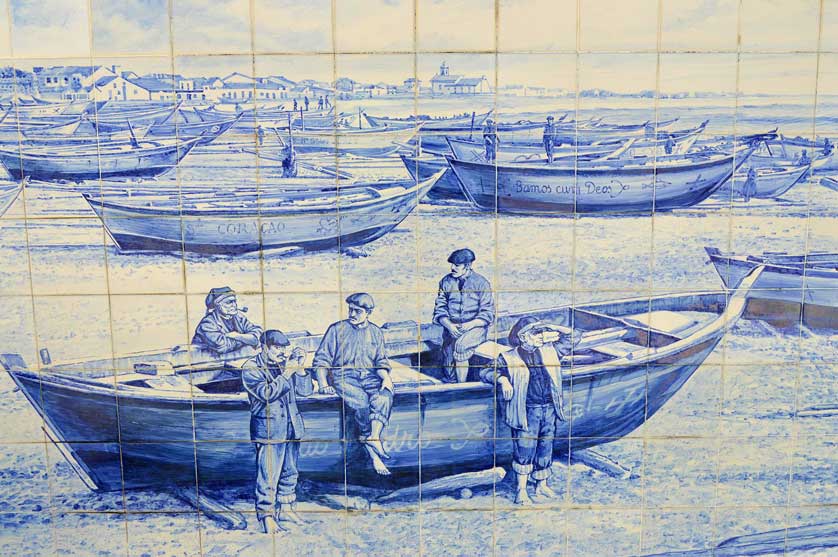
Types of Azulejos
The early Islamic azulejos had thin ridges of clay to prevent the lead-based paint from running. This process was refined with the introduction of the Italian maiolica (majolica) technique - where ceramics were coated with a thin glaze of enamel which stopped the paint from running when applied directly to the wet clay.
Before domestic production got underway early azulejos were imported from both Spain and Flanders.
Early Portugal-produced azulejos from the 16th century can be seen in the Church of São Roque (Igreja de São Roque) in Lisbon.
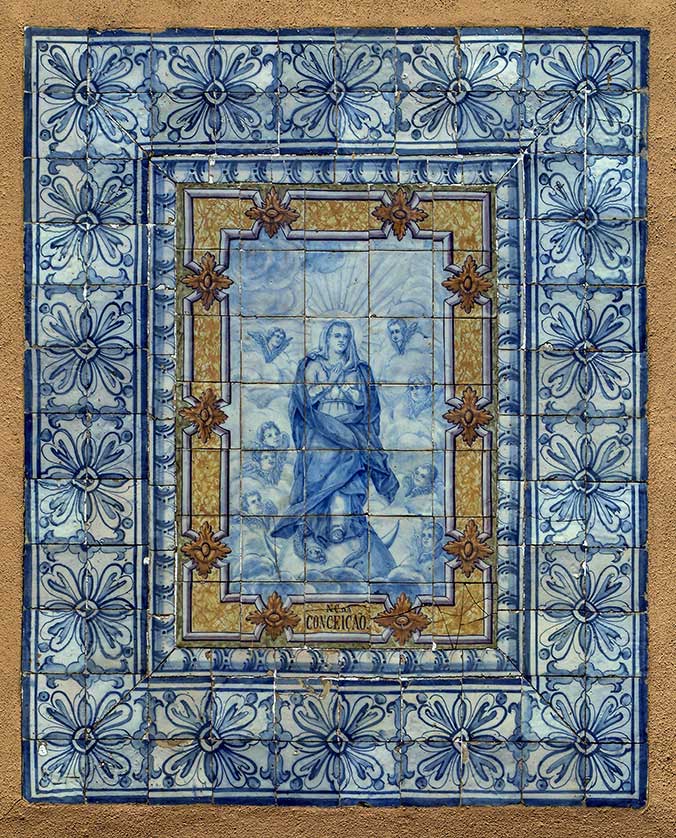
By the late 17th century azulejos began to be used in large panels to depict both religious and secular scenes. Mass production became necessary and blue and white Delft tiles were imported. This spurred domestic competition and a "Golden Age" of Portuguese tile manufacture began mostly in the Baroque style. Brazil was also a large market for Portuguese azulejos.
Tastes changed again in the mid-18th century, this time for more intimate Rococo style compositions best-illustrated by the exquisite tile panels at the Queluz National Palace.
The 1755 Lisbon Earthquake stimulated demand for tiles yet again. These were plainer, more functional and less decorative. Known as the Pombaline style, after the Marquis of Pombal, these azulejos covered the exterior and interiors of many new buildings constructed after the disaster.
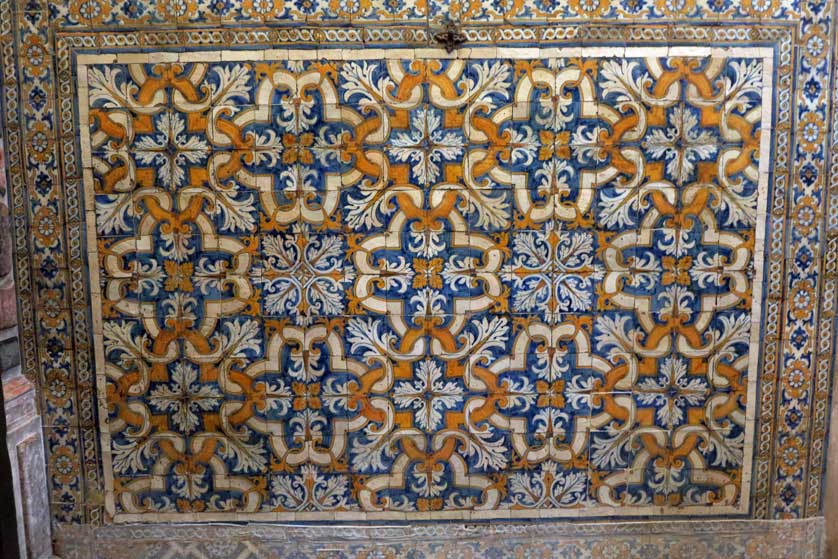

By the 19th century, new industrialized techniques developed in the Potteries in Staffordshire, England began to be copied in the tile factories of Lisbon.
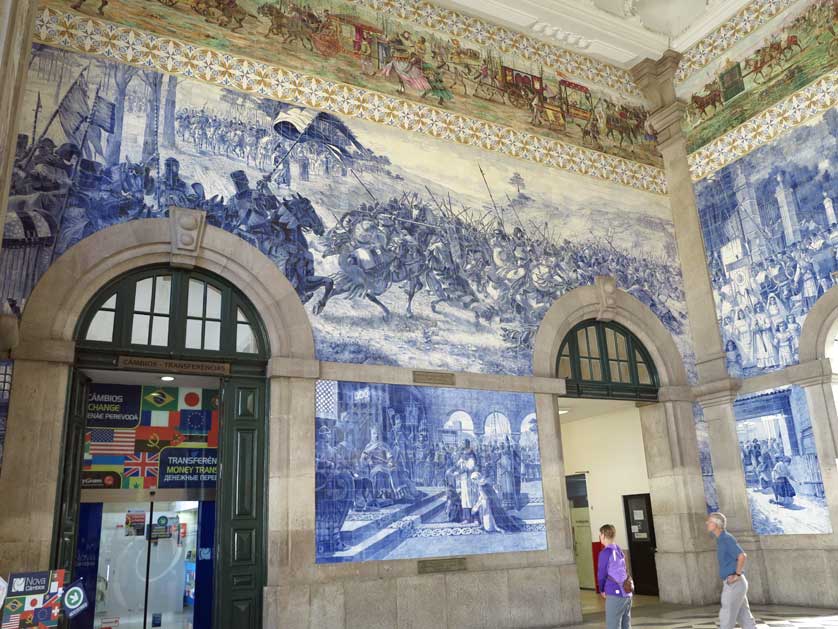
The French inspired architecture of São Bento Station in Porto is complemented by the superb azulejos of Jorge Colaço (1868-1942). They were manufactured in the 1930's and depict the history of transport in Portugal, the country's landscapes and Portugal's defining historic moments including the Battle of Aljubarrota (1385) and the Battle of Arcos de Valdevez (1140). Over 20,000 tin-glazed blue and white tiles were used to create these beautiful scenes.
The 20th century also saw the Art Nouveau and Art Deco movements represented in azulejos. From his ceramics factory in Caldas da Rainha, Rafael Bordalo Pinheiro and António Costa became the two leading Portuguese artists of these new styles.
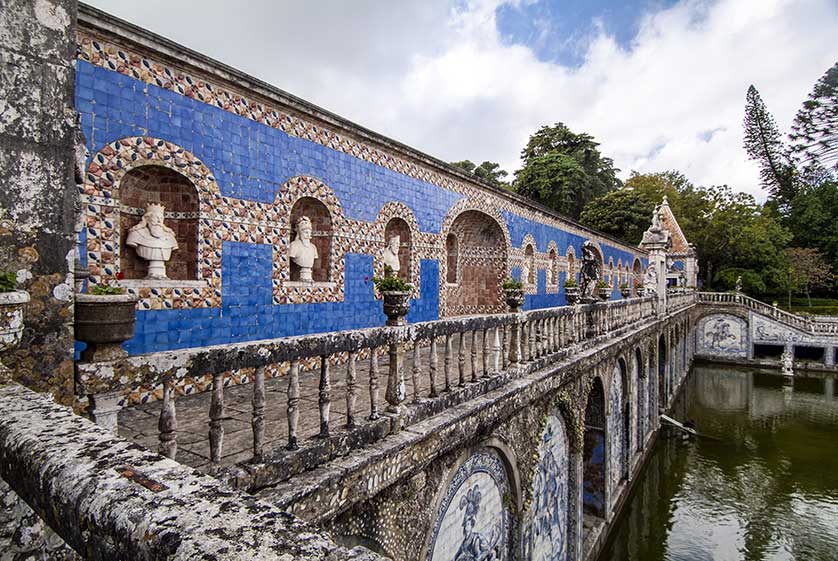
Where to See Azulejos in Lisbon
The Palácio dos Marqueses de Fronteira (Palace of the Marquesses of Fronteira) has tile panels depicting the War of Restoration including one of D. João de Mascarenhas (who built the palace) in combat with a Spanish general.
Lisbon's metro stations are repositories of some superb 20th century contemporary art. Art has been incorporated into Lisbon's metro stations since the first stations were built in the 1950's.
Architect Francisco Keil do Amaral (1910-1975) and his wife, artist Maria Keil (1914-2012) were responsible for the first eleven stations to open on the Lisbon metro such as the classic Parque Station. Later as more stations were added to the network, individual artists or teams of artists were chosen to decorate a particular station. Often, the art would reference the location and history of the area the station served. When other stations opened in the 1980's work by the artists Manuel Cargaleiro, Rolando Sá Nogueira, Júlio Pomar, and Maria Helena Vieira da Silva was included. Find superb azulejos art at Martim Moniz, Olaias, Oriente, Picoas and Rossio.

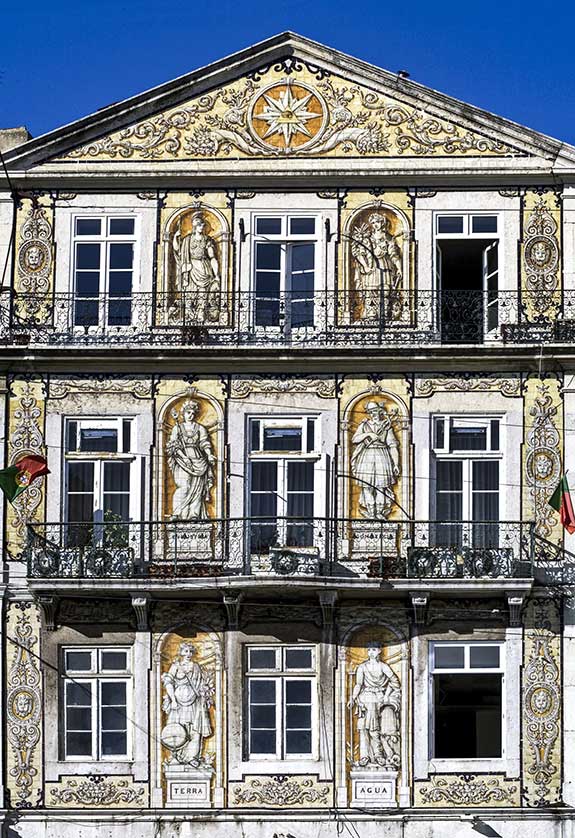
The Cervejaria Trindade in the Chiado district of the capital is decorated with magnificent tile panels designed by Francisco Ferreira with motifs inspired by the Freemasons. The panels depict allegorical figures representing the four elements, the four seasons (winter is no longer there as a door was pushed through in the 19th century) and industry and commerce on the back wall.
Last but not least, the Museu Nacional do Azulejo has the largest collection of Portuguese tiles in the world.
Porto
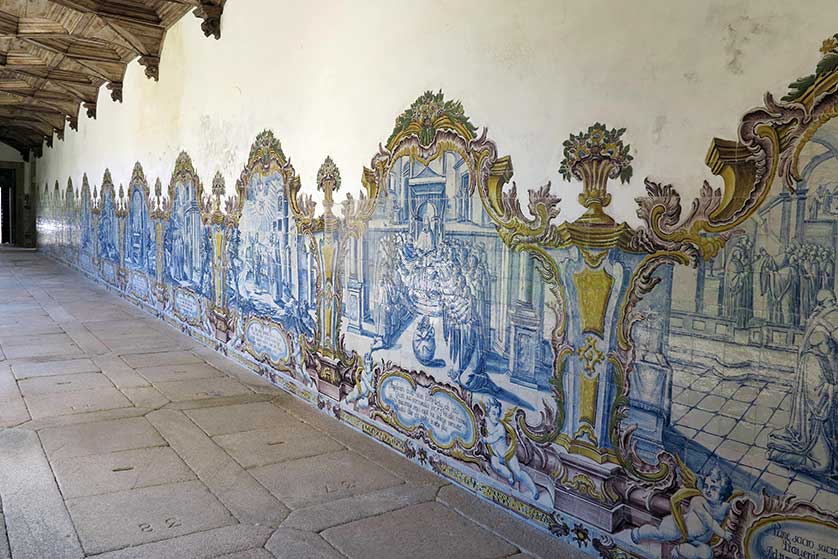
As well as São Bento Station, the cloisters of Porto Cathedral are a good place to start.
The Church of Saint Ildefonso (Igreja de Santo Ildefonso) also has tiles on its exterior walls by the master, Jorge Colaço, depicting the life of Saint Ildefonso and stories from the Gospels. More of Colaço's work can also be seen at the Igreja dos Congregados near São Bento Station.
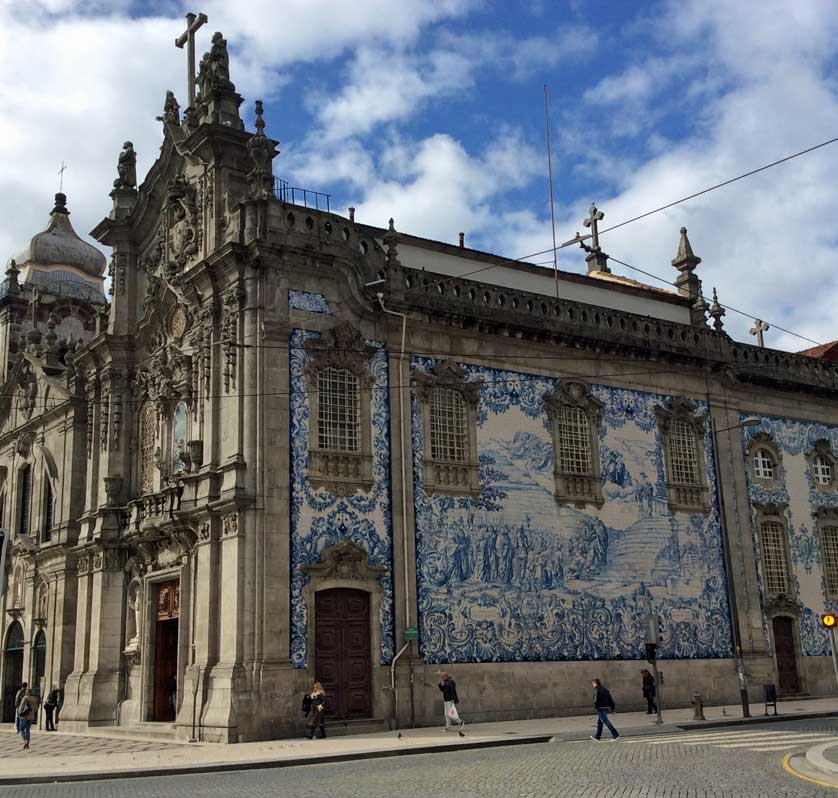
The Igreja do Carmo and Igreja dos Carmelitas, at the corner of Praça de Carlos Alberto and Rua do Carmo, are two churches in Porto that stand almost side by side. The Igreja do Carmo has an outstanding azulejo-covered exterior with the azulejos added in 1912. The tiles were made locally in Vila Nova de Gaia and designed by the artist Silvestro Silvestri. They depict scenes of the founding of the Carmelite Order and Mount Carmel.
Sintra
As mentioned, Sintra has some of Portugal's earliest known azulejos. Head for the Sala dos Brasões in National Palace of Sintra, the Convento dos Capuchos and the Pena Palace.
Other Places
Other noted places to find azulejos tiles in Portugal include the Mosteiro de São Martinho de Tibães just outside Braga, Bom Jesus do Monte, also near Braga and the tiled classrooms of Evora University in Evora.

Azulejos Links

Articles on Portuguese Culture