Portuguese Food & Drink: Portugal's Pastries
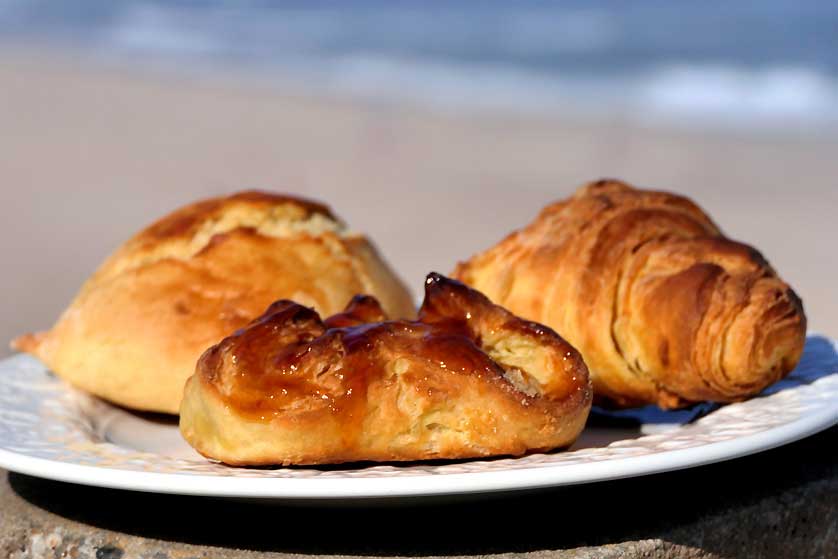
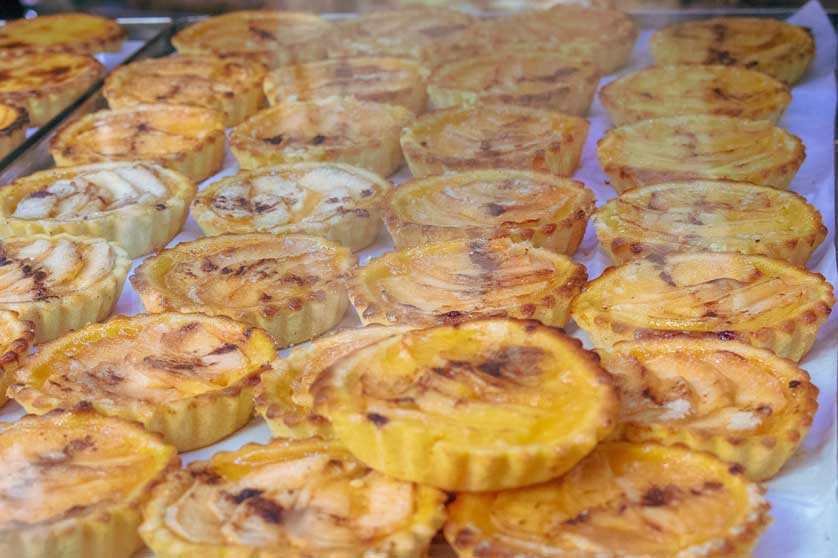
One of the many delights of Portuguese cuisine are its superb pastries.
Portugal has a vast and distinctive range of desserts, cakes and pastries.
Sugar production first on Madeira and later in Brazil created an abundance of the "white gold" necessary for Portugal's range of delicious pastries.
For a uniquely Portuguese experience, the visitor should head for a pasteleria (or confeitaria), where the many varieties of cakes and other confections are served.
They are a great way to start the morning with a coffee but can be enjoyed throughout the day.
Pastel de Nata
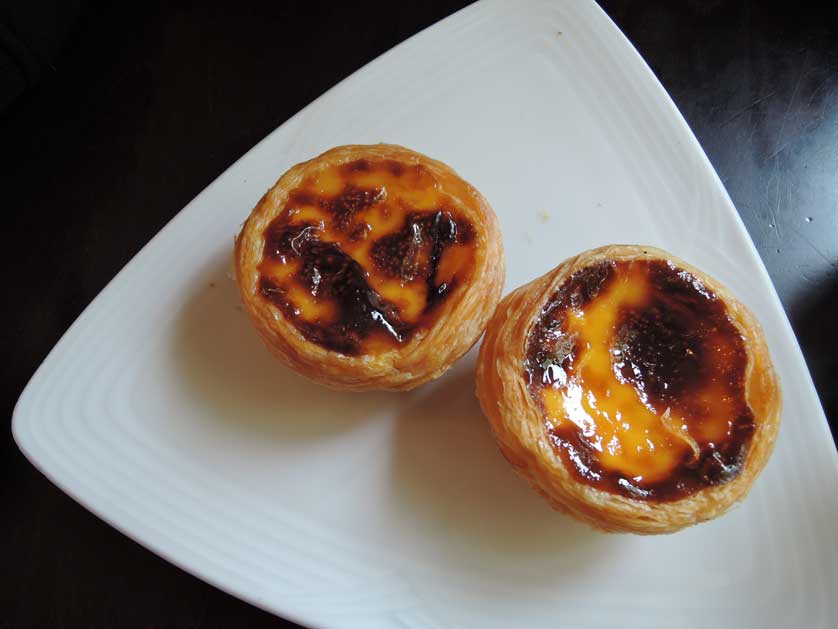
Pastel de Nata is the most famous of Portugal's pastries but by no means the only one worth trying. It was originally a speciality from the Belém district of the Portuguese capital, Lisbon.
A custard tart with a sprinkling of cinnamon this delightful Portuguese sweet is now served in cafes all over the country, however.
They can also be enjoyed in the former Portuguese colonies of Brazil, Macau and Angola.
Bolas de Berlim
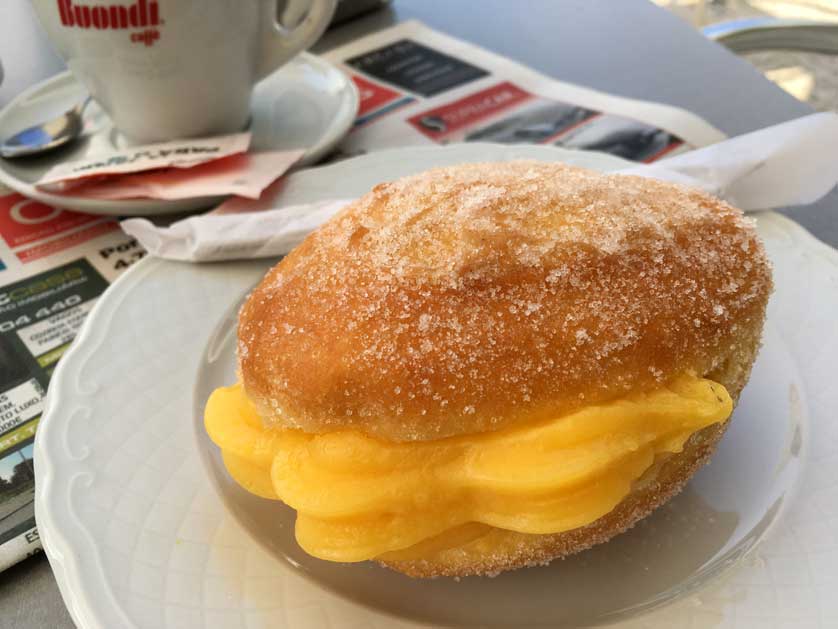
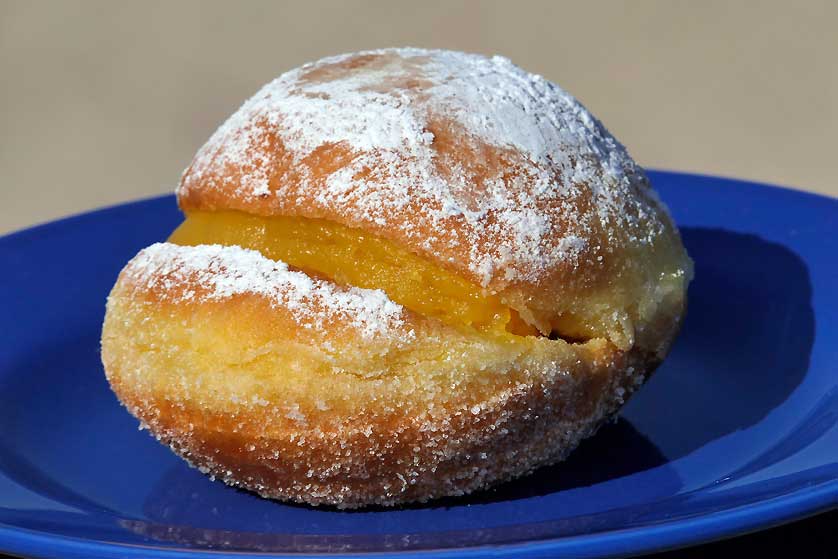
Bola de Berlim is Portugal's super sweet take on the Berliner doughnut (Berliner Pfannkuchen).
The story goes that the recipe was brought to Portugal by Jews fleeing Hitler's Germany. However, the original red fruit filling (usually berries) was replaced with Portugal's own egg-based doce de ovos.
The dough is sliced horizontally, filled with doce de ovos, and sprinkled with fine sugar. Bolas de Berlim are on sale in most cafes and can even be found being hawked on Portugal's beaches in the summer.
Some of the best Bolas de Berlim are said to be found in and around Viana do Castelo.
In the capital, seek out A Sacolinha at Rua Paiva de Andrade 4, close to Baixa-Chiado metro station.
Ovos Moles
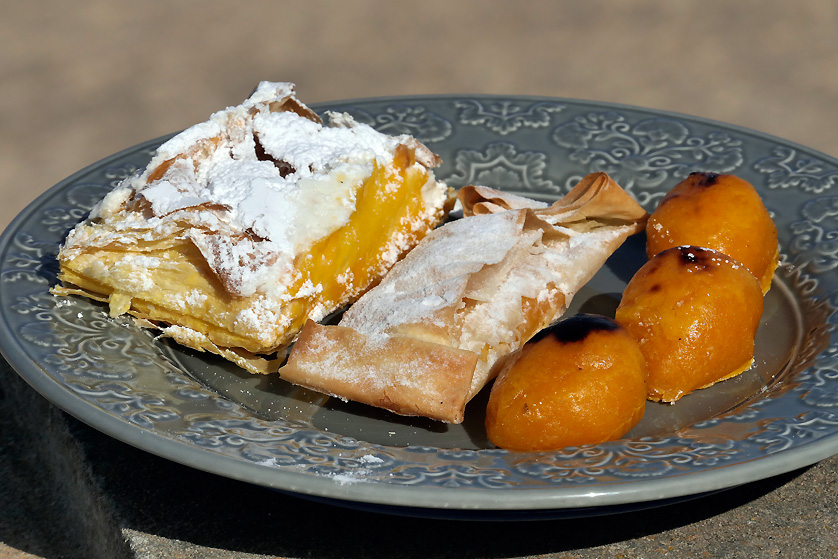
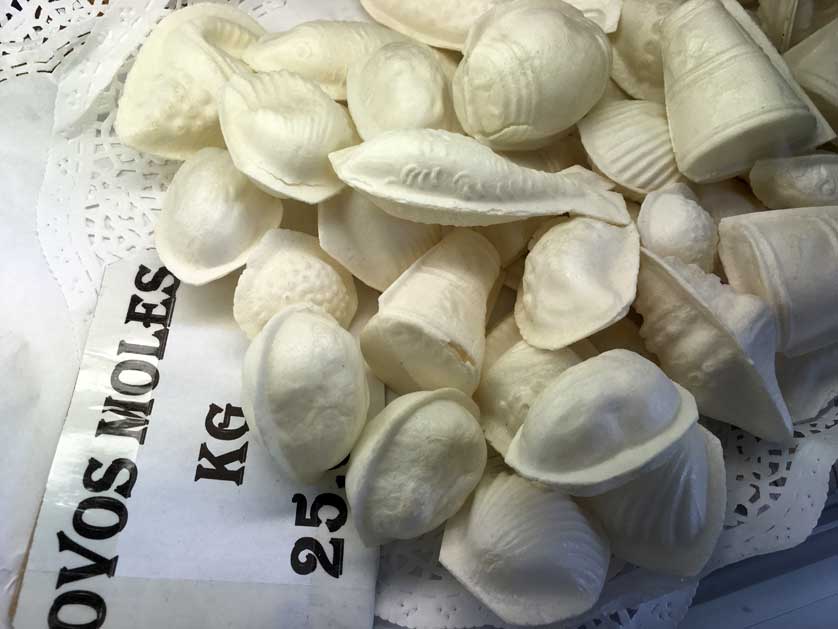
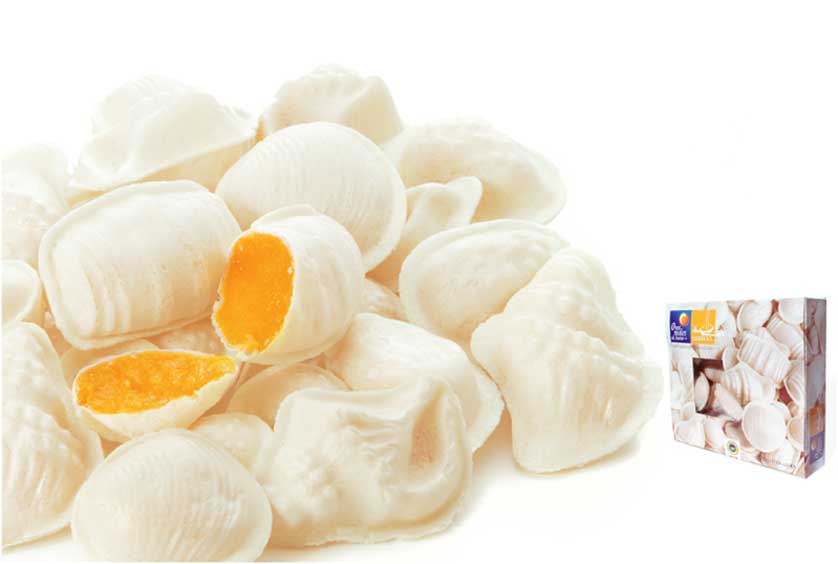
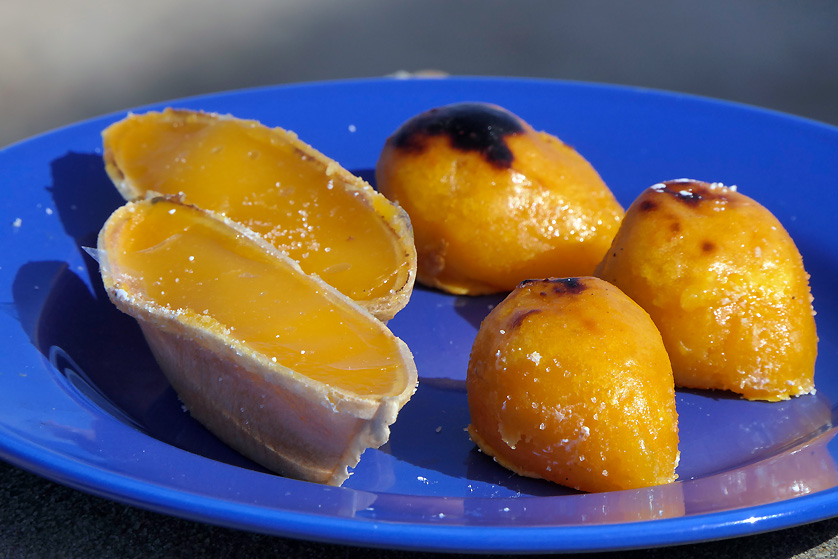
Ovos Moles de Aveiro is a local sweet from Aveiro. Ovos Moles ("soft eggs") is made of egg yolks and sugar.
The fillings are put inside rice paper in various shapes depending on the mould. In the above images, they are fish and shells, which is common due to the city's nautical heritage. Barquinhos de Ovos Moles are done in the shape of a boat (see below).
Oves Moles were first made in various convents by nuns up until the dissolution of Portugal's religious orders in 1834. The nuns used egg whites to starch their habits and so as not to waste the yolks began making Oves Moles.
Production was continued by local women who had been educated in convents.
Oves Moles was the first Portuguese confectionery product to obtain Protected Geographical Indication (PGI) from the European Union in 2006.
A variation, ovos-moles pretos are made with a chocolate casing.
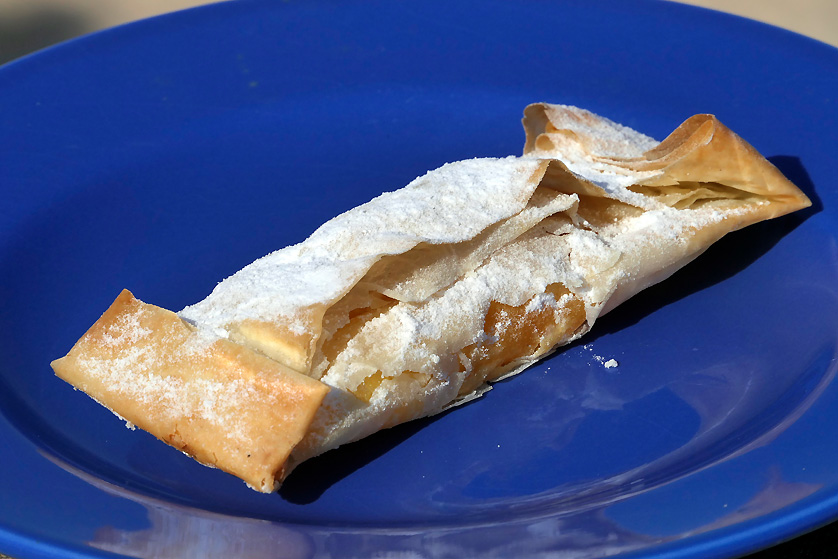
Pastel de Tentúgal
Pastel de Tentúgal is a thin and crispy puff pastry with a history that goes back to the use of egg whites for starching habits in Portugal's convents and monasteries in the 16th century. This left the dilemma of what to do with the yolks.
The clever nuns and monks made a sweet filling just as in the birth of Oves Moles and Pastel de Nata. In this case the original makers were Carmelite nuns from the Convent of Nossa Senhora do Carmo in Tentúgal between Coimbra and Figueira da Foz. The secret was passed on to the family of a local inn who popularized these heavenly sweets.
In Lisbon head for Cafetaria Astro at Avenida Guerra Junqueiro 6, just north of the Alameda metro station.
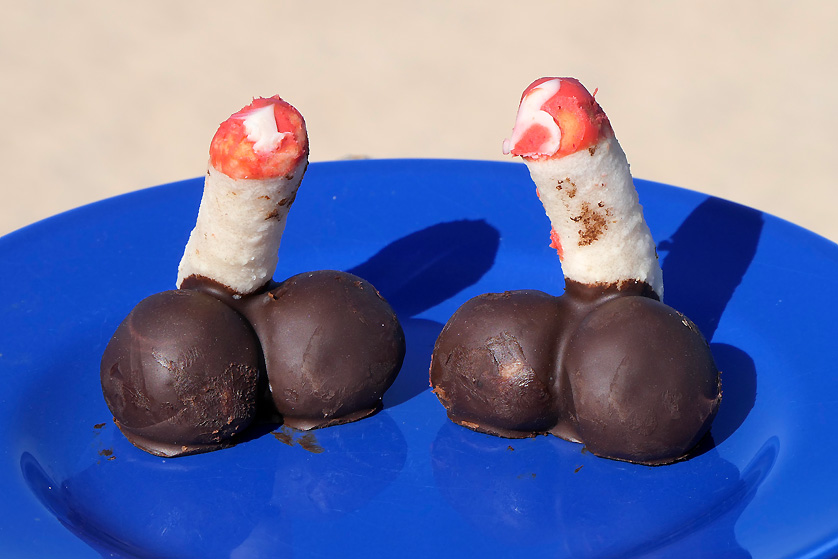
Bolinhos da Caldas
Bolinhos da Caldas from Caldas da Rainha is the ultimate in rude food. They are sweets modeled after the bizarre caralhinhos - a type of phallic pottery made in the town. You are only likely to come across them in Caldas da Rainha.
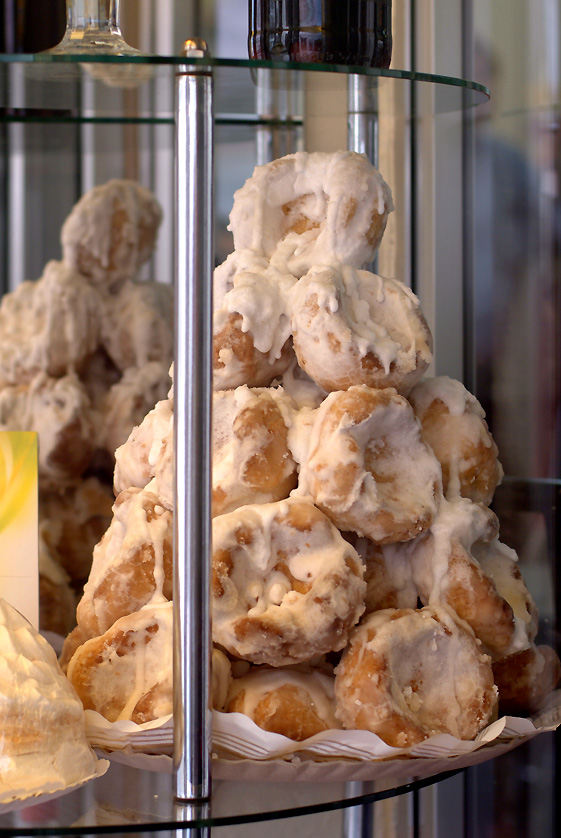
Cavacas das Caldas
Another more ordinary pastry from Caldas da Rainha is the Cavacas das Caldas. These local pastries were first made by two sisters from the town who were confectioners at the royal court in Lisbon but returned after the assassination of King Carlos in 1908. They set up in business close to the Praça da Fruta and the famous spa, the Hospital Termal Rainha D. Leonor.

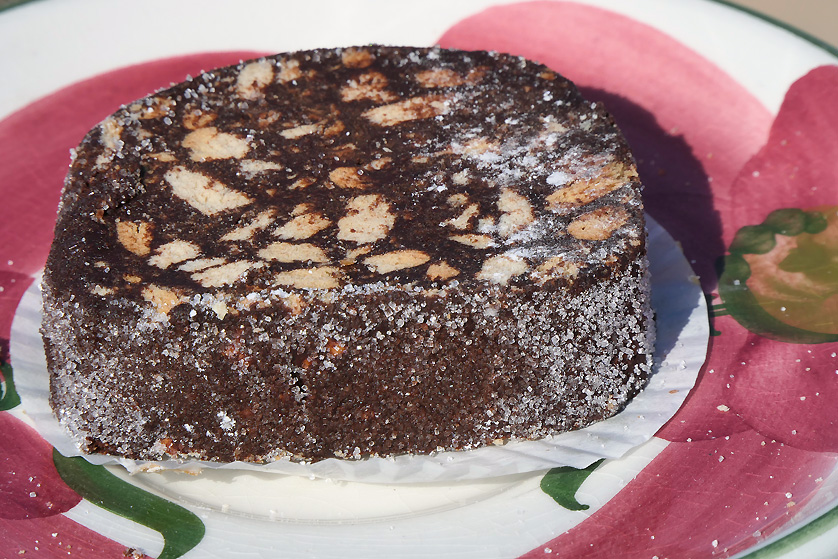
Salame de Chocolate
Salame de Chocolate (Chocolate Salami) does not contain any sausage despite its name. It's a cake made with chocolate, eggs, sugar, and Maria biscuits, you can even add a little Port wine.
Pão de Leite
Pão de leite ("milk bread") is a common Portuguese snack made from milk, sugar, eggs, a pinch of salt, butter (or margarine) and flour.
Bolo de Amêndoa
Bolo de Amêndoa is a sweet pastry made with almonds and eggs, plus sugar, flour, yeast and a little lemon rind.
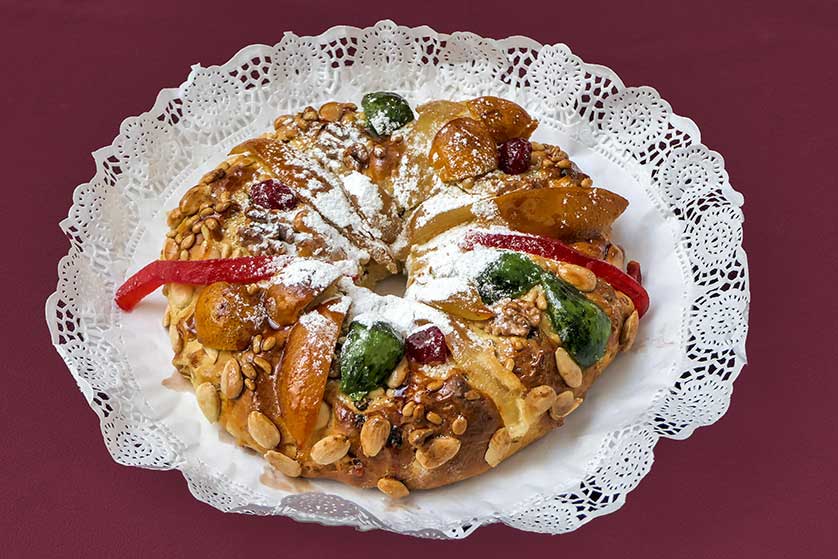
Bolo Rei
Christmas (Natal) in Portugal would not be complete without Bolo Rei, (King Cake), a rich fruit cake in the shape of a wreath. Its name alludes to the three wise men who visited Jesus after his birth. Round in shape, with a large hole in the center, resembling a crown, Bolo Rei usually contains raisins, nuts, plus dried and candied fruit.
Often the cake contains a dried broad bean (fava bean) and tradition has it that whoever finds the bean should pay for the cake the following year. The cake is usually eaten over the Christmas and New Year Period as well as during Epiphany.
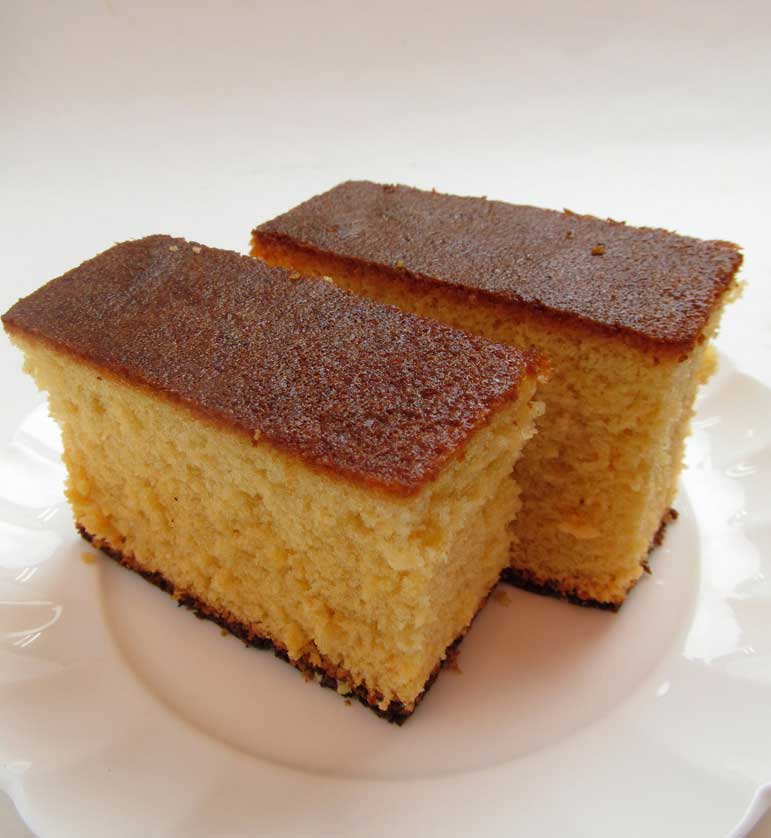
Pão-de-ló
Pão-de-ló (sponge cake) is another cake often eaten at Christmas and Easter, though you can try it year round. Light and fluffy the cake is made with flour, sugar and egg yolks.
It is said that Portuguese traders introduced the recipe to Nagasaki in Japan during the Age of Discoveries, where it became castella.
In Lisbon, Melhor Pão de Ló do Universo at Rua Nova de São Mamede 54 a short walk from Rato metro station is recommended.
Bolo de Bolacha
Bolo de Bolacha is a Portuguese favorite consisting of alternating layers of butter cream and English Maria biscuits soaked in coffee, all covered and dusted with chopped peanuts or ground cinnamon. It is a traditional homemade dessert throughout Portugal.
For a taste make your way to Esquina da Fé at Rua da Fé 60 near Avenida metro station.
Related articles on Portuguese food and cuisine
Pastel de Nata Workshop in Lisbon
Vegetarian Restaurants in Lisbon